Another fun conversation with Jonathan from OpenITI! This was mostly about choosing a "tech stack" as a DH practitioner in a field like ours. I'll post a few links below for tools that I mentioned here.
In this week's OpenITI Conversation we hear from @sarahsavant1 on a range of fascinating topics, including the (quite tricky) definition of a book in the premodern and modern world, the ways that numbers have informed her work, her workflows, and more https://t.co/UWjsxFPx1W
Department of Art History & Archaeology at University of Maryland is searching for a postdoc in Islamicate art & architecture (600-1500 CE)!
Possibilities for collab w/ many units, including @Open_ITI@RoshanInstitute@PersDig_UMD@AIS_1967@MESA_1966
https://t.co/DfDx8UYJ1u
Department of Art History & Archaeology at University of Maryland is searching for a postdoc in Islamicate art & architecture (600-1500 CE)!
Possibilities for collab w/ many units, including @Open_ITI@RoshanInstitute@PersDig_UMD@AIS_1967@MESA_1966
https://t.co/DfDx8UYJ1u
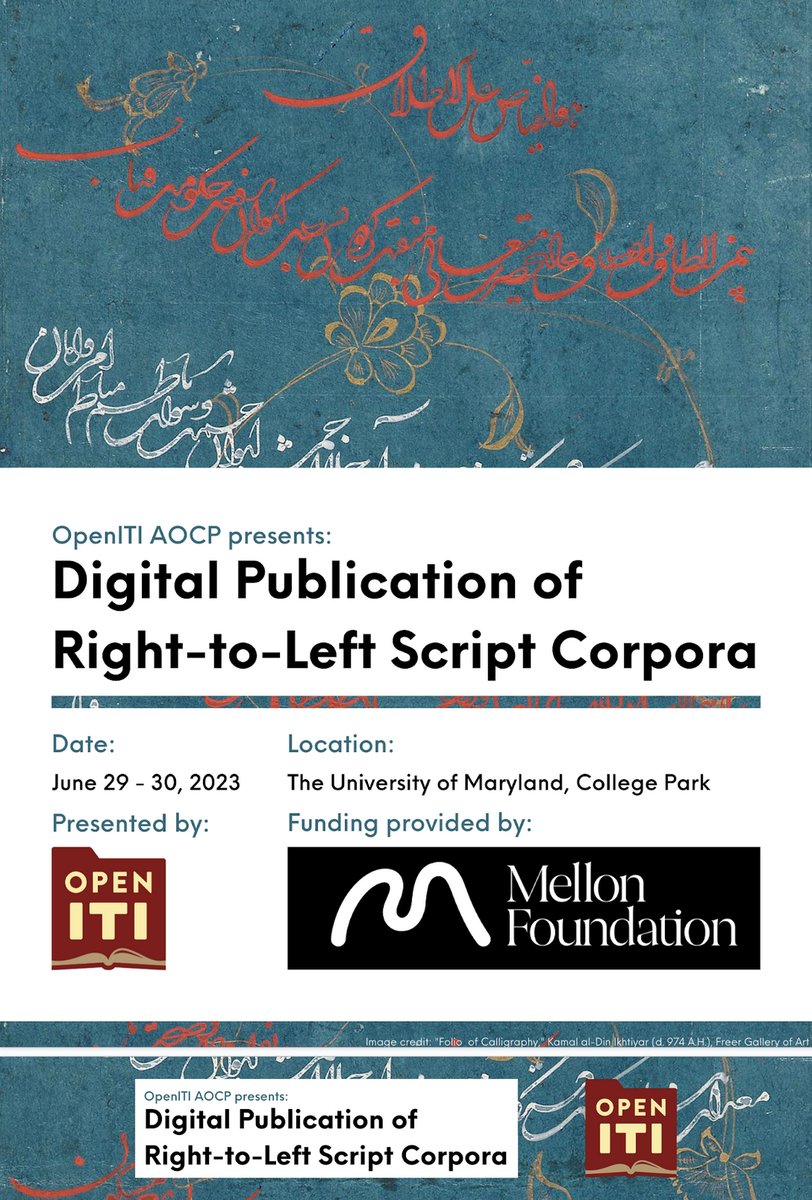
Getting ready to wrap up the #OpenITIDigitalPub workshop.
Incredible exchange of ideas the past two days.
Onward to the @Open_ITI team meeting w/ much to consider.
Very grateful to all expert participants and @MellonFdn for the funding to make this gathering happen!
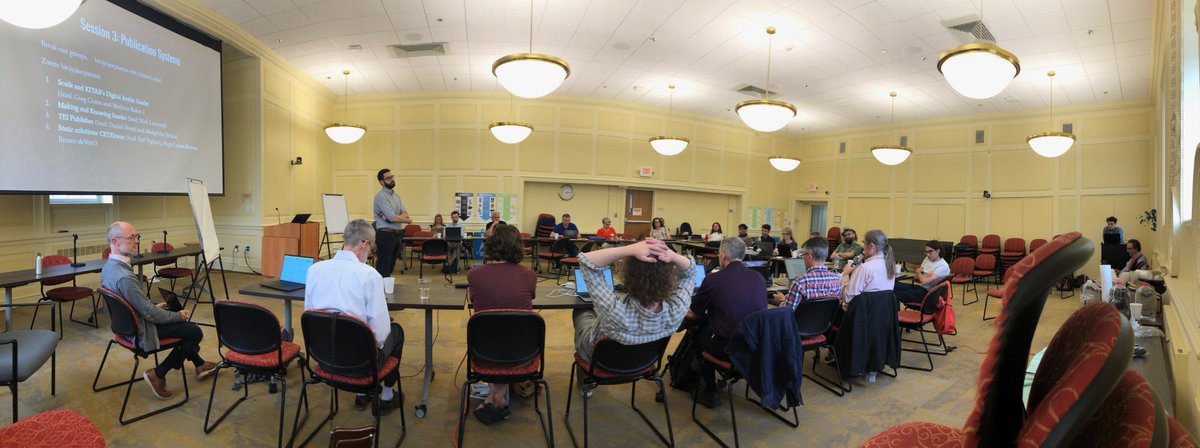
Session 3 at #OpenITIDigitalPub: Publication Systems
- Scaife and KITAB’s Digital Arabic Reader (@PhilologistGRC, M. Barber)
- Making and Knowing Reader (@nick_performant)
- TEI Publisher (@d_stoekl, M. Turska)
- Static solutions: CETEIcean (@raffazizzi, @hcayless, Brown-deVost)
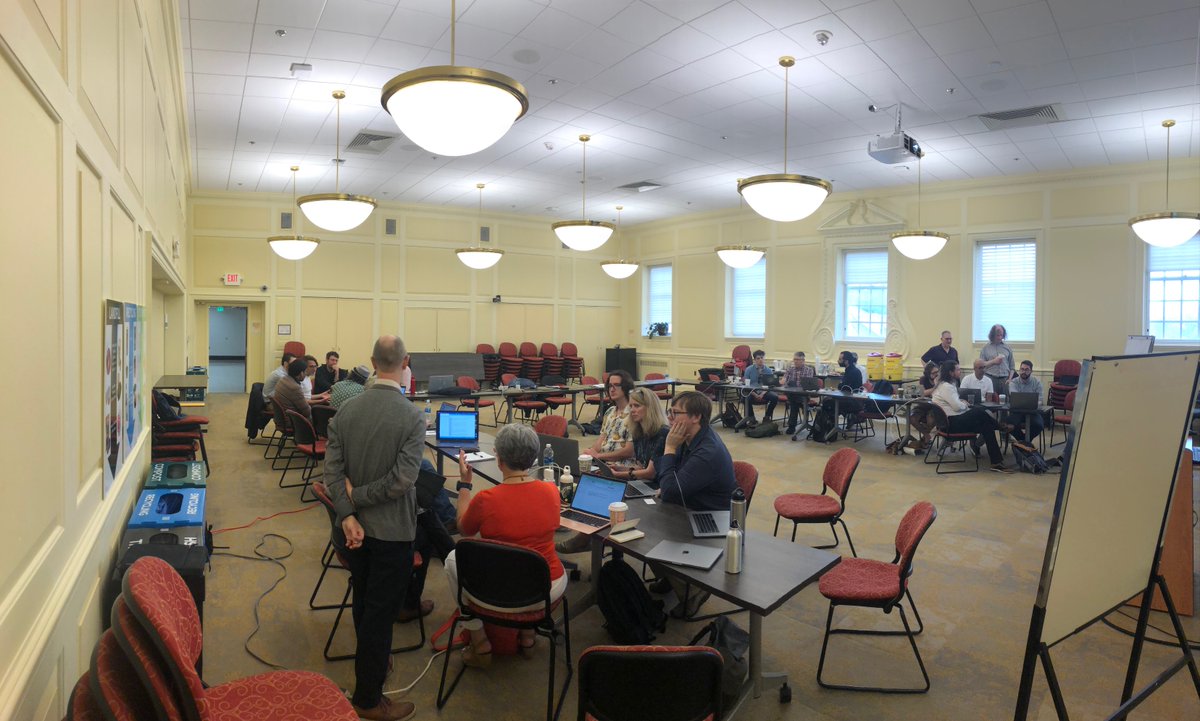
Day 2 of #OpenITIDigitalPub begins w/ breakouts on Strategies for Right-to-Left Encoding (Post-OCR)
- oXygen XML editor for RTL scripts (@hcayless)
- mARkdown and NotePad++ (Nigst & Verkinderen)
- FairCopy (@nick_performant)
- Free and Open Source Software for XML (@raffazizzi)
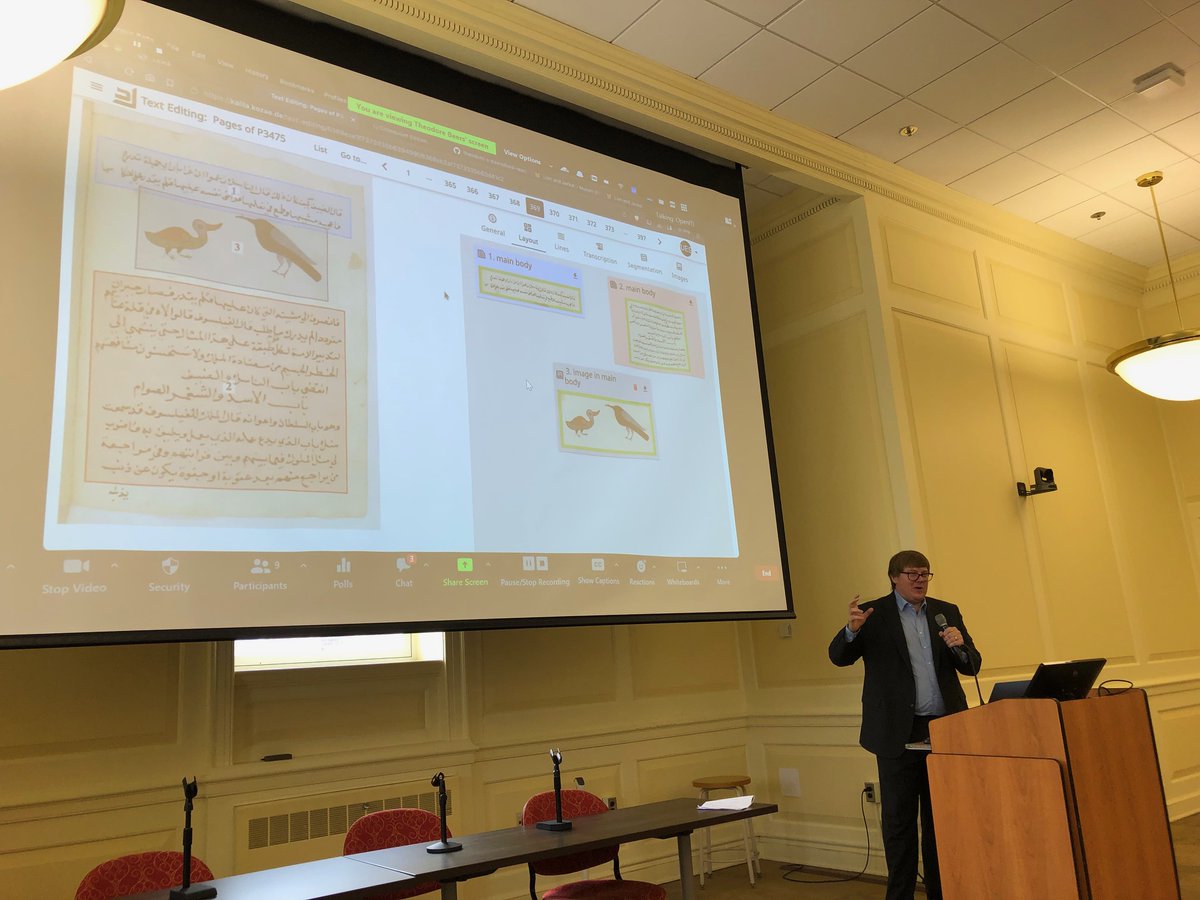
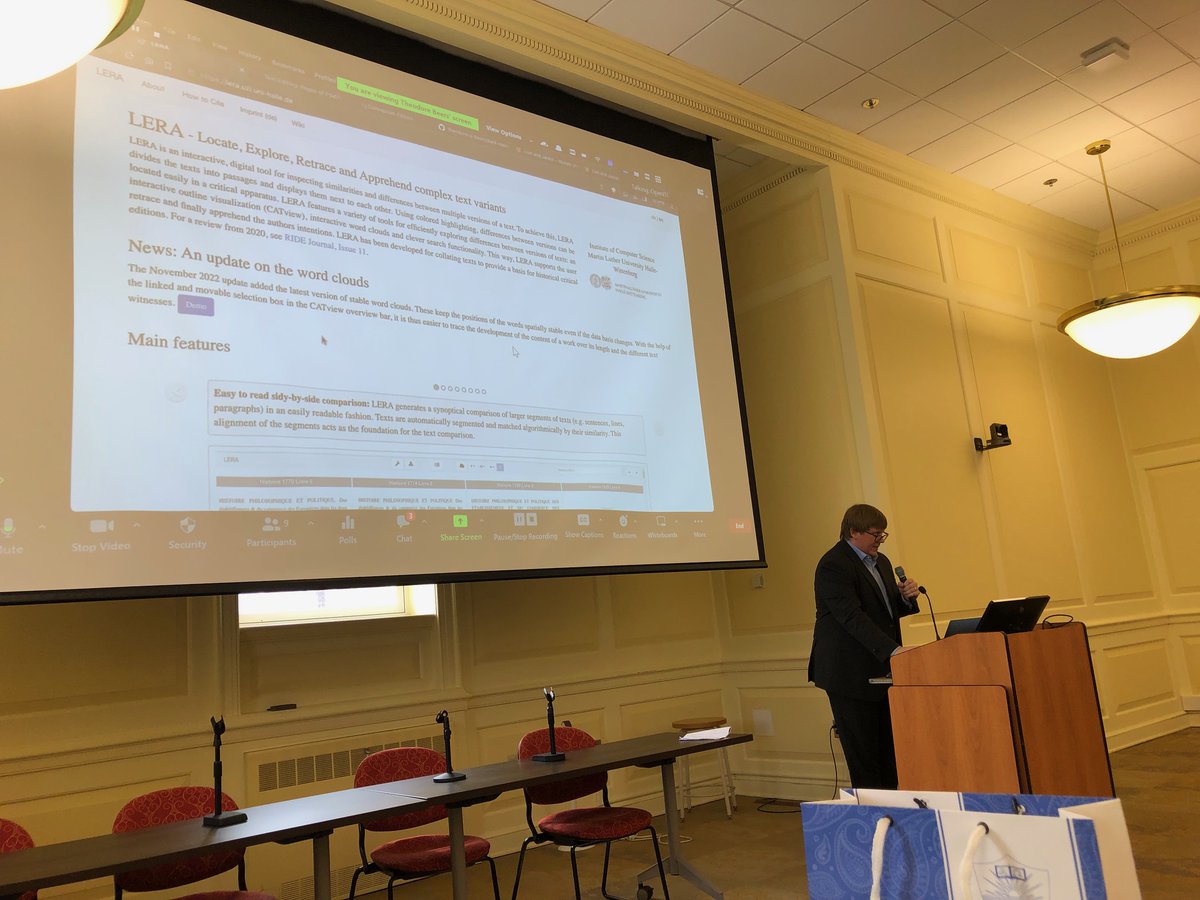
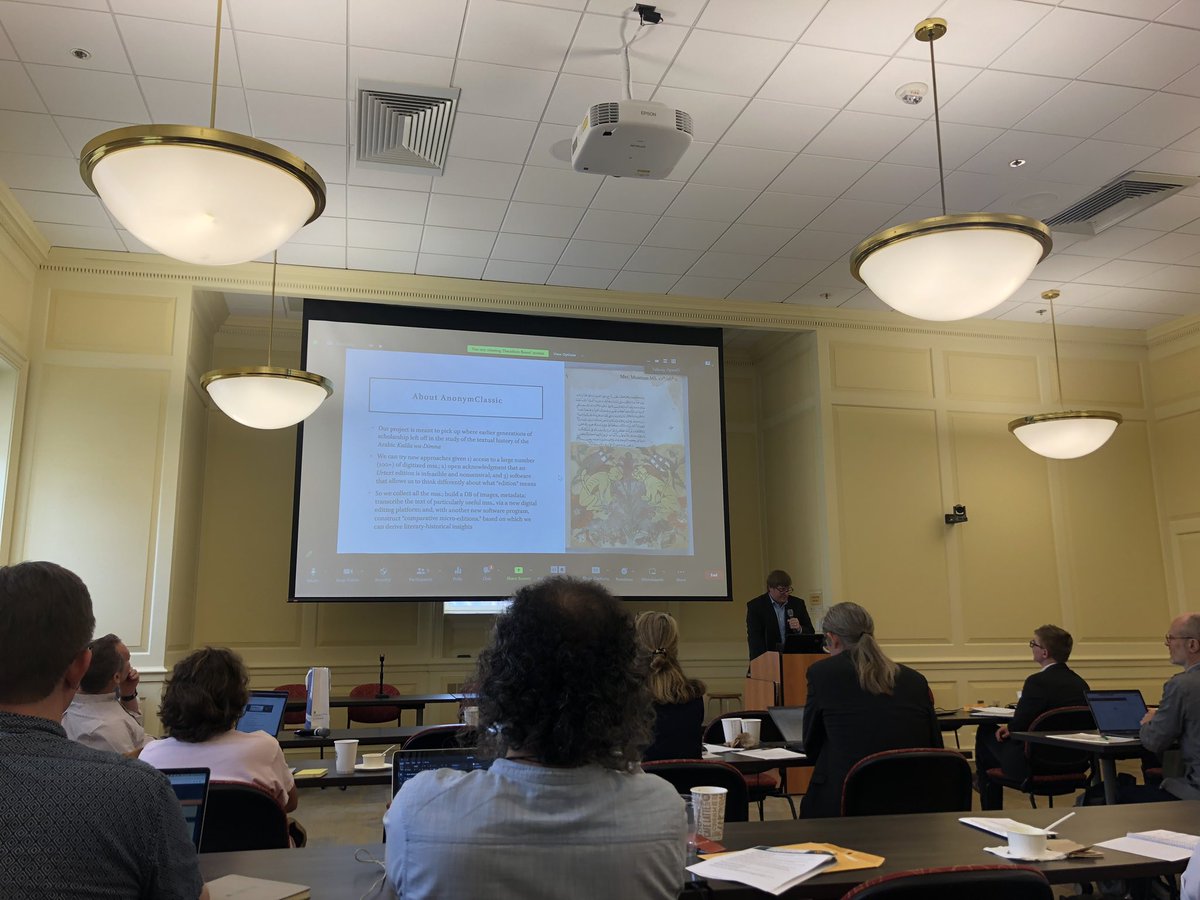
@theodorebeers talks about his work on the @AnonymClassic project that focuses on the history of Kalila wa-Dimna.
This text has a rich history, originating in the Sanskrit Panchatantra, first translated into Middle Persian in 6th CE, into Arabic in 750 CE.
#OpenITIDigitalPub
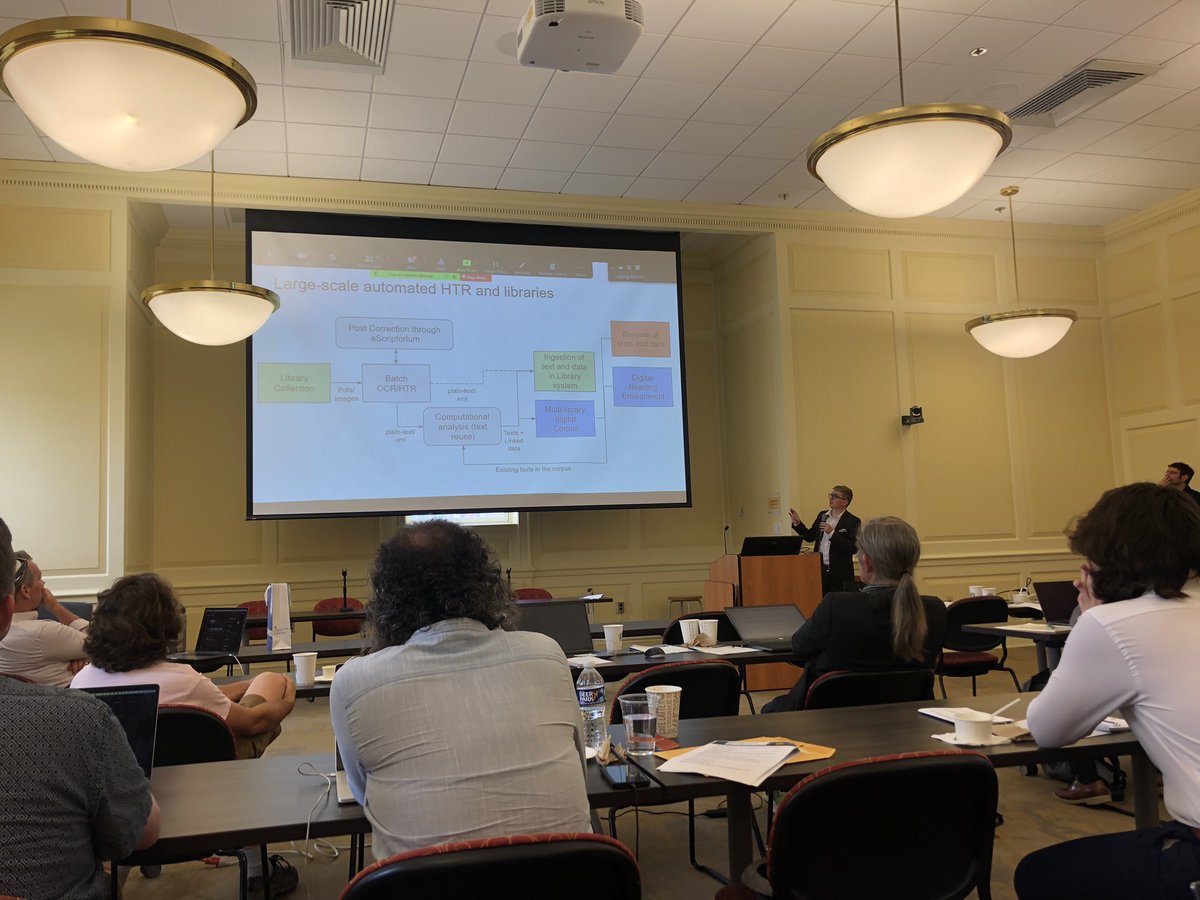
The Kitab project originated around 2014 at the Aga Khan University.
Part of the focus at the Kitab projects is on corpus building, mostly Arabic but also Urdu.
The project is interested in the transmission of Arabic texts: 7th-16th c.
#OpenITIDigitalPub
Last, but not least, though appropriately last (😀) is Janelle Jenstad presenting virtually at #OpenITIDigitalPub on:
“The End is Where We Start From:” The Endings Principle"