Now that the semester’s over I wanted to share the readings @giulia_taurino and I and the students in our seminar on Artificial Intelligence as an Archival Science put together. We had a great time; they wrote good papers; hopefully this will be useful. https://t.co/887QMzvQx5
@Dorialexander OK, try this branch: https://t.co/ithNnn9zzN
from passim import align_passages
align_passages(src, trg)
align_passages(src, trg, n=5)
Options are mostly the same as the command-line version.
@Dorialexander Nice! I'd be interested to see what kind of classifier would work to guide inference with a large enough source corpus. Are you just expecting this to work contrastively in the beam? Anyway, I'll have some free time on Friday to sketch the passim solution.
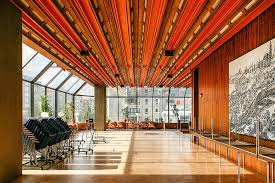
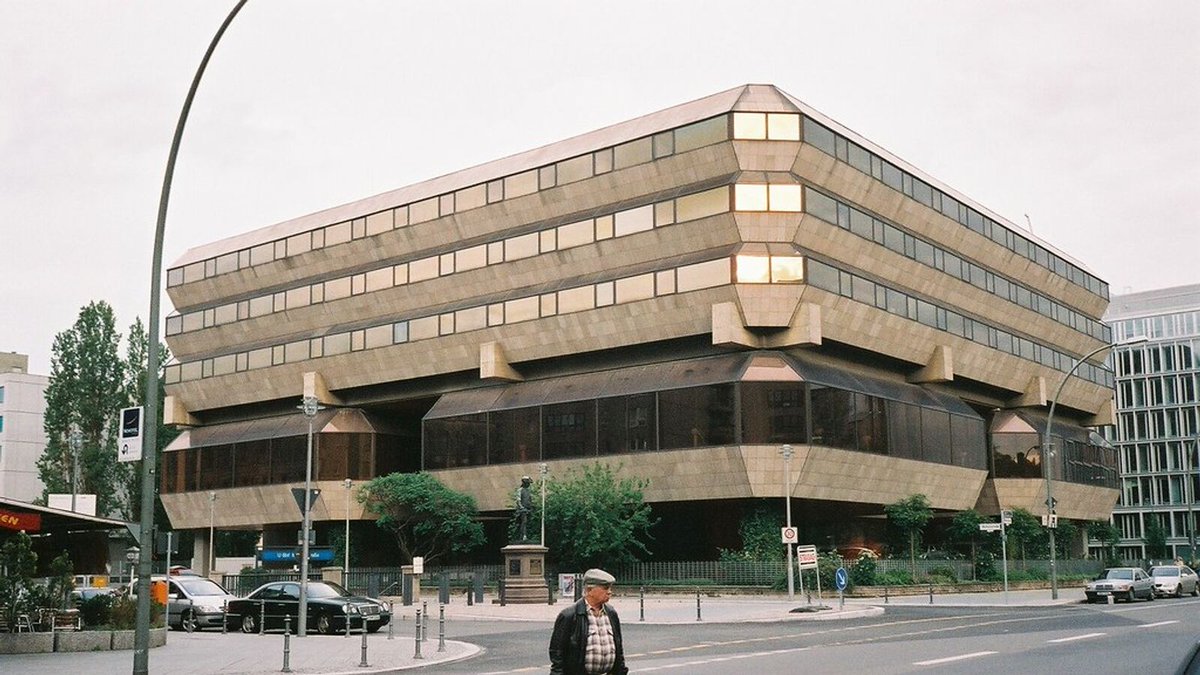
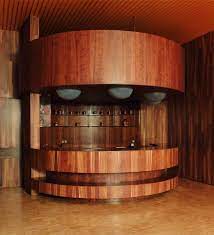
In the 1990s, part of it housed the Max Planck Institute for the History of Science. That's their the conference room on the lower left, where, before Google Docs, they hooked three keyboards up to one computer to co-edit papers.
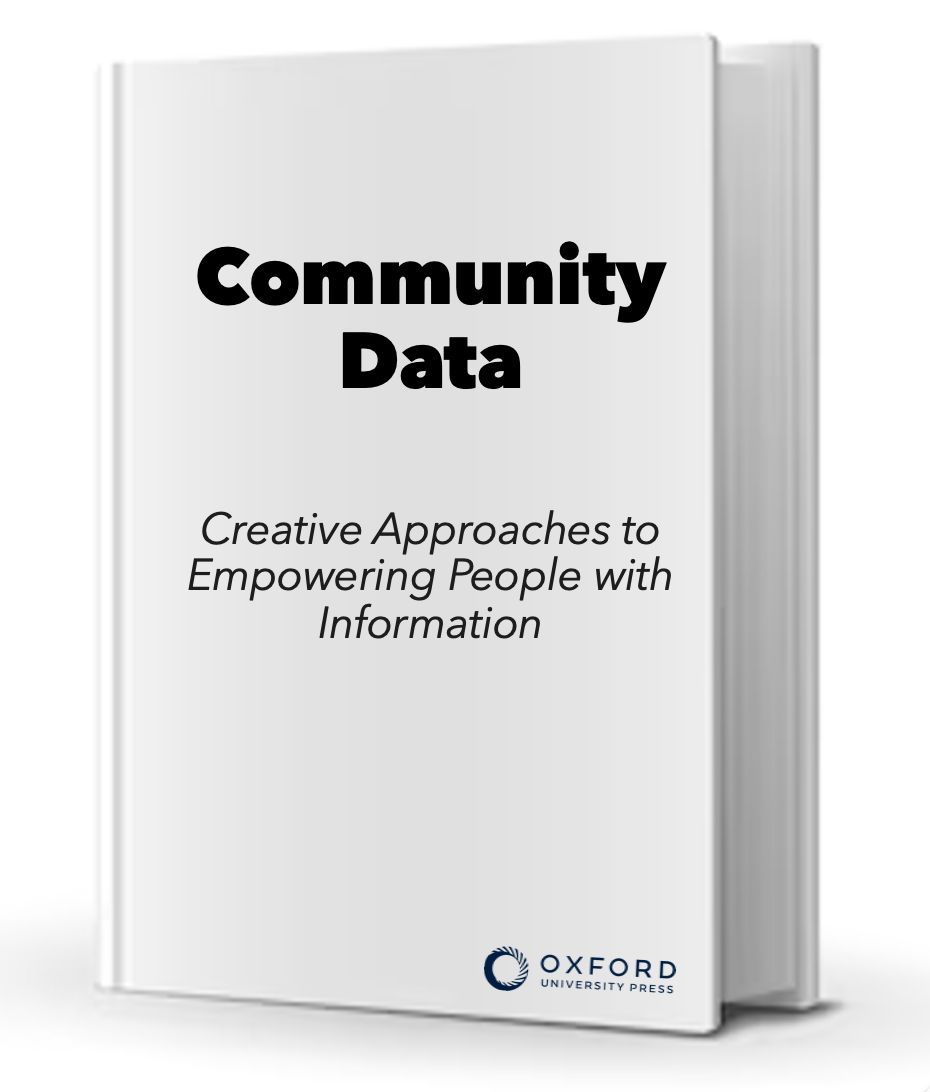
Work with data in newsrooms, libraries, CSOs, museums, govt, or community? Excited to share I'm working on a book for *you* about creative data literacy and storytelling in pro-social settings. Tentatively titled "Community Data". Coming fall '24 from @OxUniPress 💡+🧑🏾💻=📗
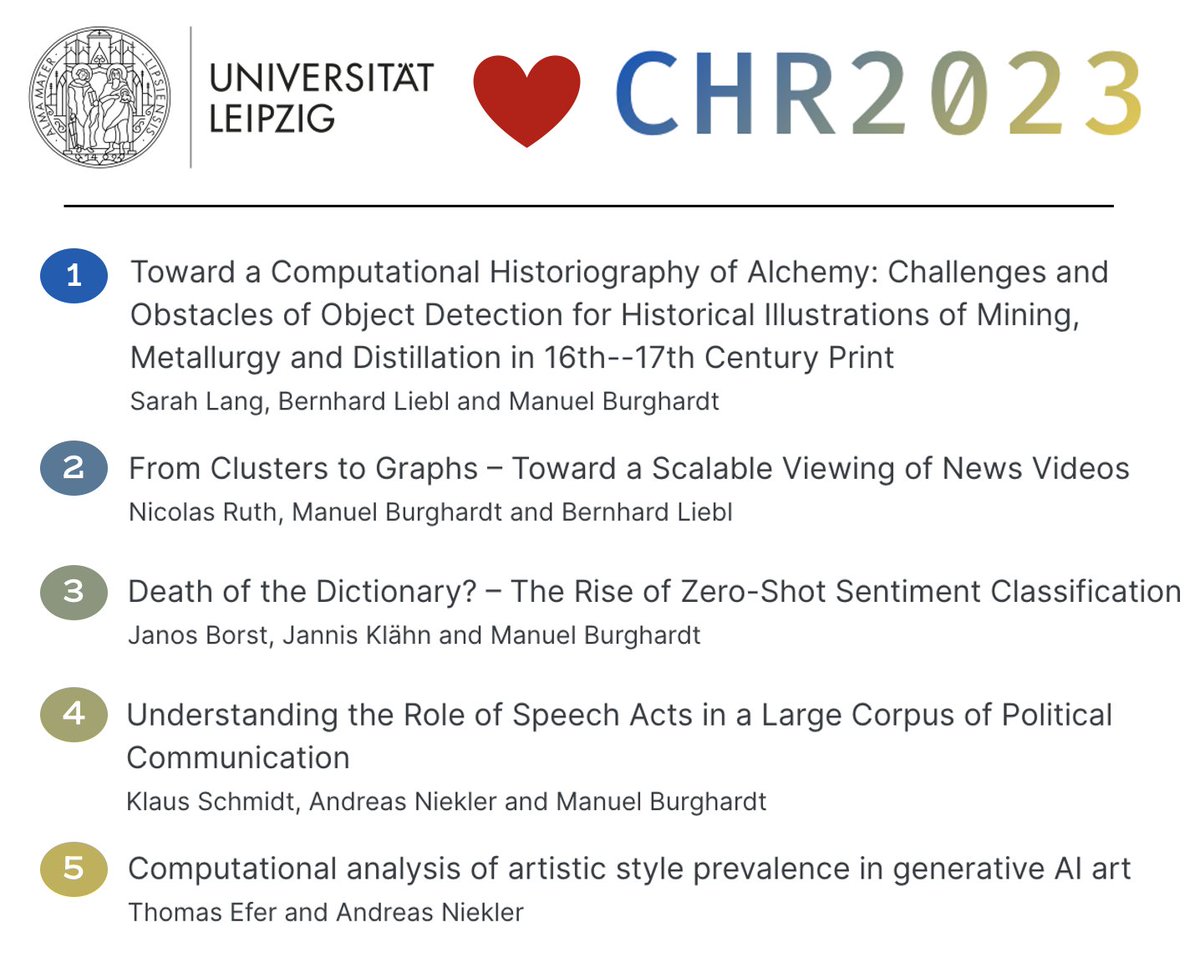
So proud of my Computational Humanities Group @UniLeipzig + special guest @SarahALang – 5 submissions have been accepted for CHR conf. 2023 in Paris ��� Props to everybody in the group and many thanks to the PC and reviewers for doing such a great job! https://t.co/ySxGLHqqYH
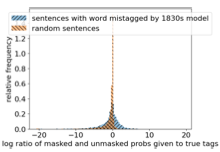
Last but not least, in EMNLP Findings, Liwen Hou continues her brilliant line of work on diachronic syntax by investigating how we can probe language models trained on different time periods. https://t.co/lMfr3NYpZS
Next in CHR, @muther22 and Mathew Barber use language models to probe modern and mediaeval citation practices. A citation is a query in a noisy channel model that the author of a target text thinks might help you find the source. https://t.co/lD2gZkdybR
Caroline Craig, @kartik_goyal_ , @farnooshamsian , and @PhilologistGRC have a CHR paper on getting document-level sentence alignment to work for the ancient Greek and Latin corpus to track multiple translations into English, French, German, Persian, etc. https://t.co/JO3OkklB4f
Our OCR team @Open_ITI (Jake Murel, @Mar_Musa , and @M_T_Miller ) has a new Computational Humanities Research paper on transcribing Arabic and Persian manuscripts without any annotated manuscript data, Automatic Collation for Diversifying Corpora (ACDC): https://t.co/pQlB0kRLeJ
New CHR paper with an amazing set of collaborators: we find that high-recall bitext mining and sentence alignment is actually kinda tricky for messy historical literary text. Multilingual embeddings like LaBSE and friends work surprisingly well for literary ancient Greek though!
I don't post over here much anymore, but I want to point out the great work of my talented coauthors in some recent papers on #NLProc, #DH, #HTR , and historical linguistics.
A lot of past work on historical syntax involved treebanking text from different time periods. Instead, Liwen compares language models trained on different time periods on modern tagging and parsing tasks to detect language change.