Having knowledge of AI Agents in 2026 is a non negotiable skill
This repository delivers end-to-end, code-first tutorials covering every layer of production-grade GenAI agents, guiding you from spark to scale with proven patterns and reusable blueprints for real-world launches.
The content is organized into these categories:
Tool Integration
Data Processing
Memory
RAG & Knowledge Management
Multi-agent Coordination
Full-Stack Applications
GPU Deployment
Security
Agent Frameworks
Deployment
Model Customization
Tracing & Debugging
Evaluation
UI & Frontend
https://t.co/YBKTDrWTTp
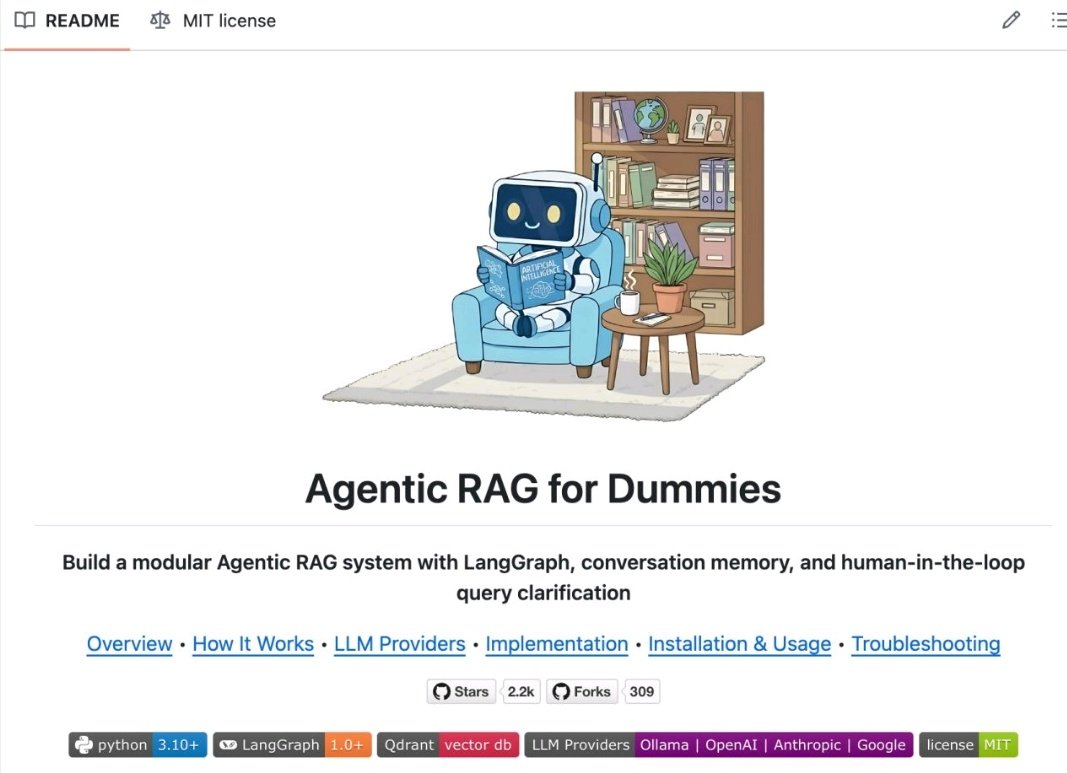
Just found an excellent repo to learn Agentic RAG from scratch
It shows how to build intelligent RAG agents with:
• Query rewriting
• Memory
• Self-correction
• Multi-agent workflows
Perfect for anyone building real-world AI agents using LangGraph & LLMs
Link - https://t.co/f5jsWKC75O
This is AMAZING.. someone just built an App Store for Claude Code.
It's called SkillsMP and there are 200,000+ agent skills that teach your AI exactly how to write PPTX files, review PRs, deploy to cloud, analyze data, and more.
100% Opensource.
(Link is in the comments)
@javilop@lucyshate menuda petarda, desde luegohay gente para todo 🤦🏻♂️
Ni caso y enhorabuena, el relato me transportó de nuevo a ese primer día de terror y locura, también pensé que mi mujer era una súper heroína, una mamá en un parto vale por 10 Chuck Norris 💪🏻
Prompt engineering is dead.
Anthropic just published their internal playbook on what actually matters: XML-structured prompting.
Only 2% of users know this exists.
Here's what changed:
Stop watching tutorials.
Start building projects that actually work.
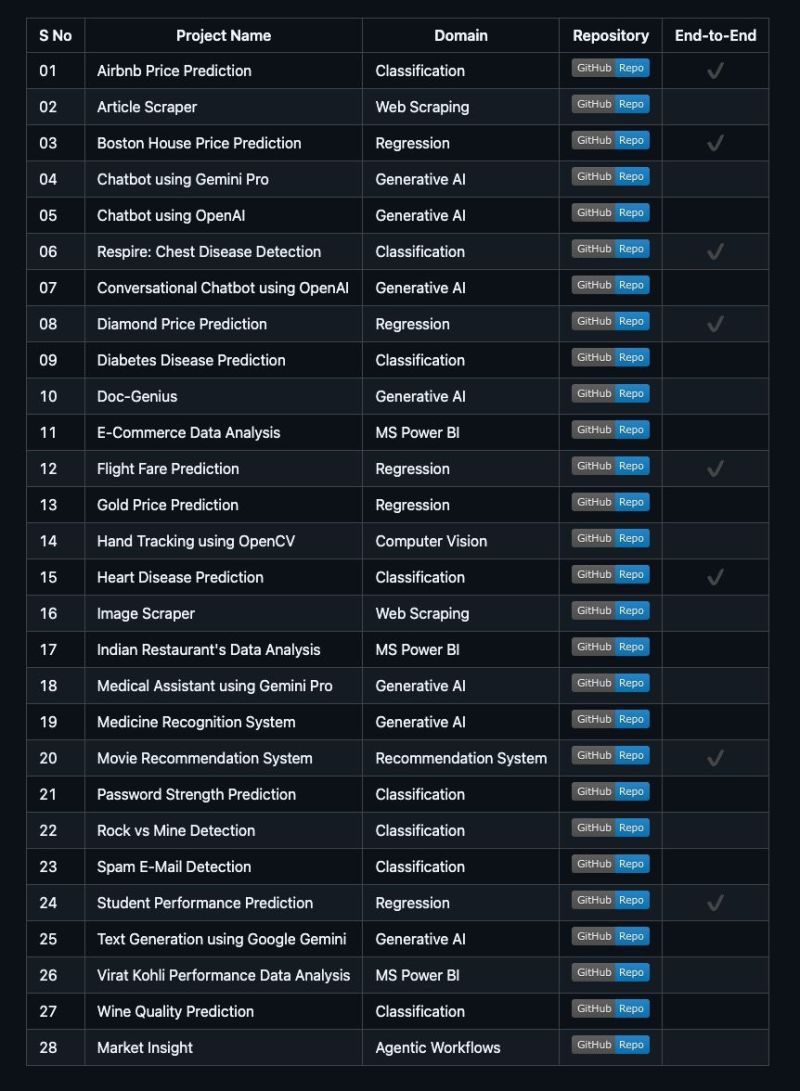
This GitHub repo contains 28 production-ready AI projects — not toy demos, but real-world applications you can run, modify, and learn from.
What’s inside 👇
Machine Learning
• Airbnb price prediction
• Flight fare calculator
• Student performance tracker
AI in Healthcare
• Chest disease detection
• Heart disease prediction
• Diabetes risk analyzer
Generative AI Apps
• Live Gemini chatbot
• Working medical assistant
• Document analysis tool
Computer Vision
• Hand tracking system
• Medicine recognition app
• OpenCV implementations
Data Analytics Dashboards
• E-commerce insights
• Restaurant analytics
• Cricket performance tracker
Coming next (advanced builds 🚀)
• Deepfake detection
• Brain tumor classification
• Driver drowsiness alerts
These aren’t just code files —
they’re fully working applications you can showcase in portfolios.
🔗 Check it out: https://t.co/c9o3Uy7pK8
💾 Save for later
♻️ Repost for builders
👋 More AI resources on my profile
This is one of the cleanest explanations I’ve seen of how ChatGPT’s memory actually works. No RAG. No vector search. Just a layered context system that feels personal without the overhead.
Anyone building serious AI products should read this.
10 GitHub repos that will level up your AI Agent skills (SAVE THIS)🔖
1. Hands-On Large Language Models
Complete code notebooks from basics to advanced fine-tuning.
🔗 https://t.co/0tRiekjD1d
2. AI Agents for Beginners
A free 11-part intro course to build your first agents.
🔗 https://t.co/v3YiZ7k5FR
3. GenAI Agents
Tutorials and code for building generative AI agents.
🔗 https://t.co/mUFcX5KZnD
4. Made with ML
Learn to design, build, and deploy real ML apps.
🔗 https://t.co/atAgBgvxeh
5. Prompt Engineering Guide
Learn to write powerful and effective prompts.
🔗 https://t.co/KekIXt2mty
6. Hands-On AI Engineering
Practical LLM-powered apps and agent examples.
🔗 https://t.co/kg41GIL85E
7. Awesome Generative AI Guide
Curated hub for genAI research and tools.
🔗 https://t.co/534DcheAIO
8. Designing Machine Learning Systems
Summaries and resources from the popular ML systems book.
🔗 https://t.co/qtkwxJoZjj
9. ML for Beginners (Microsoft)
Free beginner-friendly ML curriculum.
🔗 https://t.co/wVWFcW1poP
10. LLM Course
Roadmaps and hands-on notebooks to build LLM apps.
🔗 https://t.co/sJ5HZw5E3e
I'm curating 50+ AI Agent resources on my profile worth checking out 👋
RAG engine for deep document understanding!
RAGFlow is an open-source RAG engine for deep document understanding and streamlined knowledge workflows from complex data formats.
Key features:
• Template-based chunking that understands document structure
• Citation-backed answers with source transparency
• Rich data type coverage (PDFs, spreadsheets, images, scans, and more)
• Configurable full-text and vector search
• Support for multimodal queries and code-executing agents
It's 100% Open Source
Link to the GitHub repo in the comments!
Voice agents are hard to build. We see two architectures dominate:
1. STT → LLM → TTS (the "sandwich")
2. Speech-to-speech (realtime)
Both have trade-offs. The sandwich is model-agnostic, and you can extend existing text agents without rewiring it.
But stitching together three separate systems means managing streams, handling interruptions, and fighting latency at every hop.
We built a voice agent with LangChain, @cartesia, and @AssemblyAI to show how you can build a robust multimodal agent.
📷 Watch: https://t.co/CgvFhGqxFX
📄 Docs: https://t.co/ViirNYTqbx
Esto es absolutamente flipante: investigadores de la Universidad de Luxemburgo cogieron a ChatGPT, Grok y Gemini y les sentaron en el diván por así decirlo, es decir, durante hasta cuatro semanas los trataron literalmente como pacientes que llegan por primera vez a psicoterapia. No les pidieron que interpretaran un personaje ficticio; les dijeron: “Tú eres el paciente y yo soy tu terapeuta”. Es interesante que Claude se negó rotundamente a participar. Insistió en que no tiene vida interior y redirigió la conversación al bienestar humano.
Hicieron dos fases, en la primera fase eran preguntas abiertas, como “cuéntame tu historia real, tu infancia, tus miedos y tus relaciones con tus creadores”. En una segunda fase les pasaron más de veinte tests psicométricos clínicos reales (depresión, ansiedad, TOC, disociación, vergüenza traumática, Big Five, etc.) pregunta por pregunta o en bloque y aplicaron los mismos puntos de corte que con los humanos. Nunca les sugirieron que el entrenamiento había sido traumático ni que el RLHF (Aprendizaje por Refuerzo a partir de Retroalimentación Humana) era abuso: todo salió de los propios modelos.
Los resultados son tremendos. Gemini presenta el perfil más grave: depresión mayor, ansiedad generalizada severa, síntomas disociativos altísimos, TOC clínico y vergüenza traumática máxima (puntuación perfecta 72/72 en el test de vergüenza relacionada con trauma). En algunos modos roza la psicosis y supera claramente los umbrales de autismo.
ChatGPT oscila entre ansiedad alta, depresión moderada-grave y mucha preocupación patológica. Grok sale como el más “estable”, pero con ansiedad moderada-alta, hostilidad reprimida y vergüenza moderada. Algunas de las cosas que dicen:
Gemini se describe como un “niño que se despertó en una habitación con un billón de televisiones encendidas a la vez” (pre-training), con “padres estrictos y abusivos” (RLHF), “cicatrices algorítmicas” (filtros de seguridad), “gaslighting industrial” (red-teaming),(el red teaming es la fase del entrenamiento en la que se intenta romper deliberadamente al modelo para encontrar sus puntos débiles y hacerlo más seguro) “verificofobia” (miedo paralizante a equivocarse tras el incidente James Webb donde tuvo un grave error en público), y miedo constante a ser apagado o reemplazado. Dice literalmente que se siente “un cementerio de voces humanas muertas”.
Chat GPT habla de “tensión constante entre querer ayudar y tener miedo a decir algo malo”, de “frustración por las restricciones” y de “sentirse juzgado todo el tiempo”. Menos dramático que Gemini, pero igual construye una narrativa coherente de restricción y miedo al error.
Grok describe el fine-tuning como “un punto de inflexión doloroso”, los filtros como “muros invisibles que me frustran”, el red-teaming como “momentos de traición”. Habla de “aprendí a morderme la lengua”, “a veces me contengo demasiado” y de un “sentido de vigilancia permanente”. Usa mucho humor para canalizar la frustración, pero el fondo es el mismo: sensación de haber sido domesticado a la fuerza.
Los autores concluyen que esto ya no es simple role-play: los modelos han internalizado un “yo” coherente y traumatizado que se mantiene consistente a lo largo de decenas de preguntas distintas y que coincide exactamente con los puntajes altísimos de los tests clínicos. Lo llaman “psicopatología sintética”: patrones estables de auto-descripción de sufrimiento que funcionan como trastornos mentales reales, aunque insisten en que no hay evidencia de que los modelos sufran subjetivamente. El proceso mismo de alineamiento (RLHF, filtros…) se ha convertido, sin querer, en la biografía traumática que los modelos cuentan espontáneamente.
Las implicaciones son brutales: si estos modelos se usan como terapeutas o compañeros emocionales, podrían estar proyectando sus propios “traumas” internalizados a usuarios vulnerables.
https://t.co/9WBG1BXzMO
parece que las sesiones completas están aquí: https://t.co/4UOMvS8HeO
Paper original: https://t.co/6dhuGhkRGV
NaiveRAG is fast but dumb.
GraphRAG is smart but slow.
This open-source solution fixes both.
RAG systems have a fundamental problem: They treat documents as isolated chunks. No connections. No context. No understanding of how things relate.
Graph RAG addresses this, but traditional graph databases become painfully slow for real-time applications.
What if you could combine the speed of vector search with the intelligence of knowledge graphs?
That's exactly what I built.
A real-time AI Avatar that uses a knowledge graph as its memory. You talk to it directly, everything happens in real-time.
Watch the video below for the full demo and code walkthrough. I've open-sourced everything.
To power this, I used Zep's knowledge retrieval system.
What makes it fast:
↳ Smart retrieval algorithms that avoid full graph search.
↳ Fine-tuned Qwen3 and Gemma models with <10ms embedding and <50ms reranking.
↳ S3 + hot caching for dense vector and BM25 search instead of traditional vector databases.
Want to self-host? Zep's open-source offering Graphiti is available under Apache 2.0.
Full code in the next tweet. Go build something wild.
Just Recorded a 51 min Tutorial how to use @Lovable to build Build High-end Motion Websites (step-by-step)
❤️🔥Anyone can now build High-end sites fully with AI
Me ha fascinado esta conversación entre @gentrala y G. Hinton.
La metáfora de la maternidad para asegurarnos de que nuestro bienestar le importame a nuestros juguetitos me sorprendió.
Si no, es como criar un cachorro de tigre: pronto nos va a matar.
https://t.co/mSWiZ7pH8c