Out now: Multilingual Texts and Practices in Early Modern Europe. New work from @AlisavdH, @acoldiron1 and others. Thanks to @WendyBennett21, @meits_owri, @EDACS_UoB and @routledgebooks (esp. Elysse Preposi) for the support.
Table of contents: https://t.co/d6ewEwY9FW
The Oxford Handbook of Early Modern Women’s Writing in English, 1540-1700, edited by @LizzieScoBau@sarahceross and me is published in the UK today! https://t.co/LsSf4rj1fs 1/2
In this week's #ArtsMatters lunchtime lecture, @peterauger argues that we need new translations reflecting a wider range of human experience.
Watch "Why do we need feminist translation?" on Wednesday at 1pm here: https://t.co/nZYb24os2c
Introducing #ArtsMatters, our new series of lunchtime lectures. Each week our researchers discuss their work, sharing the ideas that matter to them - and why these matter to all of us.
Watch "Our Haunted Shores", from @jfpackham at 1pm on 27th Oct here: https://t.co/NQTBMAFGLR
Navigation Spiritualised Chapter 10/32
By Navigation one Place stores another,
And by communion we must help each other.
John Flavel 1664
Sign up to THE EXPERIENCE OF LONELINESS IN THE SIXTEENTH AND SEVENTEENTH CENTURIES Conference is now open here: https://t.co/8o96hP3swL
Review of Richard Hillman's Shakespearean Comic and Tragicomic in Translation and Literature on the French Malvolio and other new parallels (also find via Bham research portal): https://t.co/NMsosgtXkY
Spenser Review 51.1 (2021) on 'Spenser’s connections with European writers, the opportunities for international engagement that Spenser undertook, and that his work, in turn, offers': https://t.co/PVs9c5qzNG
Super excited about next #EdBibSoc talk: Jamie Reid-Baxter on early modern woman writer, calligrapher & producer of books Esther Inglis. As ever, members get an email with joining details, if not it’s free & all welcome, but please book via Eventbrite https://t.co/A4xN2YZmSn
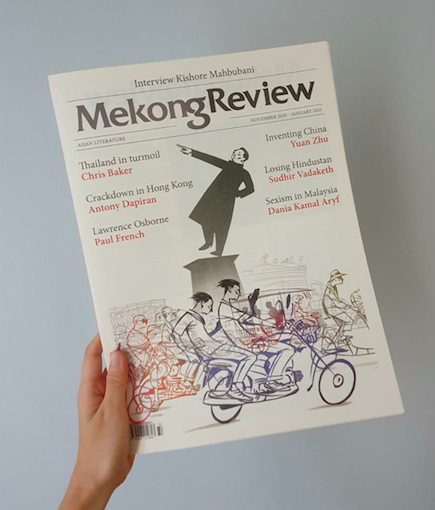
1. Finally, it feels safe to announce that the latest @MekongReview is out! You may recall that we had trouble printing the magazine in HK last time. Well, that effort has been superseded. Getting this one out was even more difficult. It will take a few tweets to tell the tale.
Edited by Anne-Pascale Pouey-Mounou (Sorbonne) and Paul Smith (Leiden), “Ronsard and Du Bartas in Early Modern Europe” is the first book-length volume to explore the transnational reception histories of both poets in conjunction with each other https://t.co/JSq0hfjGrn
Congratulations to Dr Mark Wormald and Pembroke College Cambridge @pembroke1347 for this wonderful acquisition recording the friendship of Hughes, Heaney and artist Barrie Cooke. A stunning addition to the College’s Ted Hughes collection.
https://t.co/qbm70pPpX4
Trivium journal from Chandernagore College ed. @GoswamiNiranjan. 'Lit. in English from pre-and-post Indep. India, Chldrn's Lit. in English and Bengali, American Lit., Early Modern English and French Lit., and Women's History' and more. First five issues: https://t.co/KOuPAaleUB
My release of early modern women with the @ODNB is out today. 13 new entries ranging from Anne Herbert [nee Parr] to Jane Hogarth, with noblewomen, merchants, a publisher, travelers, a miniaturist, folk song collectors, vowesses, a poet, and a murderer. Thanks to the authors!
Article based on research I carried out years back for Sharon Achinstein finally out and open access on why Milton's bible quotations are so inaccurate: https://t.co/XKHRYulSDb
"We need to acknowledge mountaineering as a profoundly social pursuit…. We need to understand where someone is starting from if we really want to understand what the road to the summit for them is like." Listen to the Alpinist podcast interview with Amrita Dhar here.
@FeinsteinKen@earlymodernjohn Good question. Of the top of my head, those ones are: Robert Nicolson (who @jes1003 has written about recently), pass, and R. Hyther. But I'm mostly just following the back of Snyder's Oxford edition. Do email if you want to discuss more.
@FeinsteinKen@earlymodernjohn Do you have particular ones in mind? The book is unsurprisingly Du Bartas-specific but I do e.g. note that the translation 'Little Bartas' is not from DB but the poet-bishop Pierre Duval.
Watch the @Cambridge_Uni film of our Pop-Up World of Languages:
https://t.co/mywEQ2RTlG
We are the Grafton Centre all this week @thegraftoncambs Languages are fun and easier than you think! @meits_owri@ahrcpress
DBs' works meet an 'urgent need to understand more about literary activity...across the social spectrum and by more than one gender, and to be more outward-looking in understanding how English writers responded to...neighbouring nations'.
Autumn, finally: https://t.co/5mbWij1IFK