Next week at GMU’s weekly Workshop in Philosophy, Politics and Economics Joe Salerno will discuss his new book on Rothbard and the making of an Austrian economist. Rothbard played a huge role in my own education and subsequent direction of teaching and research … https://t.co/1632uGYSVc
The Use of Knowledge is considered by the profession one of the top 20 articles ever published in the AER in first 100 years of its existence; Mises’s contributions to methodology, monetary theory and business cycle and comparative economic systems are debate vigorously not only in his lifetime but in the 50+ years since his death. Of course, not as widely discussed let alone accepted, but they are not ignored as the efforts to close doors hoped to achieve. My statement is actually rather modest, not triumphalist.
Read this closely. The effort to close elite doors for Austrian economists has been significant part of the scientific history of this tradition starting at University of Vienna itself. But ideas win out in the end. Mises was Distinguished Fellow of AEA; Hayek Nobel; Machlup editor of AER; Morgenstern at Princeton, etc. But you cannot tell the story of the history of Austrian economics without taking into account this effort to block and asking why the scientific contributions were so vigorously denied.
#HarvardEconomics In 1935 the Harvard economics department was able to offer Gottfried Haberler a five-year appointment. The support material has been transcribed. However, John Maynard Keynes cast some serious shade. https://t.co/wpQHhnZ1xn
Fact check for yourself. Just do so please. Then read Don Boudreaux and Phil Gramm’s expose of the 7 myths that distort economic understanding, The Triumph of Economic Freedom. It’s high time some reason and facts enter into the emotive discourse of our age on the right and the left.
One of the things that has made me most optimist over the last decade is the obvious demand among students for deep reading and serious conversation. At Mercatus my colleague @vstorr created an set of educational programs for advanced students as well as beginning starting in HS. This year alone we had for the advanced group 4,500 applications for 250 spots! (Yes, you read those numbers right) Students from the finest universities in Europe and US are applying to read Adam Smith and JS Mill, and FA Hayek and James Buchanan in depth and engage in serious conversation with scholars and fellow students. These participants have gone on to write books and articles , become professors at major universities and elite liberal arts colleges, public intellectuals and policy makers. This generation isn’t swallowed up by TikTok, Instagram, etc. There still is a demand for deep reading of classic texts and serious discussion on the foundational issues these texts raise.
"We live in an age of maximum information but minimum reflection."
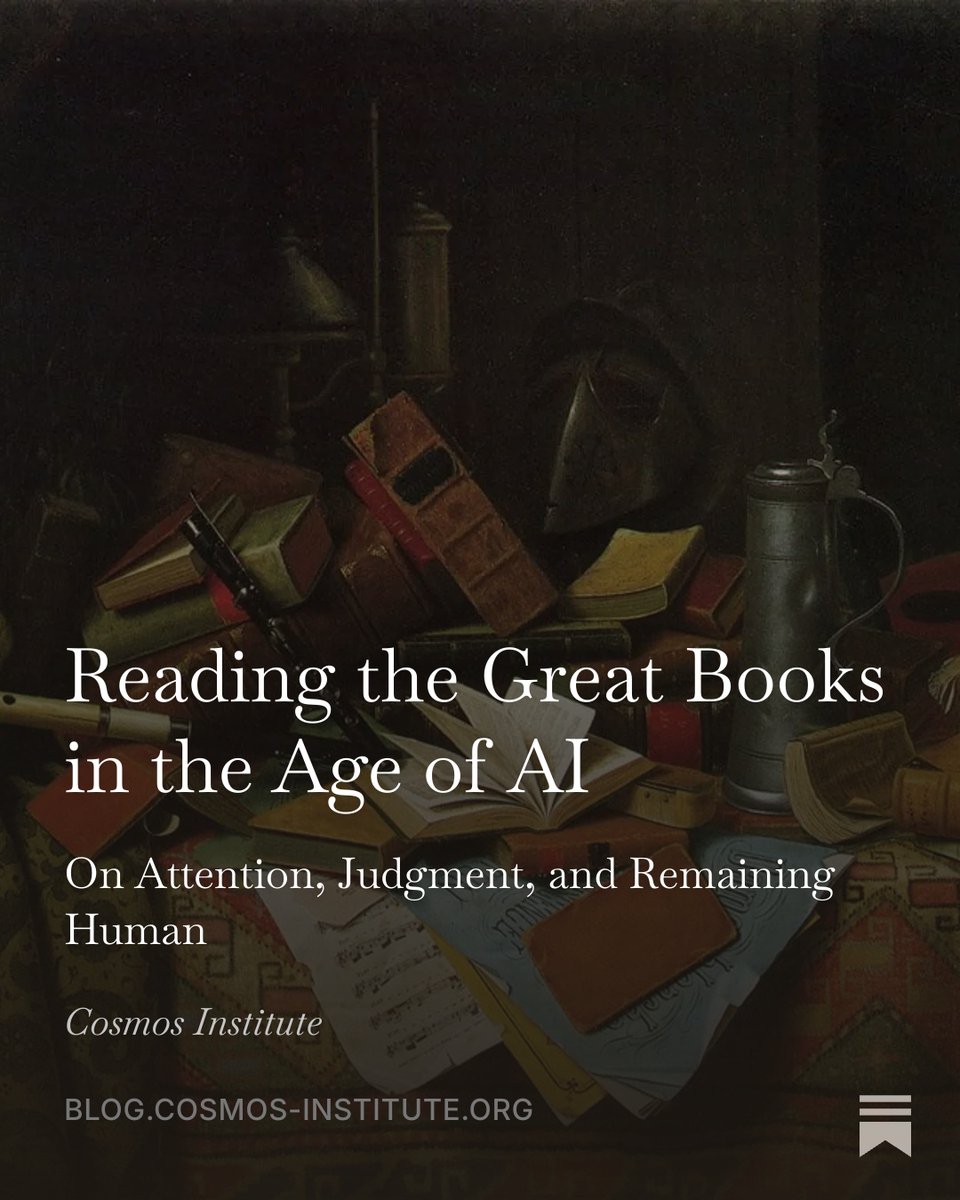
New guest essay from Devin Stauffer, Professor of Government at @UTAustin and Cosmos Founding Fellow on why reading the Great Books is more urgent than ever.
https://t.co/dZOwzJuZYf
Deirdre McCloskey has a forthcoming book — Equality of Permission (Chicago) — that all liberals should read. I think it is no exaggeration to say that this work alongside Bill Easterly’s Violent Saviors and Barry Weingast’s forthcoming book on Adam Smith are the most important social scientific works in recent times to put liberty at the center of the analysis. Here is a great conversation from a decade ago between Don Boudreaux and McCloskey on the Bourgeoise trilogy.
https://t.co/dATlg0u5rG
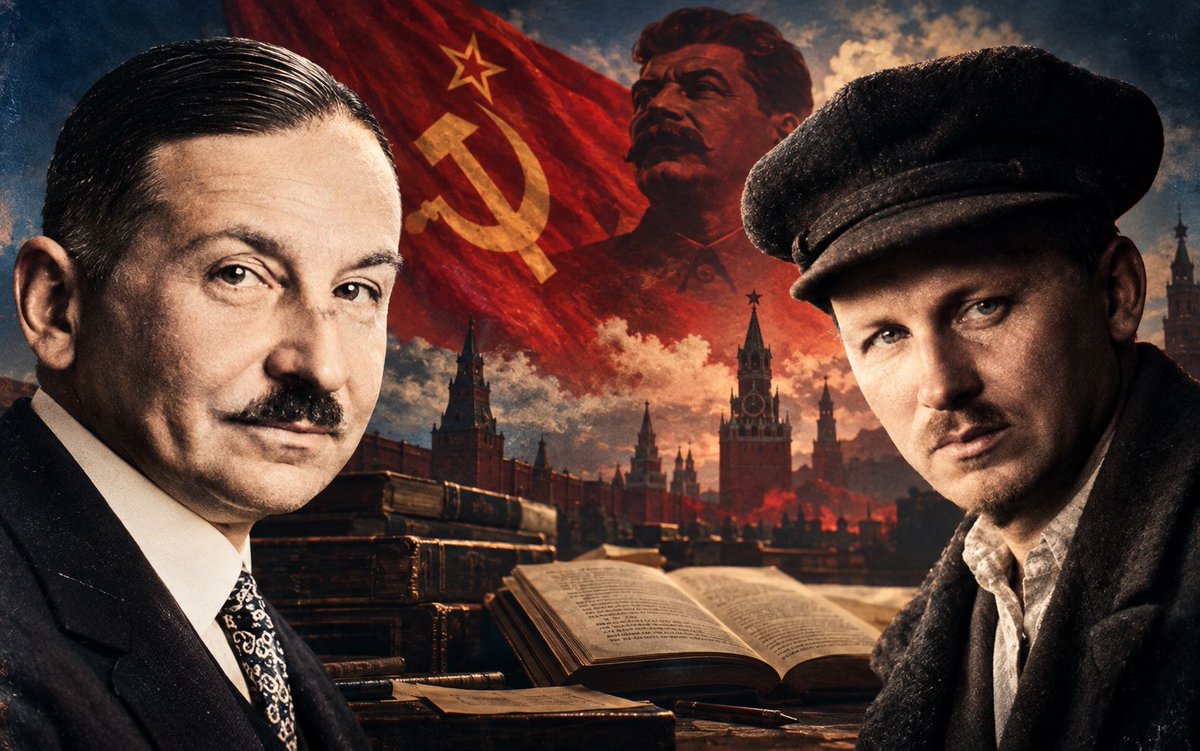
In 1925, the Soviet Union's leading economist admitted in print that Ludwig von Mises was right about socialism.
Thirteen years later, the regime he helped build shot him.🧵
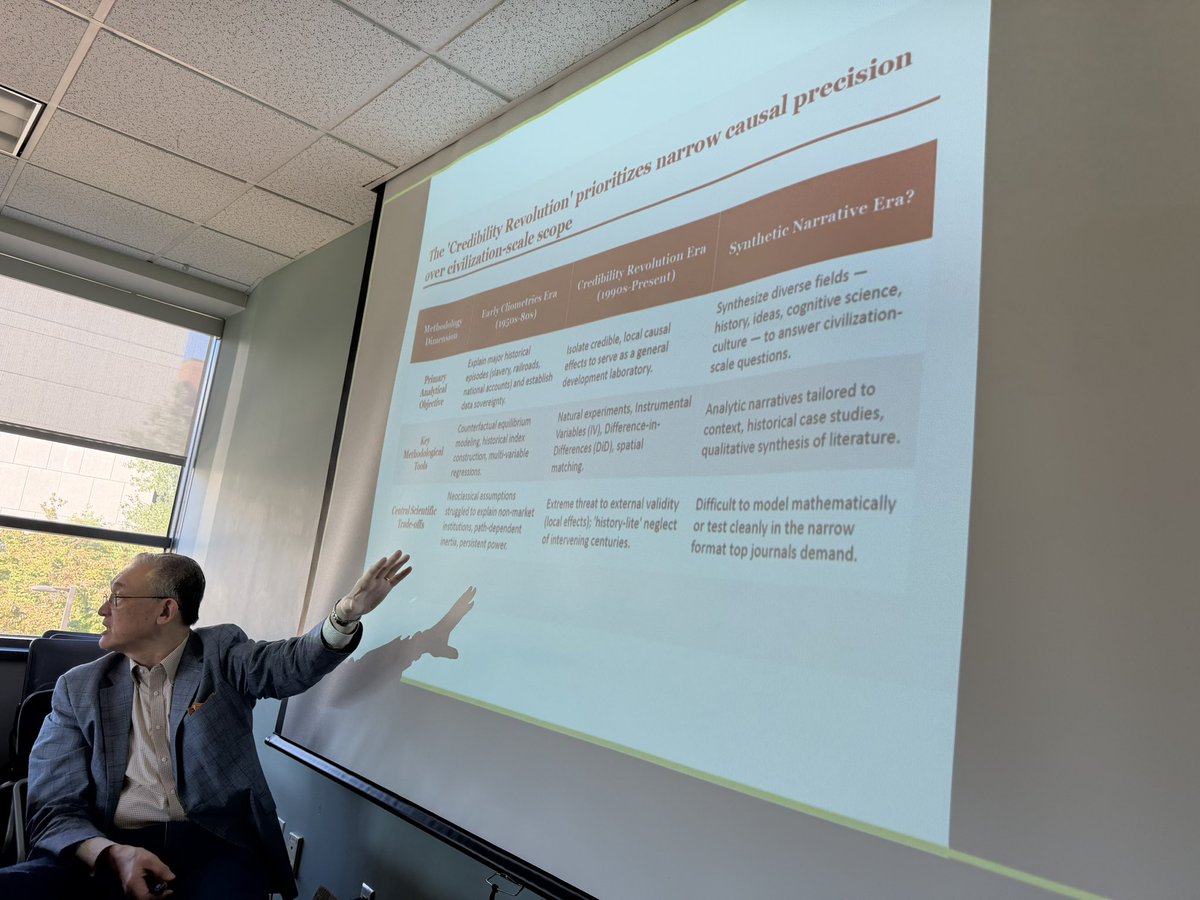
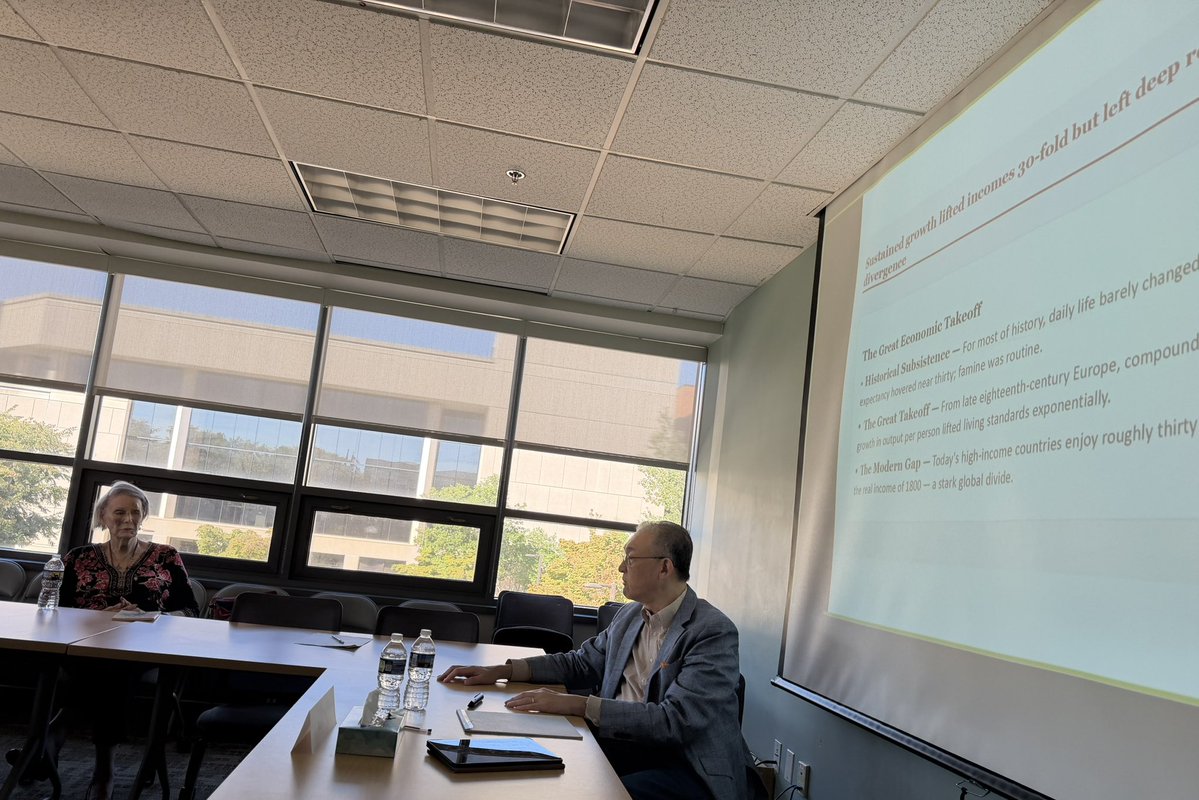
Sometime you just have an econ history sort of day … John Nye discussing his ‘History of Modern Economic History’ and Deirdre McCloskey engaging in productive talk with John on this history she played such a critical role in making. Note on second slide Nye’s invoking of analytic narrative … my preferred approach despite the professional road blocks.
Worth watching and reading the relevant chapter… Free To Choose 1980 - Vol. 07 Who Protects the Consumer? - Full Video https://t.co/7KAWchvOIK via @YouTube
On World War 2 bombing strategy:
"Some of the bombing experts said, 'Let us pick certain topics and destroy specific capital,' and the Knightians said, 'Oh, no, all capital in time is substitutable. Bomb anything; you're bombing capital …'"
-Armen A. Alchian (1978)
Ok, need to think about that conceptual distinction, I prefer to think of unified theory and the link between micro and macro being the theory of economic forces AT work as Alchian put it. I tend to focus not on the Monetarist Counter Revolution but the Counter Revolution captured in property rights econ, law and econ, public choice, and market process theory.
Why misunderstanding of science? I am curious. Yeager has great paper on the Keynesian Diversion; Buchanan discusses the fiscal consequences of Keynes; Hayek the monetary consequences. Ok so Chap 12. keynesianism is about the agony of choice and subjectivity of expectations, but is there a relative price economics in his narrative of econ crises? Arthur Marget’s Theory of Prices pointed in a different direction that was swept away in the Keynesian Avalanche. How do we dig through the wreckage and salvage? Seems to me science progresses not only through tombstones but in salvaging expeditions.
As John McEnroe was famously said ‘You Can’t Be Serious’ … come on George, writing a bad book that sells because it fit a cultural zeitgeist is not the same as writing a great book in economics. The General Theory derailed progress in economic theory by shifting away from price theoretic explanations of money, capital and employment. You of all people know that!
@TyKeynes is in good company: countless others agree with him that the _General Theory_ is a great book and a far better one than _Human Action_. Some have even read it.
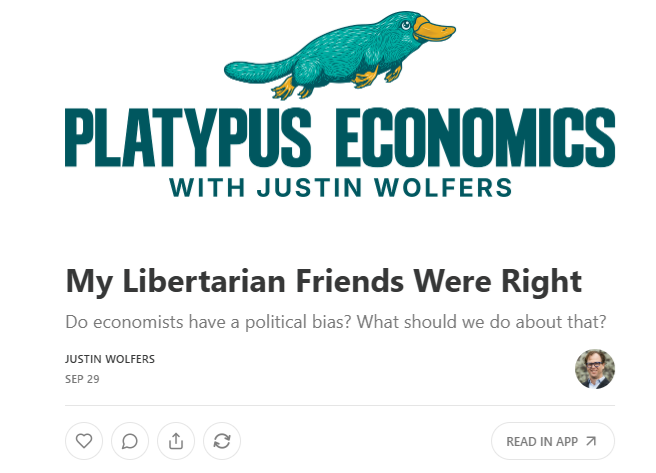
Good essay from @JustinWolfers: "My Libertarian Friends Were Right"
"My libertarian-leaning friends have consistently argued against a powerful federal government in favor of individual freedoms. I had — somewhat naively — never taken their views seriously enough. My friends who worked in government were good people, I reasoned, and surely that’s true more broadly.
"But I’ve had to admit to my libertarian friends that they were right. Concentration of power can be abused. We’re seeing it happen right now."
This fall, the Penn Initiative for the Study of Markets (which I direct) has organized a series of events celebrating the 250th anniversary of the publication of “The Wealth of Nations.”
The flyer provides all details. All events are open to the public. Registration is encouraged for the seminars, but it is required for the special exhibition because physical space at the library is limited. Registered participants will also have the opportunity to receive a free Liberty Fund edition of “The Wealth of Nations.”
Registration form:
https://t.co/YsOmcaxK2p
This should be an interesting occasion to learn more about a fundamental book in the history of economic thought.