This is f*ckin awesome.
A Stanford team pairs JEV with Claude Code to sort 75 billion data points every 11 minutes.
JEV runs a cheap first pass on everything. Claude only gets the hard cases.
Faster, cheaper, way less compute burned.
8.86 seconds…🤯
The 100m record has fallen once again.
It started at 9.39 seconds on the opening night, dropped to 9.32, and now Tiangong has clocked an incredible 8.86 seconds in the first semi-final heat.
Sub-9 seconds.
And the final is still to come.
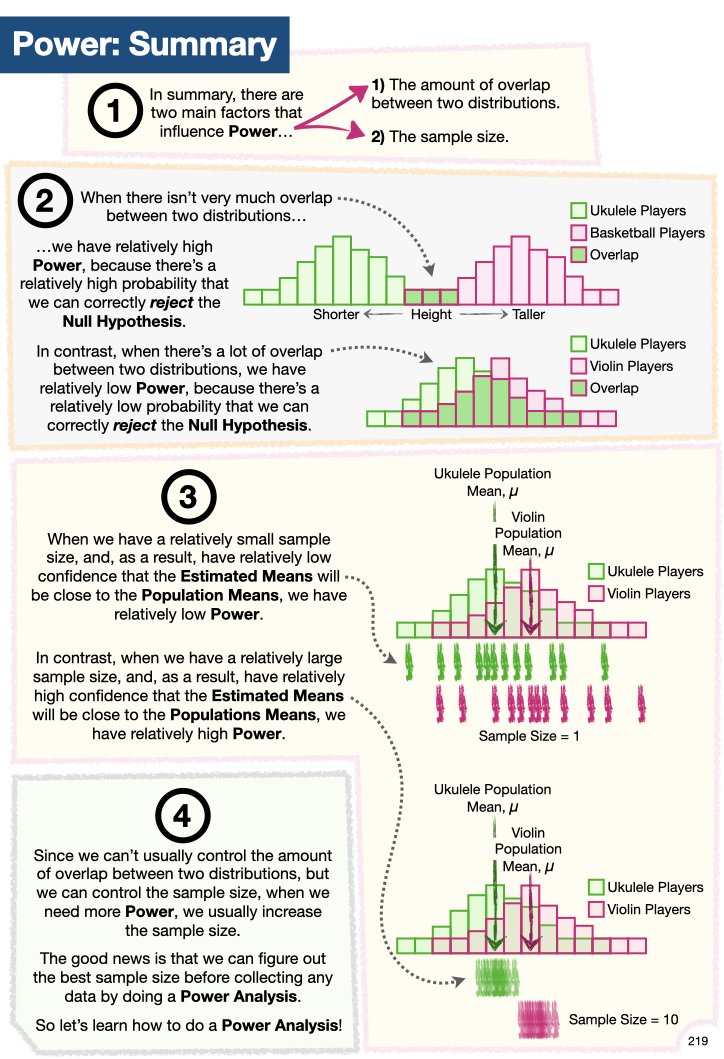
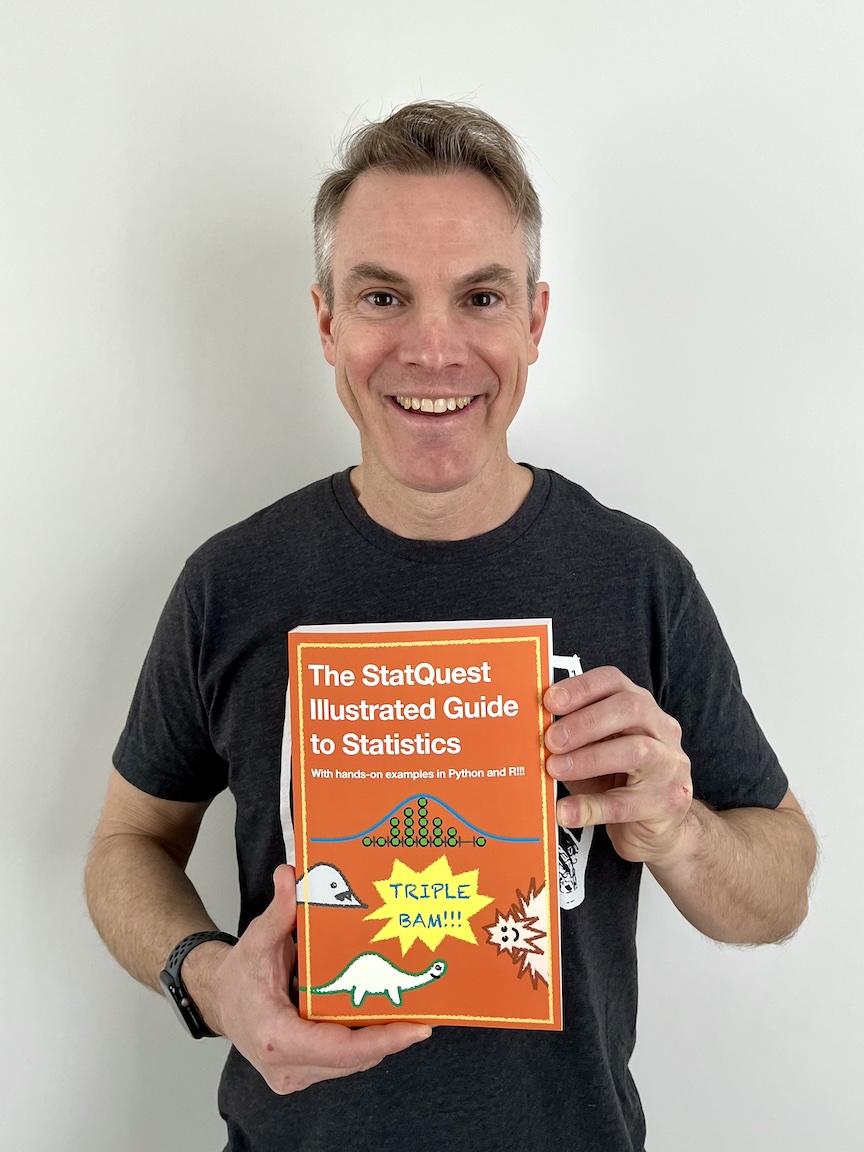
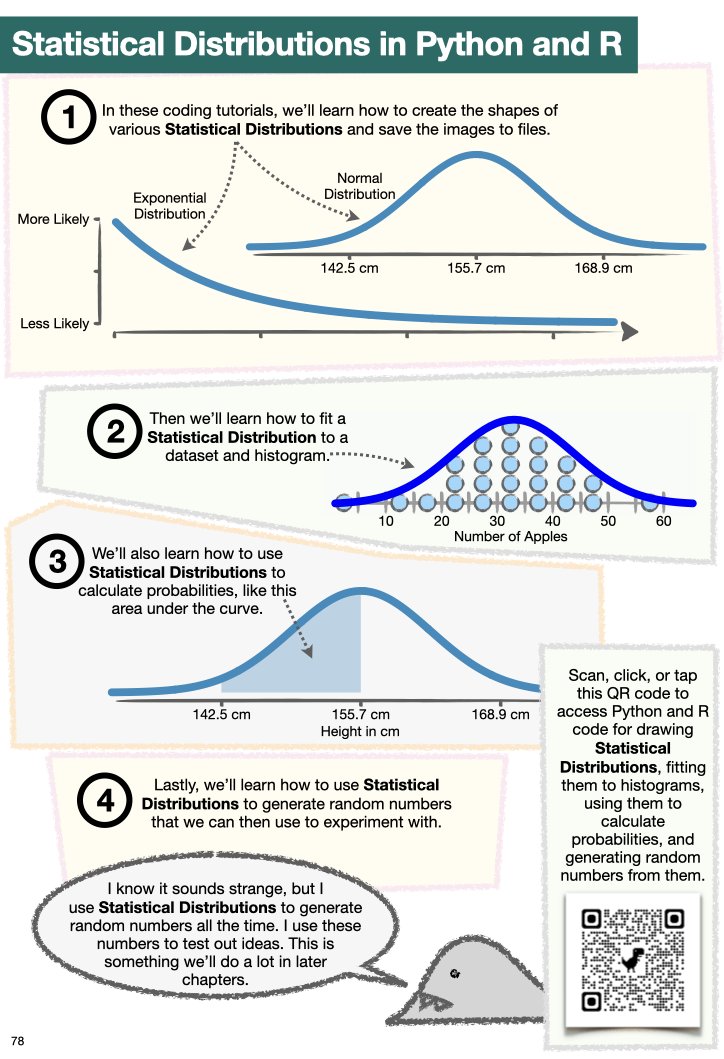
The wait is over!!! The StatQuest Illustrated Guide to Statistics is here! TRIPLE BAM!!!
Amazon: https://t.co/GCPaT8DOwN
PDF: https://t.co/s5CMDUxMzf
India Pre-Order: https://t.co/IlVdJL3NlU
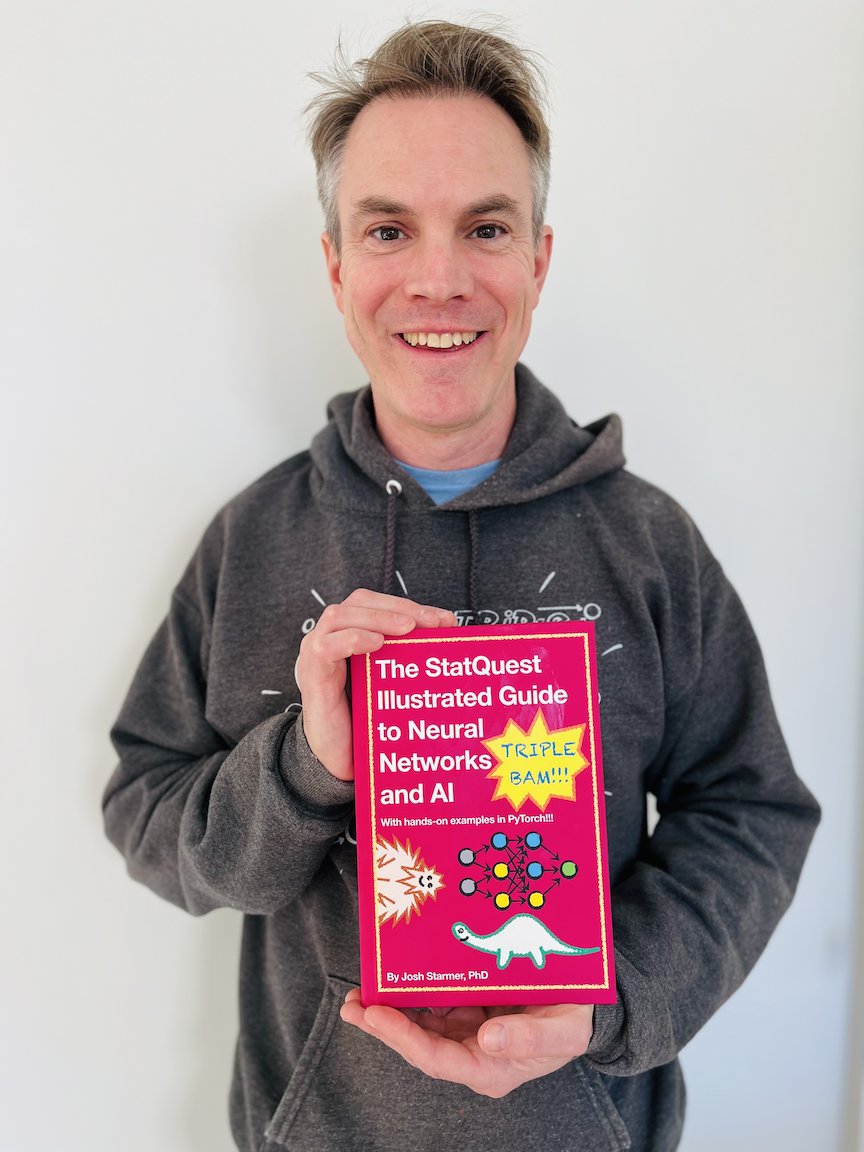
The StatQuest Illustrated Guide To Neural Networks and AI: With hands-on examples in PyTorch is here!!! Get your copy!!! TRIPLE BAM!!!
PDF - https://t.co/bAPfBTzpV9
Paperback - https://t.co/lAeVF8lNKv
Hardcover - https://t.co/21gGn8mND9
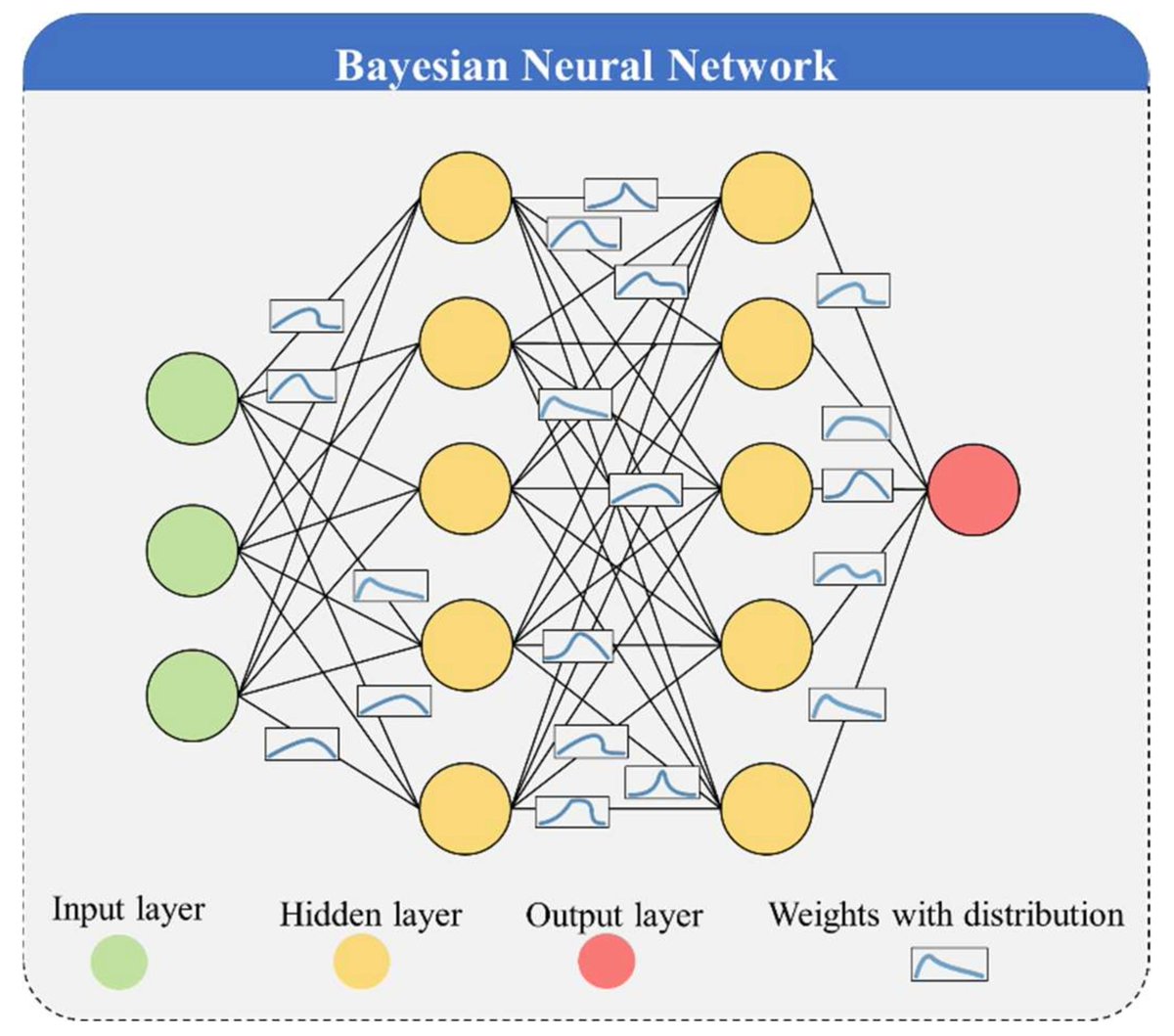
Bayesian Neural Networks - Capturing The Uncertainty Of The Real World
Life is inherently uncertain and probabilistic, and Bayesian Neural Networks (BNNs) are designed to capture and quantify that uncertainty
In many real-world applications, it's not sufficient to make a prediction; you also want to know how confident you are in that prediction. For example, in healthcare, a model that says a patient has a 70% chance of having a particular disease is less informative than one that says there's a 70% chance but with a margin of error of ±10%.
BNNs are less prone to overfitting, can be more data efficient as they can incorporate priors, and can output a probability distribution for each prediction. Knowing the uncertainty or the probability that a particular prediction is accurate builds trust and confidence with business users.
So how do Bayesian Networks Work?
The core idea is to replace the fixed weights w in a standard neural network with probability distributions P(w)
The famous equation from Bayes is:
P(A|B)=P(B|A)P(A) / P(B)
In the context of BNNs:
A is the model parameters (weights and biases).
B is the observed data.
P(A∣B) is the posterior distribution of the parameters given the data.
P(B∣A) is the likelihood of the data given the parameters.
P(A) is the prior distribution of the parameters.
P(B) is the evidence, often considered a normalizing constant.
Prior Distribution - You start with a prior distribution P(w) over the weights. This represents your initial belief about the model parameters before seeing any data.
Posterior Distribution - The goal is to compute the posterior distribution P(w∣D), which represents the updated belief about the weights after observing data D. Bayes theorem along with some approximation methods are used to calculate this distribution.
Prediction - Finally, to make a prediction for a new input x, you average over all possible weights, weighted by their posterior probabilities:
P(y∣x,D)=∫P(y∣x,w)×P(w∣D)dw
This gives you not just a point estimate but a distribution over the possible outputs y, capturing the model's uncertainty.
For example: BNNs can be applied to a dataset of MRI scans where each scan is labeled either "Cancer" or "No Cancer." The goal is to build a model that can predict these labels for new, unlabeled MRI scans. A BNN can say, "I'm 80% sure this is cancer, but there's a 20% chance it's not," which is valuable information for clinicians.
BNNs are useful wherever uncertainty quantification is important including disease diagnosis, risk assessment, energy forecasting, and real-time decision-making
🎆 It's here! The complete index of every short 2-5min video in the Making Friends with #MachineLearning course:
https://t.co/cLCG1MQOdg
Happy learning!
(If you enjoyed the #MFML course, please help it reach others who'd benefit from it. 💝)
Now in a single video: Making Friends with #MachineLearning (#MFML)
Enjoy all 6.5 hours of Google’s legendary #AI course designed to enlighten AI beginners, grow technology leaders, inform better citizens, and amuse AI experts!
Don't forget to RT 💖
https://t.co/n9HxUVpX3d
Mr Laurence Liew, spoke at the Biz Tech Forum, organized by ITE and Hong Kong Institute of Vocational Education (IVE), Vocational Training Council (VTC).
Find out more: https://t.co/CuX6kaGoZW
Improve your AI literacy and proficiency: https://t.co/938rcW183D #growourowntimber#ai
The 3rd edition of my book is being printed, it will be released within the next few weeks! 📙🦎🎉😁
You can preorder it at https://t.co/GCauRzdrEI
You can play with the notebooks at https://t.co/B1nNM4C9Bs
It covers many new topics, including diffusion models:
🤗 AutoNLP now supports summarization!!! Check it out here: https://t.co/HyjPGE2eEA. Building a SOTA custom summarization model is now as easy as pie! 🚀🚀🚀
✅ Binary Classification
✅ Multi-Class Classification
✅ Entity Extraction
✅ Summarization
pip install autonlp
The messenger RNA technology that developed successful covid-19 vaccines could transform medicine. Next up: sickle cell, HIV, and malaria. https://t.co/HECOIDzMhg