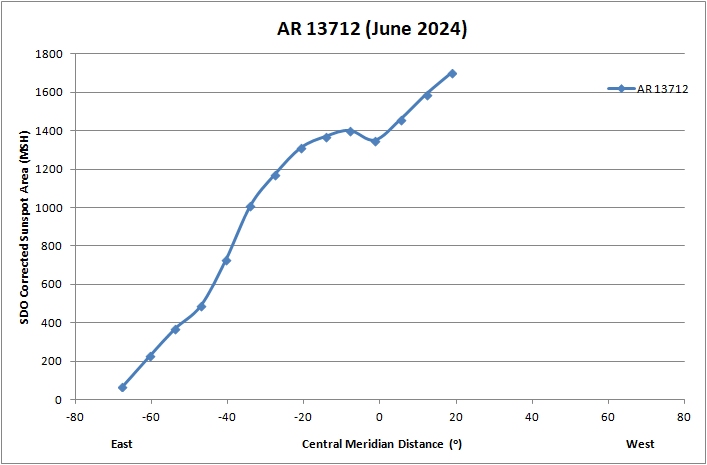
New high latitude sunspot appeared from about 1st May 21 UT to 2nd May 09 UT at N46/123. It was even a penumbral sunspot. A bit late in the cycle for a C25 sunspot? @NWSSWPC@SNHWx@SolarMonitororg@swmcintosh @
@JAtanackov That's a pity. The more people who use the correct 5 digits version the better. Professionals use 5 digits in their papers so why not on X? It is bad enough that the SWPC areas are inaccurate by up to 50% - a problem know for many many years.
I see @NWSSWPC that the sunspot areas in your daily SRS reports are still too small by a factor of up to 2. This has been known about for many years. The easy solution is to move from using analogue templates to a per pixel digital approach. Why not fix it?
Behind the scenes at the 150-Foot Solar Tower: our Technical Services volunteers recently completed critical maintenance to help preserve this 124-year-old solar research instrument for the future. Video: Rob Skinner
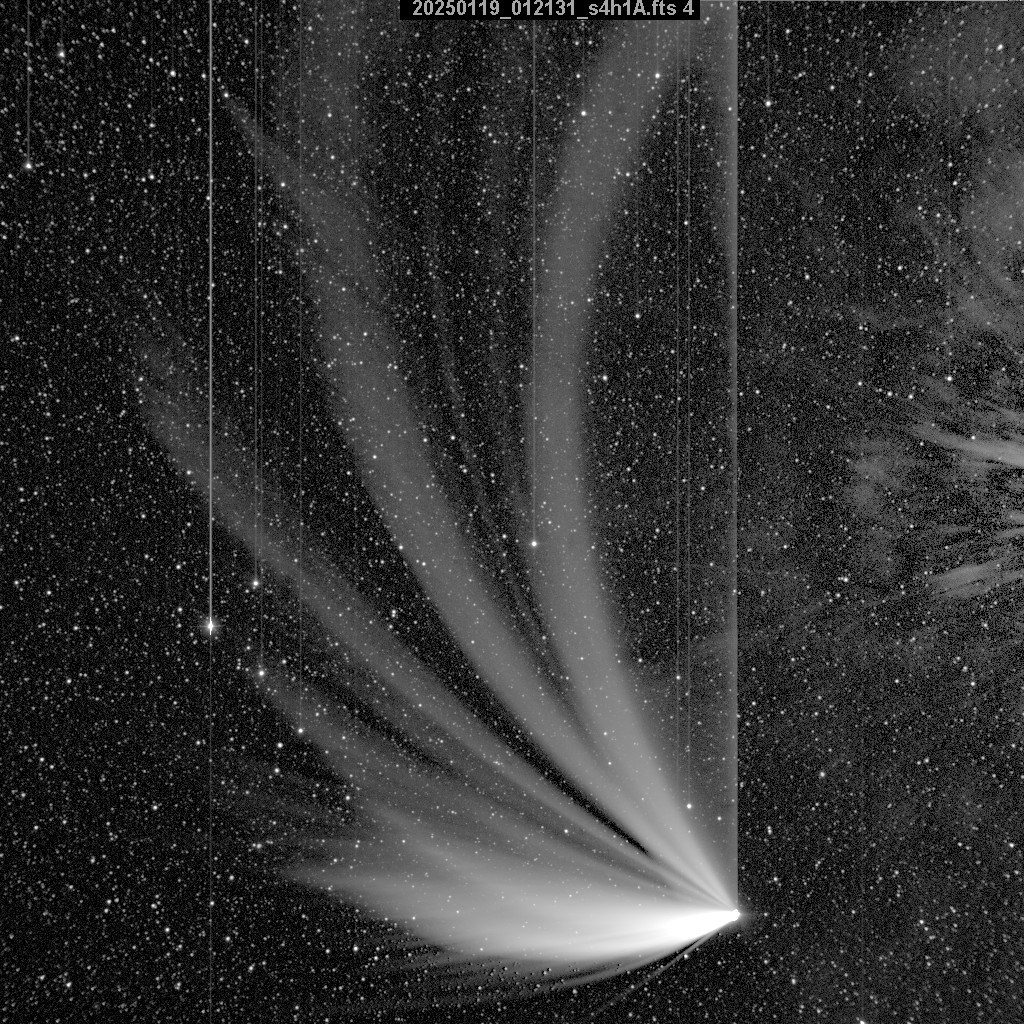
Just to be clear - given recent drivel on line - Comet 3I/Atlas is a comet, made of carbon dioxide and water ices and bits of other stuff. It is entirely natural in origin, its orbit is as expected and it will whizz around the sun and then disappear off into the galaxy again. If it ever encounters another inhabited solar system in the far future I hope the living things there are more sensible than us and enjoy it for what it is - a visitor from elsewhere in the galaxy - a pristine lump of rock and ices which formed around a distant, maybe long-dead star billions of years ago and many light years away, just passing through. Isn’t that wonderful enough?
@JimWindweather@JAtanackov Yes should be 10486. This area is from the DPD catalogue, the official successor to the Greenwich catalogue. Unfortunately USAF/NOAA areas are unreliable and up to 50% too small - see this paper https://t.co/KDMNVBXUNg
@JimWindweather@JAtanackov The large group of Jan 1938 had a peak area of 3630 millionths on the 21st (Greenwich group 12673) while AR 10464 was slightly smaller at a peak area of 3390 millions on 1st Nov 2003.
Was this the most visually-appealing solar flare of 2024? According to my social media engagement it was, as my most liked/viewed post ever. It's a fantastic solar flare example from September 1st, with striking flare loops, flare fan, and supra-arcade downflows.
#astronomy
@JAtanackov @eelcodoornbos See photo of ERS-1 orbits from a ESA publication from 1989! Basically ERS-1 was in a 785km orbit and it is still in orbit. ERS-2, an almost identical copy, decayed recently.
@RyanJFrench@swmcintosh And what about the inaccurate sunspot areas still being used in the NOAA/USAF daily SRS reports - see https://t.co/KDMNVBXmXI from 4 years ago? It isn't that difficult to get it right. @drkstrong@swmcintosh@NWSSWPC
Our sun today, I’m using the @zwoastro#Seestar at the moment , to bring a bit of the fun back to my #astronomy and #Astrophotography . Can’t quite face getting my big rig up and running yet. Either way look at all those spots….#aurora on the way ?! 🤞🏻