INCONVENIENT UNTRUTHS by @BjornLomborg: Two decades ago, Al Gore’s movie An Inconvenient Truth thrust climate change into the spotlight. With dramatic imagery and dire warnings, it transformed a niche concern into a front-page crisis, influencing rich country leaders and elite jet-setters, and inspiring a generation of activists.
Twenty years affords distance to reflect not just on the film’s impact, but also its accuracy. Many of Gore’s most alarming predictions have failed to materialise, while the policy response it helped inspire has proved extraordinarily flawed.
The documentary’s core narrative was that climate change was driving worsening disasters, such as floods, droughts, storms and wildfires.
Yet, over the past century, even as the global population quadrupled, deaths from these climate-related disasters have plummeted. In the 1920s, an average of nearly half a million people died annually from such events. Today, that number is under 10,000 – a decline of over 97 per cent. Richer, smarter societies have made us dramatically safer, proving adaptation and resilience work far better than alarmism suggests.
The film claimed we would see more frequent and stronger hurricanes because of climate change, with the movie poster showing a hurricane coming out of a smokestack. Global data actually show a slight decline in hurricane frequency and their total energy since comprehensive satellite data started in 1980.
Wildfires follow a similar pattern. Globally, annual burned area has decreased by more than 25 per cent over the past quarter century, according to Nasa data. While recent years have seen large US fires because of forest mismanagement, the 1930s Dust Bowl era was five times worse. Fires are down on all other continents.
The film famously highlighted polar bears as a symbol of impending ecological collapse, suggesting they were drowning due to melting ice. In reality, polar bear populations have more than doubled from around 12,000 in the 1960s to over 26,000 today. The primary historical threat was hunting, not climate change, and Gore’s claims, now 20 years later, have simply turned out to be wrong.
Gore’s call to action spurred expensive emissions reductions. Yet, fossil fuel consumption keeps increasing because cheap and reliable power drives growth, and global emissions have set records nearly every year since 2006.
We’re nowhere near a green transition. In 2006, the world generated 82.6 per cent of its total energy (not just electricity) from fossil fuels, according to the International Energy Agency. In 2023, the last year with global data, the share was 81.1 per cent. On this slow trend, it will take over six centuries to get to zero.
Yet, Gore’s message was explicit: climate solutions were already at hand, needing only political will from rich nations to implement them swiftly and decisively.
Wind and solar usage is rising rapidly
China's electricity generation📷Fossil fuelsFossil fuelsWind and solarWind and solarOther clean energyOther clean energy6KTerawatthours4K2K020152020June2025Source: Ember
Although solar and wind technologies have become dramatically cheaper, they remain fundamentally intermittent: they generate power only when the sun shines or the wind blows. Modern societies require reliable, 24/7 electricity, which necessitates substantial backup systems – typically fossil-fuel plants. People think batteries can play a large role, but almost everywhere, we have battery back-up just for less than tens of minutes.
The result is that we end up paying twice: once for renewables and again for reliable backup infrastructure. The film’s wilfully naïve framing ignored these engineering and economic realities.
The cost of climate policies since 2006 has exceeded $16tn globally. In the US alone, the Inflation Reduction Act poured hundreds of billions into green tech. Yet, emissions climb because the rich world’s efforts ignore the reality that developing nations require cheap and reliable energy to reduce poverty.
Global CO2 emissions are still accelerating
Carbon dioxide growth rate in parts per million📷3.5ppm32.521.51.51990200020102020Source: World Meteorological Organization
Rich nations only account for 13 per cent of the remaining 21st-century emissions. Emerging giants such as China, India and Africa drive the rest. Even if all rich countries achieved net zero by mid-century, it would avert less than 0.1°C of warming by 2100, using the UN climate panel’s own model.
Gore’s apocalyptic climate predictions have aged poorly. While climate change is a real problem, the best evidence suggests warming might shave 2-3 per cent off global GDP by 2100. Context matters: the UN estimates that by century’s end, the average person will be 450 per cent as rich as today. With climate impacts, they would “only” be 435 per cent as rich. We’re talking about being vastly better off, just slightly less so.
The film’s biggest blunder was to fail to make the case for smarter approaches. We need to prioritise innovation. Green tech research and development – to achieve better batteries, advanced nuclear, fusion – could slash costs to make clean energy cheaper than fossil fuels. Adaptation saves lives cheaply: sea walls, drought-resistant crops, early warnings. And development lifts billions out of poverty, building resilience.
Two decades on, An Inconvenient Truth reminds us that panic is a terrible policy adviser. Focusing on cost-effective solutions – innovation, adaptation, development – will save trillions and do much more to help both people and the climate.
How many people holding public office in the United States can go where Ben goes in this discussion? Not many. It's not just that he's exceptionally gifted intellectually; it's that he has taken the trouble to read and think deeply about our nation's principles and institutions.
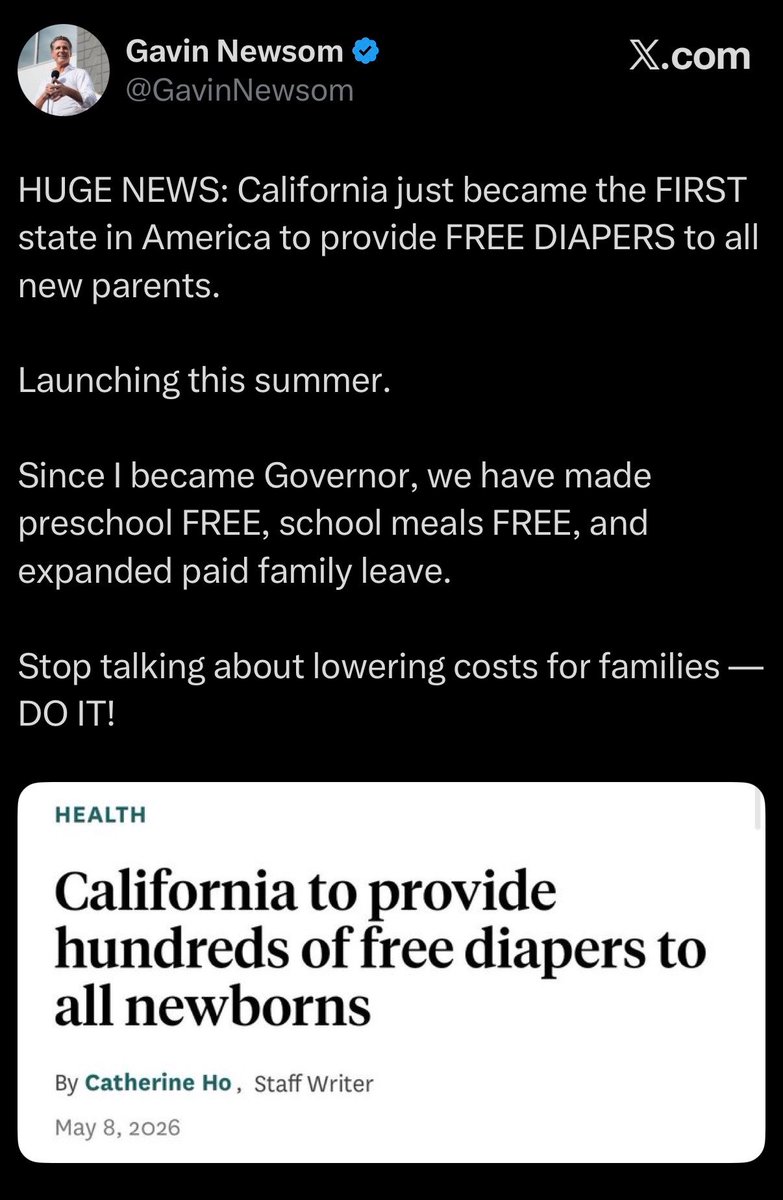
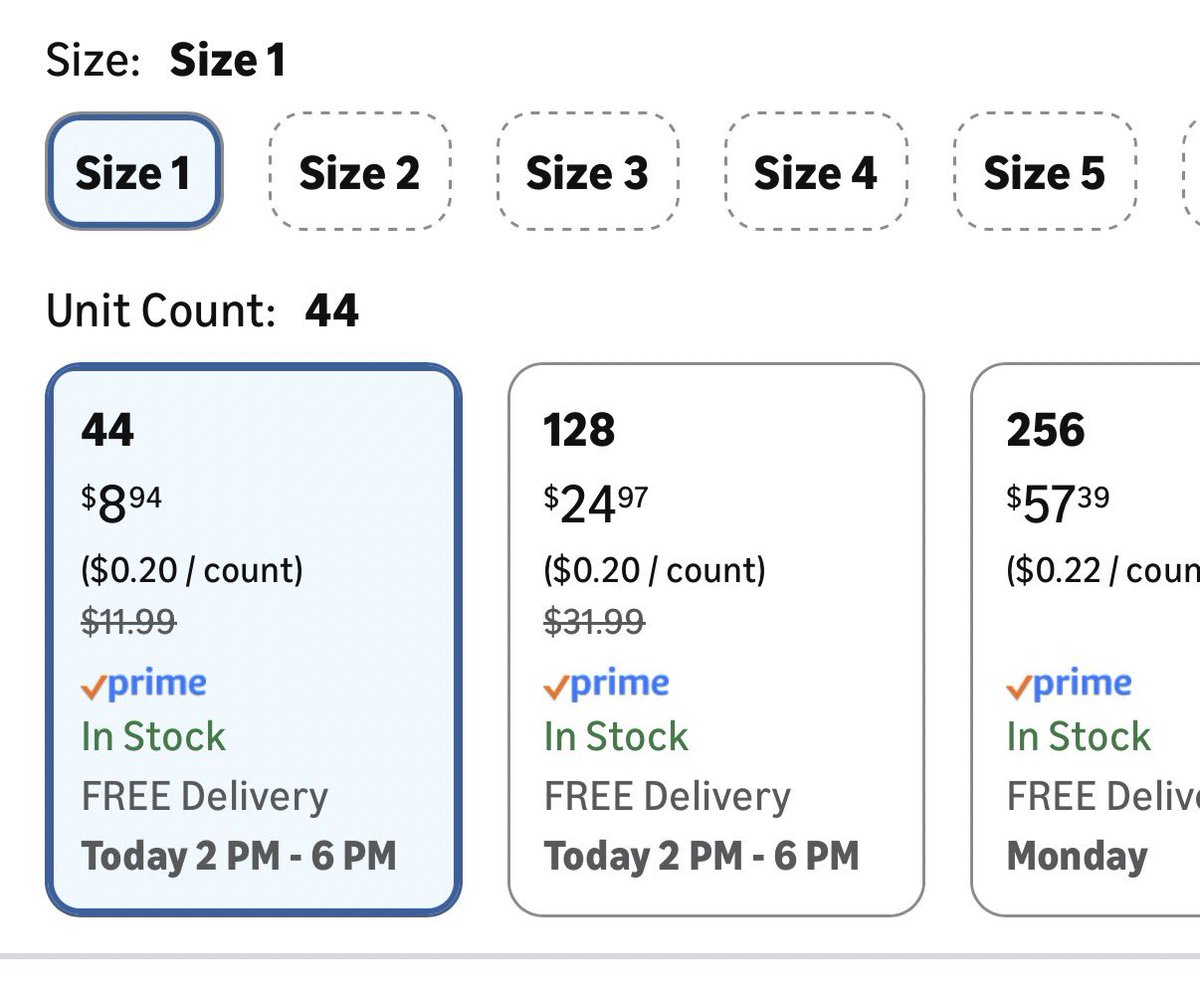
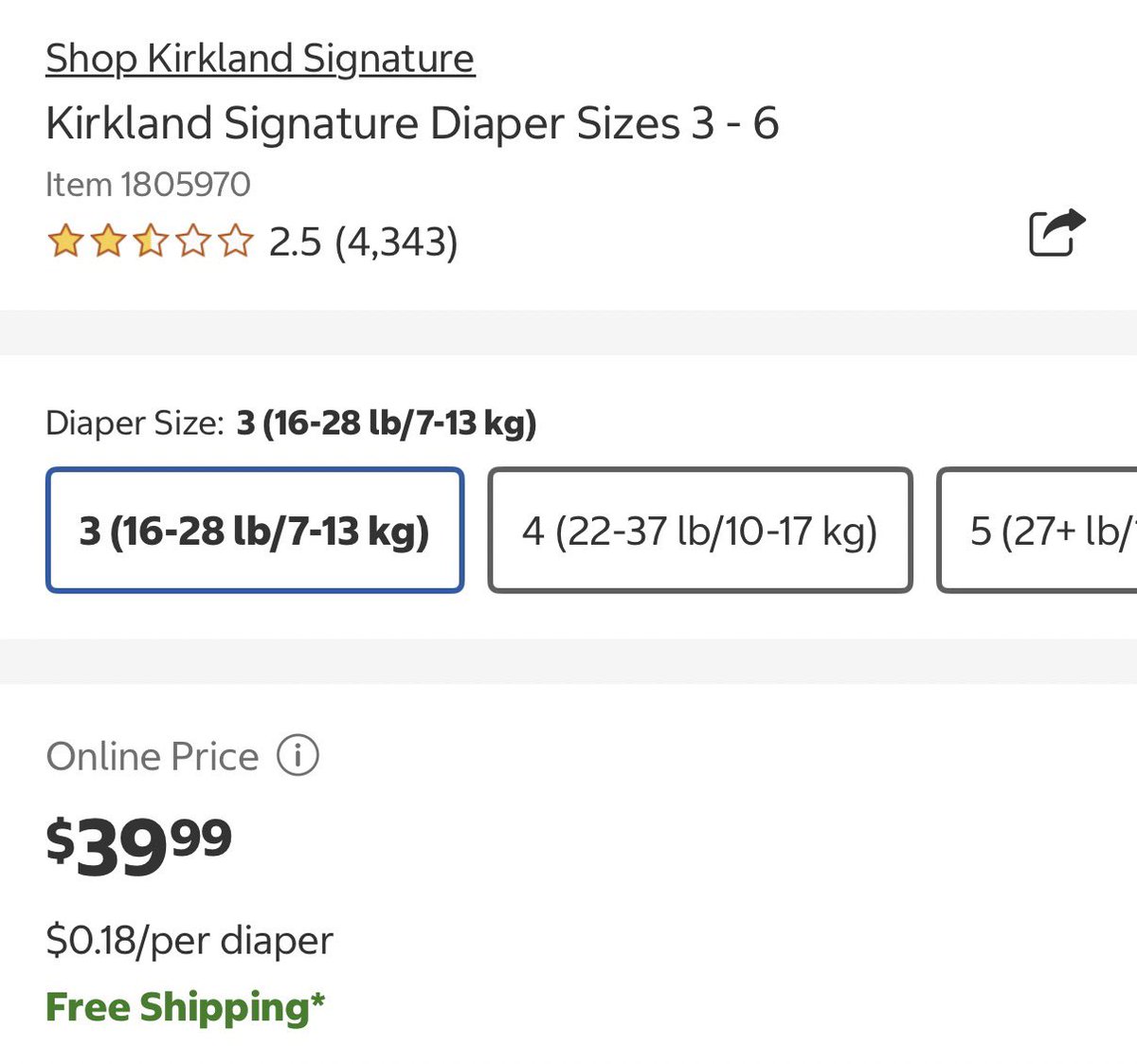
Gavin Newsom’s “free” diaper program is more than twice the cost of Amazon and Costco. Not to mention the free home delivery.
But I suppose just handing out gift cards would make it hard to funnel money into Gavin Newsom‘s wife’s board BFF’s non profit.
There's a contest underway over the future of this country.
One side says prosperity is something to be handed out by the state and that the only thing standing between Americans and the lives they want is someone else's wealth, someone else's success, someone else's refusal to give up the goods.
The other says that prosperity is something built by free citizens in safe neighborhoods under institutions that treat them as responsible adults.
One vision is increasingly pervasive in our cities, in our universities, in our political culture.
The other is what Manhattan Institute exists to defend.
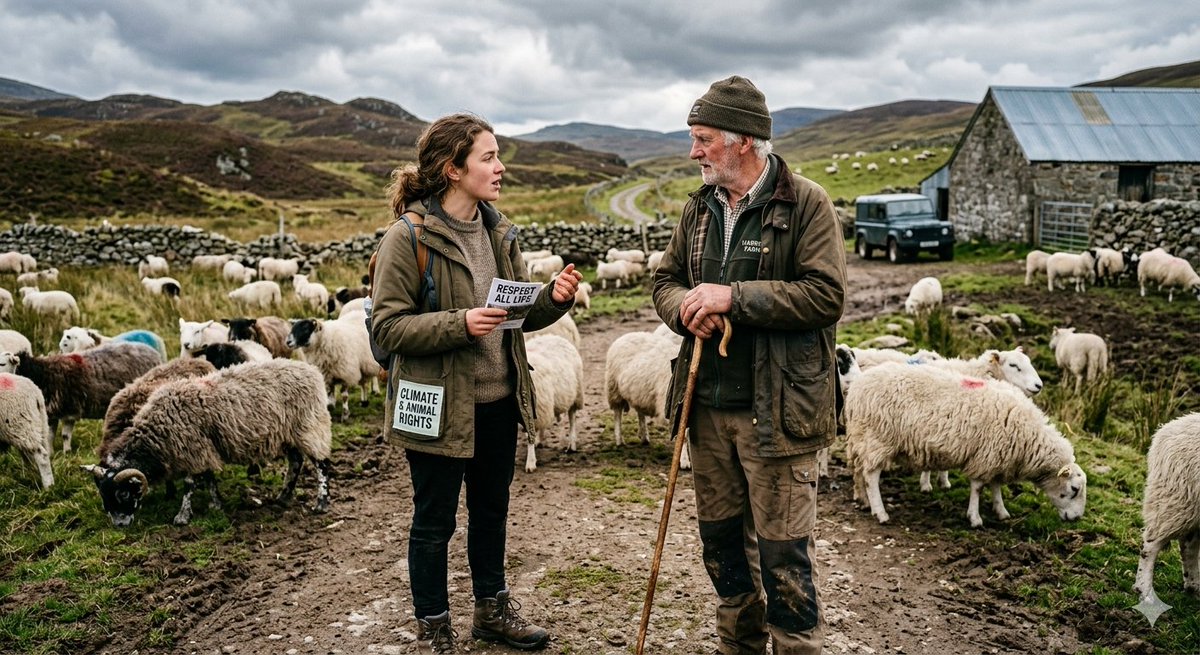
Activist: "You can graze sheep underneath solar panels. It's called agrivoltaics."
Farmer: "I've read the brochures."
Activist: "Best of both worlds."
Farmer: "The panels shade the sward. Productive species die back. What grows is what tolerates shade and compaction. Sheep won't finish on it."
Activist: "But the trials show it works."
Farmer: "The trials run three years and measure ewe presence. Not lamb growth rates. Not finishing weights. Not what the soil looks like in year fifteen."
Activist: "It's still better than nothing."
Farmer: "It's a 30% stocking rate, a steel frame I can't plough around, panel-cleaning chemicals running into the watercourse, and a 40-year lease I can't break."
Activist: "But you're getting energy AND lamb."
Farmer: "I'm getting a third of the lamb, a maintenance contract, and a field my grandson can't farm."
Activist: "You're being negative."
Farmer: "I'm watching a thousand-year-old way of feeding people get traded for twenty-five years of subsidised electricity. Negative would be the polite word."
The biggest wealth transfer in American history isn’t happening on Wall Street. It’s happening on U-Hauls.
Over $2 trillion in income fled high-tax blue states for low-tax red states in just 11 years.
And blue states’ solution? Raise taxes again.
Looking forward to the implementation of quicker/less bureaucratic path to first in human and only one pivotal study required for approval. Question is when these changes will happen and will all FDA offices/divisions support.
NYT's @NickKristof to fellow progressives: "A black kid in Mississippi is 2.5 times as likely to be proficient in math & reading by 4th grade as a black kid in Calif. Do we need to look a little bit less at what the Trump Admin is doing ... & look a little more in the mirror?"
I understand opposition to Trump. But I'll never understand how opposition to Trump entails support for tyrannical regimes in Venezuela, Iran, and Cuba. It is a baffling phenomenon.
Joe Kent testified before the Senate one year ago that Iran and its terror proxies threatened U.S. servicemembers in the Middle East. He said it would be an honor to return to the fight against terrorism, and he pledged to lead with integrity and accountability. The virulent anti-Semitism of his resignation letter makes it clear that Mr. Kent is incapable of upholding these pledges, and those who mistake its baseless and incendiary conspiracies for brave truth-telling are only fooling themselves. Isolationists and anti-Semites have no place in either party, and certainly do not deserve places of trust in our government.
Really disappointed with product support @eightsleep I’ve been given the runaround for over two weeks. They did a test and determined the pod is defective and now won’t honor their warranty terms. I’ve recommended the product to countless friends and now sorry I did. 😡
I don't talk about this a ton, but now feels right... I used to be a journalist covering human trafficking on the US Mexico border.
I’ve crossed the border illegally covering migrants and cartels countless times. I saw young women in the morgue after they were raped and brutalized in Juarez.
I saw a man get stabbed by a coyote in the gut, a terrible way to die. I know the sound a human makes when it happens. I knew a kid Neftali Fuentes who crossed 100+ times helping others not die in the desert across Arizona.
I’ve seen cartel wars play out on the streets of Juarez, bodies dangling from over passes. I’ve been held at gun and knife point before. Those who say open borders are humane have no idea what they’re talking about. You live in an air-conditioned suburb that might as well be an ivory tower. Do not tell me what we do now is virtuous; it is cowardice.
I hope we do what is right, which is secure the border, stop criminals from profiting off of misery, and help support local governments to be better, like El Salvador. I know borders and the separation of humans feels sad and impossible. But if you don’t understand this, yet you’ve never been to the border, never spoken to border patrol, never seen the many crosses of raped women in the desert, maybe get down off your high horse and try to understand the US can only have sanctuary cities... if we can keep the place a sanctuary.
My Venezuela experience as head of trading in the region for Cargill.
Cargill was/is the leading producer of critical staple ingredients such as flour, pasta, vegetable oil, and rice in VZ. I am not saying I agree with grabbing the dictator, but I did have a front row seat to the damage a kleptocracy did to innocent people.
1. The government took over our "minute rice" facility at gunpoint because we were "gouging" the nation's poor. The government was never able to run the plant. It never ran again. It was returned years later with no equipment inside
2. There are 1000's of generals in the army. They are each given a slice of the economy to loot. The large number of generals made it difficult to organize a coup against the regime.
3. The government opened grocery stores and sold staples below the cost we sold them to the government. In theory they used petro oil money to lower grocery prices. Our regular grocery outlets were forced out of business. When the government demanded we sell them products below cost we simply had to shut down. The populous became ever more dependent on the government handouts. (PS this is the mayor of New York City's proposal.
4. Dollars- We needed dollars to go buy raw materials like wheat from places like the US and Canada. The government would periodically allocate us some dollars that could only be spent for raw materials and freight. Eventually only the local companies that can and would pay bribes got dollar allocations. We had several facilities closed for lack of raw material
5. My employees liked working for Cargill. The office was an armed compound with access to a gym, high speed internet, global communications, and a weekly box of basic staples. Cargill provided a safe and secure environment if only for the working hours.
6. Employees became very close to others inside the apartment building. Going out on the street with a desperate population was not advisable.
7. I needed wood pallets for feed. We tried to export wood pallets to swap for grain. We refused to pay the bribes it would take to export the pallets
8. I once tried to set up a closed loop wheat planting to flour mill supply chain. A. They came and stole all the seed wheat for food. When we tried to ship in seed wheat in containers via US donors there was no way to get it out of the port without it being stolen
9. Livestock- Our feed business completely collapsed. Even if you could raise a pig, you couldn't defend it from being stolen. People with guns were hungry.
10. Employees- In the end my highly skilled team alone with other highly educated people chose to leave. Cargill often found jobs for them in other Latin countries. The regime was more than happy to see the well-educated leave the country. Setting these employees up with high quality stable jobs after fleeing remains one of the best things I ever did in my career. No one remembers millions in trading earnings.
This is a short list. In my opinion the first money spent needs to happen now and it needs to be food. The US is already on the clock. The current regime does not care if it starves the population. The orgy of theft will actually accelerate if they believe their days are numbered. VZ should be an outstanding customer of US grown ag products. Rice, bread wheat, veg oil ect. Feed the people first.
Jeff Kazin
Former head trading Cargill
This is so frustrating. It's getting quite hard not to conclude that the environmental movement is primarily an anti-Western vehicle given its silence about arguably the biggest environmental destruction currently being wrought on the planet.
The massive - and potentially irreversible - oceanic destruction by China's huge trawler fleet has been known for about a decade now, but still no one seems to care.
The history of funding and influence links between Russia, China, and some Western environmental groups is well known:
See @UnHerd article here: https://t.co/Pq4KMRmM0m
The longer our most visible environmental activists and orgs stay silent about the behavior of the Chinese trawler fleet, the more we know what their game plan was all along.
Also I seem to recall celebs like Leo DiCaprio caring very much about marine conservation and protection of biodiversity. Sadly, he won’t say shit about this because he would never make another movie again.
He would sooner denigrate Western consumption habits on stage at the Oscars than criticize or use his foundation to do anything about the Chinese destroying swathes of marine ecosystems and overfishing.
True - Orzag is always thoughtful - but the admin he was part of chose not to prioritize “total cost of care” or value over access. This is how we got here
The National Guard shooter's story is not simple. He was admitted to the U.S. by the Biden administration through a hurried, temporary parole program that had a documented history of helping Afghan immigrants on the terrorism watch list. Yet, he was granted asylum here by the Trump administration. He wasn’t just an “Afghan national,” but someone who worked with the CIA and whose brother was a military leader in an elite CIA squad. According to Kristi Noem, he was radicalized in the U.S. after immigrating, which would both absolve the Biden administration of negligence and bolster the argument that allowing these migrants in is risky, even when they clear the vetting process.
It's true that this is the fourth publicly reported Afghan national to be arrested for an act or potential act of terrorism since just last October. And it's true this shooter is one of just 190,000 Afghan refugees who resettled here after the fall of Kabul in 2021.
One high-profile shooter in 190,000 people isn’t exactly an endemic issue. For comparison, that’s roughly the same odds of being born with 11 fingers or toes, or of being struck by lightning (if you spend a lot of time outside). There are zero instances of mass shootings in the U.S. committed by Afghan-born people in the last 10 years, and just six Afghan-born perpetrators of attacks on U.S. soil in the last 50 years — 2.5% of all foreign-born attackers.
What's nuts to me is that some aspects of this story are heart-breakingly typical. The shooter was a 20-something male. He had military experience. He was prone to long periods of isolation and was struggling financially. Community members expressed concern about him prior to the act of violence. All of this is common for mass shooters in America.
We have broken immigration programs we can fix, but painting this as a vetting issue, an Afghan immigrant issue, a Biden or Trump issue; it's all just way too basic. We still don't even know his motive or how he got his gun. Until we recognize that violent events like this aren't singularly attached to your pet issue, we're never going to get anywhere.