Hackers leave infected USB drives in parking lots.
It's called USB baiting.
The attack works like this:
A threat actor drops 5 or 10 USB drives in a parking lot, lobby, or bathroom near a target company. sometimes labeled "Layoff List" or "Top Secret" sometimes no label at all. just a drive on the ground.
Someone picks it up. takes it inside. plugs it in.
The drive auto-runs. installs a keylogger, backdoor, or ransomware loader. The attacker is now inside the network.
How well does it work?
IBM ran a test. dropped 200 USBs across various locations. 98% were picked up. of those, 45% were plugged in within minutes.
Almost half within minutes.
The most famous real-world example: Stuxnet, the malware that physically destroyed Iran's nuclear centrifuges. It got inside an air-gapped facility via a USB drive dropped in a parking lot.
Never plug in a USB you didn't buy yourself. ever. regardless of where you found it. regardless of what it says on the label.
If you found one hand it to IT don't plug it in just to see what's on it.
Curiosity is the attack vector.
oh YES.
Since the 1980s, Xerox and Canon made a secret deal with the US Secret Service. every color laser printer now embeds invisible yellow dots on every single page it produces. too small to see with the naked eye. they repeat up to 150 times per page so they survive cropping, damage, even shredding.
the dots encode:
— your printer's serial number
— the exact date and time of printing
— the manufacturer
no law requires manufacturers to tell you this. most printer manuals don't mention it. you almost certainly didn't know.
The first use case was counterfeiting. catching people printing fake money. reasonable.
Then, in 2017, Reality Winner printed a classified NSA document and mailed it to journalists. investigators cross-referenced the yellow dots with security footage. she was identified, arrested, and sentenced to 5 years.
because there is no law regulating who can request this information. no warrant requirement. no oversight. the EFF has been saying this since 2004 and nothing has changed.
you can check if your printer does this. the EFF maintains a list: https://t.co/mffS4X92kw
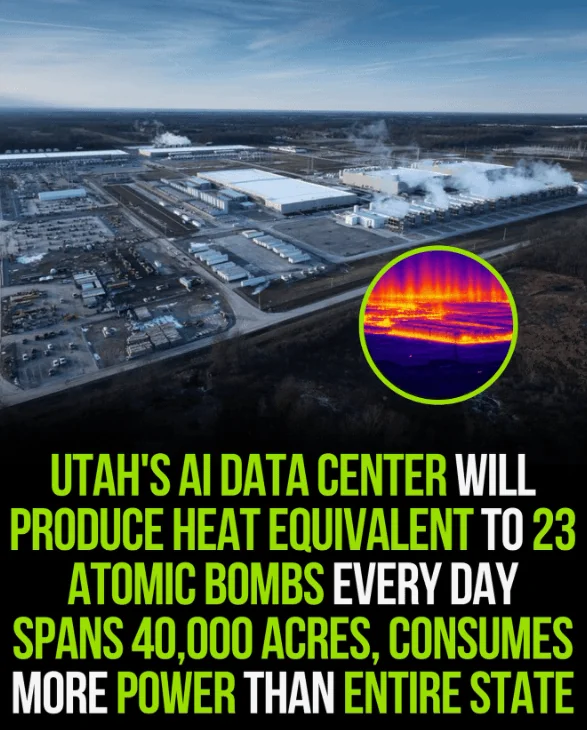
🦔Utah approved a 40,000 acre AI data center that would dump the heat equivalent of 23 atomic bombs into the surrounding valley every single day. Kevin O'Leary's Stratos Project needs 9 gigawatts of power to run, more than double what the entire state currently uses, and it plans to generate all of it on-site by burning natural gas. In a state where the governor has asked residents to pray for rain, the facility would consume somewhere between 4 and 16 billion gallons of water per year.
The state military development authority cut taxes from 6% to 0.5% to land the deal, the county approved it before environmental studies were finished, and when thousands of residents showed up to object, the county started charging $15 per complaint.
My Take
O'Leary has $20 million invested in a project with a $100 billion buildout estimate and zero named tenants. Nobody has publicly committed to renting the compute. He's calling it a national security priority and blaming Chinese interference for the backlash, but none of that answers the obvious question: who is actually paying for this? Strip away the patriotism branding and it looks like a speculative energy play in an AI jacket.
A USU physicist says the waste heat could raise nighttime temperatures in Hansel Valley by 8 to 12 degrees year round. The Great Salt Lake is already drying up. You can support data center buildout and still look at this specific project, in this specific location, approved through this specific process, and think somebody is getting played.
Hedgie🤗
i come back to this clip of Jim Simons every few months.
the man who built the most successful hedge fund in history sharing his guiding principles in life.
2 and a half minutes that will stick with you.
@RealColaBear Ich glaube das ist einfach gesunder Mennschenverstand. Politik sollte im Interesse der Menschen sein und nicht einiger weniger. Die Politiker und Staatsbeamten sollten wieder Staatsdiener sein. Leider habe ich oft den Eindruck, die Politik lebt in einem Paralleluniversum.
@RealColaBear gefühlt überall träge und findet hier keine pragmatischen Lösungen sondern scheint nur Lobbyinteressen durchsetzen zu wollen. Dabei braucht es Lösungen im Interesse des Allgemeinwohles useres Landes. 8/8
@RealColaBear dort weiter ausgebaut werden, wo der Strombedarf ist und den benötigten Strom reduzieren und über Speicher und Bedarfssteuerung findet eine weitere Verbesserung statt. Dann ist es die Planungsaufgabe, Lösungen für den weiteren Bedarf zu finden. Leider ist die Politik wie 7/x
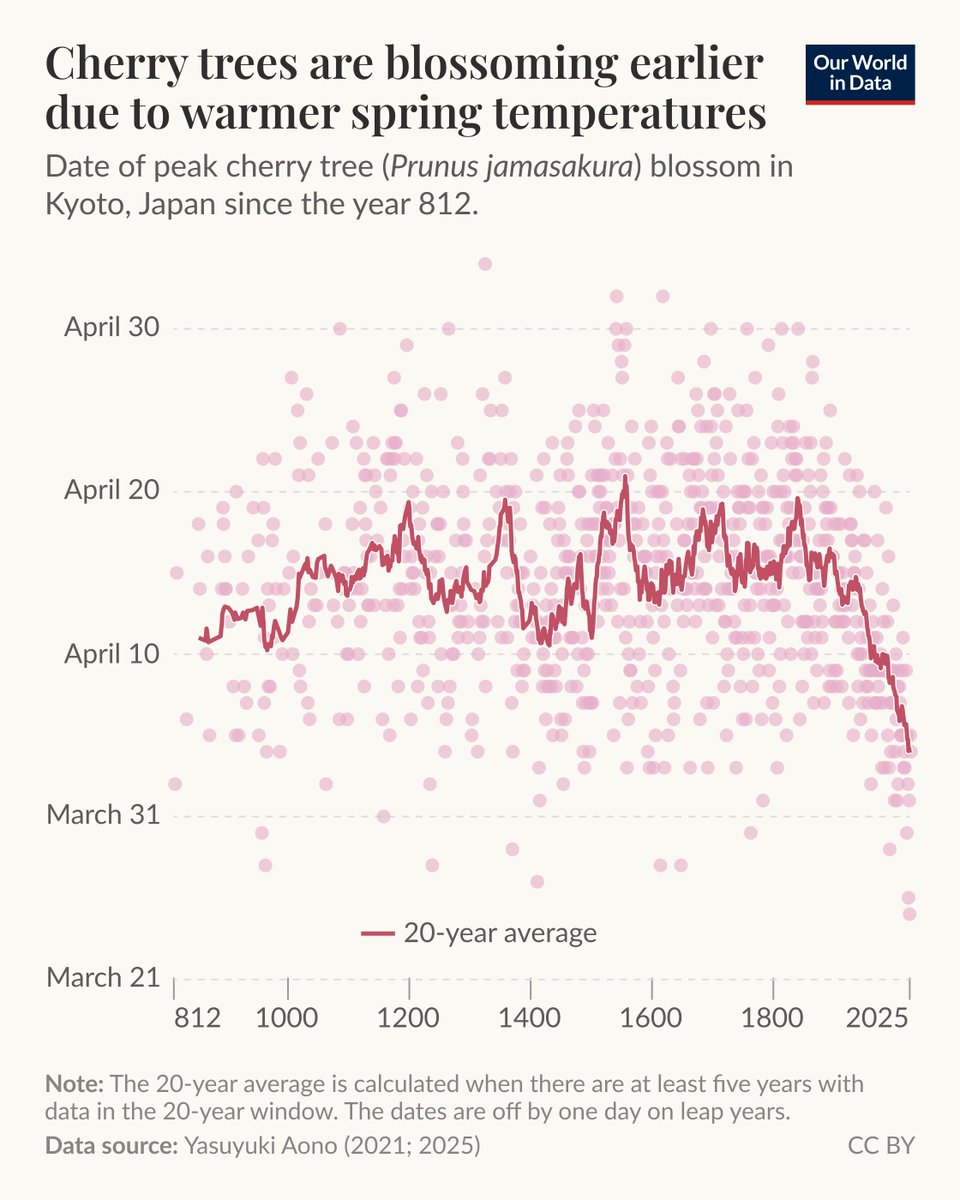
I'm a data scientist @OurWorldinData and I need help from a botanist or someone local to Kyoto, Japan! 🌸
We present one of the world’s longest climate records: 1,200 years of peak cherry blossom dates in Kyoto.
The researcher who maintained it, Professor Yasuyuki Aono, sadly passed away last year.
@thomaseisenhuth@CedricHofmann43 Für viele Photovoltaikanlage mit einem hohen Eigenverbrauchsanteil ist eine Vergütung nicht mehr entscheidend. Man sollte aber eine einfache Vermarktung des Stroms über die Netzbetreiber erfordern und den Marktwert zum Zeitpunkt der Einspeisung bezahlen.
I worked at Epic Games for two years. This is real, and the strategy behind it is smarter than most people realize.
Tim Sweeney has spent nearly two decades buying North Carolina forest land. 50,000+ acres across 15 counties. He’s now one of the largest private landowners in the state. The purchases started in 2008, right after the real estate collapse wiped out developers who had been planning golf resorts and luxury communities on biodiverse wilderness.
Sweeney paid $15 million for Box Creek Wilderness, a 7,000-acre stretch in the Blue Ridge foothills containing 130+ rare and threatened species. Developers had owned 5,000 of those acres before the crash. He bought them for conservation prices when nobody else was bidding.
He runs the acquisitions through an LLC called “130 of Chatham.” He buys the land, holds it for years, then either donates it to the U.S. Fish and Wildlife Service, sells it at a discount to state parks, or hands it to land trusts. In 2021, he donated 7,500 acres in the Roan Highlands to the Southern Appalachian Highlands Conservancy. Largest private land donation in North Carolina history.
The part people miss: he told the News & Observer that since 2021, land got too expensive to keep buying. So he shifted focus to converting his existing 50,000 acres into permanent conservation status. He’s locking the land into legal structures that make development impossible regardless of who owns it in the future.
A billionaire worth roughly $6 billion is spending tens of millions acquiring wilderness specifically during economic downturns, then giving it away or placing it under permanent legal protection. The land will outlast him, Epic Games, and Fortnite.
That’s the part that separates Sweeney from billionaires who write checks to get their name on a building. The building depreciates. The forest compounds.