@RoryStewartUK Thoroughly enjoying it so far. Fascinating account of the clash between the love for what politics can be and the desperation over what it has become... Thanks for writing it!
Excited to share one of our apex studies from our @NCIHTAN center, focused on the transition to metastasis, shedding light transition to #CRC#metastasis. Joint work with @KarunaMDPhD, led by @andrewrmoorman and @elliebenitez11. -->
https://t.co/9mVfnoJtNe
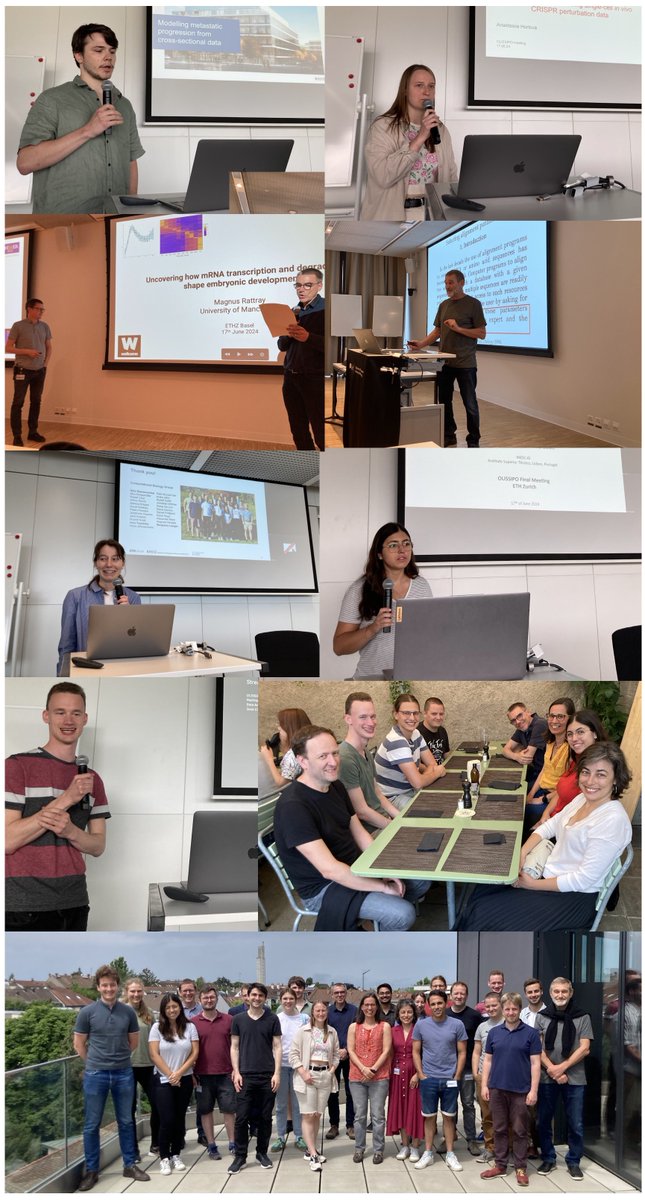
This week all members were together in Basel, @ETH_en, for the final meeting of this amazing project.
That's a wrap of these 3,5 years of training, exchanging, sharing & collaborating!
Thanks to all the students, researchers and research administrators who have crossed our path!
This week all members were together in Basel, @ETH_en, for the final meeting of this amazing project.
That's a wrap of these 3,5 years of training, exchanging, sharing & collaborating!
Thanks to all the students, researchers and research administrators who have crossed our path!
Sigh. The level of profound confusion in the scRNA-seq analysis field keeps surprising me. I've now run into people that, in a discussion about technical artifacts of scRNA-seq, where I claimed there is no evidence for zero inflation, first insist that it does exist, and then 1/n
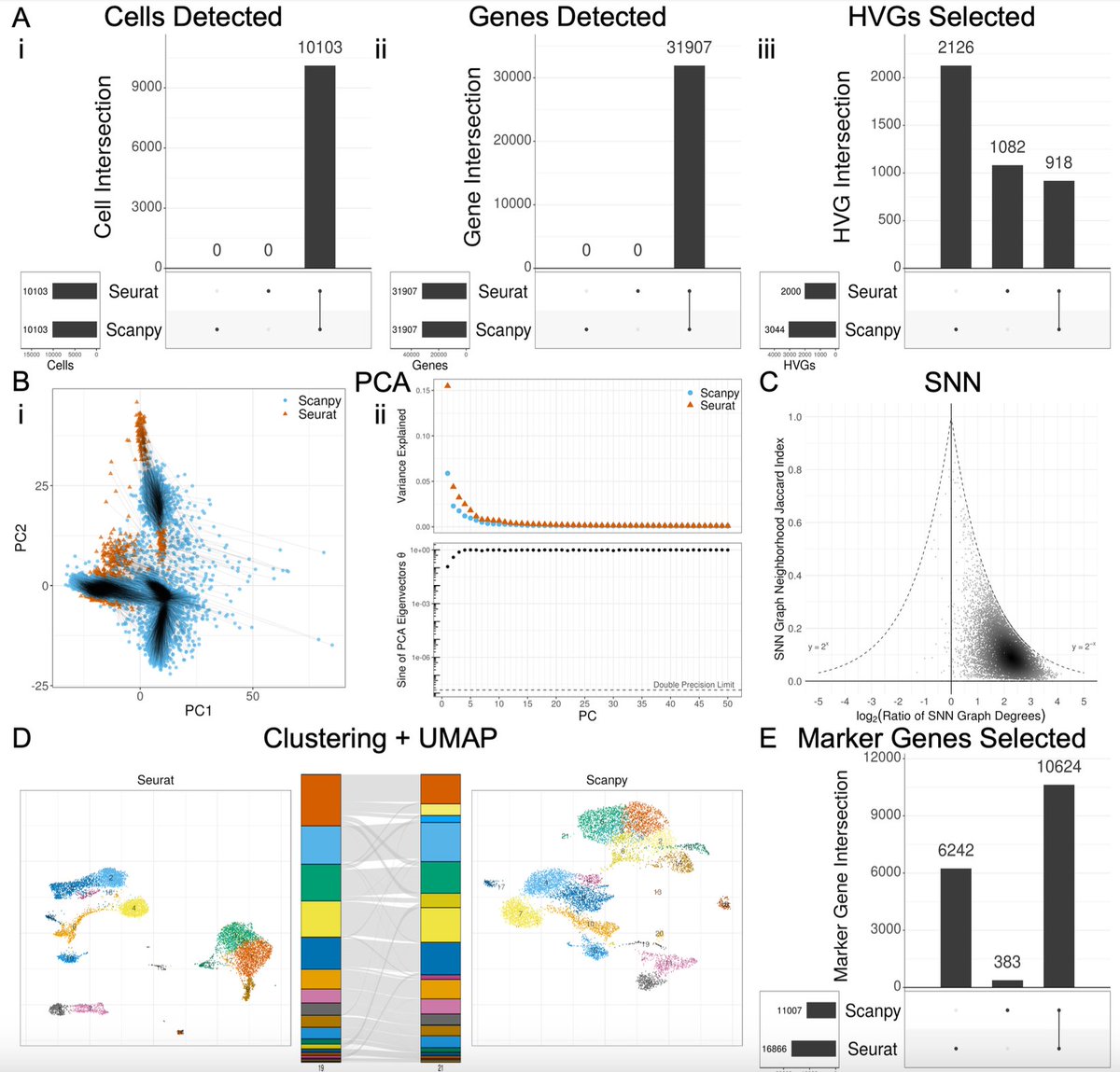
The choice of whether to use Seurat or Scanpy for single-cell RNA-seq analysis typically comes down to a preference of R vs. Python. But do they produce the same results? In https://t.co/rVOiR847CY w/ @Josephmrich et al. we take a close look. The results are 👀 1/🧵
I see we are getting to the stage of the discussion where people are starting to defend UMAP saying it can 'reveal patterns' or 'structure' in the data. Without ever specifying what precisely these patterns/structures represent. This is not surprising because hardly anybody 1/n
Our latest out today in @Nature. We profiled 12 million single cells from mouse embryos spanning gastrulation to birth, defined cell type tree from zygote to birth, and unexpectedly found crazy fast changes within first hour of extrauterine life. OA PDF: https://t.co/7PsCcqaQS8
An interesting approach to hierarchical cell type annotation for single-cell RNA-seq using a multi-level Bayesian factorization model. https://t.co/7Y3Bjw1DRf
I really dislike this race to the bottom: No need to write protocols. No need to write your own introduction section. Just copy somebody else's. Everything is too much apparently.
There are many reasons why being forced to formulate a protocol each time is helpful. 1. It 1/n
Delighted to present our full-length scRNA-seq study on ovarian cancer patients, in collaboration with the University Hospital Basel @labfranz ! https://t.co/I7LnLDd2gr
Can we simultaneously detect isoform-level gene expression, mutations and gene fusions in cancer cells? 1/
Thrilled to see our paper out today
where we use long-read whole-genome sequencing to study SNVs, structural variation and repeats in single cells
https://t.co/Qd05jzC9DG
Many thanks to everyone involved @_adameur, @Jeff_Mold, @jakmic2003, @ngisweden, @scilifelab
In our detection of BA.2.86 in two wastewater samples from Laupen (BE, Switzerland) of August 5 and 6: we observed co-occurrence of these mutations on the same fragments:
– 21618: T, 21622: T, 21624: C, 21633: '---------', 21711: T, 21765: '------' (amplicon 67)
The next Computational Reproducibility seminar is this Wednesday at 5 pm:
Kim Philipp Jablonski @kpj_py at @Google is going to speak about sustainable tool benchmarking and workflow development in Computational Biology.
--
Join us for free at: https://t.co/eJc5KgJCQn
@SwissRN
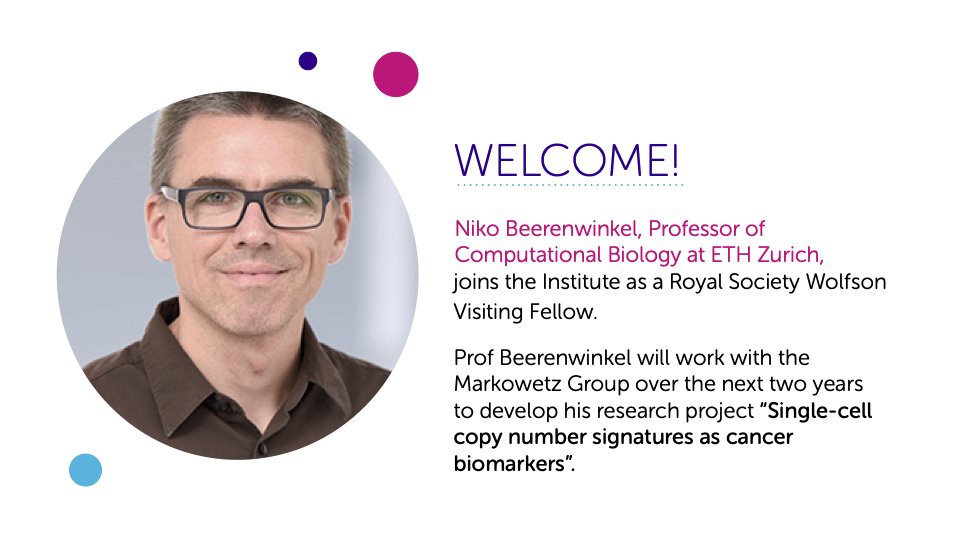
We are pleased to welcome Prof Niko Beerenwinkel of @cbg_ethz. He joins the Institute as a @royalsociety Wolfson Visiting Fellow.
He will work with @markowetzlab over the next two years to develop his research project "Single-cell copy number signatures as cancer #biomarkers".