One of the biggest benefits of @BillAckman's successful campaign to dismantle discriminatory practices and outright ideological corruption at elite colleges is it proves something that many of us have been saying for a long time: all it takes is for a few people with power, money and influence to start standing up to this crap and it'll all be over.
@elonmusk buying Twitter is the same.
More people in positions to make an impact need to realise there are easy wins to be had.
Let's make 2024 the year when we break the back of wokeness so we can focus our efforts and thoughts on improving society instead of just fighting off people who are intent on destroying it.
In light of today’s news, I thought I would try to take a step back and provide perspective on what this is really all about.
I first became concerned about @Harvard when 34 Harvard student organizations, early on the morning of October 8th before Israel had taken any military actions in Gaza, came out publicly in support of Hamas, a globally recognized terrorist organization, holding Israel ‘solely responsible’ for Hamas’ barbaric and heinous acts.
How could this be? I wondered.
When I saw President Gay’s initial statement about the massacre, it provided more context (!) for the student groups’ statement of support for terrorism. The protests began as pro-Palestine and then became anti-Israel. Shortly, thereafter, antisemitism exploded on campus as protesters who violated Harvard’s own codes of conduct were emboldened by the lack of enforcement of Harvard’s rules, and kept testing the limits on how aggressive, intimidating, and disruptive they could be to Jewish and Israeli students, and the student body at large. Sadly, antisemitism remains a simmering source of hate even at our best universities among a subset of students.
A few weeks later, I went up to campus to see things with my own eyes, and listen and learn from students and faculty. I met with 15 or so members of the faculty and a few hundred students in small and large settings, and a clearer picture began to emerge.
I ultimately concluded that antisemitism was not the core of the problem, it was simply a troubling warning sign – it was the “canary in the coal mine” – despite how destructive it was in impacting student life and learning on campus.
I came to learn that the root cause of antisemitism at Harvard was an ideology that had been promulgated on campus, an oppressor/oppressed framework, that provided the intellectual bulwark behind the protests, helping to generate anti-Israel and anti-Jewish hate speech and harassment.
Then I did more research. The more I learned, the more concerned I became, and the more ignorant I realized I had been about DEI, a powerful movement that has not only pervaded Harvard, but the educational system at large. I came to understand that Diversity, Equity, and Inclusion was not what I had naively thought these words meant.
I have always believed that diversity is an important feature of a successful organization, but by diversity I mean diversity in its broadest form: diversity of viewpoints, politics, ethnicity, race, age, religion, experience, socioeconomic background, sexual identity, gender, one’s upbringing, and more.
What I learned, however, was that DEI was not about diversity in its purest form, but rather DEI was a political advocacy movement on behalf of certain groups that are deemed oppressed under DEI’s own methodology.
Under DEI, one’s degree of oppression is determined based upon where one resides on a so-called intersectional pyramid of oppression where whites, Jews, and Asians are deemed oppressors, and a subset of people of color, LGBTQ people, and/or women are deemed to be oppressed. Under this ideology which is the philosophical underpinning of DEI as advanced by Ibram X. Kendi and others, one is either an anti-racist or a racist. There is no such thing as being “not racist.”
Under DEI’s ideology, any policy, program, educational system, economic system, grading system, admission policy, (and even climate change due its disparate impact on geographies and the people that live there), etc. that leads to unequal outcomes among people of different skin colors is deemed racist.
As a result, according to DEI, capitalism is racist, Advanced Placement exams are racist, IQ tests are racist, corporations are racist, or in other words, any merit-based program, system, or organization which has or generates outcomes for different races that are at variance with the proportion these different races represent in the population at large is by definition racist under DEI’s ideology.
In order to be deemed anti-racist, one must personally take action to reverse any unequal outcomes in society. The DEI movement, which has permeated many universities, corporations, and state, local and federal governments, is designed to be the anti-racist engine to transform society from its currently structurally racist state to an anti-racist one.
After the death of George Floyd, the already burgeoning DEI movement took off without any real challenge to its problematic ideology. Why, you might ask, was there so little pushback? The answer is that anyone who dared to raise a question which challenged DEI was deemed a racist, a label which could severely impact one’s employment, social status, reputation and more. Being called a racist got people cancelled, so those concerned about DEI and its societal and legal implications had no choice but to keep quiet in this new climate of fear.
The techniques that DEI has used to squelch the opposition are found in the Red Scares and McCarthyism of decades past. If you challenge DEI, “justice” will be swift, and you may find yourself unemployed, shunned by colleagues, cancelled, and/or you will otherwise put your career and acceptance in society at risk.
The DEI movement has also taken control of speech. Certain speech is no longer permitted. So-called “microaggressions” are treated like hate speech. “Trigger warnings” are required to protect students. “Safe spaces” are necessary to protect students from the trauma inflicted by words that are challenging to the students’ newly-acquired world views. Campus speakers and faculty with unapproved views are shouted down, shunned, and cancelled.
These speech codes have led to self-censorship by students and faculty of views privately held, but no longer shared. There is no commitment to free expression at Harvard other than for DEI-approved views. This has led to the quashing of conservative and other viewpoints from the Harvard campus and faculty, and contributed to Harvard’s having the lowest free speech ranking of 248 universities assessed by the Foundation of Individual Rights and Expression.
When one examines DEI and its ideological heritage, it does not take long to understand that the movement is inherently inconsistent with basic American values. Our country since its founding has been about creating and building a democracy with equality of opportunity for all. Millions of people have left behind socialism and communism to come to America to start again, as they have seen the destruction leveled by an equality of outcome society.
The E for “equity” in DEI is about equality of outcome, not equality of opportunity.
DEI is racist because reverse racism is racism, even if it is against white people (and it is remarkable that I even need to point this out). Racism against white people has become considered acceptable by many not to be racism, or alternatively, it is deemed acceptable racism. While this is, of course, absurd, it has become the prevailing view in many universities around the country.
You can say things about white people today in universities, in business or otherwise, that if you switched the word ‘white’ to ‘black,’ the consequences to you would be costly and severe.
To state what should otherwise be self-evident, whether or not a statement is racist should not depend upon whether the target of the racism is a group who currently represents a majority or minority of the country or those who have a lighter or darker skin color. Racism against whites is as reprehensible as it is against groups with darker skin colors.
Martin Luther King’s most famous words are instructive:
“I have a dream that my four little children will one day live in a nation where they will not be judged by the color of their skin but by the content of their character.”
But here we are in 2024, being asked and in some cases required to use skin color to effect outcomes in admissions (recently deemed illegal by the Supreme Court), in business (likely illegal yet it happens nonetheless) and in government (also I believe in most cases to be illegal, except apparently in government contracting), rather than the content of one’s character. As such, a meritocracy is an anathema to the DEI movement. DEI is inherently a racist and illegal movement in its implementation even if it purports to work on behalf of the so-called oppressed.
And DEI’s definition of oppressed is fundamentally flawed.
I have always believed that the most fortunate should help the least fortunate, and that our system should be designed in such a way as to maximize the size of the overall pie so that it will enable us to provide an economic system which can offer quality of life, education, housing, and healthcare for all.
America is a rich country and we have made massive progress over the decades toward achieving this goal, but we obviously have much more work to do. Steps taken on the path to socialism – another word for an equality of outcome system – will reverse this progress and ultimately impoverish us all. We have seen this movie many times.
Having a darker skin color, a less common sexual identity, and/or being a woman doesn’t make one necessarily oppressed or even disadvantaged. While slavery remains a permanent stain on our country’s history – a fact which is used by DEI to label white people as oppressors – it doesn’t therefore hold that all white people generations after the abolishment of slavery should be held responsible for its evils. Similarly, the fact that Columbus discovered America doesn’t make all modern-day Italians colonialists.
An ideology that portrays a bicameral world of oppressors and the oppressed based principally on race or sexual identity is a fundamentally racist ideology that will likely lead to more racism rather than less. A system where one obtains advantages by virtue of one’s skin color is a racist system, and one that will generate resentment and anger among the un-advantaged who will direct their anger at the favored groups.
The country has seen burgeoning resentment and anger grow materially over the last few years, and the DEI movement is an important contributor to our growing divisiveness. Resentment is one of the most important drivers of racism. And it is the lack of equity, i.e, fairness, in how DEI operates, that contributes to this resentment.
I was accused of being a racist from the President of the NAACP among others when I posted on @X that I had learned that the Harvard President search process excluded candidates that did not meet the DEI criteria. I didn’t say that former President Gay was hired because she was a black woman. I simply said that I had heard that the search process by its design excluded a large percentage of potential candidates due to the DEI limitations. My statement was not a racist one. It was simply the empirical truth about the Harvard search process that led to Gay’s hiring.
When former President Gay was hired, I knew little about her, but I was instinctually happy for Harvard and the black community. Every minority community likes to see their representatives recognized in important leadership positions, and it is therefore an important moment for celebration. I too celebrated this achievement. I am inspired and moved by others’ success, and I thought of Gay’s hiring at the pinnacle leadership position at perhaps our most important and iconic university as an important and significant milestone for the black community.
I have spent the majority of my life advocating on behalf of and supporting members of disadvantaged communities including by investing several hundreds of millions of dollars of philanthropic assets to help communities in need with economic development, sensible criminal justice reform, poverty reduction, healthcare, education, workforce housing, charter schools, and more.
I have done the same at Pershing Square Capital Management when, for example, we completed one of the largest IPOs ever with the substantive assistance of a number of minority-owned, women-owned, and Veteran-owned investment banks. Prior to the Pershing Square Tontine, Ltd. IPO, it was standard practice for big corporations occasionally to name a few minority-owned banks in their equity and bond offerings, have these banks do no work and sell only a de minimis amount of stock or bonds, and allocate to them only 1% or less of the underwriting fees so that the issuers could virtue signal that they were helping minority communities.
In our IPO, we invited the smaller banks into the deal from the beginning of the process so they could add real value. As a result, the Tontine IPO was one of the largest and most successful IPOs in history with $12 billion of demand for a $4 billion deal by the second day of the IPO, when we closed the books. The small banks earned their 20% share of the fees for delivering real and substantive value and for selling their share of the stock.
Compare this approach to the traditional one where the small banks do effectively nothing to earn their fees – they aren’t given that opportunity – yet, they get a cut of the deal, albeit a tiny one. The traditional approach does not create value for anyone. It only creates resentment, and an uncomfortable feeling from the small banks who get a tiny piece of the deal in a particularly bad form of affirmative action.
While I don’t think our approach to working with the smaller banks has yet achieved the significant traction it deserves, it will hopefully happen eventually as the smaller banks build their competencies and continue to earn their fees, and other issuers see the merit of this approach. We are going to need assistance with a large IPO soon so we are looking forward to working with our favored smaller banks.
I have always believed in giving disadvantaged groups a helping hand. I signed the Giving Pledge for this reason. My life plan by the time I was 18 was to be successful and then return the favor to those less fortunate. This always seemed to the right thing to do, in particular, for someone as fortunate as I am.
All of the above said, it is one thing to give disadvantaged people the opportunities and resources so that they can help themselves. It is another to select a candidate for admission or for a leadership role when they are not qualified to serve in that role.
This appears to have been the case with former President Gay’s selection. She did not possess the leadership skills to serve as Harvard’s president, putting aside any questions about her academic credentials. This became apparent shortly after October 7th, but there were many signs before then when she was Dean of the faculty.
The result was a disaster for Harvard and for Claudine Gay.
The Harvard board should not have run a search process which had a predetermined objective of only hiring a DEI-approved candidate. In any case, there are many incredibly talented black men and women who could have been selected by Harvard to serve as its president so why did the Harvard Corporation board choose Gay?
One can only speculate without knowing all of the facts, but it appears Gay’s leadership in the creation of Harvard’s Office of Diversity, Equity, Inclusion and Belonging and the penetration of the DEI ideology into the Corporation board room perhaps made Gay the favored candidate. The search was also done at a time when many other top universities had similar DEI-favored candidate searches underway for their presidents, reducing the number of potential candidates available in light of the increased competition for talent.
Unrelated to the DEI issue, as a side note, I would suggest that universities should broaden their searches to include capable business people for the role of president, as a university president requires more business skills than can be gleaned from even the most successful academic career with its hundreds of peer reviewed papers and many books. Universities have a Dean of the Faculty and a bureaucracy to oversee the faculty and academic environment of the university. It therefore does not make sense that the university president has to come through the ranks of academia, with a skill set unprepared for university management.
The president’s job – managing thousands of employees, overseeing a $50 billion endowment, raising money, managing expenses, capital allocation, real estate acquisition, disposition, and construction, and reputation management – are responsibilities that few career academics are capable of executing. Broadening the recruitment of candidates to include top business executives would also create more opportunities for diverse talent for the office of the university president.
Furthermore, Harvard is a massive business that has been mismanaged for a long time. The cost structure of the University is out of control due in large part to the fact that the administration has grown without bounds. Revenues are below what they should be because the endowment has generated a 4.5% annualized return for the last decade in one of the greatest bull markets in history, and that low return is not due to the endowment taking lower risks as the substantial majority of its assets are invested in illiquid and other high-risk assets.
The price of the product, a Harvard education, has risen at a rate well in excess of inflation for decades, (I believe it has grown about 7-8% per annum) and it is now about $320,000 for four years of a liberal arts education at Harvard College. As a result, the only students who can now afford Harvard come from rich families and poor ones. The middle class can’t get enough financial aid other than by borrowing a lot of money, and it is hard to make the economics work in life after college when you graduate with large loan balances, particularly if you also attend graduate school.
The best companies in the world grow at high rates over many decades. Harvard has grown at a de minimis rate. Since I graduated 35 years ago, the number of students in the Harvard class has grown by less than 20%. What other successful business do you know that has grown the number of customers it serves by less than 20% in 35 years, and where nearly all revenue growth has come from raising prices?
In summary, there is a lot more work to be done to fix Harvard than just replacing its president. That said, the selection of Harvard’s next president is a critically important task, and the individuals principally responsible for that decision do not have a good track record for doing so based on their recent history, nor have they done a good job managing the other problems which I have identified above.
The Corporation board led by Penny Pritzker selected the wrong president and did inadequate due diligence about her academic record despite Gay being in leadership roles at the University since 2015 when she became dean of the Social Studies department.
The Board failed to create a discrimination-free environment on campus exposing the University to tremendous reputational damage, to large legal and financial liabilities, Congressional investigations and scrutiny, and to the potential loss of Federal funding, all while damaging the learning environment for all students.
And when concerns were raised about plagiarism in Gay’s research, the Board said these claims were “demonstrably false” and it threatened the NY Post with “immense” liability if it published a story raising these issues.
It was only after getting the story cancelled that the Board secretly launched a cursory, short-form investigation outside of the proper process for evaluating a member of the faculty’s potential plagiarism. When the Board finally publicly acknowledged some of Gay’s plagiarism, it characterized the plagiarism as “unintentional” and invented new euphemisms, i.e., “duplicative language” to describe plagiarism, a belittling of academic integrity that has caused grave damage to Harvard’s academic standards and credibility.
The Board’s three-person panel of “political scientist experts” that to this day remain unnamed who evaluated Gay’s work failed to identify many examples of her plagiarism, leading to even greater reputational damage to the University and its reputation for academic integrity as the whistleblower and the media continued to identify additional problems with Gay’s work in the days and weeks thereafter.
According to the NY Post, the Board also apparently sought to identify the whistleblower and seek retribution against him or her in contravention to the University’s whistleblower protection policies.
Despite all of the above, the Board “unanimously” gave its full support for Gay during this nearly four-month crisis, until eventually being forced to accept her resignation earlier today, a grave and continuing reputational disaster to Harvard and to the Board.
In a normal corporate context with the above set of facts, the full board would resign immediately to be replaced by a group nominated by shareholders. In the case of Harvard, however, the Board nominates itself and its new members. There is no shareholder vote mechanism to replace them.
So what should happen?
The Corporation Board should not remain in their seats protected by the unusual governance structure which enabled them to obtain their seats.
The Board Chair, Penny Pritzker, should resign along with the other members of the board who led the campaign to keep Claudine Gay, orchestrated the strategy to threaten the media, bypassed the process for evaluating plagiarism, and otherwise greatly contributed to the damage that has been done. Then new Corporation board members should be identified who bring true diversity, viewpoint and otherwise, to the board.
The Board should not be principally comprised of individuals who share the same politics and views about DEI. The new board members should be chosen in a transparent process with the assistance of the 30-person Board of Overseers. There is no reason the Harvard board of 12 independent trustees cannot be comprised of the most impressive, high integrity, intellectually and politically diverse members of our country and globe. We have plenty of remarkable people to choose from, and the job of being a director just got much more interesting and important. It is no longer, nor should it ever have been, an honorary and highly political sinecure.
The ODEIB should be shut down, and the staff should be terminated. The ODEIB has already taken down much of the ideology and strategies that were on its website when I and others raised concerns about how the office operates and who it does and does not represent. Taking down portions of the website does not address the fundamentally flawed and racist ideology of this office, and calls into further question the ODEIB’s legitimacy.
Why would the ODEIB take down portions of its website when an alum questioned its legitimacy unless the office was doing something fundamentally wrong or indefensible?
Harvard must once again become a meritocratic institution which does not discriminate for or against faculty or students based on their skin color, and where diversity is understood in its broadest form so that students can learn in an environment which welcomes diverse viewpoints from faculty and students from truly diverse backgrounds and experiences.
Harvard must create an academic environment with real academic freedom and free speech, where self-censoring, speech codes, and cancel culture are forever banished from campus.
Harvard should become an environment where all students of all persuasions feel comfortable expressing their views and being themselves. In the business world, we call this creating a great corporate culture, which begins with new leadership and the right tone at the top. It does not require the creation of a massive administrative bureaucracy.
These are the minimum changes necessary to begin to repair the damage that has been done.
A number of faculty at the University of Pennsylvania have proposed a new constitution which can be found at https://t.co/Vggm1eomnI, which has been signed by more than 1,200 faculty from Penn, Harvard, and other universities. Harvard would do well to adopt Penn’s proposed new constitution or a similar one before seeking to hire its next president.
A condition of employment of the new Harvard president should be the requirement that the new president agrees to strictly abide by the new constitution. He or she should take an oath to that effect.
Today was an important step forward for the University. It is time we restore Veritas to Harvard and again be an exemplar that graduates well-informed, highly-educated leaders of exemplary moral standing and good judgment who can help bring our country together, advance our democracy, and identify the important new discoveries that will help save us from ourselves.
We have a lot more work to do. Let’s get at it.
Imagine the following:
You're a man who serves as Chairman of the Board of a large University who led the search for the recently hired president.
Your wife runs a non-profit in the DEI space. She is the only full-time employee of the organization, serving as Founder, CEO, and CFO. You serve as Treasurer.
The non-profit ostensibly sells two principal products in the DEI space:
1. "Evidence-based 'how-to-guides' and
2. "The most comprehensive intersectional analytics platform of its kind..."
but the non-profit has no revenues.
It relies entirely on contributions to fund its operations, which principally consist of your wife's salary and some other ancillary overhead.
There have been only two contributors to the non-profit, the University whose board you chair, which has contributed:
2018 $100,000
2019 $300,000
2020 $150,000
2021 $600,000
2022 $789,000
and a donor advised fund (DAF) affiliated with you which has contributed:
2018 $0
2019 $0
2020 $0
2021 $10,000
2022 $20,000
Doesn't this seem very strange?
What if the University was @MIT?
What if the Chairman was Mark Gorenberg?
What if the non-profit is https://t.co/6XEtf7DgO4?
Why are there so many conflicts/scandals concerning DEI organizations?
All of the above can be found in MIT's and https://t.co/4dOX2C32hc's IRS Form 990s which are available and summarized here:
https://t.co/a7T7aOd0cM
My undergraduate university @Penn, my PhD university @Harvard and my Post-doctoral university @MIT all walk into a hearing…
Three for three. This is like the set up of a personalized antisemitic canned joke from hell.
What I would like to say to the Presidents of all three institutions: you just aren’t good enough for these institutions. This is not revolutionary Marxist justice fingerpaining daycare for sociopaths. Enough DEI. Enough normalization of hatred. Have someone else who understands academe, science and research take over.
https://t.co/o2Yl1u0Iwj
My “Take Back MIT” stance from several years ago with @lexfridman. Listen again with ears fresh from this madness in front of Congress. Enough!
Some people said this was “Way over the top” at the time (April 2020).
Ok. So now that you have heard what these leaders are really like, what do you think? I’m beginning to wonder myself if maybe I pulled my punches...
From 3:45 on:
https://t.co/MMvsiPyIxl
Please see my below letter to the President of Harvard University sent today:
November 4, 2023
Dear President Gay,
I am writing this letter to you regretfully. Never did I think I would have to write a letter to the president of my alma mater about the impact of her actions and inactions on the health and safety of its student body in order to help catalyze necessary change. For the past four weeks since the horrors of October 7th, I have been in dialogue with members of the corporation board, other alumni, as well as students and faculty sharing and comparing our concerns about the growing number of antisemitic incidents on campus, as we wait for you and the University to act. Four weeks after the barbaric terrorist acts of October 7th, I have lost confidence that you and the University will do what is required.
Last Wednesday, I spent seven hours on campus meeting with Jewish, Israeli, and non-Jewish students and faculty at the Law School, at HBS and in a 90-minute town hall in Aldrich 112 with 230 Jewish college students (coincidentally, one for each hostage held by Hamas), research staff, and faculty from the University at large, organized by Harvard Chabad. Over the course of the day, it became clear that the situation at Harvard is dire and getting worse, much worse than I had realized.
Jewish students are being bullied, physically intimidated, spat on, and in several widely-disseminated videos of one such incident, physically assaulted. Student Slack message boards are replete with antisemitic statements, memes, and images. On-campus protesters on the Widener Library steps and elsewhere shout “Intifada! Intifada! Intifada! From the River to the Sea, Palestine Shall Be Free!” as they knowingly call for violent insurrection and use eliminationist language seeking the destruction of the State of Israel and the Jewish people.
When you explained in your October 12th video address that Harvard “embraces a commitment to free expression,” you sent a clear message that the eliminationist and antisemitic statements of the protesters are permissible on campus. Putting aside the legal limitations on free speech that include restrictions on fighting words and true threats, “where speakers direct a threat to a person or group of persons with the intent of placing the victim in fear of bodily harm or death,” if Harvard indeed had a strong track record of protecting free speech, many would have taken your support for free speech more seriously. Unfortunately, Harvard has not embraced a serious commitment to free speech, particularly so in recent years.
In The Foundation for Individual Rights and Expression (FIRE) Annual College Free Speech Rankings, Harvard has consistently finished in the bottom quartile in each of the past four years, with its ranking deteriorating each year. On September 23rd, just two weeks prior to October 7th, FIRE announced that Harvard achieved its lowest free speech ranking ever for the 2023 academic year, ranking last out of 254 universities, with a rating of 0.00, the only university with an “abysmal” speech climate. See: https://t.co/RCpDyY7E0W the results of the survey where FIRE cites multiple examples of incidents on the Harvard campus where students and faculty were denied their First Amendment rights. Therefore, when you cite Harvard’s “commitment to free expression,” in supporting the protesters, it rings false and hypocritical to the university at large and the Jewish community in particular.
Many Jewish students have also recently become afraid to express their concerns. Many have also felt the need to remove their mezuzahs, yarmulkes, Stars of David, and other overt evidence of their religion and heritage on campus and in Cambridge to avoid being exposed to discrimination, bullying or worse.
I am incredibly saddened to say that Harvard has also become a place where Jewish students are concerned about the threat of physical violence (which likely has a corresponding impact on their mental health) while among other insults, they are forced to sit next to classmates who openly and comfortably post, under their actual names, antisemitic statements and imagery on the student-wide Slack message system with no consequences for their actions.
And it is not just the Jewish students and faculty that are up in arms. While on campus, I heard a constant refrain from non-Jewish members of the Harvard community:
Why are Claudine and the administration doing nothing about this?
Harvard’s Office of Equity, Diversity, Inclusion and Belonging
I have heard from many members of the Harvard community that Harvard’s Office of Equity, Diversity, Inclusion and Belonging (“OEDIB”) is an important contributing factor to the problem. I was surprised to learn from students and faculty that the OEDIB does not support Jewish, Asian and non-LGBTQIA White students. I had never read the OEDIB DEI statement until today when I wrote this letter. The DEI statement makes clear that Harvard’s conception of diversity, equity, inclusion and belonging does not include Jews (at least those that are not in one of the other welcomed DEI groups). According to Harvard’s DEI statement:
"We actively seek and welcome people of color, women, persons with disabilities, people who identify as LGBTQIA, and those who are at the intersections of these identities, from across the spectrum of disciplines and methods to join us."
In other words, Jews and others who are not on the above list are not welcome to join. When antisemitism is widely prevalent on campus, and the DEI office – which “views diversity, equity, inclusion and belonging as the pathway to achieving inclusive excellence and fostering a campus culture where everyone can thrive” – does not welcome Jewish students, we have a serious problem. It is abundantly clear that the campus culture that is being fostered at Harvard today is not one where everyone is included, feels a sense of belonging, welcomes diversity, or is a place where “everyone can thrive.”
Equity on Campus
The issue of equity, or the lack thereof, was another issue about which I heard constant complaints, i.e., the so-called “double standard.” One member of the faculty rhetorically asked:
"What would Claudine do if 34 Harvard student organizations put out a statement on May 25th, 2020 that ‘George Floyd had it coming,’" noting that you have yet to condemn the student organization letter which holds Israel “solely responsible” for the heinous and barbaric acts of a terrorist organization.
Other faculty, alumni and students asked other rhetorical questions including:
"How would Harvard respond if a trans student attempted to walk by an anti-LGBTQIA demonstration on the HBS campus and was subject to the same abuse that the Jewish HBS student experienced at the Free Palestine demonstration on October 18th?"
"How would you respond to a Harvard white supremacist protest where students shouted 'Tulsa! Tulsa! Tulsa! From the Atlantic to the Pacific, America should be free of Black people.'"
Would Harvard even permit the above demonstrations to take place on campus?
Despite the outburst of antisemitic activities and protests on campus, the first initiative that Harvard took to protect students was the establishment on October 24th of a task force to “support students experiencing doxxing, harassment, and online security issues following backlash against students allegedly affiliated with a statement that held Israel ‘entirely responsible’ for violence in the Israel-Hamas conflict.” The creation of this task force sent a very strong message that the University was not just ignoring the antisemitic incidents and threats to Jewish student safety on campus, but rather it was taking sides in the conflict by only supporting students who held Israel responsible for Hamas’ vile acts.
In summary, your failure to condemn the barbaric acts of October 7th opened the door for a wave of anti-Israel attacks on campus that have led to a growing number of antisemitic protests and actions. Your subsequent two statements about October 7th to the University attempting to address the failings of your first letter were not taken seriously as many perceived those statements as being driven by pressure from the alumni community rather than reflecting a sincere and authentic understanding of the issues, and real empathy for Israel and the Jewish community.
The failure of your communications to the public and the University coupled with the fact that the first tangible action by the University was to protect those who blamed Israel has created a belief among the Jewish and Israeli community at Harvard that they are not deemed welcome nor worthy of protection by the University.
“Narrow Casting”
Finally, your announcement on Friday October 27th about launching a task force to address antisemitism and your statement that “Antisemitism has no place at Harvard” was welcomed by members of the Jewish community in attendance, but students who participated in my Thursday town hall were either unaware of that announcement or alternatively questioned your commitment to address antisemitism.
At my town hall, it was noted that your antisemitism speech was made only to Jewish students and parents at a Hillel Shabbat dinner, and a transcript of your remarks was only given to and published in the Forward, a niche Jewish publication with a tiny subscriber base. Two members of the Harvard faculty described this as “narrow casting” to an affinity group rather than you making a serious public commitment to address antisemitism. One research fellow stated, and many in the room agreed, that they would only believe that you were committed to stamp out antisemitism at Harvard if you stood up in front of the entire Harvard community and made that commitment, and you then implemented tangible and decisive actions consistent with that commitment.
While the members of the Jewish community I met with at Harvard were happy to hear from an alum who was willing to listen, many students questioned why you have not sat down with students so that you can hear their concerns first-hand.
Antisemitism at Harvard Prior to October 7th
In the transcript of your speech published in the Forward, you said about antisemitism at Harvard: “For years, this university has done too little to confront its continuing presence. No longer.”
Your remarks imply that antisemitism has been a serious issue at Harvard that has gone unaddressed for years. I have been an active alum for 35 years having attended the college and HBS, taught numerous classes on campus each year, have participated in many fireside chats with large student audiences, mentor current students and recent graduates on a regular basis, and have been a member of the Dean’s Advisory Board at the business school for many years. During this period, I have neither experienced nor have I become aware of any antisemitic incidents at Harvard until beginning four weeks ago.
When I asked my daughter today about her experience with antisemitism at Harvard (she graduated in 2020), she described antisemitism when she was at Harvard as “non-existent.” While I am sure it is possible if not likely that there have been some antisemitic incidents at Harvard over the last 35 years, the reality is that Harvard has been an extremely comfortable place to be Jewish and/or Israeli, up until the last four weeks.
In truth, the outburst at antisemitism at Harvard is a recent one and is largely due to your actions and inactions and that of the administration and the University at large in failing to appropriately address blatant antisemitism on campus.
How Can You Solve the Problem?
What I find particularly upsetting about recent events on campus is that the problem is not so difficult to address. I do not believe that antisemitism is widespread among the student body and faculty at Harvard. Rather, I believe that a small minority of students, faculty, and staff are antisemitic and the administration’s inaction in confronting the problem head on have emboldened this antisemitic subset of the community to escalate their antisemitic actions because there have been no consequences for doing so.
Actions speak much louder than words. Members of the Harvard community have heard some words, but experienced no actions of substance to address antisemitism on campus. I would therefore recommend the following steps which I believe will dramatically reduce if not eliminate antisemitic acts at Harvard immediately.
First, the students involved in harassing and allegedly physically assaulting the HBS student on October 18th should be immediately suspended. I understand that the University is waiting for the outcome of a police department review of the situation to take action, but this makes no sense. It is clear from the multiple videos available of the incident that the conduct of the protesters involved does not meet the standards for student conduct outlined in the Harvard College Student Handbook, in particular Harvard’s anti-bullying policies outlined in the Report & Recommendation from the Anti-Bullying Working Group adopted on September 1, 2023. https://t.co/2ewn9mWeO8 These standards alone are enough to invoke Disciplinary Probation until such time as the police department investigation is completed. Harvard student disciplinary actions should not be outsourced to the police department.
Taking decisive action now will put all Harvard students, faculty and staff on notice that the University takes violations of Harvard’s code of conduct seriously, and will bring great comfort to the Jewish community at Harvard that appropriate actions to reduce threats to their safety are being implemented.
Second, the protesters who have been chanting Intifada and other eliminationist statements should be subject to disciplinary action. There are multiple videos available of the various protests that would enable the University to identify the individuals involved who can then be referred to the Administrative Board where appropriate disciplinary action can be determined and acted upon.
Third, the University should review the student Slack message boards to identify those students who have made antisemitic statements or shared antisemitic imagery. These students should also be referred to the Administration Board for appropriate disciplinary action.
Fourth, the University should publicly reach out to students in an effort to obtain other examples of antisemitic acts that should also be carefully investigated, and for which appropriate disciplinary steps should be taken.
Because Harvard students are notoriously focused on their job and career prospects post-graduation, disciplinary actions by the administration for failure to meet the University’s standards for appropriate conduct that become part of a student’s permanent record should serve as an effective deterrent to overt antisemitic acts on campus. No law firm, corporation or graduate program will hire or admit an antisemitic or racist student. I note that the recent letter to the deans of law schools around the country signed by many of the top law firms in the U.S. has, I am told, already begun to have an effect in reducing antisemitic acts at the Law School.
Fifth, the University should form a task force to review the appropriateness of the activities of the OEDIB and whether its practice of excluding certain minority communities on campus, including Asian and Jewish students, is appropriate, which in fact may be contributing to discrimination against these groups on campus.
Sixth, the results of the antisemitism task force should be made public as promptly as possible so that we can better understand the sources of antisemitism at Harvard. Harvard’s admissions practices should be reassessed to ascertain why the university is admitting racist students, and should consider revisions to the application process to enable the University to better screen the character of candidates for admission.
Seventh, as Harvard president, you should make clear that Harvard supports free speech on campus, but that certain kinds of hate speech as well as fighting words and incitement to violence are not consistent with Harvard’s values or considered appropriate conduct for members of the Harvard community. In connection with your commitment to free speech, Harvard should form a task force to understand the constraints on free speech at Harvard that have led to it ranking last on FIRE’s annual college survey, so the issues that have led to Harvard’s last-place ranking can be addressed.
Violations of Title VI of the Civil Rights Act of 1964
On September 28, 2023, the Biden Administration issued a clarifying release stating that Title VI of the Civil Rights Act of 1964 prohibits certain forms of antisemitism, Islamophobia and related discrimination as part of its National Strategy to Counter Antisemitism released in May 2023 https://t.co/E82EDjTp5c Title VI of the Civil Rights Act requires universities to provide all students, including students who are or are perceived to be Jewish, a school environment free from discrimination. The consequences for a university’s failure to meet the requirements of Title VI include the cancellation of federal funding.
Harvard has failed in recent weeks to meet its Title VI obligations which threatens a major source of the University’s funding. When coupled with numerous Jewish and non-Jewish alumni that have publicly and privately shared these same concerns, important sources of Harvard’s revenues are at risk. While the University should not need a financial incentive to eliminate discrimination on campus, Harvard’s recent failure to create a safe and non-discriminatory environment for Jewish students threatens the University’s funding for research, scholarships, and more.
Your Historic Opportunity
You have been president of Harvard, one of the most important institutions in the world, for four months at one of the most challenging times in its history. As Harvard’s leader, your words and actions are followed closely. As a result, the steps you take to address antisemitism at Harvard will be recognized around the world, and can contribute greatly as an example to other institutions seeking to eliminate antisemitism in all of its forms.
History has taught us that when the sparks and initial flames of antisemitism emerge, we must promptly put out the flames before a conflagration begins. It is therefore critically important you act with alacrity in addressing these issues. I encourage you to act boldly and promptly to eliminate this scourge at Harvard.
I also call upon you to complete the commitment you made at inauguration when you stated that “Knowledge is our purpose. We serve that purpose best when we commit to open inquiry and freedom of expression as foundational values of the academic community.” Harvard must create an environment where free speech is encouraged and accepted. At the same time, the Harvard community at large must understand the difference between speech protected by the First Amendment and speech that incites violence or seeks the elimination of any group. Such speech does not advance knowledge nor does it belong on campus regardless of whether or not it is protected by the First Amendment.
Successfully addressing antisemitism at Harvard and creating an environment with true freedom of expression will become a critically important part of your legacy as the Harvard community works together to address these challenges at a difficult time in world history.
I would be delighted to help in any way that I can to enable you to succeed in this mission and as Harvard’s president. Please let me know what more I can do to help.
Sincerely,
William A. Ackman
A.B. 1988, MBA 1992
cc: The Harvard Corporation Board;
Penny Pritzker, Chairman
One of the greatest pleasures in life is watching a dear friend’s arc of success and growth in experience & wisdom
@KonstantinKisin - with words, impeccable delivery, fatherhood & leadership in building @triggerpod - is meeting this moment to service a greater good
Love you KK
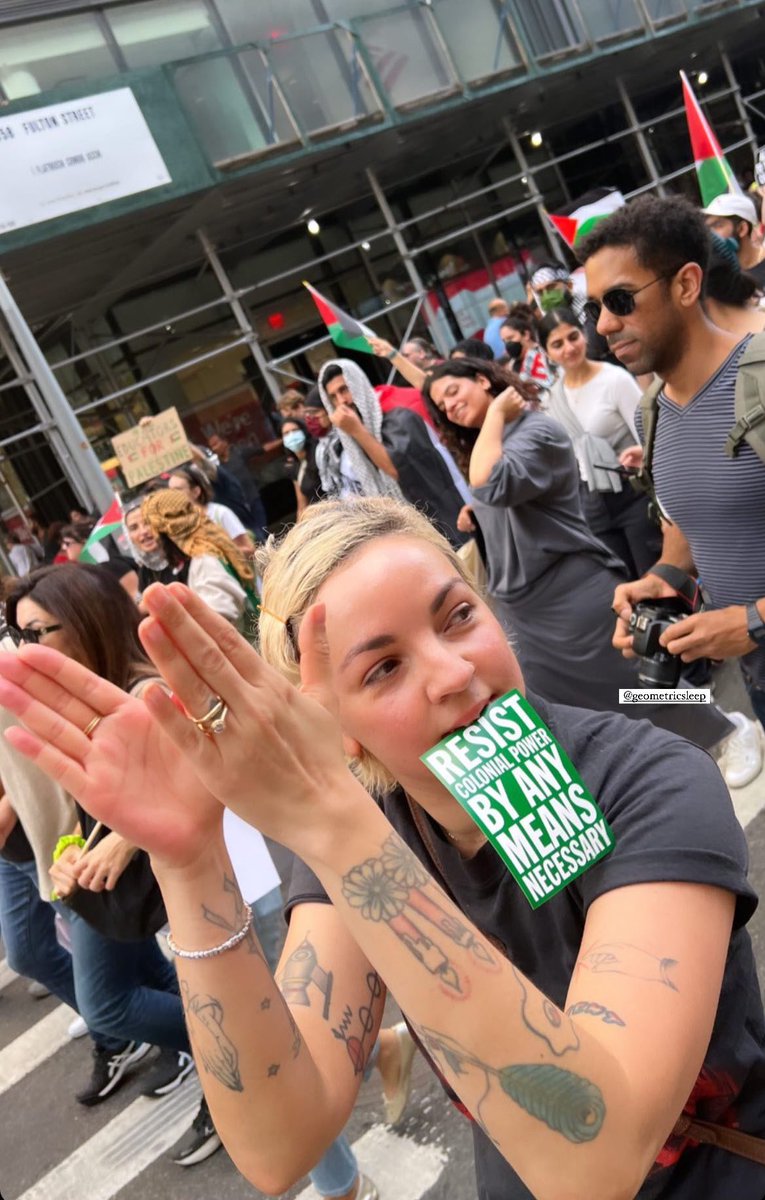
We are disgusted to see Vogue staffer Laia Garcia-Furtado hold up a pro Hamas sticker in her mouth that reads “resist by any means possible”.
This message references the brutal Hamas attack on Israeli civilians in which they beheaded babies, raped women, and shot the elderly point blank.
Hamas cheerleaders do not belong on staff @voguemagazine
Wind & solar are a cheap way to make expensive electricity.
Electricity like healthcare, is a service not a commodity. It must be available 24/7/365.
“Fair weather” doctors who work for free but randomly drop the scalpel & leave mid operation necessitate costly backup.
The SEC exhibits hostility toward technology and disclosure in a new rule proposal: https://t.co/B24FhidaWu Here's my initial take: https://t.co/oFExcBD59u and
The game is up.
Zelensky's 15 minutes is over. The Azov Nazi sponsoring NeoCon war hawk days are numbered.
"..because we don't want peace, we want the war with Russia"
@RobertKennedyJr ruins @seanhannity on NeoCon warmongering, Zelensky & Ukraine.
Credit where credit is due:
Dame Alison Rose has gone. Others must follow.
I hope that this serves as a warning to the banking industry.
We need both cultural and legal changes to a system that has unfairly shut down many thousands of innocent people.
I will do my best to be their voice.