Many people in the west don't realise that Chinese communists make Ronald Reagan look like an extreme redistributionist. In today's China personal taxes are ultra-low and there is very limited provision of free public services. Xi's views on the welfare state would be labelled 'far right' in the west, illustrating - yet again - the horseshoe theory of the far left and the far right bending towards each the further to the extremes they go.
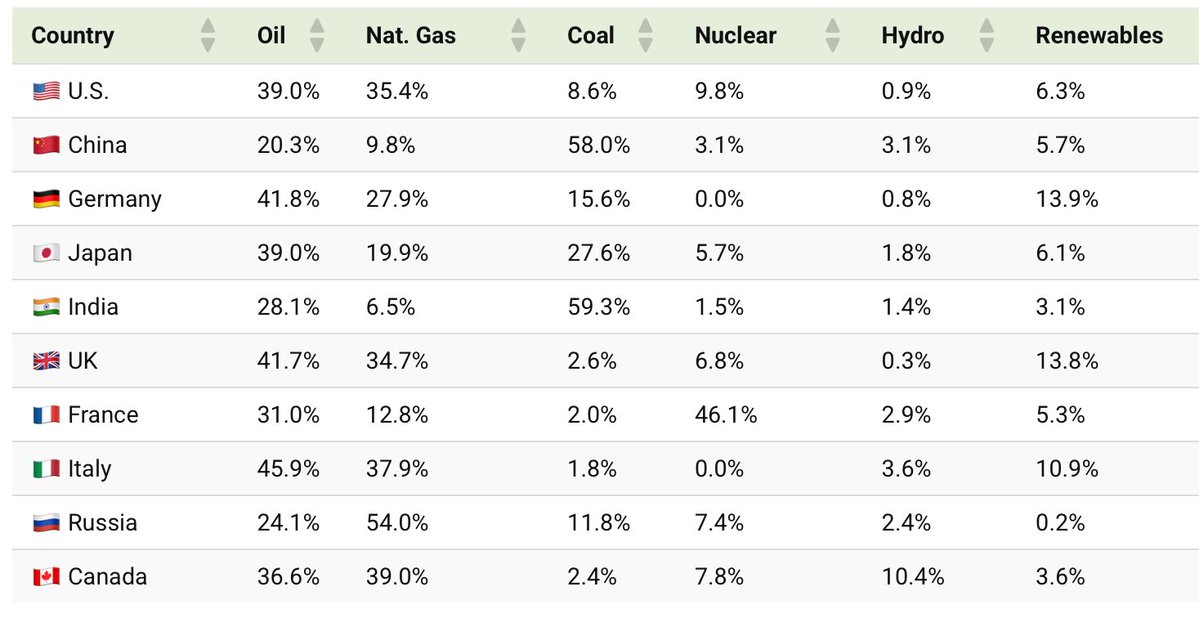
The utter recklessness of successive governments on energy security is well captured here. People will die if the gas pipeline from Scotland stops functioning. Homes wouldn't be heated and businesses would have to close. This is all clearly understood in government.
Yet still no storage facilities and no LNG import capacity exists, and it will be many years before this changes.
All of this reflects the failure of the political class to understand that the first duty of government is to protect citizens and the state. More widely, it explains why another vital strand of national security - defence force modernisation and resourcing - is not treated as the emergency that it is.
https://t.co/AxWHXFjVY9
Good to see both coalition partners finally giving commitments on cuts to crash-era personal tax rates. Revenues from these taxes rose from €15 billion in 2010 to €45 billion in 2025. It is long past time that confiscatory marginal tax rates above 50% were pared way back to incentivise work.
https://t.co/M5YbM1vKPV
Hefty majority for considering nuclear power.
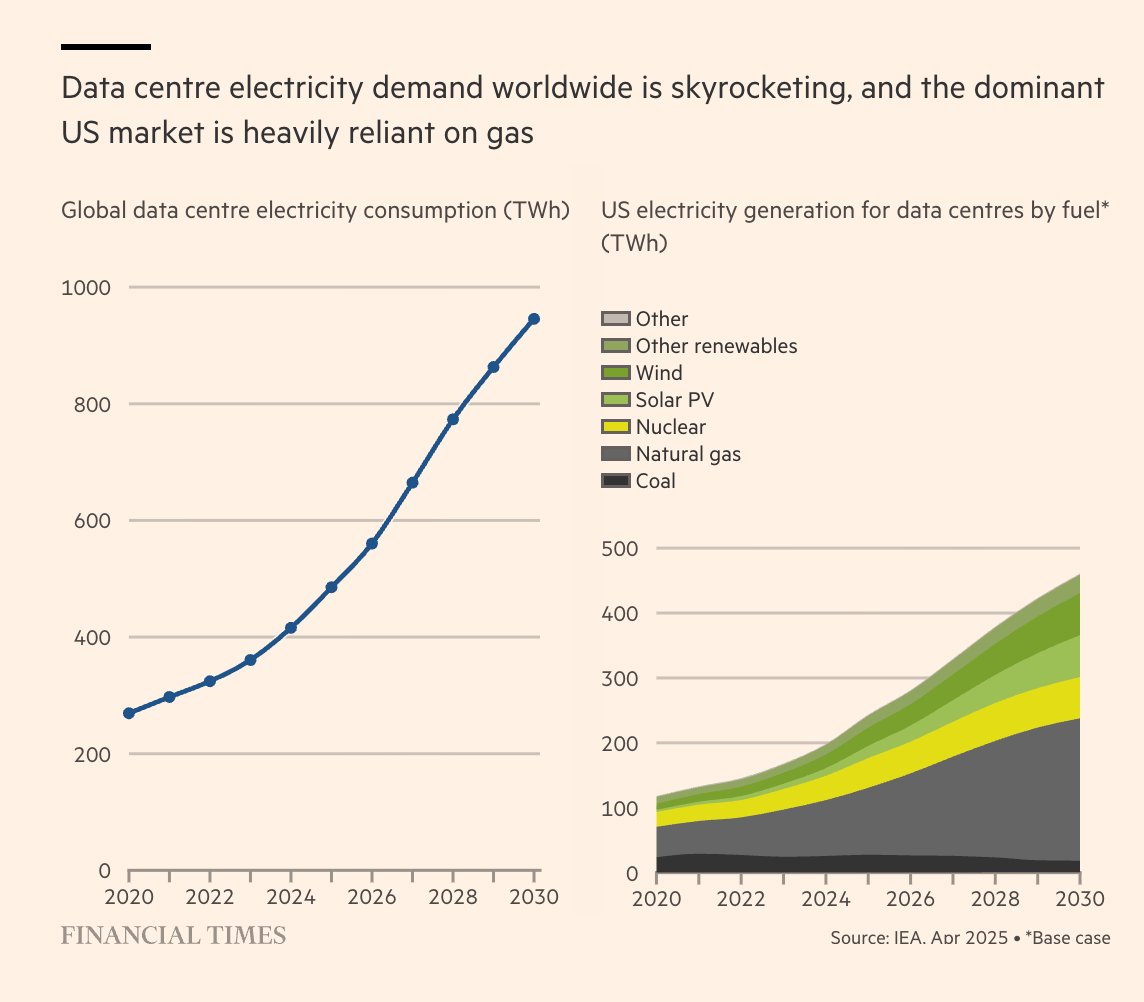
If, as looks likely, the technology advances and modular reactors small enough to be trucked into place - to be used in factories and data centres etc - energy/climate worries would be a thing of the past.
As a lifelong centrist, I fully support the European model of redistribution. But something is wrong in Ireland.
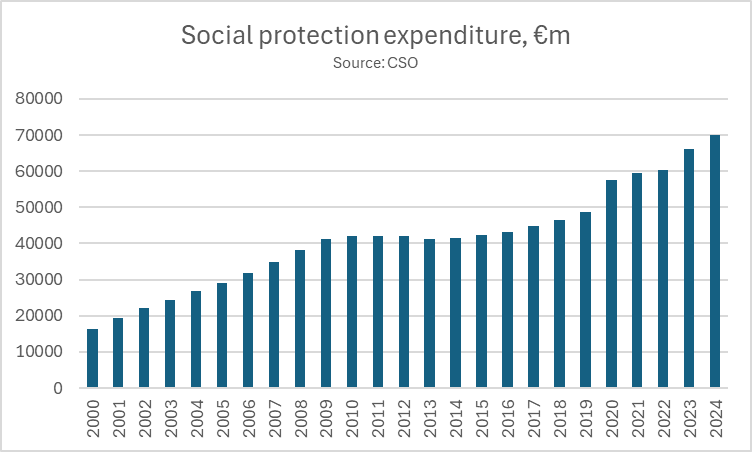
The welfare state should expand in recessionary times and shrink in boom times. As the chart below shows, over the decades this has worked in reverse in Ireland. Social expenditure, which includes welfare benefits and services provided for free by the state, more than doubled during the Celtic tiger. Then, during the post 2008 crash, when Ireland suffered one of the sharpest economic contractions ever recorded in a developed economy, social spending flatlined. From the middle of the last decade, when strong economic growth returned, the spend rose by 70%.
When the money is available, it is spent. I'm fed up with this unthinking use of my taxes. It's time for lower personal taxation and spending restraint.
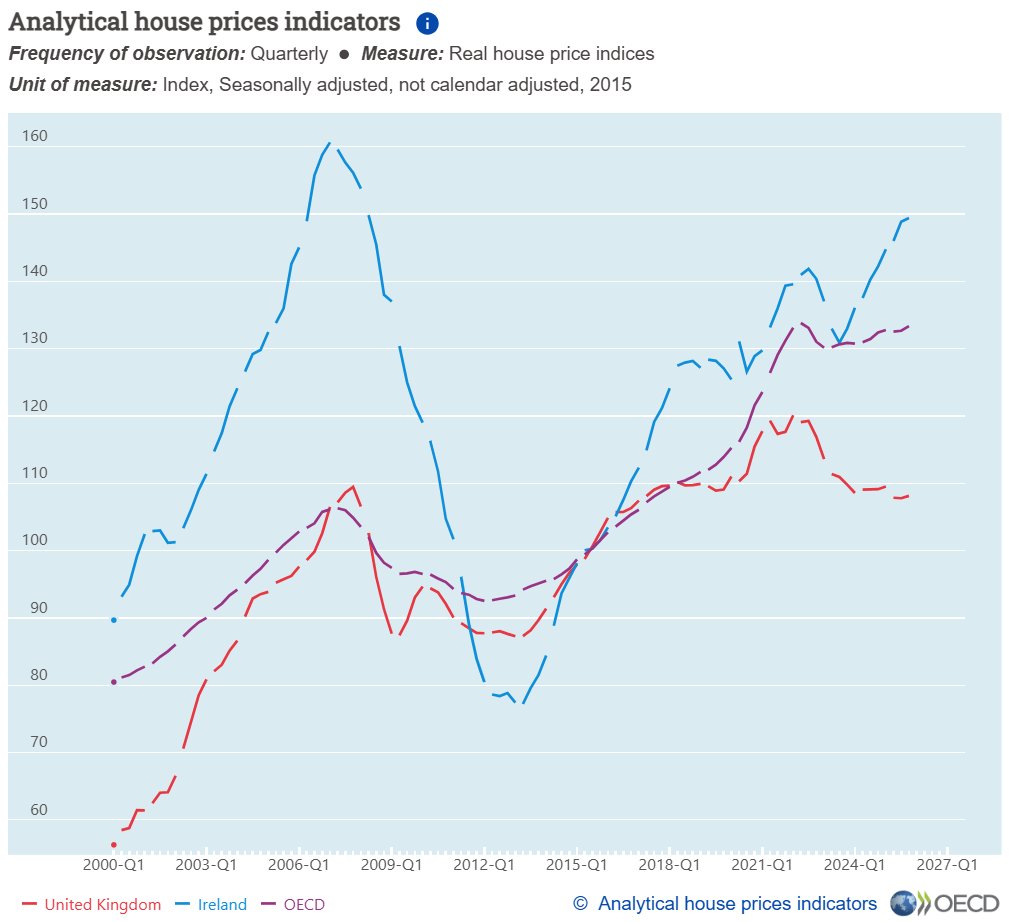
Ireland is one of the few countries anywhere in which real house prices are lower than 19 years ago. Also true of the UK (just).
Prices across the OECD, when adjusted for general consumer price inflation, are up 25% over two decades.
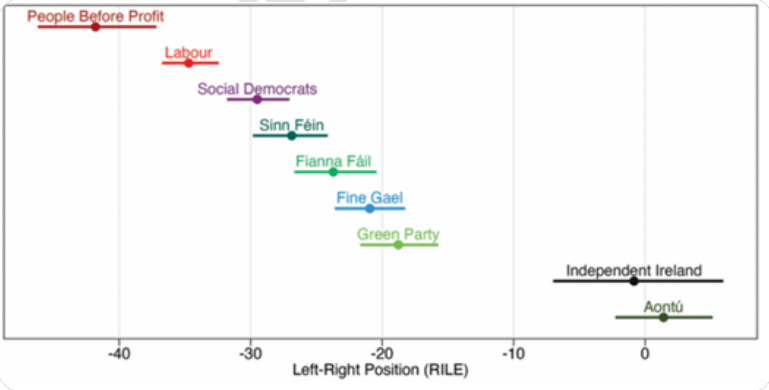
Political scientists evaluated manifestos from the 2024 general election. Every party/grouping bar one is found to be on the left. Aontu, which is economically leftist, is judged to be marginally on the right.
Despite this, Ireland is one of the few European countries with no gas storage capacity and it will likely be years before any is installed. Staggering that such vulnerability even exists.
https://t.co/UP5jcq4D7J
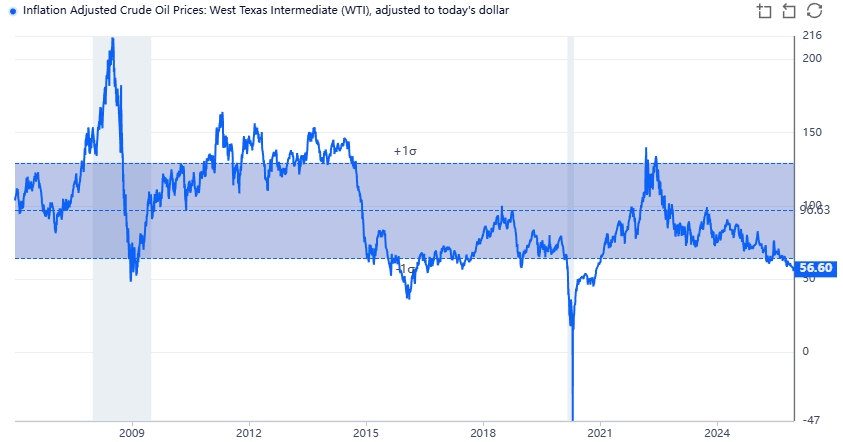
Oil at 20-year lows in real terms, yet people call for $30–50 glut bear scenarios.
Downside: maybe -5–10%. Upside: 2–3× to the upper range?
That’s asymmetric risk/reward — and I like that trade.
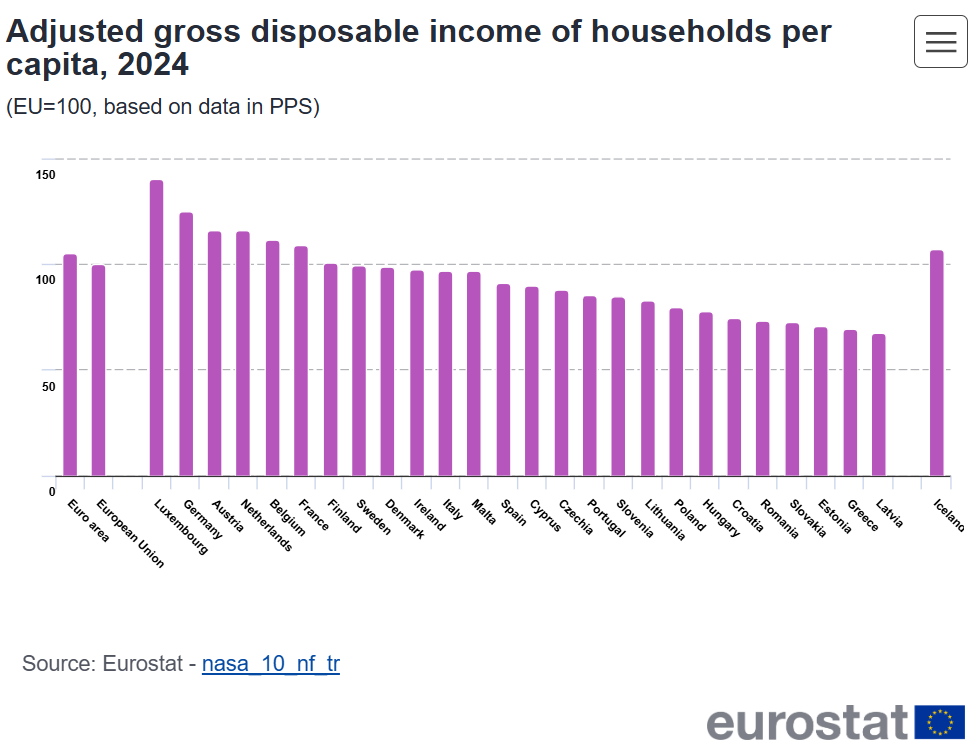
How rich is Ireland? Not as easy to answer as some assume owing to messy GDP numbers.
This is about the best measure. It looks at average disposable incomes per person, adjusting from inflation and national price levels.
By this measure Ireland has not quite caught up with its neighbours in North West Europe, and incomes are still the lowest of that grouping.
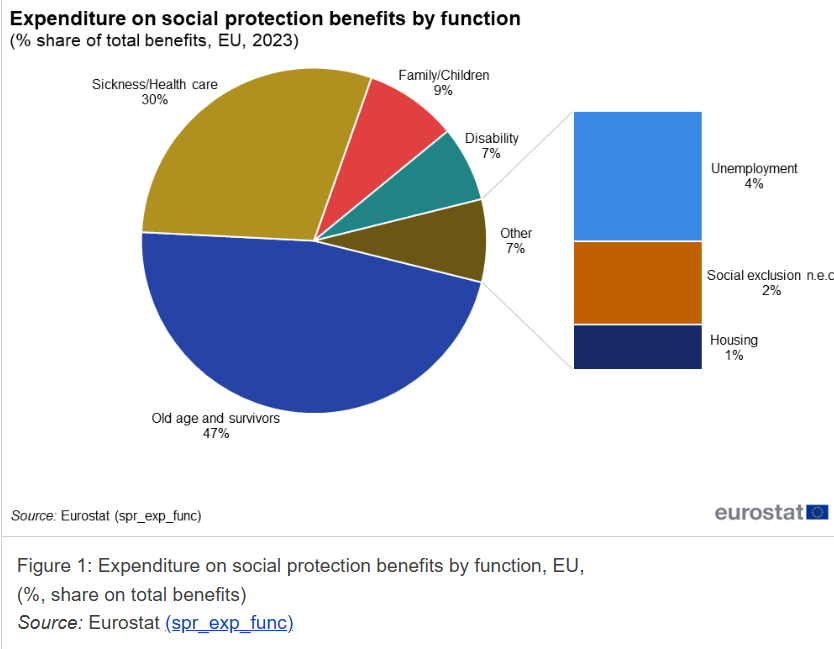
There's a very common misperception that welfare spending is mostly about jobless benefits. In fact, they account for a tiny fraction - just 4% across the EU in 2023. Transfers to the elderly, sick and disabled are around 20 times higher than dole spend.
During Liquidations, all asset correlations go to 1.0
During a global margin call, investors don’t sell what they want to sell, they sell what they have to sell
Always remember that leverage can never make a bad investment good, but it can, sometimes, make a good investment bad
Everybody wants to buy the dip in tech after a 2% drop, meanwhile a lot of real economy deep value stocks with strong dividends are down 50-75% in the past 1-3 years.
Will some dividends get cut? Maybe. But the businesses will recover. Buy the real economy. Sell the ponzi.