.@Apple built a health feedback loop that keeps people coming back.
What started as an #iPhone on your wrist became a window into your body. Wear → learn → insights → repeat.
The ultimate goal in consumer health. https://t.co/9zlFs1ZNI4
I recently joined the TrackCred Human Performance Innovation Summit in Boston.
We discussed product design and heard great perspectives across athletics, health tech, and AI. Thanks to Denis Cranstoun for bringing everyone together.
With PCCPs, expanded real-world evidence, and tighter cybersecurity and lifecycle rules, AI devices are now treated as continuously governed systems. Moving innovation toward responsible, real-world performance at scale. https://t.co/POmnoxjw1o
Signal for device development: even with talk of looser medical AI regulation, not everything will move unchecked. The path forward is innovating while staying grounded in safety, validation, and trust. https://t.co/4rI8yuU99F
AI is no longer just a background tool.
It’s actively supporting decisions and reducing healthcare complexity. As it moves into everyday life through wearables and insights, the focus must stay on transparent use alongside people. https://t.co/5EUm2UKU6U
Innovation proves a product works, but adoption is the real challenge. As Dymeka Harrison notes, strong commercial architecture transforms potential into enterprise value. https://t.co/tnPAC9SFSY
Great design leadership is in asking the right questions.
Leaders who challenge assumptions and embrace feedback, set the stage for teams to create work that’s both innovative and impactful.
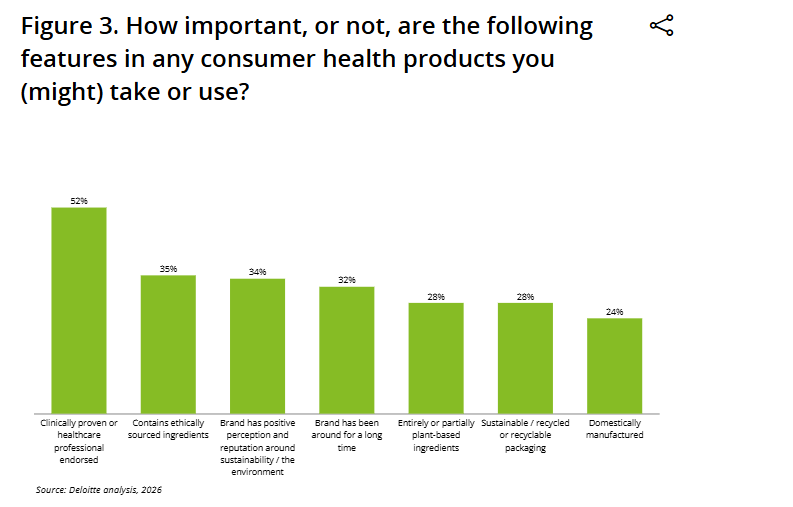
Trust is key in consumer health.
Today’s informed, proactive consumers do their own research, but HCPs turn data into insight, building the credibility and confidence that help people make the right choices.
https://t.co/WBgoPCH12q
Platforms like Perplexity Health connect Apple Health, wearables, labs, and EHRs (2.4M+ providers). That's fewer isolated metrics, more full-picture insight.
Smarter context for better conversations with clinicians. https://t.co/gy7Zjt8UnY
Design shapes experience. If it’s not for everyone, it excludes someone. Accessibility added at the end is costly; built in early, it makes design better for all.
And no, accessible design isn’t limiting. It raises the bar. https://t.co/erQFc2SnuT
.@Microsoft’s Copilot Health is changing consumer health.
Combining wearable data to deliver AI-powered insights. From symptoms to navigating care, privacy-conscious AI is making expert guidance accessible anytime, anywhere. https://t.co/52PkL6XOxb
Accessibility belongs in design.
And it should be an ongoing practice: continuous testing, clear standards, and feedback from people who navigate the world differently. https://t.co/uBNWO1eha2
Wearables and fitness tracking tech have changed how runners see progress.
@Strava stands out.
Its strength is flexibility. It doesn’t define what “counts,” letting movement become a personal scrapbook. https://t.co/ncdfiFRR3y
The challenge of AI is in integration without losing authorship, craft, and critical thinking.
Schools like ArtCenter College of Design show how clear, ethical guidelines keep human judgment and creativity at the center. https://t.co/MZadwVGBHt
Agentic AI is moving from pilots to enterprise scale, changing how work gets done.
Unlike generative AI, agents execute workflows, make decisions, and act across systems, reducing friction and boosting productivity. https://t.co/fSxOG7uUfd
AI in design has become a partner.
It speeds exploration, lifts standards, and frees designers to focus on strategy. It can also boost accessibility by checking contrast, readability, layouts, and suggesting inclusive alternatives. https://t.co/uwvR3Vhlny
@ouraring@ACCinTouch When health tracking feels insightful instead of routine, it actively changes our behavior.
We begin to see patterns, triggers, and cause-and-effect relationships. Insight creates intention. And intention is what turns data into lasting behavior change.
I recently attended the panel “Always On: How Continuous Health Data is Transforming Care,” featuring leaders from @ouraring, Dexcom, Rimidi, and the @ACCinTouch.
And it genuinely shifted my perspective.
@ouraring@ACCinTouch What stood out most is how companies like @ouraring are constantly innovating.
From sleep and readiness insights to now capturing meal photos and tracking composition, they’re layering in meaningful features that keep users learning and engaged.