In our Helm chart, every pgEdge node is its own CloudNativePG Cluster, and at KubeCon + CloudNativeCon North America in Salt Lake City (through Thursday, Nov 12) you can watch a pair of them survive a node failure and a network partition with zero failed writes live - then talk to our team about how to replicate it on your infrastructure.
In the demo, when a node goes down, CloudNativePG restarts the pod while the app writes through the other node. Cut the network between them and both sides keep accepting writes, then Spock, our open-source multi-master replication extension, catches them up once the link returns. The chart sets up Spock across the nodes at install time, and it can wire existing CloudNativePG Clusters into a pgEdge cluster as well.
Matthew Mols built the demo to be more visual than our usual terminal-heavy videos. Everything runs on one laptop. It’s a local kind cluster, so US-East and EU-West are labels and the orders are a demo workload.
The chart is open source at https://t.co/AFR0IvM8dz, and the loop is playing at our booth (Booth #366) if you have questions about it and want to talk more.
#KubeCon #CloudNativeCon #SaltLakeCity #SLC #Utah #PostgreSQL #CloudNativePG #Kubernetes #OpenSource #HighAvailability
KubeCon + CloudNativeCon North America is underway at the Salt Palace Convention Center in Salt Lake City, Utah, and it runs through Thursday, Nov 12. The Showcase floor opened to attendees at 10:45 this morning, and Booth #366 is where you’ll find the pgEdge team, ready to say hi, show you live demos, hand out some swag, and talk about your #PostgreSQL on #Kubernetes architecture or plans.
We’re here! Look for us in Halls A-C and 1-5 on Level 1, open until 5:15 PM today. Local to the Salt Lake City area and heading downtown to the conference? Come on by. 🐘
#KubeCon #CloudNativeCon #SaltLakeCity #SLC #Utah #Postgres #DataEngineering #Kubernetes #TeamCloudNative
Keeping years of history in PostgreSQL gets expensive. Disk fills up, queries slow down, and vacuum overhead keeps growing... all for data your application barely touches. 🐘
pgEdge ColdFront is an open source tool that tiers old PostgreSQL partitions to Apache Iceberg on object storage, while a transparent view keeps them queryable from Postgres. Your application never has to change a query. (It's currently in beta.) 🧊
In a new walkthrough, Muhammad Imtiaz sets ColdFront up against every supported storage backend: SeaweedFS for local dev, AWS S3, Google Cloud Storage, and Azure Blob Storage (ADLS Gen2). ☁️
One interesting part: once the archiver runs, the April partition no longer exists in PostgreSQL... so what happens when you SELECT from the table? The April row still comes back, read live from Iceberg, right next to the row inserted moments earlier. One query, both tiers.
He also flags the gotchas along the way (like why the AWS S3 storage secret needs null in the endpoint slot), and closes with two bonus sections: running the partitioner on its own, and using the compactor to stop small Parquet files from piling up.
Find the full walkthrough on our blog 📖 https://t.co/ofMH3oix2K
#PostgreSQL #Postgres #ApacheIceberg #OpenSource #DataEngineering #DataTiering #DuckDB #AWS #GoogleCloud #Azure #ObjectStorage #DevOps
In a three-node multi-master PostgreSQL cluster, one node came back from an in-place upgrade to PostgreSQL 18 looking healthy to the other two nodes, even though it wasn’t applying any of the changes they sent.
That’s one of the surprises in the latest post from Ahsan Hadi and Susan Douglas, a follow-up to an earlier post on rolling major-version upgrades. Rolling upgrades add a new-version node and retire an old one, which “assumes you can stand up an extra server for every node you need to upgrade.” A lot of customers can’t.
This time, each node gets upgraded where it sits with pg_upgrade --link (Postgres’s major-version upgrade tool; --link hard-links the data files instead of copying them), one at a time, so that node goes down for a few minutes while the other nodes keep taking writes.
The test cluster ran Spock 5.0.13, pgEdge’s open-source multi-master logical replication extension, and the upgrade took one node from 17.10 to 18.6 along with its physical standby, which Patroni manages for high availability. The silent node traces back to something pg_upgrade doesn’t carry over. Resuming Patroni also tripped its system ID check, and PostgreSQL 18’s initdb now enables data checksums by default, which matters if your old cluster runs without them.
Coming from 15 or 16 rather than 17? Check what the post says about logical slots before you plan anything. Within, you'll also find the commands and checks between steps, including how to confirm the upgraded node is applying changes again before you touch the next one.
Read the full walkthrough: 📖 https://t.co/NJMtZF3Dbi
#postgresql #postgres #postgresql18 #dba #database #opensource #highavailability #replication #patroni #devops #sre #distributedsystems
Phillip Merrick says our enterprise Postgres cloud platform, pgEdge Starfleet, lets developers “build at AI speed and then deploy anywhere, without finding themselves at an architectural dead end.” The webinar we ran on October 20 shows how that holds up, and you can still register to watch the recording on demand, free.
You can start on pgEdge-hosted cloud, move to your own AWS, Azure or GCP account, or go on-premises and air-gapped with pgEdge Enterprise Postgres, all on the same community Postgres platform. 🐘 Nothing gets replatformed.
Gil Browdy, who directs engineering for our cloud team, covers how it’s built. Storage and compute are separated in the file system, with Postgres’s own storage layer left in place, which is what lets branches spin up quickly: a branch is a new Postgres server pointed at copy-on-write blocks, with its own connection string and its own MCP and RAG servers, and it’s charged only for the time it exists. Backups come two ways, hot volume snapshots for a near-instant restore and durable backups that ship the write-ahead log (WAL) to object storage for when the host doesn’t survive.
The AI tooling is built in. The MCP server (Model Context Protocol, the standard that lets AI agents talk to external systems like your database) is read-only by default, and the RAG server (retrieval-augmented generation) runs hybrid vector and keyword search over your own tables. Both are open source and free to use on Starfleet. pgEdge SafeSession, an open source Postgres extension, blocks DDL, COPY FROM, GRANT and REVOKE on read-only connections, and IP allow lists start closed, so nothing is reachable until you add a CIDR range, set separately for each database, branch and service.
Then Paul Rothrock drops a table on a branch live while the production table stays right where it was. The Q&A covers moving an existing Postgres database over with a dump and restore, how hot and durable restores differ, and where to start with branching.
Want all the details? Register free and watch on demand:
https://t.co/yQiTQ5LQvO
#postgresql #postgres #webinar #opensource #database #cloud #devops #aiagents #databasebranching #developers
You don't need to run a Kubernetes cluster or be a CNCF regular to get something out of KubeCon + CloudNativeCon North America, which opens in Salt Lake City next week (Nov 9-12). If you're a platform engineer or SRE, it's where the tools you run every day get explained by the people who maintain them. If you're a developer or DBA whose app just moved onto Kubernetes, it's where you find out what that changes for your data. And if you lead a team deciding what to adopt next, you can compare notes with 9,000+ attendees from 2,100+ organizations who have already made that call.
The program has 400+ sessions, and this year it leans into the infrastructure underneath AI: inference, agentic workloads, GPU scheduling and model serving, alongside platform engineering, observability, security, and running stateful systems like databases on Kubernetes. Monday is co-located events, including Agentics Day (MCP + Agents), Platform Engineering Day and Observability Day. Tuesday through Thursday brings the keynotes, breakouts, Maintainer Tracks and ContribFests.
Keynote and breakout recordings should be on the CNCF YouTube channel within about two weeks, but a recording can't answer your follow-up question, and the Maintainer Tracks and ContribFests put you in the same room as the people who write the code. Seating is first come, first served... so it's a good idea to build your agenda before you land.
We'll be there too. Come by Booth #366 to talk Postgres on Kubernetes: pgEdge is 100% open-source enterprise Postgres that gives you complete deployment flexibility. And yes, it does work with CloudNativePG, and there's a Helm chart if you'd rather start from the manifests. We'd love to meet you. 🐘
Still deciding? The All-Access pass adds Monday's co-located events, and the KubeCon + CloudNativeCon Only pass covers Tuesday through Thursday plus Monday's Project Lightning Talks. Register here: 🎟️ https://t.co/9tfkqVZLSU
#KubeCon #CloudNativeCon #PostgreSQL #Kubernetes #CloudNative #PlatformEngineering #OpenSource #TeamCloudNative
The main heap for a 100,000-row PostgreSQL table is 47 MB when TOAST moves the big JSON column out of line and 318 MB when it doesn't (heap only, so the toast table's own storage isn't in that number). TOAST, The Oversized-Attribute Storage Technique, is how Postgres keeps large values in a hidden companion table and leaves a pointer in the row.
Shaun Thomas's latest PG Phriday starts with a slow event log he once fought with, and the twist is that the problem wasn't necessarily TOAST but the column itself. Counting rows ran in 26 ms against 91 ms and an UPDATE took 62 ms against 128 ms, because small rows pack densely. Pulling one field out of the JSON took 288,127 buffer accesses against 40,754, because every toasted value means a trip to the toast table.
So what do you do when the big column is the problem? Splitting it into its own table behind a LEFT JOIN view dropped the main heap from 47 MB to 5 MB, and the planner skips the join for queries that never ask for the column. Lowering toast_tuple_target won't get you there, since rows under TOAST_TUPLE_THRESHOLD never get toasted. And lz4 compressed nearly 30 times faster than pglz in his test, on very repetitive data, so your ratio will vary.
The queries and their output are in the full post: https://t.co/RLVvUm1w4s
#postgresql #postgres #pgphriday #dba #database #performance #sql #compression #lz4 #devops #opensource #dataengineering #programming #tech
Should you go to KubeCon + CloudNativeCon North America? A quick checklist.
Check any that apply:
[ ] You run, or are about to run, stateful workloads on Kubernetes
[ ] You’d like to be in a room with 9,000+ people building cloud native infrastructure, across 400+ sessions
[ ] You want to meet the maintainers behind the projects you rely on (Maintainer Tracks and ContribFests run all week)
[ ] You like a head start: Monday has co-located events like Platform Engineering Day, Observability Day and Cloud Native AI + Inference Day
[ ] You’d rather not rent a car: the Salt Palace sits inside the downtown free fare zone, and TRAX gets you from the airport in about 20 minutes
Checked even one? Put Salt Lake City, November 9-12, on your calendar.
pgEdge will be there too, talking Postgres on Kubernetes with the cloud-native community. Come by the pgEdge table in the sponsor area and say hi.
Register: https://t.co/0uRmhOmzJD
#KubeCon #CloudNativeCon #PostgreSQL #DevCommunity #SaltLakeCity #Utah #TechConference #Tech #Kubernetes #CNCF #CloudNative #CloudEngineering #CloudOps #Containers #Docker
AI has made it easy to prototype an app in a weekend. Getting it into enterprise production is the hard part.
In this clip, Phillip Merrick explains pgEdge Starfleet in a nutshell: a developer-friendly Postgres cloud platform that lets you build fast, then deploy where your data needs to live. That can be pgEdge-hosted cloud or your own cloud (AWS, Azure, or GCP). With pgEdge Enterprise Postgres, it can also be on-premises or air-gapped. It’s the same Postgres platform in each case, so you don’t have to replatform on the way to production.
Two things set it apart:
👉 Deployment flexibility. Start in minutes on our cloud, then move to your cloud or your own infrastructure when compliance, sovereignty, or scale demands it.
👉 Postgres expertise. Starfleet is built by people with decades of Postgres experience, some going back to the early days of the open source project.
It also ships with AI tooling built in: an MCP server for connecting tools like Claude Code, Cursor, and Replit, a RAG server, and a PostgREST API server. SafeSession keeps read-only MCP connections truly read-only.
Starfleet is generally available now. You get a 14-day free trial with no credit card, and plans start at $25/month.
Watch the clip, then try it: https://t.co/dUxapdTBeV
#dev #programming #appdev #applicationdevelopment #softwareengineering #softwareengineer #hacking #aiengineering #llm #llmops #devops #dba
AI has collapsed the time it takes to prototype an app, but the demands of production (compliance, scale, security) haven’t changed. That gap is where Gil Browdy, pgEdge’s Director of Engineering for cloud, started last week’s webinar on pgEdge Starfleet, our enterprise Postgres cloud platform... and you can still register and watch it on demand.
The session follows the build. Starfleet runs standard community Postgres, with branching handled by copy-on-write at the file system layer instead of a replaced storage layer, so a branch spins up fast, gets its own connection string and MCP and RAG servers, and is billed only for the time it exists. Security is on by default: MCP servers are read-only out of the box, IP allow lists deny everything until you say otherwise, and pgEdge SafeSession keeps read-only connections read-only.
Then Paul Rothrock drops a table on a branch live, with the production table left still sitting there. The Q&A covers restores, bringing over an existing Postgres database, and a good first branching workflow.
Watch on-demand: 🎬 https://t.co/tbKtzQrEIc
#postgresql #postgres #webinar #opensource #database #cloud #developers #databasebranching
A multi-master PostgreSQL cluster can report every subscription as healthy while the new node publishes nothing to the rest of the cluster. That’s one of the things Ahsan Hadi ran into while testing a rolling upgrade of a live PostgreSQL 17 cluster to 18 with Spock, pgEdge’s open-source extension for multi-master logical replication, following Susan Douglas' documentation on rolling upgrades. The approach: add a PostgreSQL 18 node, move traffic, retire the old node, repeat. In the test the application never lost a writable node.
The catch is that none of the problems he hit showed up in a status check. His list of what to watch for: with DDL replication off, the new node’s tables sit in no replication set until you add them, the new node’s Spock slots need failover = true before slot sync will touch them, and Patroni overwrites Spock’s settings unless they’re in its etcd config.
So test writes in both directions before you remove anything. A failover test is still on his list, which means a follow-up post is coming. Stay tuned...
Read the full walkthrough from Ahsan and Susan: https://t.co/cWXePxZ962
#postgresql #postgres #opensource #database #dba #highavailability #distributedsystems #patroni #devops #sre
PostgreSQL Conference Europe in Valencia is all wrapped up - and it was a fabulous event!
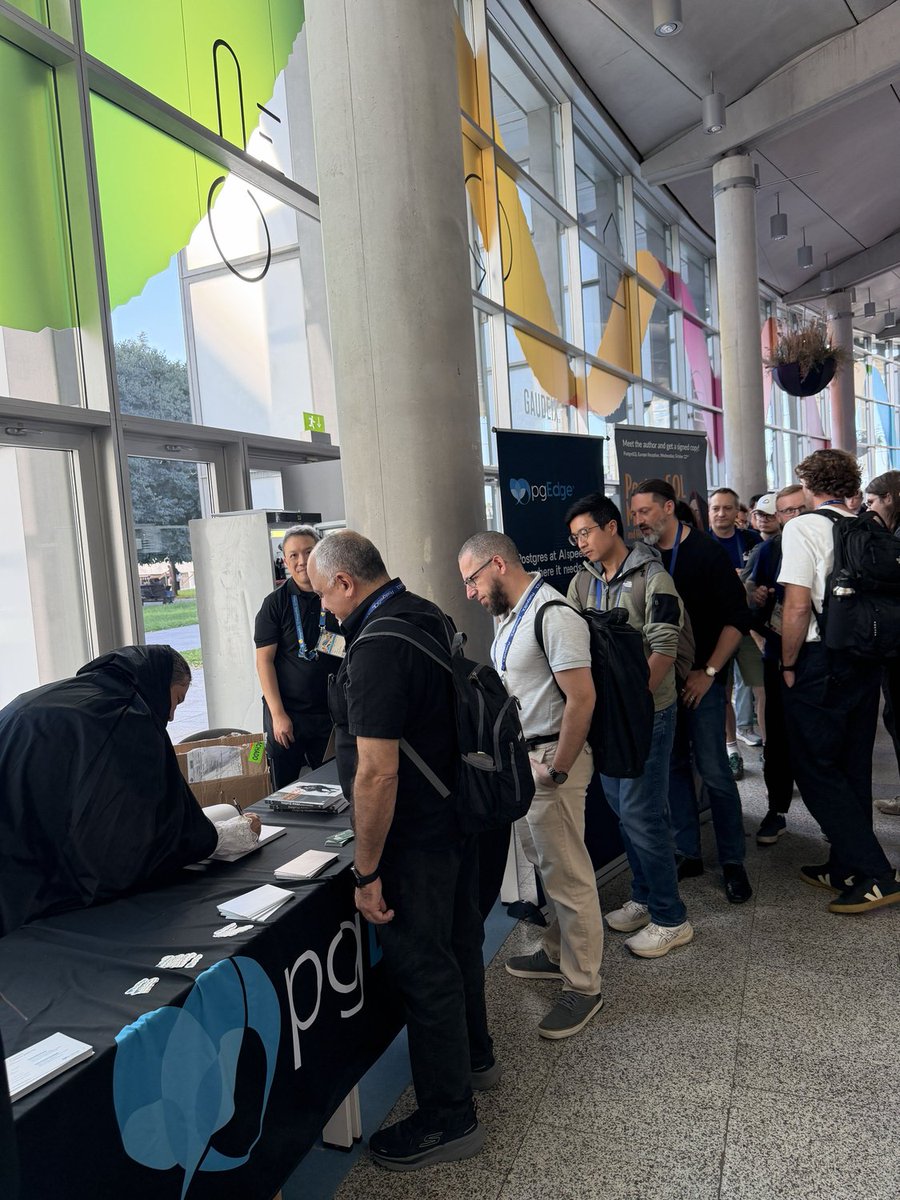
The book signing turned the pgEdge table into a mob scene. :-) Our own Jimmy Angelakos was a rockstar signing copies of his Manning book, PostgreSQL Mistakes and How to Avoid Them, a tour of common PostgreSQL mistakes with a demo for each, in full costume through two boxes of books.
The talks were packed all week, and our team gave several: Dr. Ibrar Ahmed on eight steps to database disaster recovery, Phillip Merrick on agentic engineering, operations and analytics with Postgres, and Jimmy on radar and radar-ui, agentless diagnostic snapshots for PostgreSQL, plus the On-Call Confessions panel. Andrei Lepikhov gave a talk too on “Finding the Invisible: Spotting Query Planner Issues Before They Appear”, introducing pg_track_optimizer, an extension he built to compare what the query planner expected with what actually happened.
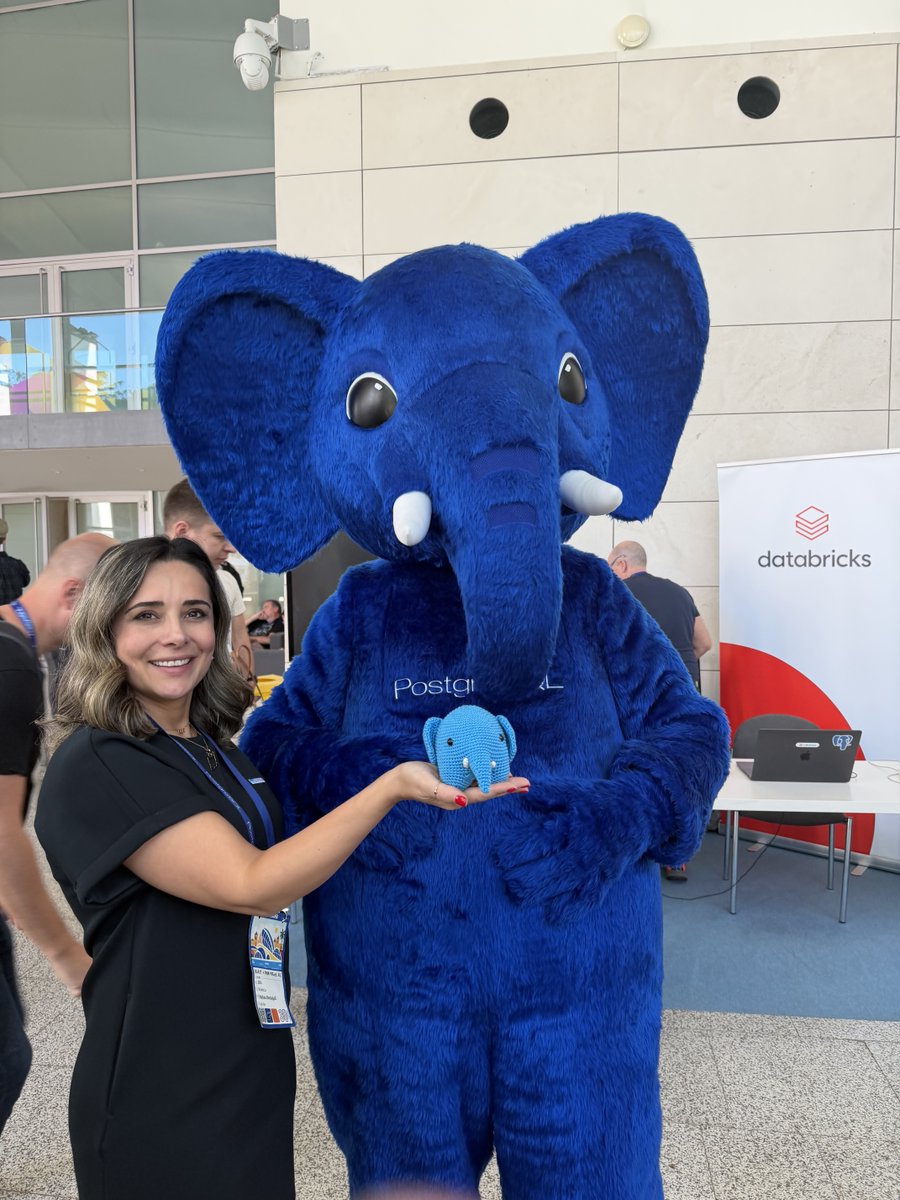
Thank you to PostgreSQL Europe for organizing, and to everyone who stopped at the pgEdge table in the sponsor area. It was a fun week. 🐘
Miss getting a copy of the book in person? You can still get it online: 📖 https://t.co/6l9UbB02Dt
#postgresql #postgres #queryplanner #dba #opensource #community #conference #databases #spain #programador #tecnologia #devcommunity #valencia
Someone runs UPDATE orders SET status = ‘cancelled’; and forgets the WHERE clause. Now what?
For most Postgres teams, the answer is an afternoon of restore-and-reconcile: bring up a copy from before the mistake, pull out the damaged rows, and patch them into a live table that kept moving. It works. It also ties up your most senior person for hours.
Muhammad Aqeel built pgVolvra to turn that into one statement. It’s an open-source tool for row-level undo and history in Postgres. It records changes on the tables you choose, then reverses only the rows a mistake touched. And if users changed some of those rows in the meantime? Undo stops and tells you which ones are in the way. There’s deliberately no force flag.
It’s plain SQL, so no extension and no superuser, which is why it runs on managed Postgres. Aqeel verified it on Supabase, Neon, and pgEdge Starfleet, our Postgres cloud platform. There’s also an optional archive tier, plus replay for the hours a restore leaves behind.
It’s a beta (Postgres 14 through 19), so reports of where it breaks are welcome.
Check out the blog post: https://t.co/tZKP7tYEfS
You can find the code, docs, and test suite on GitHub 🔗 https://t.co/b37O4hJagW
#PostgreSQL #Postgres #OpenSource #DBA #DatabaseAdministration #DataRecovery #SQL #DevOps #DataEngineering #pgEdge
pgAdmin ships a new release roughly every six weeks, and until recently the machinery behind those releases was a Jenkins server that only a few people could get into.
🔎 pgAdmin is the open source graphical management tool for PostgreSQL, started by Dave Page nearly 30 years ago, and he still works on it as part of his job at pgEdge. His two new posts cover how its releases get built.
The first blog describes the move of the entire build and release process to GitHub Actions, so it lives in the repository and goes through pull requests like any other code. The second covers pgbuild, which builds the libraries bundled into the desktop packages and pins a SHA-256 digest for each one, so a swapped archive fails the build.
These engineering deep-dives explore a build config hidden in a web UI, “latest” tags that shift underneath you, and unverified dependencies can bite any project that ships packages, images or binaries. Dave walks through the fix, in the open.
Part one, the build farm: 📖 https://t.co/KSi6TUA85w
Part two, pgbuild: 📖 https://t.co/SEB5ObZOOU
The project: 🔗 https://t.co/Xe5GAwD0cc and https://t.co/8BLrQA4xL9
#postgresql #postgres #pgadmin #opensource #githubactions #cicd #devops #programming #engineering #deepdive #tech #developer #devcommunity #database #dba #softwareengineer
Phillip Merrick, pgEdge’s CEO and Co-Founder, speaks at PostgreSQL Conference Europe in Valencia this morning, 11:45 to 12:35 local time in SM1-A: “Agentic Engineering, Agentic Operations and Agentic Analytics with Postgres.”
The talk looks at how AI agents can help across the whole Postgres lifecycle: building applications, diagnosing database problems, and analyzing years of historical data. We've addressed all three situations through fully-open source tools (under the PostgreSQL license): The Agentic AI Toolkit covers engineering, the AI DBA Workbench covers operations and administration, and pgEdge ColdFront (currently in public beta) covers analytics. (🔗 Want to check these out ahead of time? Visit our GitHub: https://t.co/zEuyNPSWgn)
We’re also giving away free signed copies of PostgreSQL Mistakes and How to Avoid Them, Jimmy Angelakos’s 2024 Manning book on the mistakes Postgres users tend to make and how to sidestep them. Come on by the booth anytime to meet the author and get a copy 📖
Session details: https://t.co/I7f0XdAdcU
#postgresql #postgres #agenticai #aiagents #valencia #spain #programador #tecnologia #devcommunity #techconference #tech #programming
An application built quickly with AI coding tools still has to run somewhere that meets the enterprise's security, compliance, and reliability requirements. 🔒
That's the gap Phillip Merrick, co-founder and CEO of pgEdge, takes on in CTO Magazine. On where these apps end up running, his point is that "enterprise data often can’t leave the enterprise."
Gizel Gomes' piece turns that into a checklist for CTOs: weigh security, compliance, and data needs before choosing where an AI-built app runs (a vendor-managed cloud, your own cloud account, or on-premises), measure how often an AI agent gets things wrong and decide whether that rate is acceptable, steer teams toward vetted AI coding and database platforms before shadow IT does the choosing, and give every AI-built application a long-term owner.
pgEdge Starfleet, our enterprise Postgres cloud platform, is built around the same view: start on pgEdge-hosted cloud, then deploy to your own cloud or on-premises with pgEdge Enterprise Postgres, without replatforming.
Read the full piece in CTO Magazine: 📖 https://t.co/wexLpIEHJs
#postgresql #postgres #cto #enterprise #ai #aicoding #security #compliance #datasovereignty #shadowit #governance #opensource #database #devops
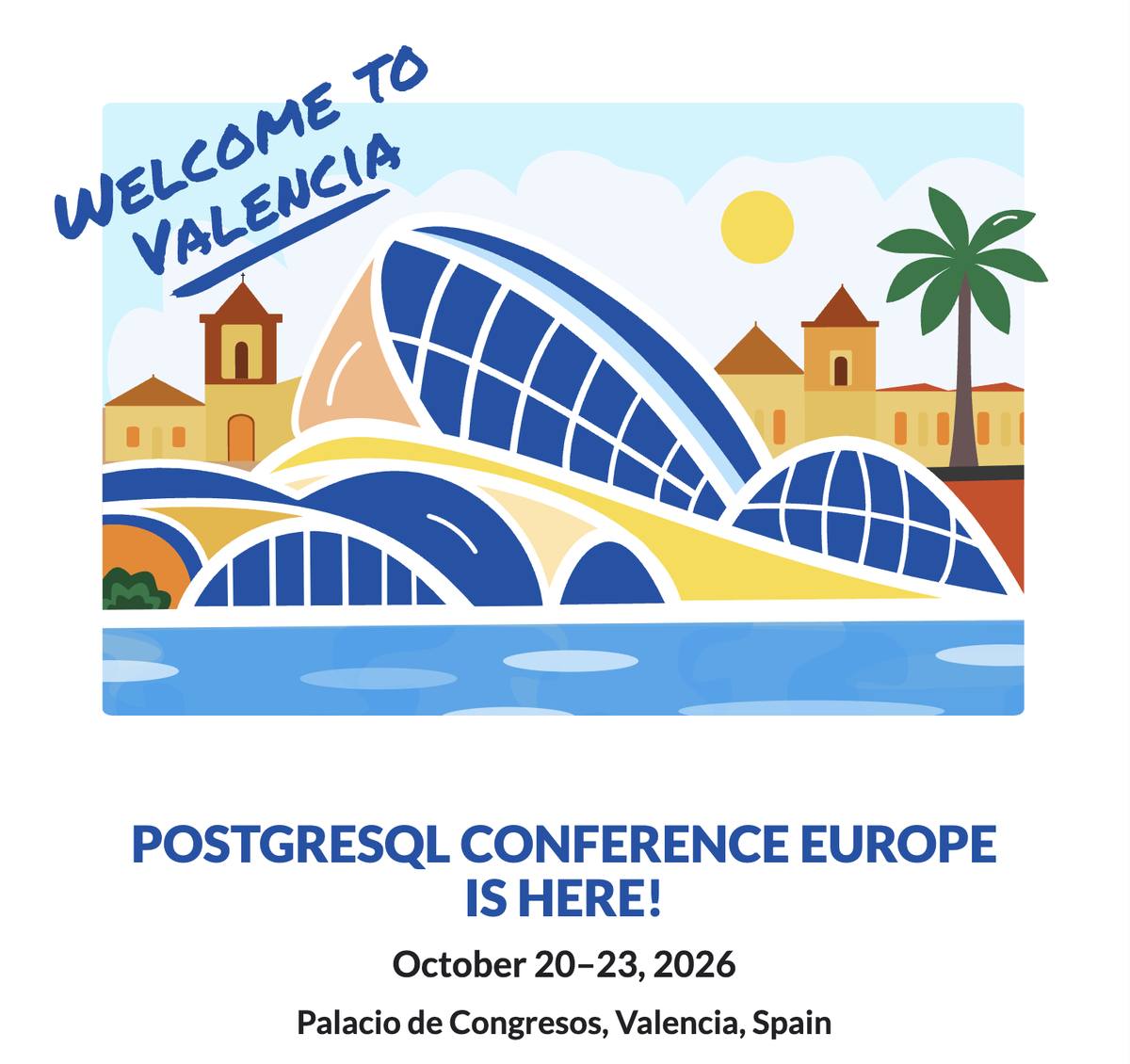
We're in Valencia for PostgreSQL Conference Europe 2026, and day one is underway.
New to Valencia (or the conference)? The conference website covers more than the schedule - it has venue and travel info, how lightning talks work, details on the social event, ideas for things to do around Valencia, and more info about the Community Events Day on Friday. Check it out if you haven't already 👀
Four pgEdge sessions are on the program this week. Jimmy Angelakos is on the Postgres On-Call Confessions panel (Tue 13:45, Audit 1), Dr. Ibrar Ahmed walks through eight steps to database disaster recovery (Tue 14:45, SM1-B), Phillip Merrick talks agentic engineering, operations and analytics with Postgres (Wed 11:45, SM1-A), and Jimmy is back Thursday with radar and radar-ui, agentless diagnostic snapshots for PostgreSQL (10:25, Audit 1). All times are Valencia local.
We're a proud Gold Sponsor of the event. Don't forget to come by the pgEdge table in the sponsor area. If hosted Postgres for enterprise requirements is interesting to you, we'd like to hear what you're dealing with. pgEdge Starfleet hosts 100% standard PostgreSQL on pgEdge-hosted cloud or in your own AWS, Azure or GCP account, with your choice of deployment at any point.
👉 Learn more about the conference: https://t.co/pkpd2zzDBk
#postgresql #postgres #valencia #spain #espana #basededatos #tecnología #programador #opensource #database #techevent
Spinning up a PostgreSQL database for a new app takes minutes. Finding out later that the platform can't follow the app into production is the slow part. 💫
That's the problem behind today's webinar, live at 8 AM PT (11 AM ET): "Build on Cloud, Deploy Anywhere: pgEdge Starfleet Deep Dive + Live Demo." pgEdge Starfleet is an enterprise Postgres cloud platform built on 100% open source community Postgres, and the hosted side is built for the fast start. Paul Rothrock (Solutions Engineer) demos sign-up to a running database in under two minutes, and the session covers true copy-on-write branching, with fully isolated database branches created in just a few minutes.
Gil Browdy (Director of Engineering, Cloud) talks about how it fits together once you're ready to move: from pgEdge-hosted cloud to your own AWS, Azure or GCP account, or on-premises and air-gapped with pgEdge Enterprise Postgres, without replatforming.
The live Q&A at the end - don't forget to bring your questions to the session.
This is happening today at 8 AM PST // 11 AM EST. Register now to join live or watch on-demand later: 🎙️ https://t.co/02akHiA9O4
#techwebinar #techpodcast #webinar #postgresql #postgres #developers #appdev #cloud #database #opensource #devtools #devcommunity
Where your PostgreSQL database runs is an easy decision on day one and a harder one when the application has to move. 🐘
Tomorrow, Oct 20 at 8 AM PT (11 AM ET), pgEdge hosts "Build on Cloud, Deploy Anywhere: pgEdge Starfleet Deep Dive + Live Demo." Gil Browdy (Director of Engineering, Cloud) covers how pgEdge Starfleet, an enterprise Postgres cloud platform built on 100% standard, open source community Postgres, works. Paul Rothrock (Solutions Engineer) then demos the path from sign-up to a running database in under two minutes.
For developers, that means starting on pgEdge Starfleet Managed, then deploying to your own AWS, Azure or GCP account, or on-premises or air-gapped with pgEdge Enterprise Postgres, without replatforming. True copy-on-write database branching is on the agenda too.
The live Q&A at the end is with Gil Browdy, one of Starfleet's key architects, so come with questions.
Register now to join live or watch on-demand later: 🎙️ https://t.co/CyYXhjT97t
#postgresql #postgres #webinar #developers #appdev #backend #cloud #database #opensource #devtools #devcommunity #techcommunity #techwebinar #techpodcast #podcast #tech
"It appears that agents are now spinning up more Postgres databases than humans."
That's one line from pgEdge's sponsor interview with PostgreSQL Conference Europe, now live on the conference site. We talk about where we see Postgres growing (agentic platforms, and enterprises moving off legacy databases), why an open source license matters when you need to inspect the technology you depend on, and what regulated industries and government ask of a database: compliance, security, high availability, and flexible deployment.
The interview also covers the people behind it: a remote-first, globally distributed team that includes a Postgres core team member, significant contributors, and board members of PgUS, PGCA, and PGEU.
Read the interview: 🎙️ https://t.co/3hRmWMFyFZ
PGConf EU 2026 runs October 20-23 in Valencia, Spain, and pgEdge is a Gold Sponsor. Haven't registered yet? You can do that here: https://t.co/0SUMh7JcFk
Already on your way? Come by the pgEdge table in the sponsor area and say hello. We'd love to hear what you're building.
#PostgreSQL #Postgres #OpenSource #PGConfEU #Valencia #Databases #AgenticAI #DevOps #DBA #OpenSourceDatabases