Moving initially at 16 km/s it slowed down to well under 10 km/s. The bright flare at the end signals that a lot of mass was consumed at the terminal point so while some small meteorites might have been produced we don't expect a large fall of rocks in this case.
So it is unlikely we will ever be able to confidently associate an infrasound signal with an impact from 2026 JN4. This is not surprising given how small was the expected energy release.
Infrasound records tend to be filled with signals (which is why it is often termed the infrasound "zoo"). In this case it is much more likely this is a false positive. Without any other station to confirm this is not a reliable confirmation of impact for 2026 JN4.
ISED as of about an hour ago released its decision about space debris mitigation. This is a disaster for the Canadian space industry.
Propulsion mandatory for satellites >600 km and collision avoidance maneuvers are mandatory for all satellites above crewed missions, which considering Tiangong flies as low as 340 km, is every satellite.
https://t.co/6ygOtzoUUv
The crew of Artemis 2 reported six flashes of light while passing behind the Moon. We've seen those kinds of flashes before.
Read more: https://t.co/1fpuYwKoLX
Airwave from the Artemis2 launch reached @Astro_Jeremy's hometown at 8:11 pm EST. @WesternU Elginfield Observatory infrasound station detected #ArtemisII just after launch ascent as it was heading over the Atlantic. Green box shows airwave arrival lasting several minutes.
#MeteorSighting: A fireball was observed by witnesses in Illinois, Indiana, Michigan, Ohio, Wisconsin, and the Canadian province of Ontario on the night of March 23. The meteor was first detected over the Michigan town of Hope. It traveled northeast and disintegrated above Saginaw Bay. At its peak, the fireball was 40 times brighter than the planet Venus.
🔗 https://t.co/3BJA5KpyrA
Eyewitness accounts supplied by the American Meteor Society
☄️ CONFIRMED BY NASA: Eyewitnesses in Texas observed a bright fireball Saturday, March 21, at 4:40 p.m. CDT.
Current data indicates that the meteor became visible at 49 miles above Stagecoach, TX northwest of Houston.
It moved southeast at 35,000 mph, breaking apart 29 miles above Bammel, just west of Cypress Station.
The fragmentation of the meteor - which weighed about a ton with a diameter of 3 feet - created a pressure wave that caused booms heard by some in the area. Doppler weather radar also showed meteorites produced between Willowbrook and Northgate Crossing.
Eyewitness accounts supplied by the American Meteor Society
A meteor - nearly 6 feet in diameter and weighing about 7 tons - entered Earth’s atmosphere near Cleveland, Ohio, on March 17, 2026, creating a light show in the sky and the opportunity to find pieces of the space rock on Earth.
The meteorites are suspected to be Eucrites, many of which come from the asteroid 4 Vesta. Watch to learn more about this fireball and how to find and care for meteorites!
Learn more at https://t.co/l866GnFnNm
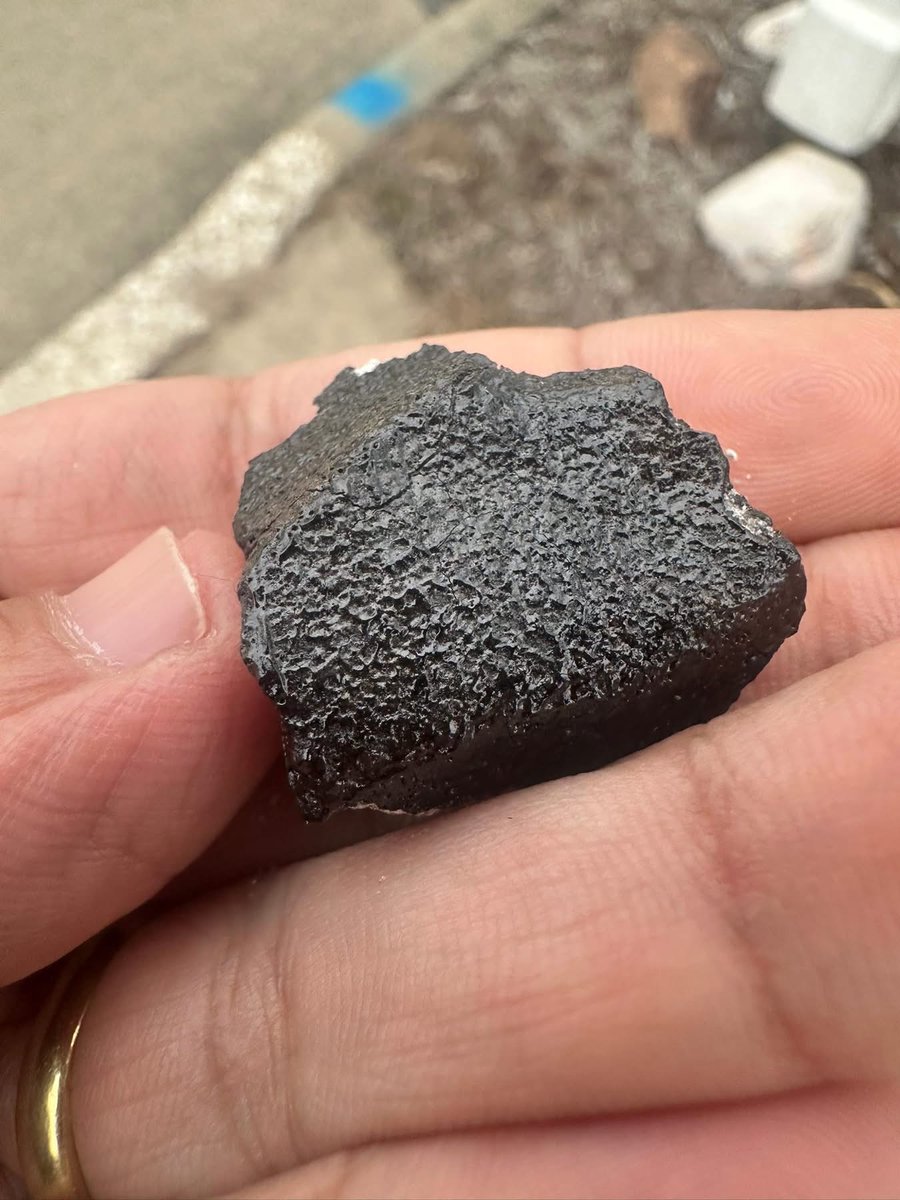
Here it is! FIRST CONFIRMED METEORITE. Roberto Vargas, a Meteorite Hunter from Connecticut was the first to find an official fragment from the St. Patrick's Day Asteroid Explosion in Medina County Ohio. It weighs 10 grams. Officials from the American Meteor Society also confirmed 2 other 5 gram fragments were found nearby today. All are rare fragments known as "achondrites," formed by the melting and re-crystallization on larger asteroids. No meteorite of any kind has been found in Ohio since the 1990s...until today. Truly historic! Show this to you friends and family.