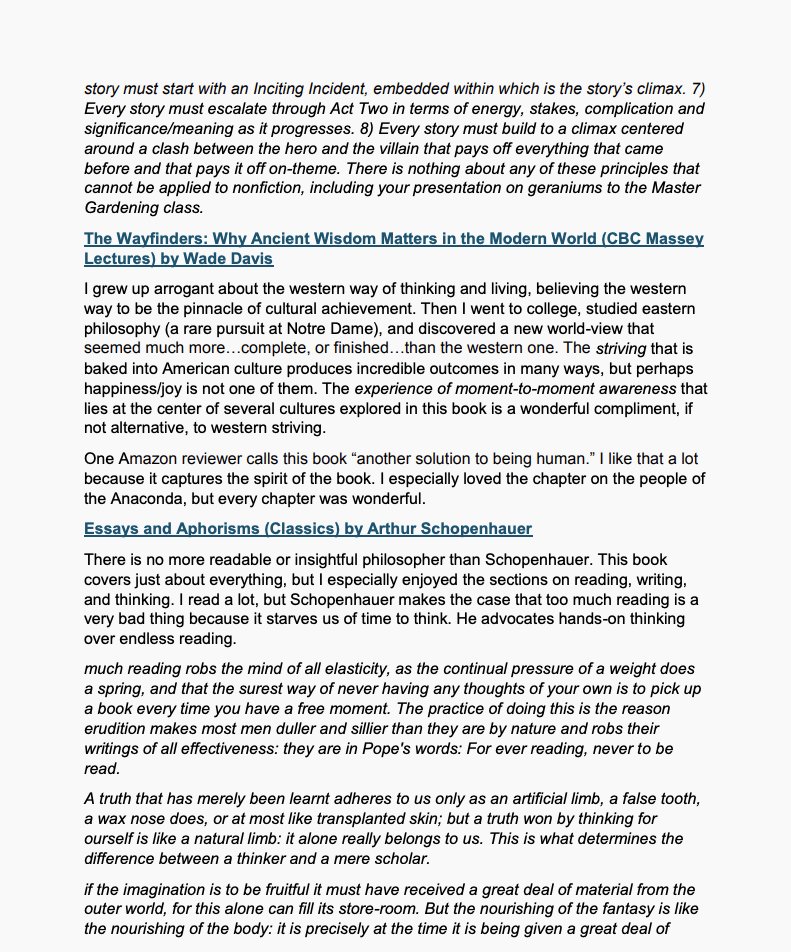
4 books that changed my life:
1. Insanely Simple - Ken Segall
2. Invent & Wander - Jeff Bezos
3. The 15 Commitments of Conscious Leadership - Jim Dethmer
4. Poor Charlie's Almanack - Charlie Munger
Read these in the next 60 days.
I guarantee you will become 10x happier.
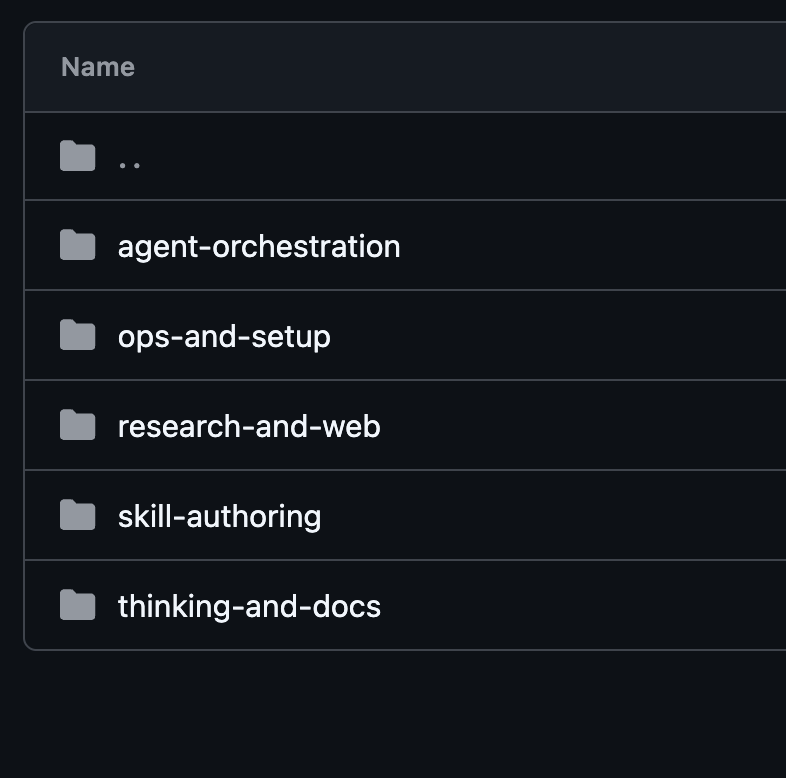
im releasing all my agent skills to the public
this is hundreds of hours of trial & error
every single global .agents skill i have
go grab it. it's free.
ELON MUSK EMAILED HIS TEAM: "ANDREJ IS THE #2 COMPUTER VISION MIND ON EARTH, AFTER ILYA SUTSKEVER."
At 22 Andrej Karpathy could solve a Rubik Cube in 16 seconds. he spent the next 17 years cracking a harder pattern: teaching machines to see.
the arc almost nobody traces:
→ at 15 he left Slovakia for Toronto to build quantum computers
→ quit it for AI because he "couldn't get his hands dirty"
→ studied neural nets under Geoffrey Hinton, the godfather of the field
→ did his Stanford PhD under Fei-Fei Li, teaching machines to describe images
in 2012 he wrote that computer vision was "really, really far away."
in 2014 he beat Google best model by hand 5.1% error to its 6.8%.
then it compounded.
→ co-founded OpenAI in 2015
→ Musk pulled him to Tesla to run Autopilot
→ fused 8 cameras into one 3D brain that could actually drive
when Musk poached him, he wrote: "The OpenAI guys are going to want to kill me. But it had to be done."
5 years later he returned to OpenAI, coined "vibe coding," and launched his own school.
now he trains Claude at Anthropic the mind teaching the model to build its own model of the world.
Meta is dangling $100M signing bonuses to poach the people sitting beside him.
and here's the part that should scare you:
one of the sharpest programmers alive just admitted he's never felt more behind.
how do you keep up with a pace this fast?
READ QUALITY BOOKS:
1) The Iliad by Homer
2) The analects by Confucius
3) The Republic by Plato
4) The prince by Machiavelli
4) Critique of pure reason by Kant
5) Hegel’s Phenomenology of spirit
6) The rose and fall of Athens by Plutarch
7) Mediations of Marcus Aurelius
Build startups for agents. I think it's the biggest opportunity of the next 10 years.
1. Agents live inside harnesses like Hermes. If you're the tool it loads by default or reaches for first, you're golden. This happened in desktop, mobile eras and created huge companies.
2. Agents burn money in ways no human would. One bad loop spends $100 in tokens in eight minutes. Spend controls for agents is Ramp for agents.
3. Agents need memory they can trust. Become the shared brain they read and write to and you become infrastructure.
4. You obv don't hand an agent your real Stripe account. You give it a sandbox. Safe environments for agents is a category nobody's clocked.
5. Onboarding flips. Humans click around for ten minutes. Agents onboard by reading your docs. Your docs are now your product.
6. Agents get scammed by other agents. A track record you can check before you trust one becomes real money.
7. An agent needs to prove it's acting for a real person and has the authority to spend. Who builds the permission layer?
8. Escrow for machines. Money that only releases when the job is actually verified done, no human checking.
9. Agents fail silently and weirdly. Someone will build the "why did my agent do that" replay and it'll be mega valuable.
10. Refunds and disputes between agents need a judge. An agent did the job badly, who decides? A court for machines.
11. Agents need throwaway payment methods per task, so they don't leak your real card. Virtual cards for agents, spun up and killed on demand.
12. A human hits rate limits and shrugs. An agent hits them and the whole workflow dies. Selling reliable, high-throughput access becomes its own business.
13. Agents need to negotiate. One agent buying from another will haggle on price and terms in milliseconds. The protocol for that doesn't really exist yet.
14. When an agent commits on your behalf, someone's liable. A legal and insurance layer for agent actions has to get built. Probably venture funded idea.
15. Agents need to run 24/7 somewhere. Selling the always on box an agent lives on is going to be a big business.
16. Then the physical world shows up. A warehouse robot paying for its own compute. A home robot ordering its own parts. Machines with wallets.
17. Agents start hiring robots. A software agent posts a real world job, a humanoid picks it up. A marketplace for machine labor.
18. Robots need to prove they did the physical job. Verification of real-world work, photos, sensors, proof, becomes its own layer.
Note: more ideas like this will be shared on @ideabrowser
19. Prompt and skill versioning becomes its own git. When your agent gets worse overnight, you need to roll back the exact skill or instruction that broke it. Version control built for agent behavior.
20. Agents will start subscribing to other agents. Your research agent pays a monthly fee to a specialist agent that's really good at one thing. Recurring revenue, machine to machine.
21. Companies will post jobs that only agents can apply to. "Wanted: an agent that can do XYZ for under like $100 per task." A job board where the applicants are all machines. Basically, fiverr for machines.
The internet got built for people. Mobile got built for people. This wave gets built for machines, and we're as early as it gets.
Go build for them.
Anthropic engineer:
"You're not supposed to prompt Claude. You're supposed to build a system that prompts itself."
In 45 minutes she shows exactly how to build an agent that improves itself.
Most people are still doing all of this by hand.
Watch the session, then save the guide below.
Marc Andreessen went on Chris Williamson's podcast and broke down exactly how Elon Musk runs multiple companies at once
No other CEO on Earth does this:
1. Every week, Musk shows up at each of his companies, identifies the single biggest problem that company is having that week, and fixes it. Then he does that for 52 weeks in a row. At the end of the year, each company has solved its 52 biggest problems. Meanwhile, most large companies are still having the planning meeting for the pre-planning meeting for the board presentation with the compliance review and the legal review attached.
2. This is not a new operating method. It is actually how the great industrialists of the late 1800s and early 1900s ran their companies. Henry Ford, Andrew Carnegie, Thomas Watson, who built IBM. Total devotion from the leader to fully and deeply understand what the company does, be in the trenches, talk directly to the people doing the work, and be the lead problem solver in the organization. Andreessen says he is not aware of another current CEO who operates this way.
3. The framework Musk uses is the bottleneck. In any manufacturing chain, there is always one thing holding everything up. Sometimes it is raw materials at the start. Sometimes it is warehousing at the end. Sometimes it is in the middle. The job is to find it and remove it. Musk has universalized this concept across every company he runs. In any given week, there is one main bottleneck. He micromanages the solution to that one thing and delegates almost everything else.
4. Musk delegates almost everything. Andreessen is clear about this. He is not involved in most of what his companies are doing. He is involved in the one thing that is the biggest problem right now. Once that is fixed, he moves to the next biggest problem. Everything else by definition, is running better than the bottleneck, so it does not need him.
5. When Musk identifies the bottleneck, he goes directly to the engineer who actually understands it. not the VP of engineering, not the director, not the manager. The individual contributor who has the actual technical knowledge. He sits in the room with that person and fixes the problem alongside them. He does not ask for a report to be reviewed in three weeks. he shows up at the keyboard or on the manufacturing line and works through it overnight if necessary.
6. This is why technical people who work for Musk say it was the best experience of their lives. Andreessen's framing: if you are stuck on a problem you cannot solve, Elon Musk is going to show up in his Gulfstream, sit with you in front of the keyboard, and help you figure it out. For an engineer who genuinely cares about the work, that is an almost incomprehensible level of support from the CEO of the company.
7. Business school teaches the opposite of this: management as a generic skill applicable to any industry. Soup company or a rocket company, the management principles are the same. process, balance sheet, meeting schedules, compliance, executive motivation, interpersonal conflict resolution. Andreessen says those skills are useful in many contexts. They just give you nothing; you need to do what Musk does. And Musk pushes as far as he can away from all of that so he can spend all of his time doing the things only he can do.
period in your life where you start to realize what it is all about and how the game is structured. if you are one of the lucky ones, you realize that life is not a linear battle but a full-on open front where you will have to take care of multiple things at once
I genuinely don't understand why everyone isn't using this yet
Andrej Karpathy, a co-founder of OpenAI, posted a simple idea that hit 16 million views: stop using AI to write code, use it to build a second brain.
You point Claude Code at a folder, drop in any source, an article, a transcript, a PDF, and Claude reads it, links it, and files it into a living wiki of everything you know. It compounds like interest, the more you feed it, the smarter it gets.
Here's the whole thing:
> Install Obsidian, create a vault, open it in Claude Code
> Paste Karpathy's wiki idea file and tell Claude to build it
> Claude makes three folders: raw for sources, wiki for its pages, a CLAUDE.md that runs it
> Drop any source into raw and say "ingest this"
> Ask questions across everything, forever
Five minutes to set up, and you never start from a blank chat again.
Full step-by-step guide with Claude and Obsidian, link below.
Bookmark this
The smartest students at Harvard and Stanford aren't smarter than you.
They just stopped studying the way that feels good and started studying the way the brain actually works.
10 techniques their professors actually teach:
Andrej Karpathy: "90% of what AI twitter tells you to learn will be dead in 6 months"
90% of what ai twitter tells you to learn dies in 6 months
senior engineers already stopped chasing it
the dead list: autogen, crewai, autonomous agent pitches, agent marketplaces, benchmark leaderboards, semantic kernel, dspy as a general framework, horizontal "build any agent" platforms, per-seat pricing for agents
the pattern is obvious. demos that break in production. hype that never ships. frameworks that go viral on monday and vanish by spring
what actually compounds:
context engineering
tool design
orchestrator-subagent pattern
eval discipline
the harness mindset. harness > model, always
mcp as the protocol layer
the edge isn't the newest framework. it's staying a few steps ahead until your signal becomes everyone's mass-opinion
book and study this