Inspired by the work that companies like @planet are doing to unlock the value of satellite imagery, I've waded into the world of earth observation data, and have jotted down some thoughts on how it can be incorporated into research in inclusive finance. https://t.co/eGB7ALWCEc
@bradneuberg This is awesome! One of my favorite examples of the applications of remote sensing data, huge environmental impact that benefits us all. Great work!
@Chris_arnade Lived in Bangkok for three years and came to love it. Feels like an inexhaustible and ever changing city that always surprises and rewards exploration. People are respectful and yet full of expression and individuality. Would love to see your walking route through the city!
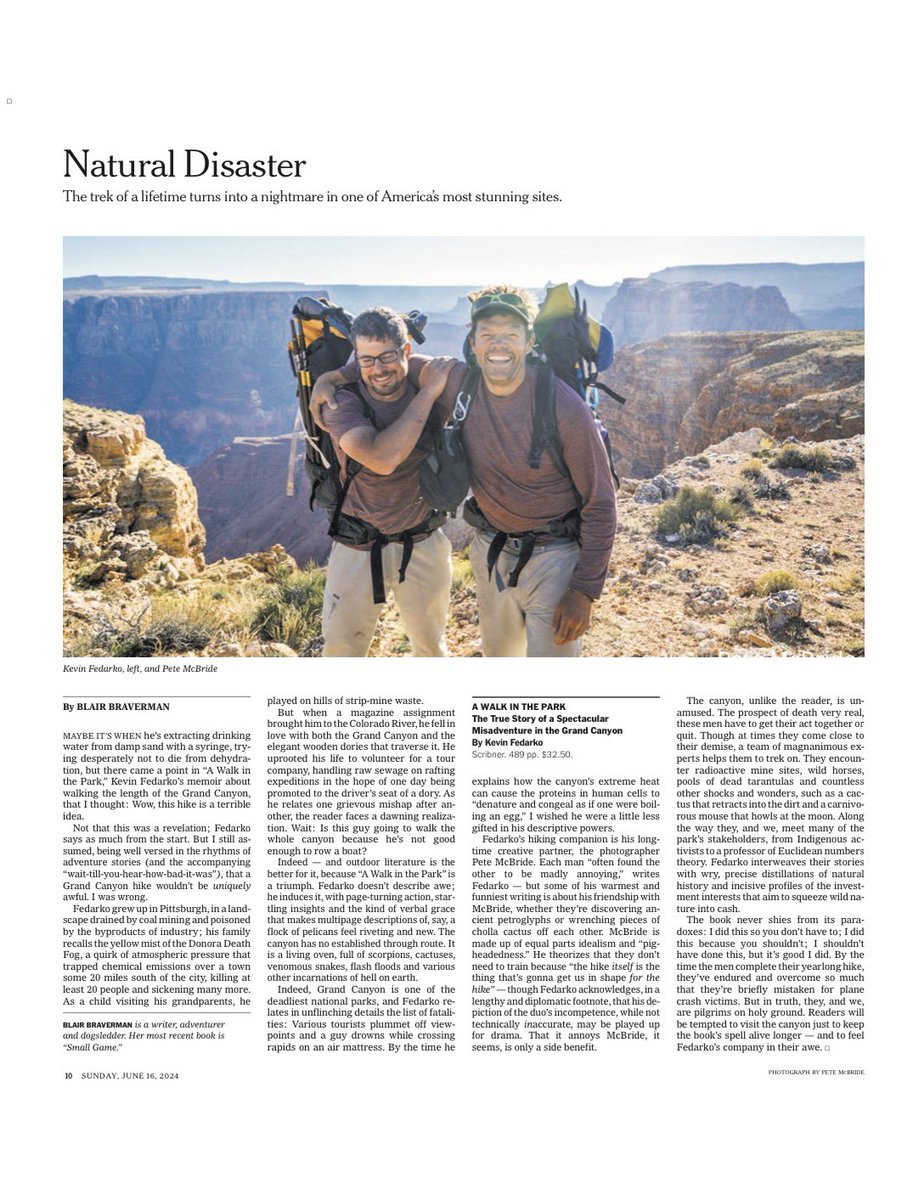
… introspection as Kevin contemplates the relationship between himself, people native to the canyon, the natural landscape and the journey itself. The book has left a deep impression of the Grand Canyon and its wonders in my mind!
Just finished reading this and it is phenomenal! While the book is often lighthearted, @KevinFedarko treats his subject, the grand canyon, its geology, its people and history with great care and respect. The book is also deeply personal, I really appreciated the honest…
This looks very interesting! With vast amounts of geospatial data at our fingertips, seems like earth observation is an area ripe for good AI tools to help people monitor and understand our dynamic planet as well as measure a range of impacts.
@j_zedd Very good essay, one that requires multiple readings. My first reaction: given that we cannot "feel good" our way out of the multiple crises we face, perhaps a more pessimistic stance can be useful in "popping the bubble" of hype driven projects/institutions/investments...
The latest series of @EmpirePodUK tracing the rise, fall and legacy of the Persian empire is extraordinary. @Dalrymple and @tweeter_anita animate the map and events of antiquity so well and infuse the retelling of history with a lot of joy and humour.
The data @climateTrace has pulled together on its platform to catalog and map individual sources of carbon emissions around the world is incredible.
https://t.co/RdPBmBm5xz
There could be a menu of environmental variables to select from: eg. NDVI, soil moisture, percent of surface area by land cover type, population density + an ability to select the sample statistic that aggregates across pixels (e.g. mean, median). Does something like this exist?
@planet Here is an idea for an application to support research: I provide point coordinates of sampled economic units (such as households, small businesses), the API returns environmental/exposure variables going back X months, for a radius of X km around each unit.
@gdemom@mustafasuleyman@emollick@davidautor Perhaps you'll cover this in your next blog, any thoughts on the potential for AI in education systems esp. in lower income contexts (e.g. using GPTs to complement classroom learning as a customizable tutor for learning about a specific text or topic)?
Love seeing this story on the significance of Africa's burgeoning youth demographic in the @nytimes that combines data with personal stories bringing to life what this trend might mean for the region & the world: https://t.co/baGuupKHeb
@gdemom When you think of literacy as a foundational skill upon which so much future learning depends, it only heightens the urgency of accurately diagnosing the reasons for this deficit and scaling effective interventions. What does the trend in this statistic look like?
@gdemom This is such a staggering statistic. At my daughters school this capability is expected during Grade 1 (5-6 year olds), which suggests that a large majority of 10 year olds in developing countries are ~5 years behind potential.