@Rainmaker1973 Not to be a downer, but make sure you are also not “tick bathing” while in the forest, or those ‘health benefits’ might flip the other direction. 😂 Dress for a chance of tick showers.
Science has confirmed that a weekend spent forest bathing can increase the activity and number of disease fighting cells in the immune system by as much as 80 percent with benefits that can last for an entire month.
The challenge is significant. According to the U.S. Environmental Protection Agency the average American spends approximately 90 percent of their life indoors a habit that contributes to growing health problems.
In our screen filled and high stress world a centuries old Japanese practice supported by rigorous modern research offers a simple and effective natural solution. For more than two decades Dr. Qing Li an immunologist at Nippon Medical School has studied Shinrin yoku also known as forest bathing. His work has translated the calming experience of being in nature into measurable biological effects.
Dr. Li has demonstrated that trees release phytoncides antimicrobial volatile organic compounds that form part of the forests natural defense system. When people inhale these compounds during walks in the forest the chemicals enter the bloodstream. This process reduces stress hormones and helps shift the body from a chronic fight or flight state into a restorative mode.
The physiological benefits are both powerful and remarkably long lasting. Dr. Lis research shows that exposure to phytoncides significantly boosts the number and activity of natural killer cells. These white blood cells are essential for destroying virus infected cells and tumor cells. A three day two night forest bathing trip can increase natural killer cell activity by up to 80 percent. These protective effects do not disappear immediately upon returning to daily life but can persist for up to a month.
This evidence makes a strong scientific case for incorporating regular time in nature as an important element of preventive health care.
[Li, Q. (2022). Effects of forest environment (Shinrin-yoku/Forest bathing) on health promotion and disease prevention: The establishment of 'Forest Medicine'. Environmental Health and Preventive Medicine, 27, 43]
This is real footage from 127 years ago.
A family was performing their acrobatic act in Paris, in 1899, and someone was there to film it...
What you are watching was captured by the Lumière brothers, Auguste and Louis, the two Frenchmen who pioneered cinema. Only a few years earlier, in December 1895, they had held the first public screening of projected film in history, using their invention, the Cinématographe.
Now they were pointing their camera at the world around them, recording ordinary life as almost no one ever had before: workers leaving a factory, a train pulling into a station, and this, a family of acrobats throwing their bodies through the air.
The performers were the Kremos, a celebrated troupe who had created their signature act just a few years before this film was made. They were what circus people call icarists, specialists in a breathtaking discipline where one performer lies on their back and launches another into the air with their feet, catching and re-launching them like a juggler using human beings instead of clubs.
The family kept the act alive for generations. Their descendants were still performing, on stages around the world, more than a century after this film was made...
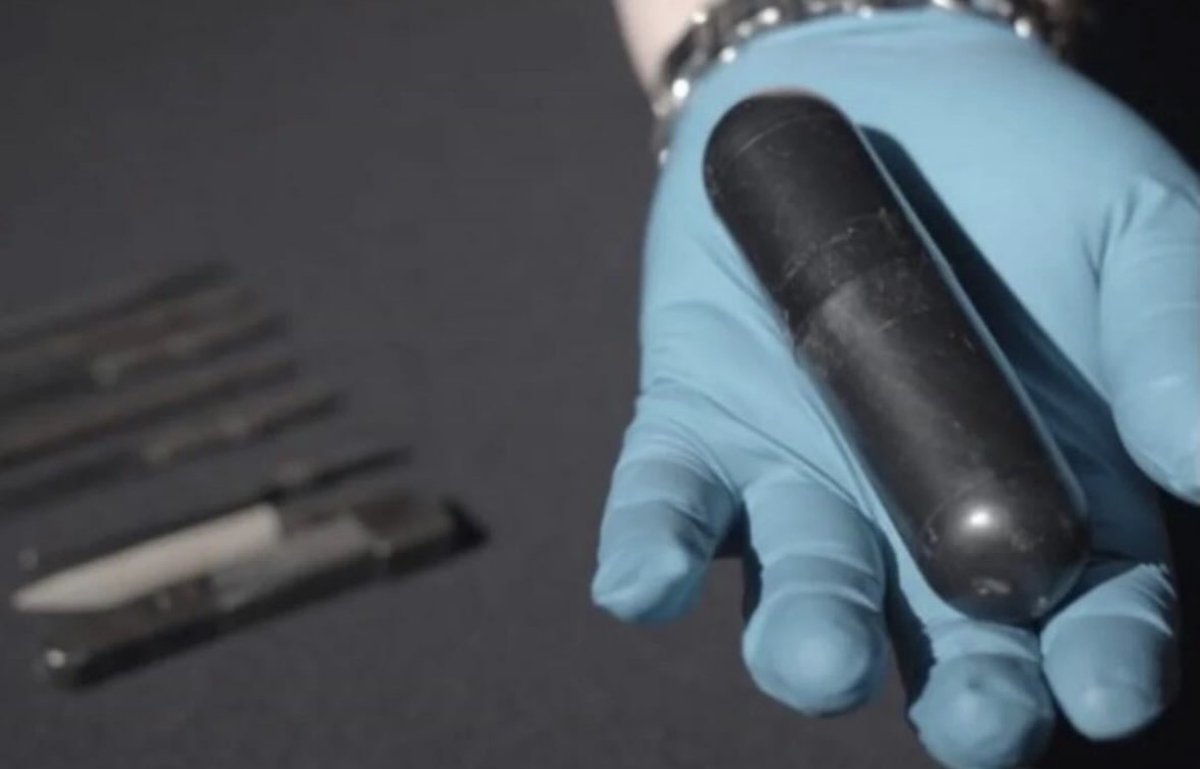
A CIA emergency survival kit designed for concealment, reportedly carried internally and containing tools intended for escape or self-defense. 1960s–1980s.
During the Cold War, intelligence agencies developed specialized equipment for scenarios in which capture, imprisonment, or interrogation were real risks.
One of the more unusual examples is the CIA rectal concealment tool kit, a sealed, pill-shaped container designed to be hidden inside the body, making it extremely difficult to detect during routine searches. Reportedly issued to operatives in the 1960s, it contained compact escape tools such as drill bits, saws, and small blades intended for use if an agent was detained. In such situations, the tools could potentially aid in cutting restraints, breaching barriers, or facilitating escape from confinement.
Its design required extreme precision: the casing had to be fully sealed to prevent leakage, while the tools inside needed to be arranged safely to avoid injury from sharp edges.
While it may seem bizarre today, the kit reflects the high-stakes and unconventional problem-solving mindset of Cold War espionage, where agencies prepared for worst-case survival scenarios.
A version of the kit is held in the collection of the International Spy Museum in Washington, D.C., where it is described as a CIA-issued Cold War escape device for “sticky situations.”
Body transfer illusion is the illusion of owning a part of a body other than one's own. This is the famous rubber hand experiment and it tricks your brain.
[📹 Adley and Story House Media]
Ranked: The Highest-Earning Football Clubs in 2025 ⚽
This graphic by Iswardi Ishak is one of the many incredible data-driven charts and stories from creators featured on our @VoronoiApp. ✅
https://t.co/aAwU1p1LlK
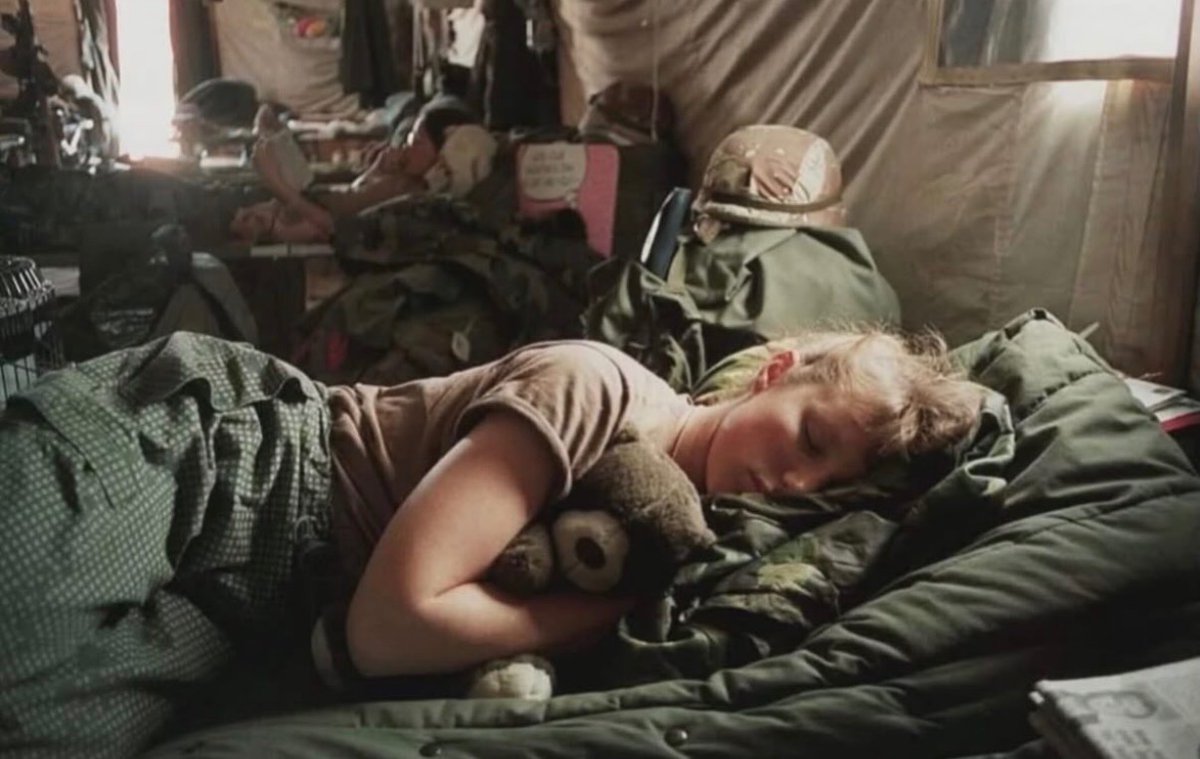
Exhausted U.S. Army nurse Amy Stuart of the 5th MASH unit in Saudi Arabia sleeps on a cot while clutching a teddy bear sent by her family during Operation Desert Storm. The touching photograph, taken in February 1991, captures a rare moment of comfort amid the relentless demands of war.
Military nurses during Operation Desert Storm endured long, exhausting shifts as they treated combat wounds, traumatic injuries, and medical emergencies, often while living in harsh, temporary camps far from home. The 5th MASH (Mobile Army Surgical Hospital) was built to operate close to the front lines, allowing critically wounded soldiers to receive life-saving surgery and emergency care as quickly as possible.
This photograph reveals a side of war that is rarely seen. Beyond the tanks, aircraft, and battlefield tactics were nurses, doctors, medics, and support personnel working under relentless pressure with little opportunity to rest. A simple cot, a nearby helmet, and a teddy bear sent from home capture a deeply human moment of exhaustion, homesickness, and the emotional burden carried by those responsible for caring for the wounded.
Operation Desert Storm began in January 1991 following Iraq’s invasion of Kuwait the previous year. Although the coalition’s air campaign and ground offensive advanced rapidly, medical teams remained on constant alert, prepared to respond to mass casualties at any moment. For nurses like Amy Stuart, even a brief nap was a rare and valuable chance to recover.
In the years after the war, the U.S. Army gradually retired its MASH units, replacing them with more modern Combat Support Hospitals that offered greater mobility, flexibility, and advanced battlefield medical capabilities.
A promising new therapy could one day eliminate the need for dental implants or dentures. The treatment aims to help humans regrow a third set of teeth with an expected availability around 2030.
For many years people who lost permanent teeth had to depend on bridges dentures or implants. A Japanese pharmaceutical startup called Toregem BioPharma is working to change this approach by activating the bodys natural ability to develop additional teeth.
Led by Dr Katsu Takahashi the team created TRG035. This monoclonal antibody drug inhibits USAG1 a protein that normally suppresses tooth growth. After successful results in animal studies the company finished its Phase I clinical trial in Japan. The trial tested safety in thirty healthy adult men who were missing at least one molar.
Although the safety results represent important progress the next challenge is to confirm that the drug can stimulate the growth of complete functional and properly positioned human teeth. With more than 29 million dollars in funding Toregem is moving forward with Phase II trials and plans to expand development to the United States. The company hopes to launch the treatment by 2030.
The initial focus will be on patients with congenital tooth agenesis. This rare condition causes people to be born without several permanent teeth. If the therapy proves effective it could transform restorative dentistry by providing a natural biological option instead of artificial replacements.
[Takahashi, K. (2024). Development of a new antibody drug to treat congenital tooth agenesis. Japanese Dental Science Review. DOI: 10.1016/j.jdsr.2024.100XXX]
Every second, the Sun ejects 1.5 million tons of material into space at hundreds of miles per second, but Earth's magnetic field protects it from the solar wind.
[🎞️ NASA Goddard]
Marriage triggers universal personality changes in less than two years.
Marriage goes far beyond a legal or social commitment—it acts as a powerful catalyst for genuine psychological shifts in both partners. A landmark longitudinal study followed 169 heterosexual newlywed couples, assessing their Big Five personality traits (openness, conscientiousness, extraversion, agreeableness, and neuroticism) at 6, 12, and 18 months post-wedding. The findings reveal consistent patterns of change that emerge early in marriage, largely independent of factors like age, premarital cohabitation, or the presence of children.
Husbands typically showed increases in conscientiousness, becoming more responsible, organized, and dependable—traits that support the demands of shared life and household stability. Wives, on the other hand, experienced notable declines in neuroticism, reporting reduced anxiety, anger, and emotional volatility, which translated into greater overall emotional stability.
However, these adaptations came with trade-offs. Both partners tended to become less open to new experiences, possibly as they settled into familiar domestic routines and routines. Extraversion also declined, with couples often prioritizing their relationship over wider social networks, leading to fewer outings and interactions with friends. Additionally, agreeableness decreased for both husbands and wives, suggesting that as the initial "courtship mask"—the idealized, highly accommodating behavior of early romance—fades, partners may become less patient and more prone to friction in everyday interactions.
These shifts appear remarkably universal across the sample, occurring regardless of baseline differences. While some changes (like heightened conscientiousness in men or reduced neuroticism in women) correlated with higher marital satisfaction over time, others (such as drops in agreeableness) highlight potential sources of strain.
Because these personality transformations are largely inevitable, experts emphasize that marital longevity depends not just on initial compatibility but on deliberate efforts to cultivate self-control, patience, and forgiveness. Couples who actively work to adapt to these evolving dynamics are better positioned to maintain a healthy, satisfying relationship as the honeymoon phase gives way to long-term partnership.
[Lavner, J. A., Karney, B. R., & Bradbury, T. N. "Personality change among newlyweds: Patterns, predictors, and associations with marital satisfaction over time." Developmental Psychology, 54(6), 1172–1185. DOI: 10.1037/dev0000491]








![Rainmaker1973's tweet photo. Science has confirmed that a weekend spent forest bathing can increase the activity and number of disease fighting cells in the immune system by as much as 80 percent with benefits that can last for an entire month.
The challenge is significant. According to the U.S. Environmental Protection Agency the average American spends approximately 90 percent of their life indoors a habit that contributes to growing health problems.
In our screen filled and high stress world a centuries old Japanese practice supported by rigorous modern research offers a simple and effective natural solution. For more than two decades Dr. Qing Li an immunologist at Nippon Medical School has studied Shinrin yoku also known as forest bathing. His work has translated the calming experience of being in nature into measurable biological effects.
Dr. Li has demonstrated that trees release phytoncides antimicrobial volatile organic compounds that form part of the forests natural defense system. When people inhale these compounds during walks in the forest the chemicals enter the bloodstream. This process reduces stress hormones and helps shift the body from a chronic fight or flight state into a restorative mode.
The physiological benefits are both powerful and remarkably long lasting. Dr. Lis research shows that exposure to phytoncides significantly boosts the number and activity of natural killer cells. These white blood cells are essential for destroying virus infected cells and tumor cells. A three day two night forest bathing trip can increase natural killer cell activity by up to 80 percent. These protective effects do not disappear immediately upon returning to daily life but can persist for up to a month.
This evidence makes a strong scientific case for incorporating regular time in nature as an important element of preventive health care.
[Li, Q. (2022). Effects of forest environment (Shinrin-yoku/Forest bathing) on health promotion and disease prevention: The establishment of 'Forest Medicine'. Environmental Health and Preventive Medicine, 27, 43]](https://pbs.twimg.com/media/HM9YSTWXUAEzcLk.jpg)



![Rainmaker1973's tweet photo. A promising new therapy could one day eliminate the need for dental implants or dentures. The treatment aims to help humans regrow a third set of teeth with an expected availability around 2030.
For many years people who lost permanent teeth had to depend on bridges dentures or implants. A Japanese pharmaceutical startup called Toregem BioPharma is working to change this approach by activating the bodys natural ability to develop additional teeth.
Led by Dr Katsu Takahashi the team created TRG035. This monoclonal antibody drug inhibits USAG1 a protein that normally suppresses tooth growth. After successful results in animal studies the company finished its Phase I clinical trial in Japan. The trial tested safety in thirty healthy adult men who were missing at least one molar.
Although the safety results represent important progress the next challenge is to confirm that the drug can stimulate the growth of complete functional and properly positioned human teeth. With more than 29 million dollars in funding Toregem is moving forward with Phase II trials and plans to expand development to the United States. The company hopes to launch the treatment by 2030.
The initial focus will be on patients with congenital tooth agenesis. This rare condition causes people to be born without several permanent teeth. If the therapy proves effective it could transform restorative dentistry by providing a natural biological option instead of artificial replacements.
[Takahashi, K. (2024). Development of a new antibody drug to treat congenital tooth agenesis. Japanese Dental Science Review. DOI: 10.1016/j.jdsr.2024.100XXX]](https://pbs.twimg.com/media/HMEn5mnWwAAn26v.jpg)

![Rainmaker1973's tweet photo. Marriage triggers universal personality changes in less than two years.
Marriage goes far beyond a legal or social commitment—it acts as a powerful catalyst for genuine psychological shifts in both partners. A landmark longitudinal study followed 169 heterosexual newlywed couples, assessing their Big Five personality traits (openness, conscientiousness, extraversion, agreeableness, and neuroticism) at 6, 12, and 18 months post-wedding. The findings reveal consistent patterns of change that emerge early in marriage, largely independent of factors like age, premarital cohabitation, or the presence of children.
Husbands typically showed increases in conscientiousness, becoming more responsible, organized, and dependable—traits that support the demands of shared life and household stability. Wives, on the other hand, experienced notable declines in neuroticism, reporting reduced anxiety, anger, and emotional volatility, which translated into greater overall emotional stability.
However, these adaptations came with trade-offs. Both partners tended to become less open to new experiences, possibly as they settled into familiar domestic routines and routines. Extraversion also declined, with couples often prioritizing their relationship over wider social networks, leading to fewer outings and interactions with friends. Additionally, agreeableness decreased for both husbands and wives, suggesting that as the initial "courtship mask"—the idealized, highly accommodating behavior of early romance—fades, partners may become less patient and more prone to friction in everyday interactions.
These shifts appear remarkably universal across the sample, occurring regardless of baseline differences. While some changes (like heightened conscientiousness in men or reduced neuroticism in women) correlated with higher marital satisfaction over time, others (such as drops in agreeableness) highlight potential sources of strain.
Because these personality transformations are largely inevitable, experts emphasize that marital longevity depends not just on initial compatibility but on deliberate efforts to cultivate self-control, patience, and forgiveness. Couples who actively work to adapt to these evolving dynamics are better positioned to maintain a healthy, satisfying relationship as the honeymoon phase gives way to long-term partnership.
[Lavner, J. A., Karney, B. R., & Bradbury, T. N. "Personality change among newlyweds: Patterns, predictors, and associations with marital satisfaction over time." Developmental Psychology, 54(6), 1172–1185. DOI: 10.1037/dev0000491]](https://pbs.twimg.com/media/HL4ZjVNWYAAtJKO.jpg)