🔉 Introducing SAM Audio, the first unified model that isolates any sound from complex audio mixtures using text, visual, or span prompts.
We’re sharing SAM Audio with the community, along with a perception encoder model, benchmarks and research papers, to empower others to explore new forms of expression and build applications that were previously out of reach.
🔗 Learn more: https://t.co/FPnfv66UCP
Have you ever wanted to meet me and/or @markcooperjones to ask us a question or raise a complaint?
Then come and see us on our MAP MEN BOOK book tour in October! 📕 🚌
20th Edinburgh
21st Leeds
22nd Manchester
23rd Bristol
24th London
https://t.co/3sqZd4Ne9j
Today, we're introducing AlphaEarth Foundations from @GoogleDeepMind , an AI model that functions like a virtual satellite which helps scientists make informed decisions on critical issues like food security, deforestation, and water resources. AlphaEarth Foundations provides a powerful new lens for understanding our planet by solving two major challenges: data overload and inconsistent information.
1️⃣ It combines information from dozens of sources to analyze the world's land and coastal waters in 10x10 meter squares, allowing for remarkable precision while tracking changes over time.
2️⃣ The system's key innovation is creating a highly compact summary for each square. These summaries require 16x less storage than those produced by other AI systems and enables scientists to create detailed, consistent maps of our planet, on-demand.
AlphaEarth Foundations represents a significant step forward in understanding the state and dynamics of our changing planet. 🌎🌎🌎
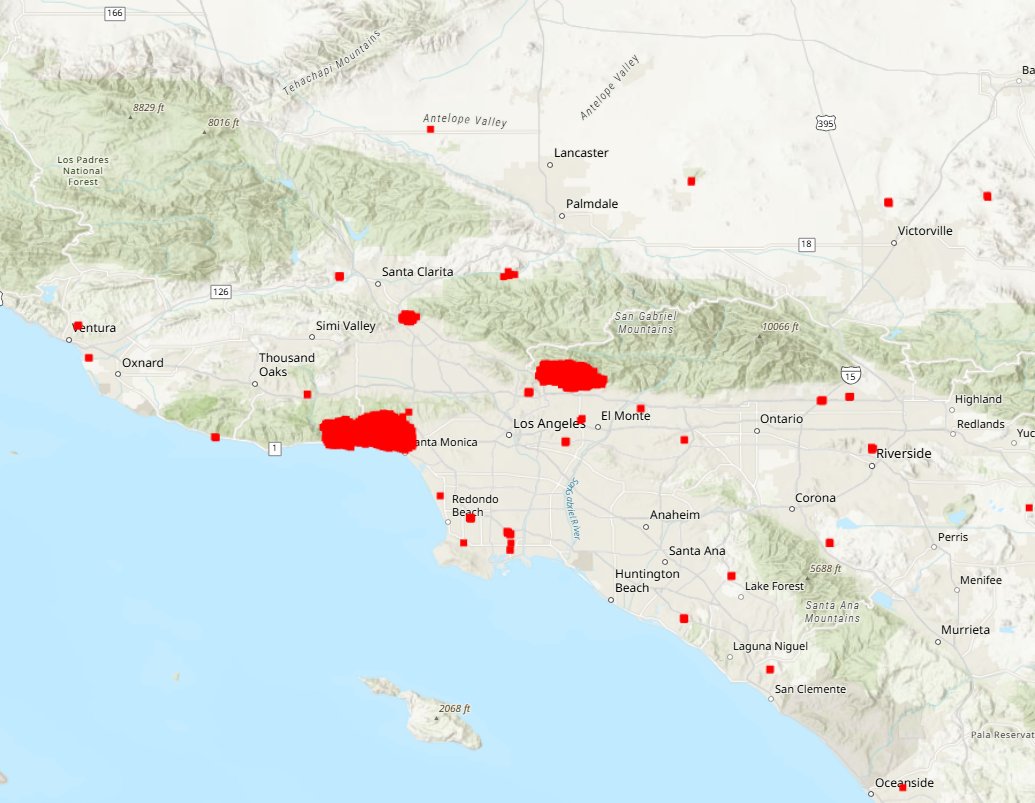
AGI2025 - GeoAI discussion - discussion included training data challenges, developing spatial models, using LLMs to extract geodata from unstructured text, and issues over what we mean by GeoAI (who is already using machine learning without perhaps knowing it?)...
Hey developers - you can create dynamic columns in Postgres to make your queries faster and avoid repetitive calculations. If you’re constantly calculating something like sales tax, totals, normalized addresses or numbers - generated columns can be a huge help.
If you want to store a table for total amount, which is a until price plus sales tax, that would look like this:
ALTER TABLE coffee_shop_sales
ADD COLUMN total_sale_amt numeric
GENERATED ALWAYS AS
((unit_price * (1 + sales_tax_pct / 100) * transaction_qty)) STORED;
Stored columns automatically stay up to date - so when source data is updated, the column is automatically recalculated and updated to reflect the new values based on the updated source data.
To normalize phone number that come in from the application in a variety of formats:
ALTER TABLE contacts
ADD COLUMN normalized_phone text
GENERATED ALWAYS AS (REGEXP_REPLACE(phone, '[^0-9]', '', 'g')) STORED;
Indexing - yes! You can also create an indexes on the generated column, which speeds up query execution when the column is used in filtering or ordering:
Benefits of generated columns
⚡ Performance: These can speed up queries with frequent calculations
✅ Data Integrity: Generated columns ensure the consistency of calculated data, avoiding manual mistakes when writing expressions in queries.
There are two types of generated columns:
Stored: The value of the generated column is physically stored with the table and calculated whenever the row is inserted or updated. This can improve performance because the computation does not need to be done at query time. These ADD COLUMN statements have STORED at the end.
Virtual: For these, the value of the generated column is calculated on-the-fly when the column is queried, but it is not stored physically. This is good for cases when you want some kind of repeated column logic but the stored value doesn't make sense - maybe space or other concerns. These ADD COLUMN calls have VIRTUAL at the end.
By using generated columns, you simplify complex expressions in your queries, reduce computation during query time, and potentially improve performance with indexing.
Stanford has launched an incredible research AI tool.
It’s called STORM, and basically you enter a topic and it will search hundreds of websites to write an article about its major findings.
Available to everyone for free!
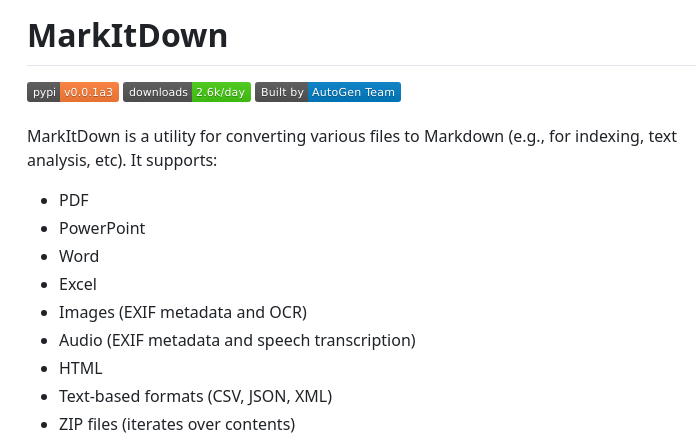
MarkItDown: A Python library by Microsoft to convert various file formats (Word, PowerPoint, Excel, PDF, images, audio, HTML, JSON, XML, CSV, ZIP) into Markdown, using OCR and speech recognition for multimedia files
Data Engineers are making fortunes building data pipelines.
I can't think of anything more important than learning how to deal with data for the next 20 years.
Here are a few steps I'd recommend to people who want to learn one of the most in-demand skills in the market right now:
1. Build a strong foundation in programming (especially Python and Java)
2. Practice SQL and learn how to work with relational databases.
3. Become familiar with NoSQL databases and handling unstructured data.
4. Learn the basics of data structures (arrays, lists, trees, graphs) and algorithms (sorting, searching, etc.)
5. Become familiar with tools like Hadoop, Spark, Kafka, Airflow, Luigi, Prefect, and Kinesis.
6. Learn how to implement data pipelines and ETL
7. Gain experience with cloud computing (AWS, GCP, Azure.)
8. Learn containerization and orchestration (Docker and Kubernetes)
9. Become proficient with data warehousing (Snowflake, Redshift, BigQuery)
10. Understand CI/CD pipelines to automate testing, deployment, and integration.
The Data Engineering Nanodegree program in @Udacity is pure fire. It's a 2-month course that covers every one of the topics above.
You'll come out on the other side as a new person.
Everywhere I go, companies need to process data as fast as they produce it. It's hard to find people who know how to do this well, but companies are willing to pay exceptionally well for this.
If you want to start 2025 with a bang, this course is for you!
Link in the next post so I don't get throttled.
Mobile phones are everywhere, and conflicts are increasingly being recorded and shared online.
The OSR4Rights research group aims to strengthen the use of open-source research in human rights investigations.
They're 2024 #ImpactPrize finalists!🎉
More:https://t.co/x9NMoDKQ1e
Hello, world! We are World Labs, a spatial intelligence company building Large World Models (LWMs) to perceive, generate, and interact with the 3D world. Read more: https://t.co/El9rgi6bxQ
.@drfeifei, aka The Godmother of AI, discusses her latest startup, World Labs, and why "Spatial" intelligence is a new foundational technology https://t.co/7yi9BXcqk0
Playing charades with the Tesla Optimus robot last night. This is either the single greatest robotics and LLM demo the world has ever seen, or it's MOSTLY remote operated by a human. No in between.