@kunchenguid Right? I like the names as names. But without looking them up, I’d not know the size.
The OpenAI and Anthropic names are definitely more intuitive.
3. Keep both small. They load into every chat before you type a word.
Run /init for a draft, then delete anything Codex can read from pyproject.toml itself.
Codex can read several AGENTS.md files at once: ~/.codex/AGENTS.md for every project, plus one in each folder from your repo root down to where you started Codex.
3 rules keep mine from fighting each other 🧵
2. Don't put the same rule in both files with different answers.
OpenAI's docs say closer files "override earlier guidance because they appear later in the combined prompt." That's prompt order. The model still reads both rules.
No one on our team loved Astra 6.2.
We have a 30-person team at Every, including our Frontier team, which gets access to these models before they come out, and we put them through their paces on our real work tasks, from coding to writing to design to knowledge work.
This is not a great model. No one on our team who tried it switched back to it.
Astra 6.2 is a real step back for writing. It had strong design defaults but couldn't vary them or be creative, and for coding we found it stopped too soon on end-to-end builds.
Get the full vibe check: https://t.co/bsEsHYnpBd
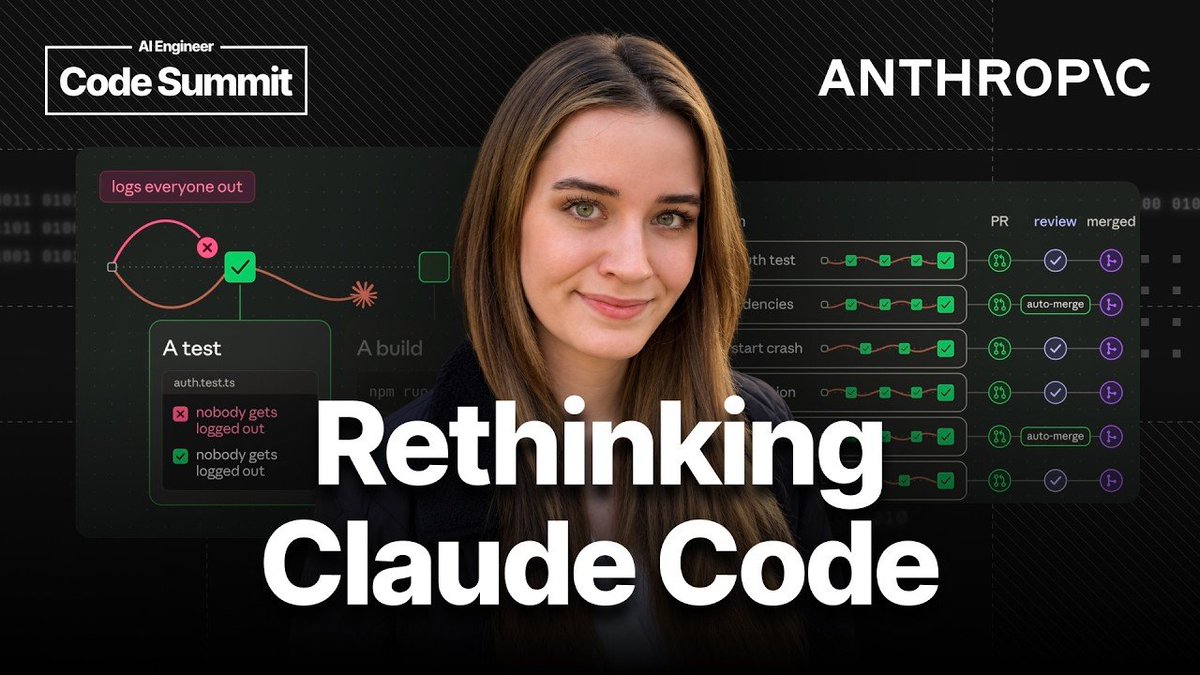
Your Claude Code setup might be optimized for a model you no longer use.
@lydiahallie (@AnthropicAI) on what to trim from CLAUDE.md, what permissions should enforce, and where tests and CI take over.
Full AIE CODE talk:
https://t.co/PiTNFdezsd
A test I run on every coding agent: ask it to find a bug I already know about.
If it finds it, I trust its other findings a bit more. If it doesn't, I learned that before it mattered.
Sometimes it finds a second bug I missed.
By default, Codex auto-compacts at about 90% of the model's context window and swaps the history for a summary.
I try never to get there. My rule of thumb: answers start slipping somewhere between 40% and 60%.
So I save what matters to a file or an issue and start fresh.
Leave the Full Access preset in /permissions alone until you've watched Codex work for a while.
Which prompt did you click "don't ask again" on and later regret?
Say Codex wants to run this command:
pip install requests
You get three choices:
- Yes, proceed
- Yes, and don't ask again for commands that start with pip
- No, and tell Codex what to do differently
Option 2 lasts longer than you'd think 🧵
Open ~/.codex/rules/default.rules now and then.
It's plain text with one line per rule, so you can see everything you've allowed and delete what you regret. Restart Codex afterwards.