Tableau Product Mgmt Director | Seattle, WA | Dedicated to empowering AI data-driven insights | Lover of books, astronomy, space exploration, yoga, & food.
For you amateur astronomers and space geeks, I made a @tableau dataviz to explore the HYG star database. My intent was to explore how variable stars are distributed in our galaxy. The exploration brings me joy. #datatelescope#data#astronomy#space https://t.co/OGLwKB9m2S
Working on AI for Tableau Pulse Discover has been a journey - full of surprises, challenges, and real insights about how people actually use data. The limits of AI/data. I wrote a bit about that here: 🔗 https://t.co/4j4Qd2u2eK... #DataFam#TableauTip#AI#Analytics#Tableau
My dev team developed this feature - Meet Discover, using an AI (a frontier LLM) to explore groups of metrics via free-form natural language; powered by Pulse's powerful statistical insight service. #tableau#tableaupulse#datafam
🆕 in Tableau Pulse: enhanced Q&A
Discover insights conversationally across related metrics and see how they impact business trends with speed and ease, all powered by AI.
Pulse’s enhanced Q&A experience provides intuitive key insights, relevant visualizations, source references, and suggested follow-up questions to help you dig deeper.
Available as a premium feature on both web and mobile. https://t.co/PlZo940vD8
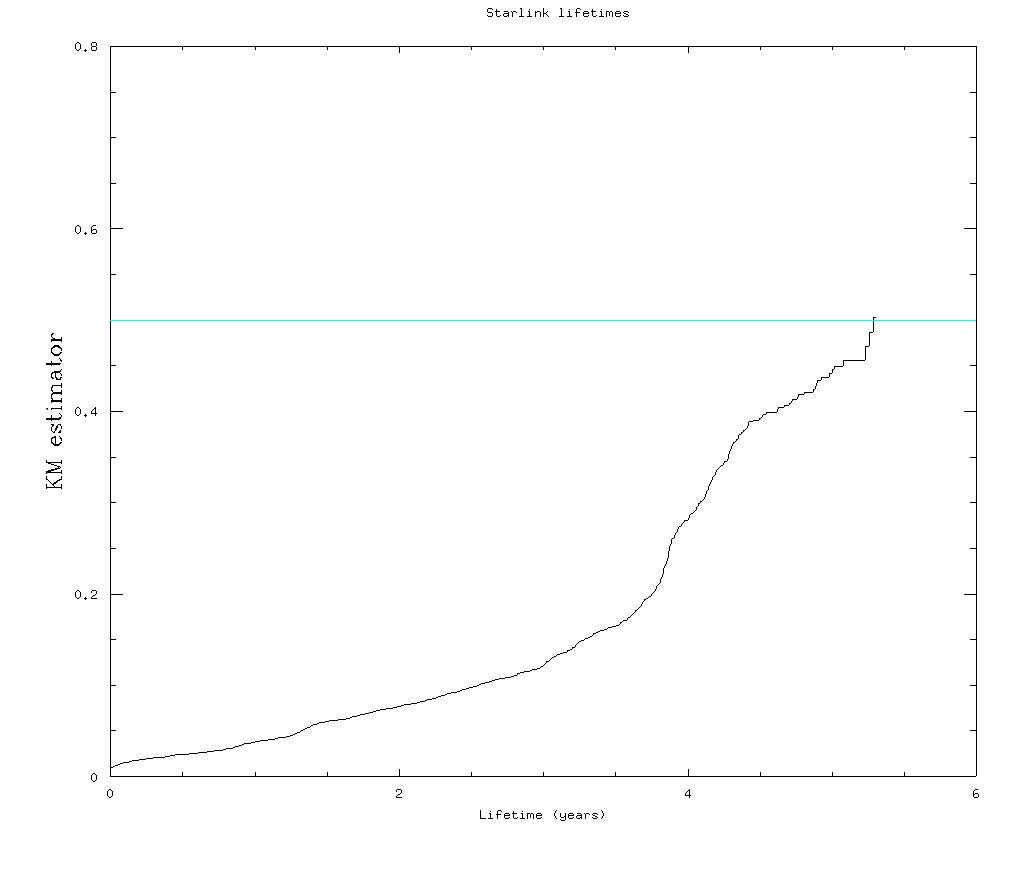
We now have enough Starlink reentries to use the Kaplan-Meier survival analysis estimator to determine the median Starlink operational lifetime: 5.3 years. This mixes together V1 and V2M Starlinks.
The director of the Super Bowl was freaking out, not knowing Michael Jackson was gonna take his time to remove his glasses which was the cue to start the track. But MJ knew exactly what he was doing & made history🙂↕️
HE KNEW HE WAS HIM #SuperBowl
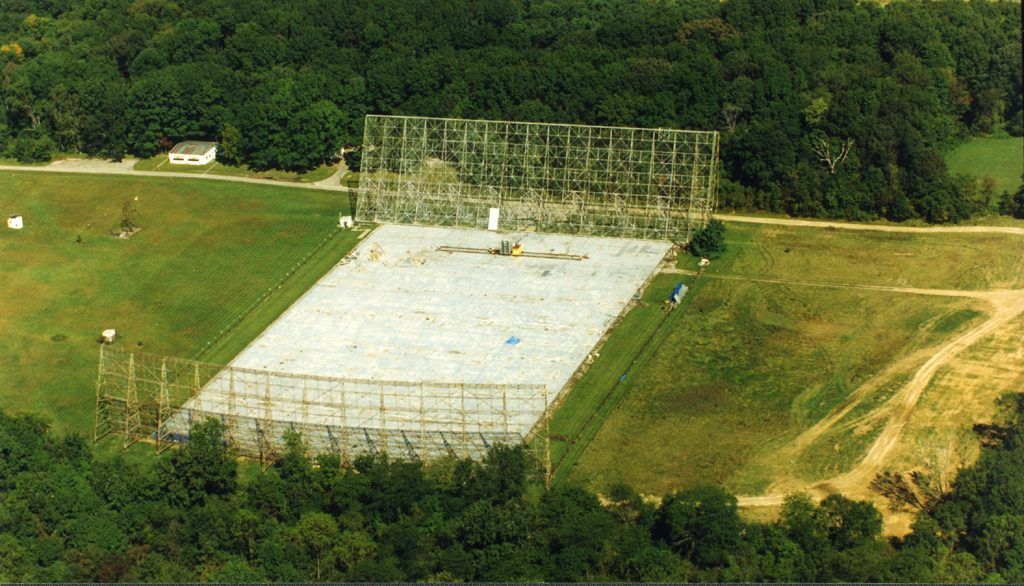
The “Big Ear” telescope operated from 1963 to 1998. Unfortunately, its data was never properly saved for future astronomers. However, three dedicated volunteers preserved most of it, and we are now collaborating with them to complete the task. #AreciboWow
After 1 month of data compilation and plotting, I have FINALLY mapped out all hurricane landfalls of the western North Atlantic!
This is not the finished product, as I plan to include the entire Atlantic Ocean AND add intensity markers - but what a map to look at!
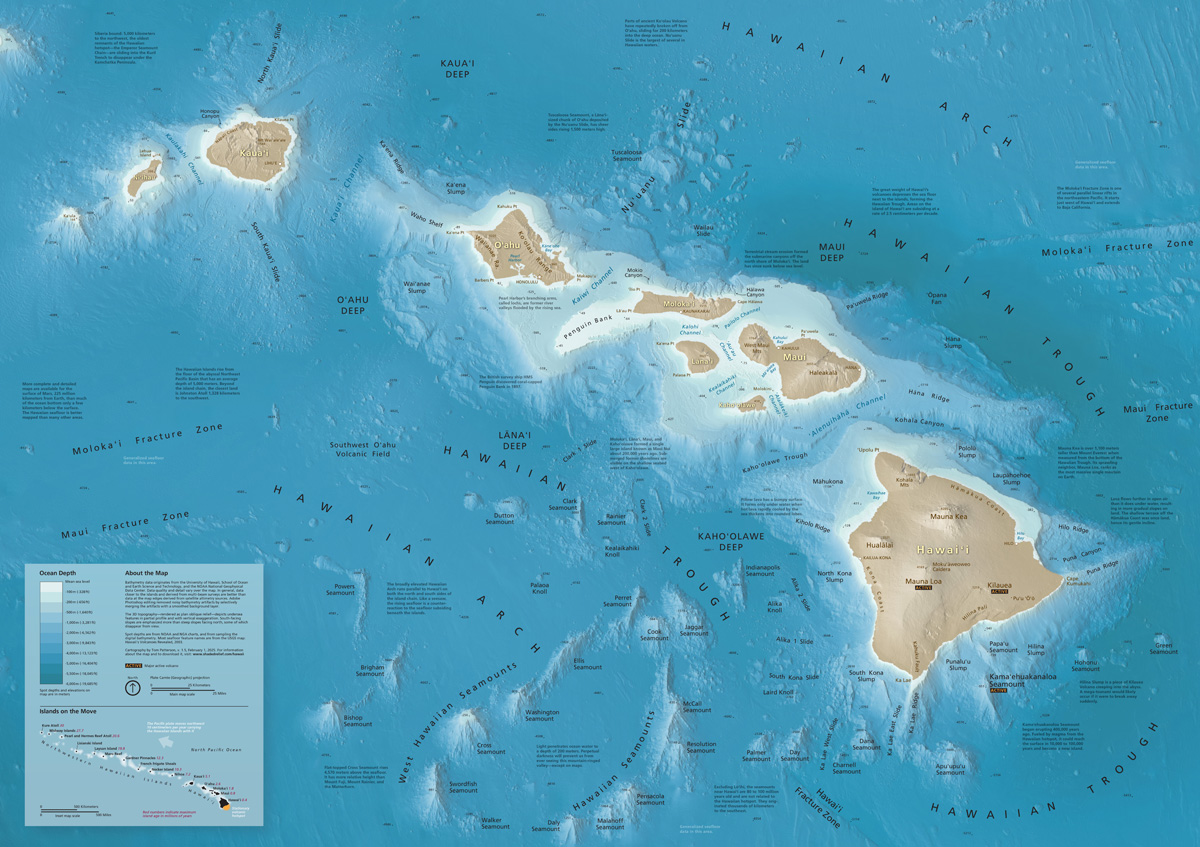
Another map name change! On my 2014 Seafloor Map of Hawaiʻi, I updated Lōʻihi to Kamaʻehuakanaloa Seamount, per a 2021 decision by the US Board on Geographic Names. https://t.co/RouetTITcD
Spanish amateur satellite Uresat has finally deployed its antennas. We confirm the reception is a lot better now! From yesterday's @SatNOGS pass (11022423) we can clearly hear 'EA1YO greeting from AO4URE'. @AmsatSpain@ure_es
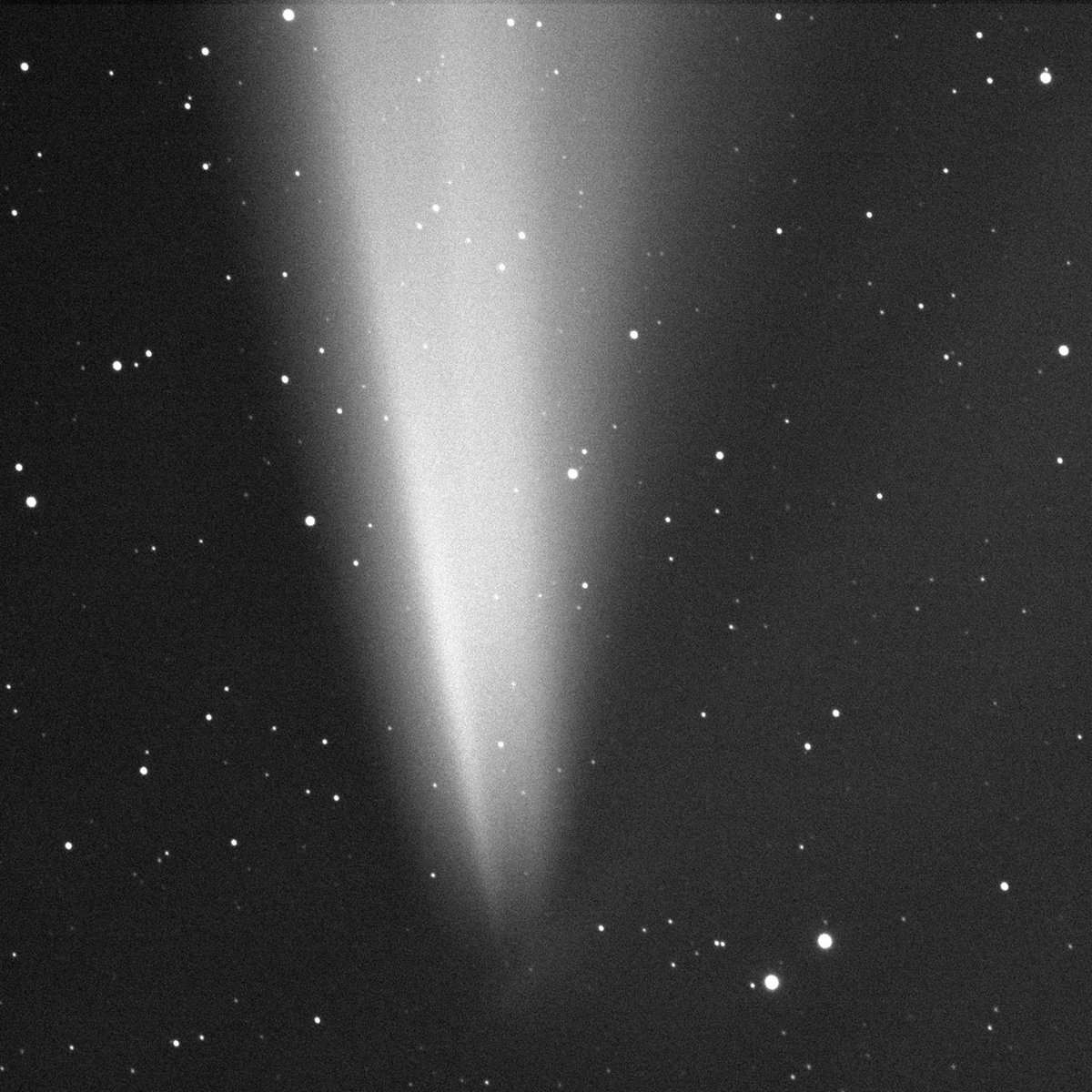
🌟 This close-up image of the now "headless" Comet C/2024 G3 (ATLAS) was captured on 31 January 2025. The bright streak is a synchrone -- a region of dust released when the comet's nucleus fragmented around 19 January. Surprisingly the comet was still just barely visible to the eye from the Bortle 2 dark sky site.🔭 🧪
Exp: 19x10s
Scope: https://t.co/DuSbDWeIHV
Preserving the Wow! Signal and Ohio SETI project data involves digitization, recovery, reverse engineering, retrocomputing, calibration, forensic analysis, historical integration, archiving, and legacy preservation. We have two years to complete this project. 😎 #AreciboWow
Starlink 5693 appears to have reentered over the southern Wisconsin/Michigan area at about 0303 to 0305 UTC Jan 29 (9.03 to 9.05pm CST) and was widely observed from neighbouring regions including Chicago
History in the making. On Jan. 28, 2025, XB-1 officially broke the sound barrier.
Flying Mach 1.122 (652 KTAS) at 35,290 ft. over the Mojave Desert, Boom’s supersonic demonstrator jet ushered in a new era of supersonic flight.
Watch the full recorded livestream: https://t.co/peyI94Cw0T
Highly elliptical orbit: A time-lapse of ~6.5 hours flight time of the PROBA-3 satellites. During this time the satellites climbed from ~6’700 km to ~57’000 km altitude. With the corresponding effect on the image scale on the sensor. Recorded from South America on 2025-01-26, from 01:55 - 08:29 UTC.
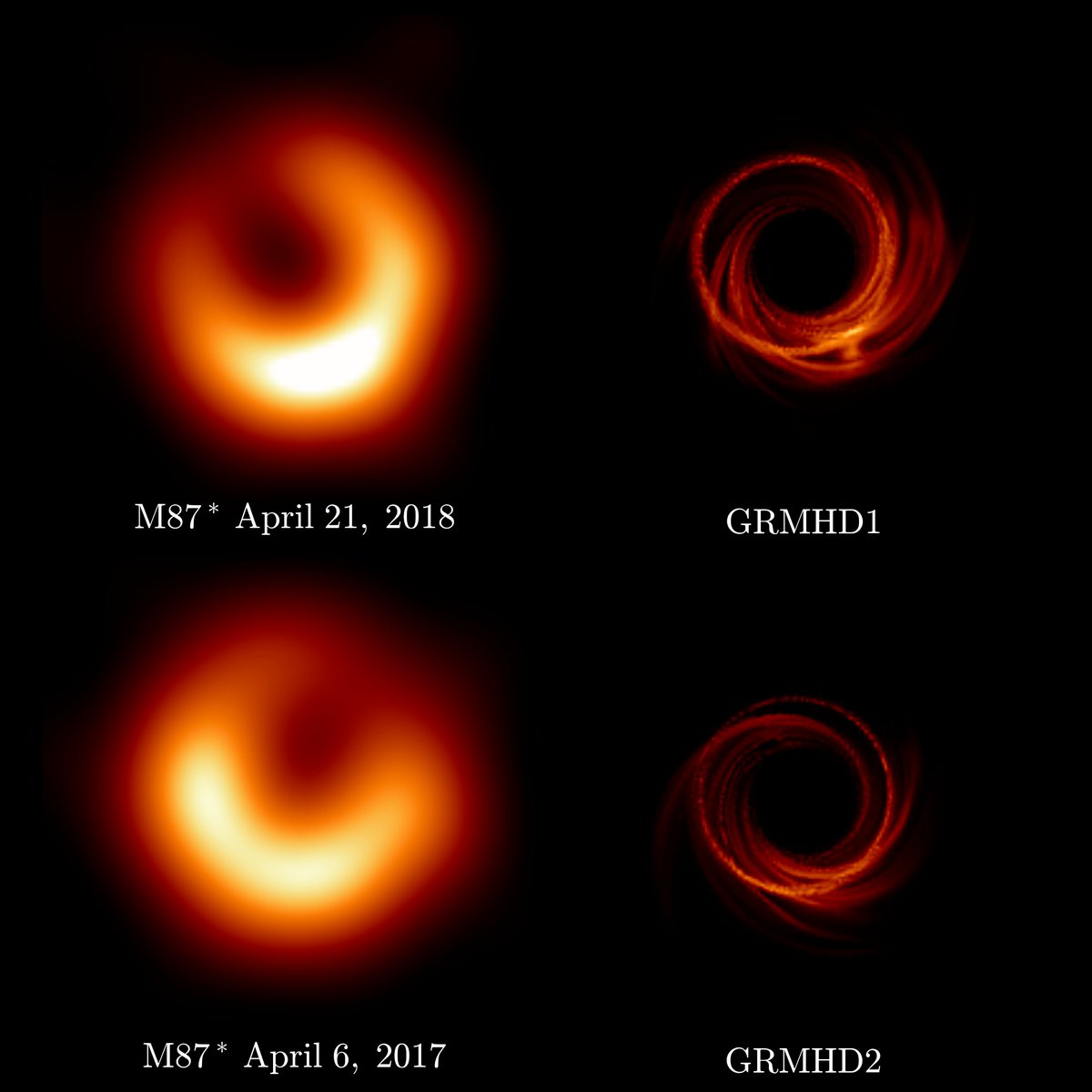
Using 2017-2018 data, the EHT revealed turbulence in M87*’s accretion flow, reshaping the ring’s brightest region. This shows the power of multi-epoch observations to uncover black hole accretion and spacetime properties—a leap in black hole studies!