After a three-year hiatus, I am bringing @SixDegreesNews back with a quiet relaunch. I founded it to connect climate, environment and development, and to influence conversations and decisions shaping sustainable development. Excited to be back #SustainableDevelopment
After three years away, I am bringing SixDegreesNews back with a low profile relaunch. More to come-Please share and follow
The #climate#disaster arrived before the argument ended
https://t.co/900LFdGz9l
@lufthansa@airindia@Expedia@ExpediaHelp I have already done that like almost 2 months back. When I ask, I am informed they are working on it and will get back in 72 hours. @airindia you already directed to @lufthansa-where is the responsibility @ExpediaHelp, please check our direct chat
Hello @lufthansa , @airindia@Expedia, @ExpediaHelp I'm still waiting on my reimbursement for a Delhi ✈️ Frankfurt return flight booked via Expedia cancelled due to the middle east conflict. Under EU Regulation EC 261/2004, I'm entitled to reimbursement. #PassengerRights
A violent storm bringing rain and hail ripped through India's most populous state of Uttar Pradesh, killing more than 100 people, rescue officials said https://t.co/3sZCLgMkzV
Bei diesem Ausfall muss es sich um einen größeren #Stromausfall im Stromnetz in #Stuttgart mit ca. 5.000 oder mehr betroffenen Einwohnern handeln. Mehr auf https://t.co/P2FgrYXh0a
@ExpediaHelp@Expedia -Dear Expedia, my flight was cancelled due to the conflicts in middle east and I had sent emails regarding the next steps on how will you handle the cancelled flight-but I never received any email or acknowledgement from your end. What should I do?
This Lizard is breaking the laws of nature and scientists don't know how to explain it. While all the reptiles are laying eggs, this tiny Australian skink has decided to start giving birth to live chicks to survive climate change. It's the first time in history a real time species transition is documented.
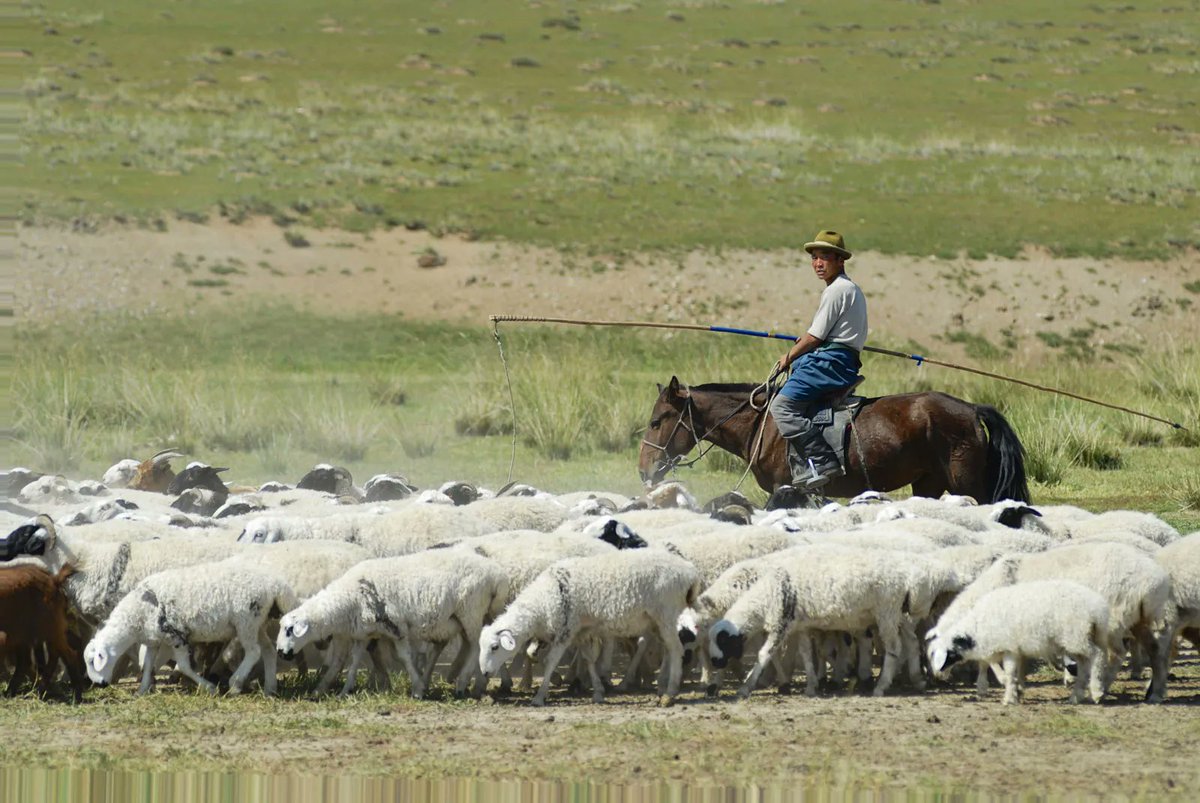
Mongolia: 64 million livestock. Sheep, goats, cattle, horses, camels.
For a country of only 3 million people, that seems excessive.
Environmental consultants from Europe and America regularly arrive to explain that Mongolia is overstocked and heading for ecological collapse.
The Mongolian herders listen politely. Then continue doing what they've done for thousands of years.
The steppes remain healthy.
How? The herders never asked for advice because they already solved this problem about 3,000 years ago.
The key is movement. Mongolian herders are fully nomadic. They move their livestock constantly, following ancient patterns that align with grass growth cycles and water availability.
A section of steppe gets hit with intense grazing from a large herd. Looks devastating. Grass trampled. Soil disturbed. Dung everywhere.
Then the herd moves on. And doesn't return to that section for months.
The grass explodes back. Faster and thicker than if it hadn't been grazed.
Why? Grazing stimulates tillering in grasses. One plant becomes five. The trampling breaks up soil crust and incorporates organic matter. The dung feeds soil microbes.
But this only works with movement. Stay too long and you destroy the grass. Keep moving and you stimulate it.
The Mongolian steppes are a carbon sink. The soil organic carbon levels are among the highest for any grassland on Earth.
This is being built by 64 million livestock doing exactly what environmental consultants say causes desertification.
Western researchers finally started studying this seriously in the 2000s. The data is clear: Nomadic grazing at high stocking densities maintains healthier grassland than low-intensity grazing on fixed ranges.
The Mongols have been right for 3,000 years. The modern range science was wrong.
There's a reason Mongolia's grasslands are still intact while American and Australian rangelands show degradation. Mongolia never adopted the Western model of splitting the range into paddocks and grazing each continuously at low density.
They kept the high-density, high-mobility system that evolved with the landscape.
Climate researchers studying carbon sequestration are now very interested in Mongolian grasslands. The carbon storage potential is enormous.
And it's being maintained by the exact thing climate activists want to eliminate: Large numbers of livestock.
The environmental movement doesn't publicize Mongolia's success because it contradicts the core message that livestock numbers must be reduced.
Mongolia's response: They'll reduce their livestock when the steppes start failing. That hasn't happened in 3,000 years of herding, so they're not worried.
The grassland knows what it needs. And what it needs is exactly what it's getting.
"My name's Hank. I'm 66. I deliver propane to homes. Rural routes, farms, folks off the grid. I fill their tanks, check connections, drive to the next house. Most customers just sign the slip, barely look up. I'm just the propane guy.
But last February, during that brutal cold snap, I noticed something at the Miller place.
Pulled up to fill their tank, gauge showed empty. Completely dry. In 15-degree weather.
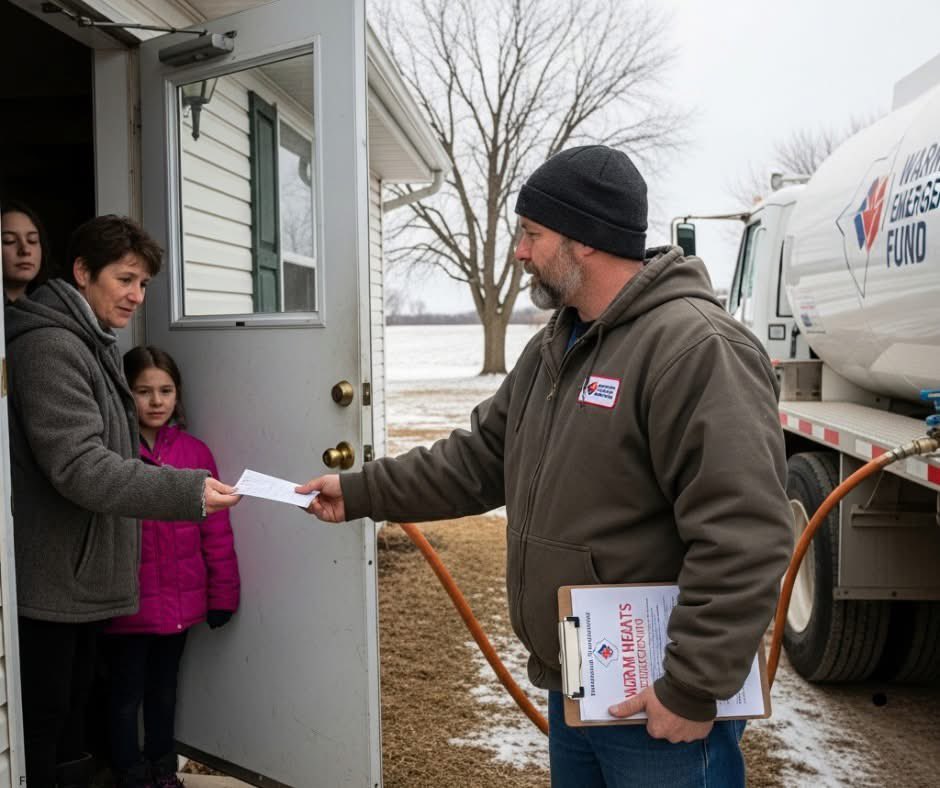
I knocked on the door. Mrs. Miller answered, three kids bundled behind her in coats. Inside the house.
"Ma'am, your tank's bone dry. How long you been without heat?"
"Four days." Her voice was steady, but her hands shook. "Bill's due Friday. We're waiting on my husband's paycheck."
Four days. Three kids. Fifteen degrees.
"Ma'am, I'm filling it now."
"I can't pay until"
"I'll mark it as a delivery error. Computer glitch. Nobody'll know."
She started crying. "Why would you do this?"
"Because those kids are wearing coats inside."
I filled their tank. Checked the furnace. Made sure heat kicked on before I left.
Drove away thinking about what I'd seen. Kids doing homework in winter jackets. A mom choosing between heat and food.
Started paying attention different after that. The elderly veteran whose tank was at 10%, he was rationing, keeping one room warm. The single dad whose payment was two weeks late, he'd been burning firewood he couldn't really afford.
I started doing something I shouldn't. When I saw someone struggling, someone who'd run out, someone rationing heat—I'd add 50 gallons. Mark it as "meter calibration" or "pressure test residual."
Small amounts. Enough to get them through.
Did it eleven times that winter. My boss noticed the discrepancies. Called me in.
"Hank, we're showing extra gallons delivered but not billed."
I told him the truth. Everything.
He stared at me for a long time. Then said, "My daughter was a single mom once. Chose between heat and groceries every winter. I wished someone had helped her."
He didn't fire me. Instead, he created something, "Warm Hearts Emergency Fund." Customers could donate. We'd match it. Use it for families in crisis who couldn't afford propane.
But here's what broke me, Mrs. Miller came to our office in May. She'd gotten a better job, caught up on bills.
She handed me an envelope. Inside, $200.
"For the next family. The one you'll find in February, four days without heat, trying to be brave for their kids."
She grabbed my hands. "Hank, my youngest has asthma. Four more days in that cold... I don't know if..." She couldn't finish.
Last winter, the Warm Hearts Fund helped 23 families. Not with handouts, with heat when they had none. With dignity when they felt broken.
And here's the thing, other propane companies heard about it. Started their own programs. Now there are "emergency heat funds" in six states.
But the moment that destroyed me happened last month. Got a call to deliver to an address I recognized, the Miller place.
Mrs. Miller answered. "Hank! Come in, please."
Inside, warm, kids doing homework at the table, laughing. She handed me a check. Full payment, plus extra.
"For the fund. But also..." She pulled out a drawing her youngest had made. Stick figure man with a propane truck. Caption in crayon: "Mr. Hank, my hero."
"She asks about you every winter. 'Is Mr. Hank making sure people are warm?'"
I'm 66. I deliver propane to houses nobody notices.
But I learned this- Cold doesn't wait for paychecks. And no child should do homework in a winter coat inside their own home.
So if you deliver anything, oil, propane, firewood, and you see someone struggling, someone empty, someone rationing,
Find a way. Mark it wrong. Call your boss. Start a fund. Do something.
Because heat isn't a luxury. It's survival.
And the difference between freezing and living shouldn't be whether your paycheck arrived on time.
Be the reason someone stays warm."
.
Let this story reach more hearts....
.
Ai image is for Demonstration purpose only
.
Credit: Mary Nelson
Australian scientists found that honeybee venom can destroy aggressive breast cancer cells in lab tests, a discovery that could inspire future treatments
Though editing humans is one of the most controversial pursuits in medicine, the rise of companies focused on it reflects a countervailing belief: that the capability to edit embryos creates an obligation to use it https://t.co/1bGjKwrG2X
Photo: AP
“This is a nut that no one else in the country has cracked — how to translate what nonprofit newsrooms are doing for commercial TV.” https://t.co/MTdFg1WSRn
If you thought a reusable water bottle was a plain, boring receptacle, then you would be wrong. For Gen Z, it is both a necessity and a fashion statement https://t.co/IO7timmnym