Consistent eccentric hamstring work can cut injuries 55-70%.
Save this.
Add 2–3 of these 10 to your program and build hamstrings of steel.
1. Foam roller single-leg ISO holds
2. Partner Nordic curls
3. Kickstand rack position RDL
4. SL physio ball hamstring curls
5. Slideboard curl switch-catches
6. Barbell RDL drop catches
7. Single-leg razor curl ISO holds
8. Barbell B-stance RDL
9. Physio ball dead bugs
10. Partner reactive med ball curls
Your legs contain approximately 50% of your skeletal muscle mass and represent your body’s largest metabolic engine.
Beyond strength and locomotion, their mitochondrial function and oxidative capacity are essential for metabolic health, healthspan and longevity.
Healthy legs are much more than strong legs.
#Mitochondria #MetabolicHealth #Longevity #Healthspan
It's never too late to build muscle, and some of the best proof comes from people in their 90s. Frail nursing home residents who averaged 90 years old did eight weeks of heavy strength training, and their strength nearly tripled on average, and their thigh muscle grew and their walking got faster too.
Many people assume that past a certain age, losing muscle is just something to accept. I think that belief is one of the biggest obstacles to healthy aging, because strength is what keeps a person independent.
Lift something heavy a few times a week at any age, and add weight as it gets easier.
Let’s try something - Notice your breath.
Now, notice yourself noticing your breath.
Who is noticing that?
You may start to realize that you cannot stand outside yourself to point at the source of your awareness.
The moment you try to point at it, you're already viewing from a new position.
However, you can trace a trajectory of awareness moving backward toward its source.
This trajectory moves through the structure of consciousness itself (not physical space).
What you discover isn't a "thing" you can point to, because anything pointable-to would already be an object of awareness (not awareness itself).
You arrive at a sense of a "no-thingness" from which your awareness emerges, what you might call the ground of consciousness.
What I'd swap out of the typical executive's supplement cabinet, item by item:
- Zinc capsules for desiccated oysters.
- Electrolyte powder for coconut water or raw goats milk.
- Creatine for more red meat (most important one).
- Vitamin C tablets for actual fruit.
- Collagen powder for slow-cooked, gelatinous cuts.
- B12 drops for liver once a week.
You get the same nutrients, minus all the factory f*ckery (and minus the guesswork about what was really in the capsule).
I also find it's cheaper too, once you add it up over time.
NSAIDs in sport https://t.co/DkXgP0RPzh
Many athletes use NSAIDs for pain management, especially in endurance sports. In this blog, Dr. Nick Tiller explains the risks of taking NSAIDs and why these drugs should generally be avoided in the context of sport.
#NSAID
Desk push-ups and chair stands sound too easy to matter. A 60-person trial proved otherwise.
-
Prolonged sitting weakens your quads, glutes, and calves while creating a vicious cycle: weaker legs make standing harder, so you sit even more.
In a 60-person trial of sedentary adults, just 3 sets of 5 or 10 chair sit-to-stands, 3 days a week for 8 weeks, improved muscle quality 40–45% and relative power 29–38%. (Lizama-Pérez et al., PeerJ 2023)
No gym, no equipment.
Here's the line-up:
1. Chair sit-to-stands — Stand from your chair without using your hands, then lower slowly. Great for quads and glutes.
2. Standing calf raises — Rise onto your toes, pause, and lower slowly. Use the desk for balance if needed.
3. Desk push-ups — Hands on a sturdy desk, body straight, lower your chest toward the edge and press back up.
4. Standing hip abductions — Hold the desk and move one straight leg out to the side. Targets the gluteus medius and challenges balance.
5. Seated knee extensions — Straighten one leg, squeeze the quadriceps briefly, then lower with control. Add an ankle weight or resistance band when body weight becomes too easy.
For breaking up prolonged sitting, sit-to-stands may give you the most bang for your buck: one movement gets you out of the chair while training some of the largest muscles in the body.
Start with 5–8 slow sit-to-stands every hour today. Which of these five will you actually do this week?
#DeskExercises
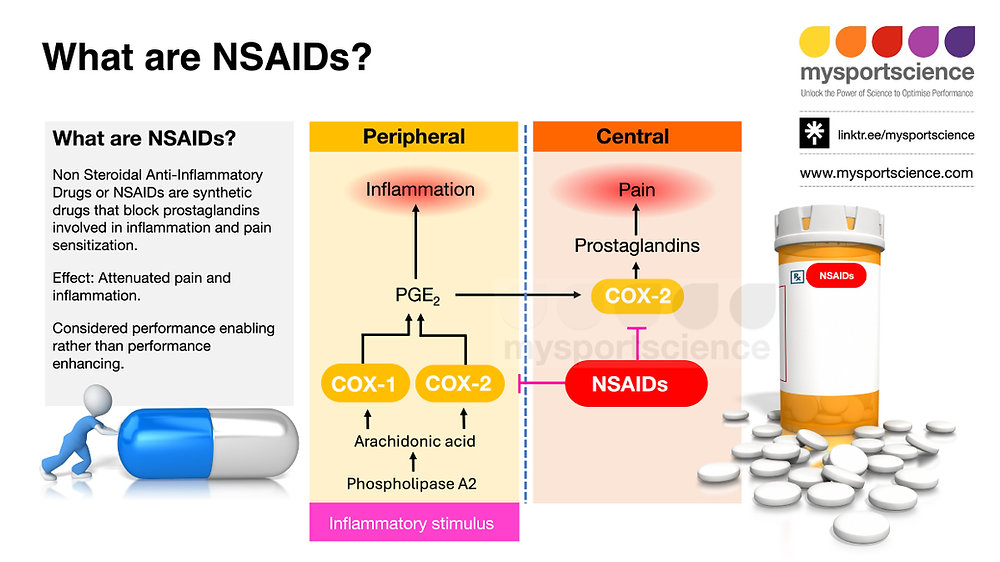
What are NSAIDs? https://t.co/z3Lg9hYQbg
People often take NSAIDs, such as ibuprofen, to manage pain. In this blog, we explore the mechanisms of action of NSAIDs. We also explore how the mechanism may have important implications for athletes.
🚨 How much exercise does your heart really need? ❤️ 🤔
Why 150 minutes a week is the floor, not the ceiling 📈
Don't miss this NEW #BJSMBlog ✅
➡️ https://t.co/jRCqw3yIlL
Target the glutes and get the buns burning with these 3 exercises!! 🔥
Reference:
Collings TJ, Bourne MN, Barrett RS, Meinders E, GONçALVES BAM, Shield AJ, Diamond LE. Gluteal Muscle Forces during Hip-Focused Injury Prevention and Rehabilitation Exercises. Med Sci Sports Exerc. 2023 Apr 1;55(4):650-660.
Sometimes I save writing a post for a certain time of year when I think it will resonate more.
This is certainly one of those. I’ve been asked about carbohydrate grams per hour all season, especially as people are in the heat of battle and race preparation and starting to panic.
It’s definitely something that’s gained a lot more attention and focus rightly so in recent years, but for many I think it remains a confusing aspect with so many mixed messages and an industry that’s motivated to sell you more!
So here’s my end-of-season advice for anyone preparing for next season.
This is general performance-nutrition information, not an individualised nutrition plan. Athletes with medical conditions, persistent GI symptoms or a history of disordered eating should seek appropriately qualified support.
The conversation has moved on from “30–60 g per hour” to “90–120 g per hour” — and, in some professional cycling circles, even higher.
But a number being used by elite athletes doesn’t automatically make it the right target for every runner, cyclist or triathlete.
The useful question isn’t simply: What’s the maximum I can get down?
It’s: How much carbohydrate is likely to help me meet the demands of this session or race, and can I tolerate that amount?
A sensible starting framework:
For shorter sessions, particularly those under about an hour, carbohydrate during exercise is usually unnecessary.
For exercise lasting around 1–2.5 hours, 30–60 g per hour is a well-established practical range.
For longer, demanding events, particularly those lasting more than 2.5–3 hours, 60–90 g per hour is a reasonable target for many athletes.
For some athletes in long, intense events, 90–120 g per hour may be useful. That’s an option to practise and individualise, not a new minimum or a target everyone needs to chase.
Duration matters, but so do intensity, event demands, race conditions, your overall fuelling, and your ability to take in carbohydrate comfortably. A long stage of road cycling, a marathon and an ultra are different challenges. Evidence from cycling shouldn’t automatically be treated as a direct prescription for running.
Why are higher intakes being discussed?
Carbohydrate can support blood glucose and provide fuel during prolonged exercise. At higher intakes, combining glucose or maltodextrin with fructose allows the gut to use different transport pathways. This can increase the rate at which ingested carbohydrate is available to the body compared with relying on glucose alone.
New research is adding to the discussion. A 2026 cycling study found that 100 g per hour, compared with 60 g per hour, improved performance after four hours of intermittent cycling in trained male cyclists and triathletes.
Another small study in trained male cyclists compared 10, 90, 120 and 150 g per hour. The higher intakes increased carbohydrate oxidation, but 150 g per hour did not produce more total carbohydrate oxidation than 120 g per hour, and the study did not find a significant performance difference between 90, 120 and 150 g per hour.
That is interesting evidence — but it does not establish a universal optimum. These were small studies, in male cyclists, using specific laboratory protocols. They help us ask better questions; they don’t settle the question for every sport and athlete.
The 2026 review by Morton and colleagues suggests the upper end of current guidance could extend from 90 to 120 g per hour for trained athletes. It also points out that reported intakes of 120–200 g per hour in the field are ahead of what research has yet established. Ross Tucker’s recent discussion of new carbohydrate studies raises the same practical question: how much do you actually need?
1/
A peer-reviewed study put the Garmin Forerunner 955 against a lab ECG. Resting heart rate was within half a beat. HRV from the same two minutes was out by anywhere from -43% to +118%, and the error isn't random: the higher your real HRV, the more the watch under-reads it.
So the best recovered athletes get the worst numbers. The sensor is consistent with itself to about 3%, which is why HRV Status can still track your own trend. Just don't compare the figure with a chest strap.
#garmin #forerunner
Each cortisone injection for knee arthritis can result in a 9.4% higher chance of needing a knee replacement within nine years, compared to not receiving any injections. But of course, association is not proof of causation. Maybe people who get more cortisone already have worse, faster progressing arthritis. However, the counterargument is that patients receiving hyaluronic acid or PRP tend to be more symptomatic, yet these injections do not indicate a similar trend towards replacement. In fact, some studies even link HA and PRP with a delayed need for surgery.
https://t.co/iP7GC1PWXk
3 key sprinting phases and how to train them! 🏃💨
Based on a fantastic overview of sprinting performance by Haugen et al. (2019) in Sports Medicine - Open.
It's *open access* so be sure to read the full article!
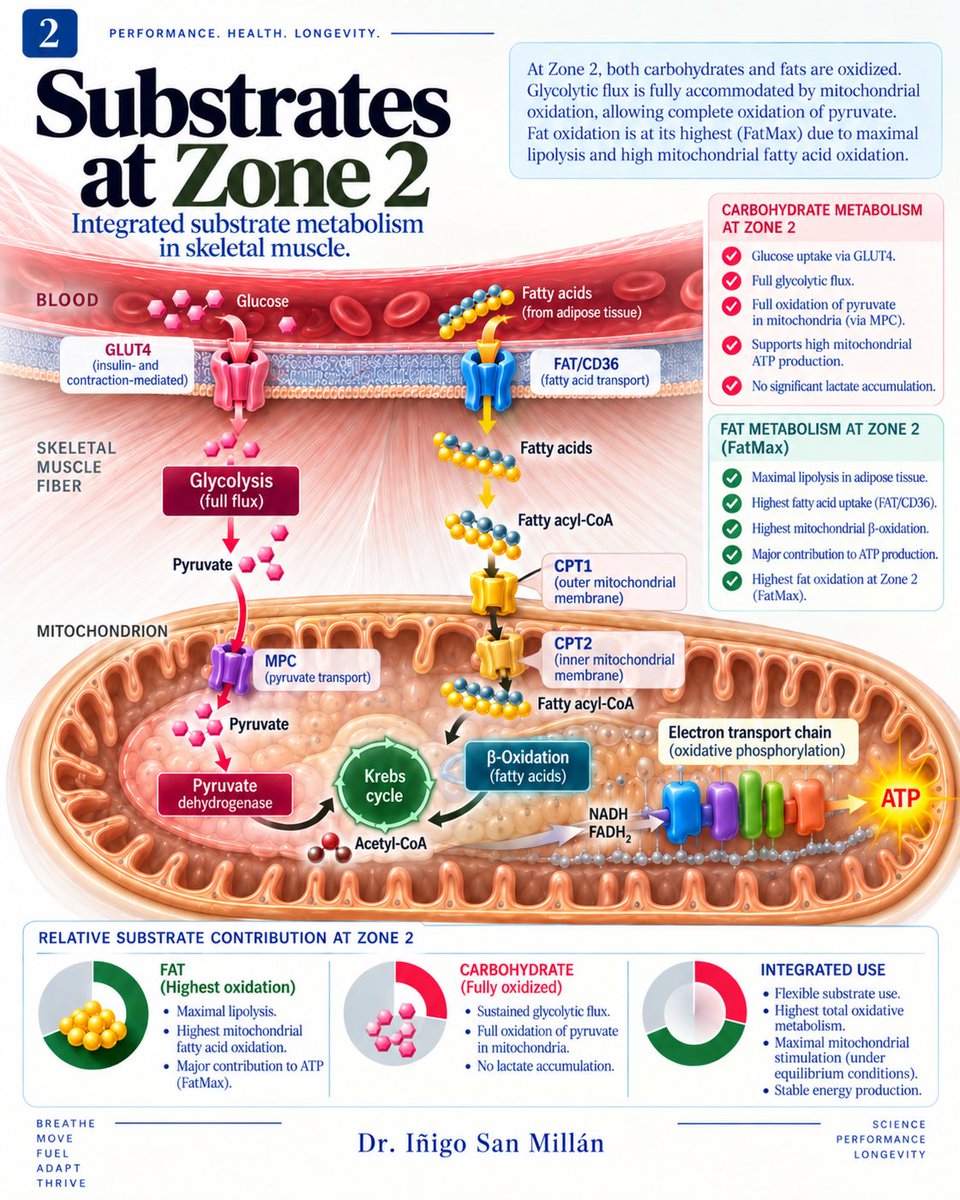
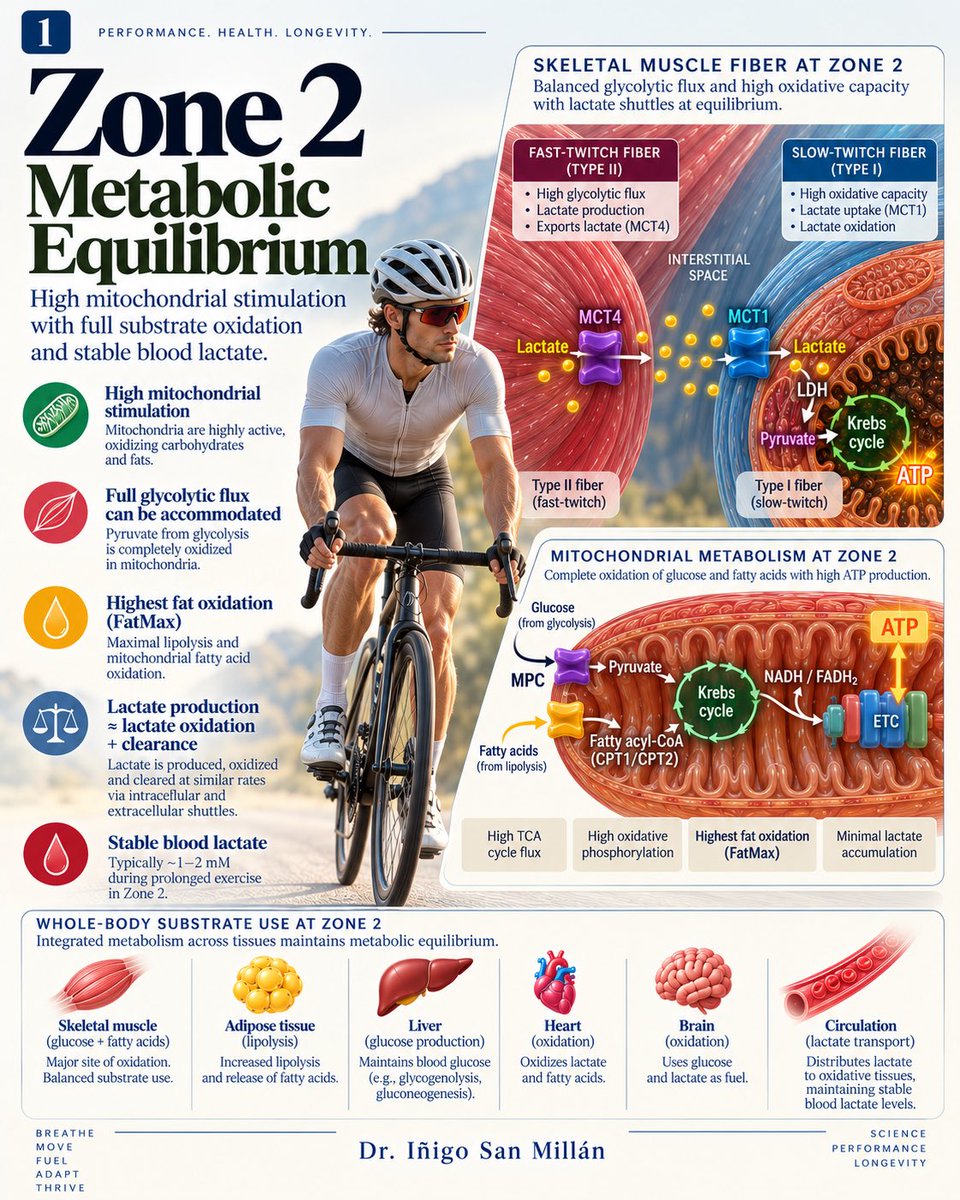
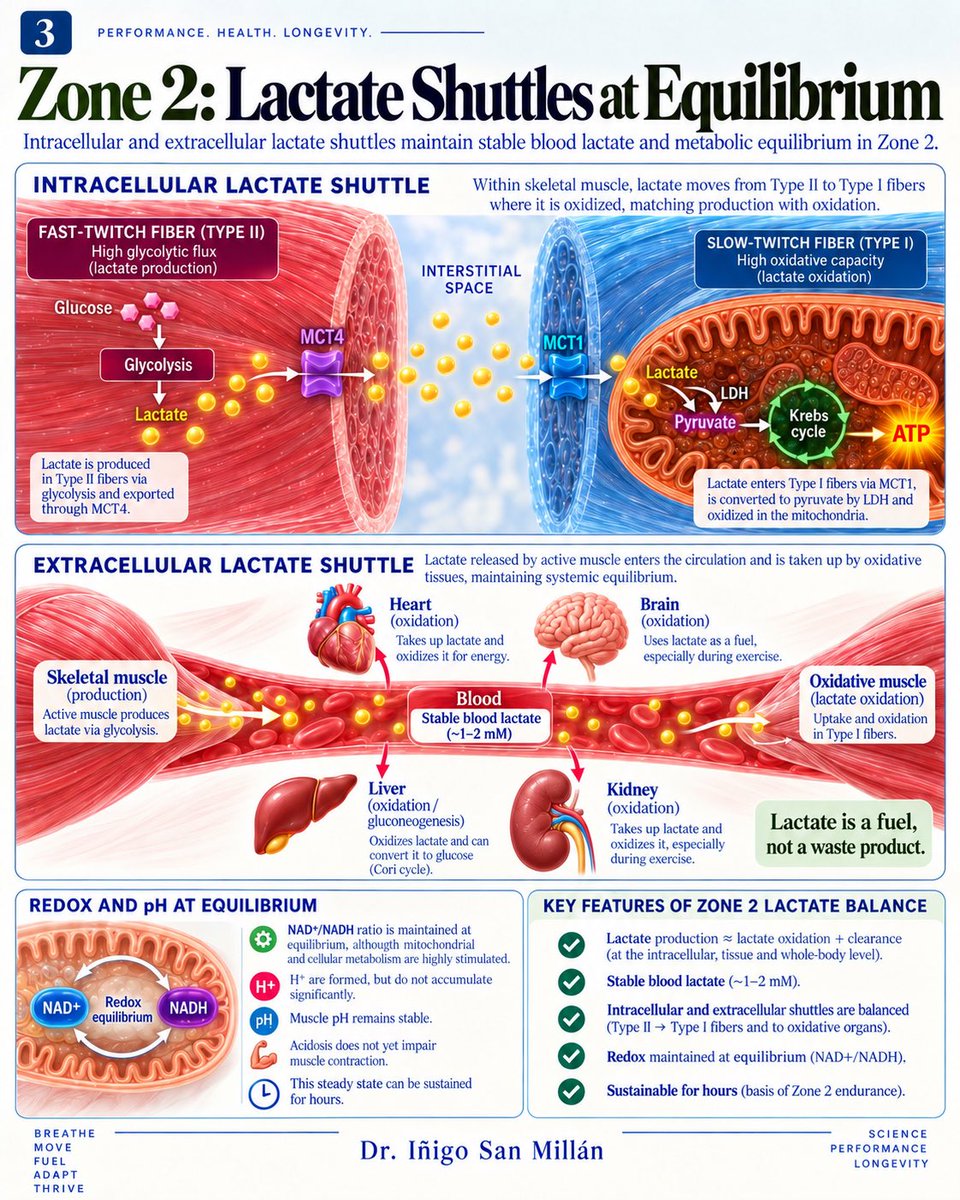
WHAT IS ZONE 2?
I would like to condense 30 years of work and research in muscle physiology, metabolism, and bioenergetics into how I understand and describe Zone 2 from a bioenergetic perspective.
I have explained these concepts many times over the years in podcasts, interviews, lectures and posts, but I have never tried to bring the entire metabolic story together visually.
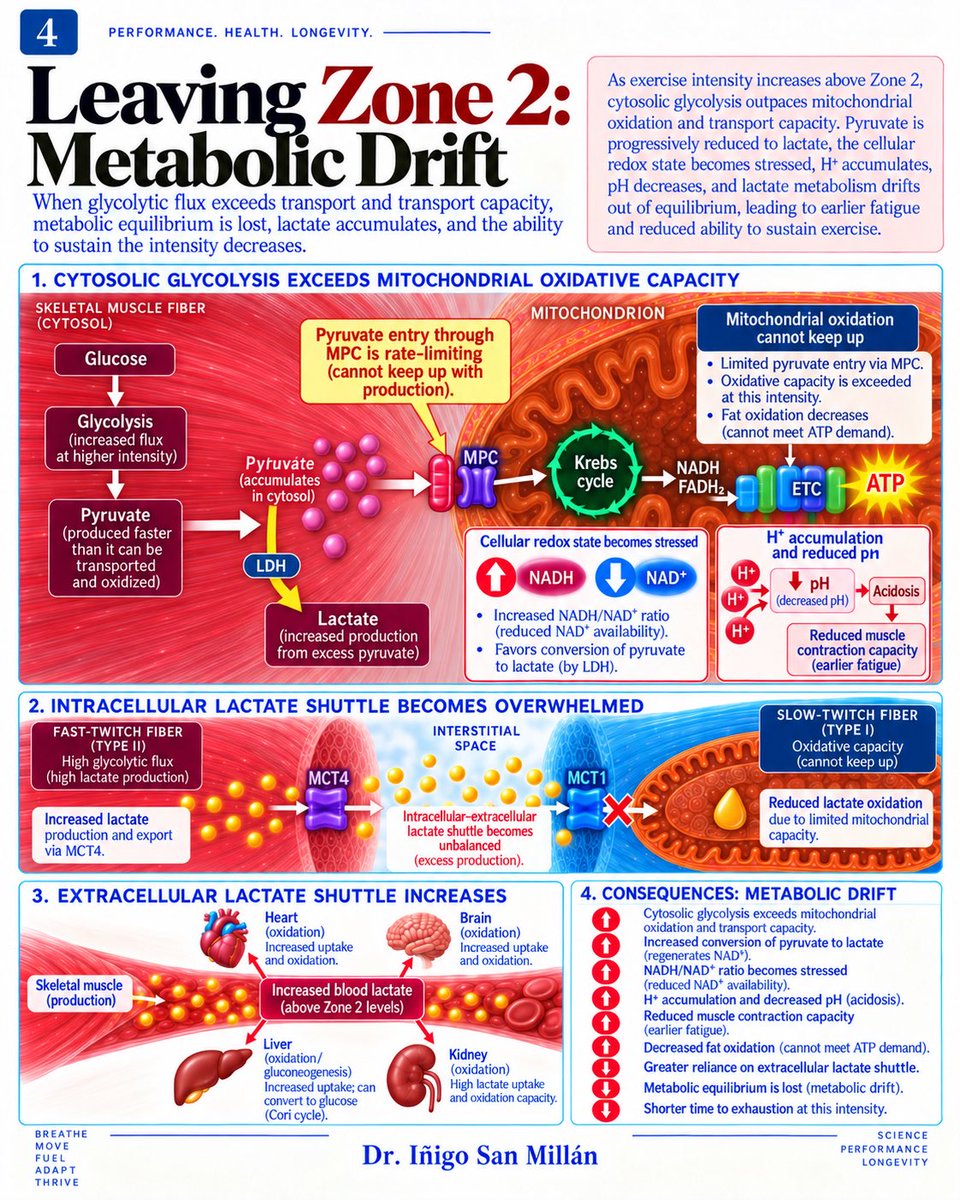
So here it is: 30 years of work and research condensed into five slides, in an AI-produced carousel that I guided scientifically, concept by concept.
For me, Zone 2 is not simply a heart rate, power output, pace or lactate number…It is a METABOLIC STATE.
It is the intensity at which mitochondrial and bioenergetic demand is the highest, while the cell can still maintain METABOLIC EQUILIBRIUM.
And when that equilibrium begins to break, we start moving away from Zone 2 and into what I describe as METABOLIC DRIFT
This carousel is my attempt to explain my vision of what Zone 2 represents at the biochemical and bioenergetic level.
Identifying where your Zone 2 is can help targeting these cellular and mitochondrial adaptations.
#zone2 #metabolicequilibrium #MetabolicDrift