Can you answer our free question of the day?
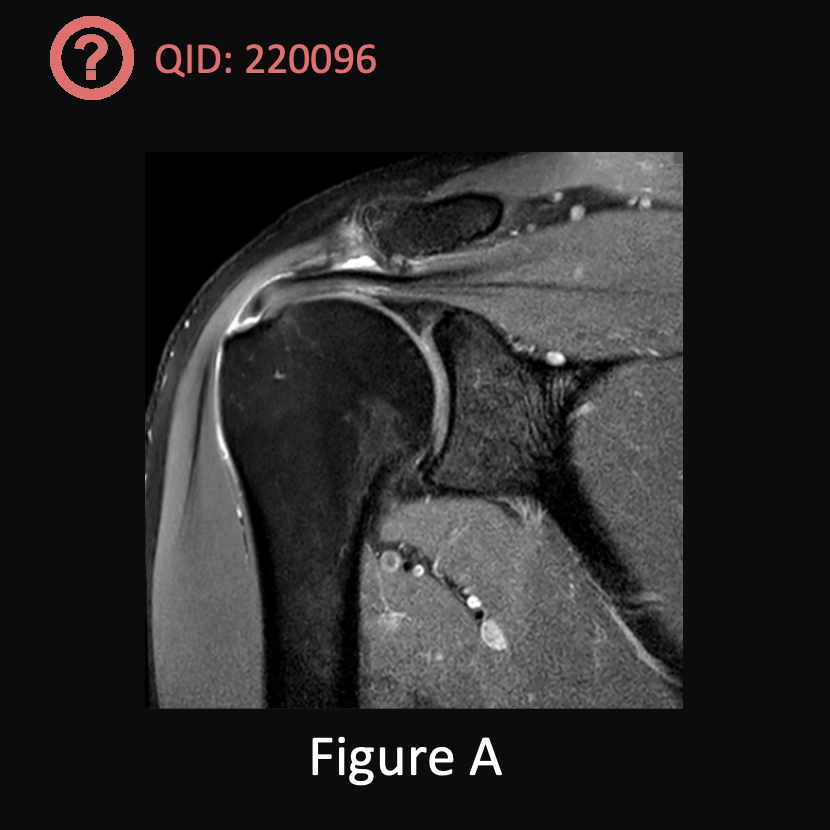
A 55-year-old nurse presents with recalcitrant shoulder pain despite 3 months of physical therapy and a complete course of non-invasive management. Her MRI shown in Figure A demonstrates a high-grade partial thickness tear of her rotator cuff. Her treating surgeon is planning to perform an arthroscopic surgery involving tear completion and rotator cuff repair. If the red dots in Figures B and C represent medial row anchors and the blue dots represent lateral row anchors, which of the following can be said about the rotator cuff repair construct in Figure C compared to that shown in Figure B?
1. The construct in Figure C results in improved forward elevation and external rotation at long-term follow up
2. The construct in Figure B is more costly than that in Figure C
3. The construct in Figure B results in less post-operative pain and faster recovery
4. The construct in Figure C results in improved healing and lower re-tear rates
5. The construct in Figure B results in less intra-operative blood loss
QID: 220096
Comment your answer below, then check to see if you got it correct by clicking the link below to see the answer & explanation.
https://t.co/5534lnzDxu
#orthopedics #orthopedicsurgeon #orthopaedics #orthopaedic #orthopedic #ortholife #orthobullets #orthoresidents #orthoresident #orthoresidency #medicalschool #medicalstudent #medstudent #doctor
🚨 EduSwim - #NEW RCT in BJSM 📄 ✅
Can an individualised swimming and education programme improve chronic low back pain? 🏊
Read here 👉 https://t.co/dO50Am67HQ
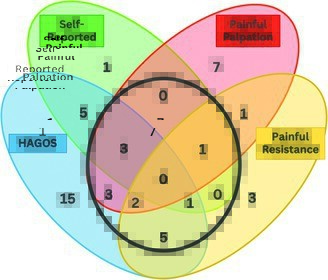
What is the prevalence of changes at the pubic symphysis in professional #female#football players 🤔
Our #ResearchReport looks at active players, and includes analysis of skeletal maturation, bony changes & symptoms of #hip or #groin pain
➡️ https://t.co/3aeWZz7Bb7
#yourJOSPT
Your cognitive edge is not abstract. It is biochemical.
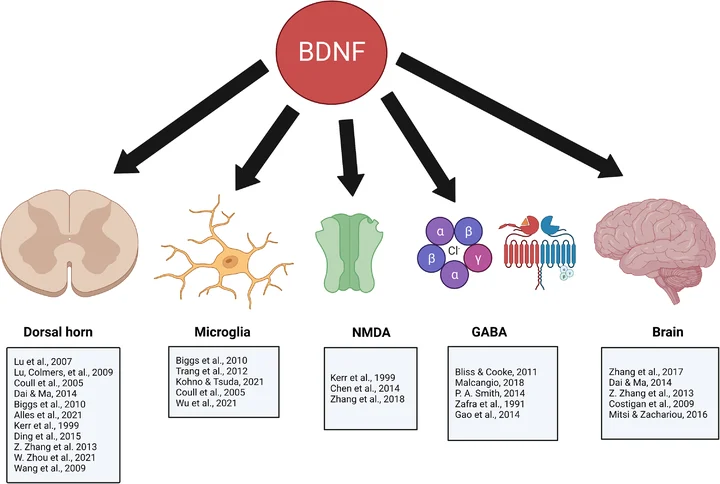
Brain-Derived Neurotrophic Factor is the molecule that decides whether your neural networks stay adaptive under pressure or start degrading under load.
High-intensity resistance training increases BDNF. Not as a side effect, but as a direct signal. It preserves hippocampal structure, strengthens synaptic plasticity, and extends your capacity to update decisions in real time.
Low intensity does not fail gradually. It fails completely. The signal is not strong enough to force adaptation.
This is where cognitive decline actually begins. Not at diagnosis. At the point where your brain stops receiving enough stimulus to justify maintaining its own complexity.
You are not maintaining muscle.
You are maintaining the biological infrastructure that allows you to think at the level you are known for.