Here, we introduce a topological approach that reframes physiological brain recordings as a time-varying geometric structure. By quantifying changes in its shape via persistent homology, we extract robust biomarkers that identify seizure onset and end in real time.
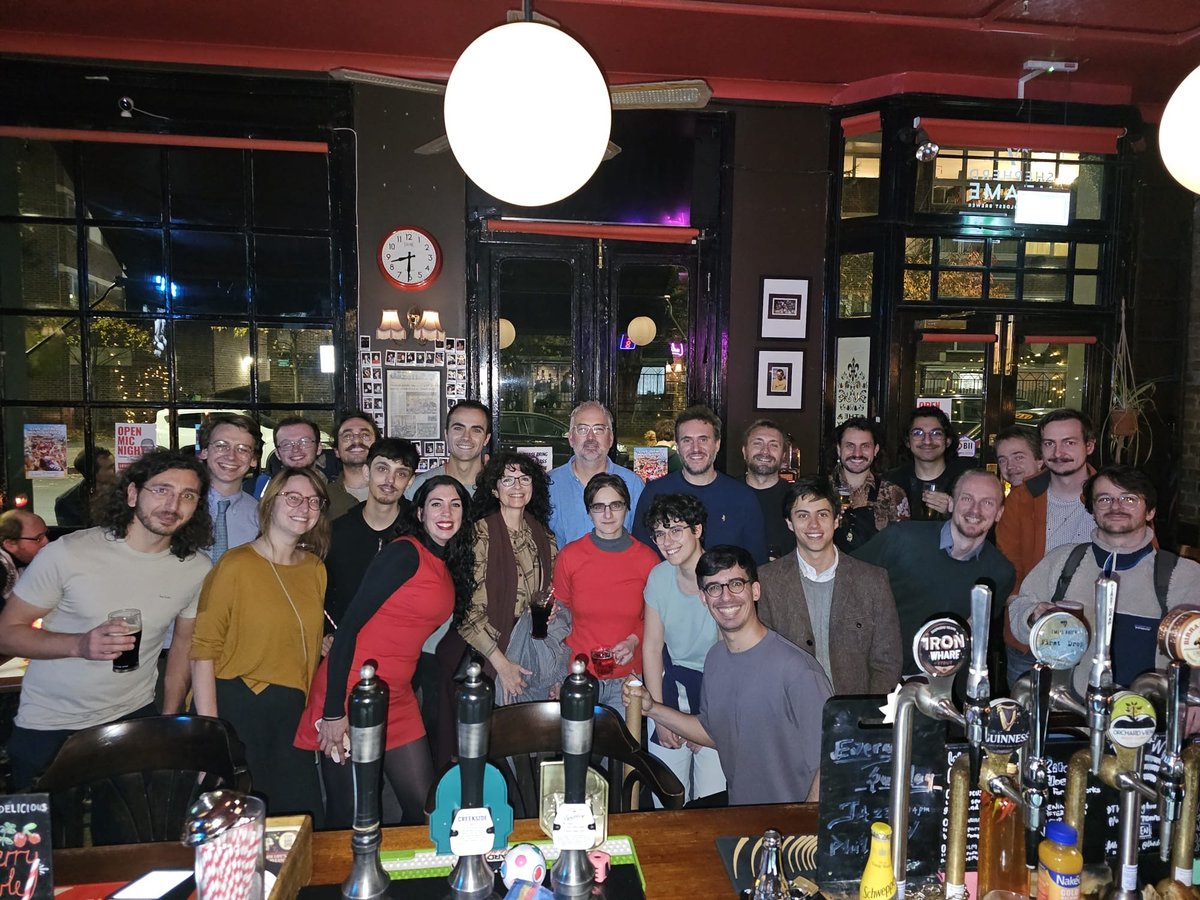
When you organise a workshop in London this is the *Official* Conference Photo😂🍻
Thanks to all the speakers, presenters and participants of the last London-Oxford-Paris TDA Meeting! We look forward to seeing you at the next edition! :)
📢 Registration open! Special edition London-Oxford-Paris TDA Seminar
🔗 6–7 Nov 2025 | City University of London
Open to all researchers & students in algebraic topology, computational geometry & TDA
📅 Details & registration (deadline 24 October): https://t.co/e3Gkg0VTzl
Happy to announce the Tube Neighbourhood Meeting – July 17 in London!
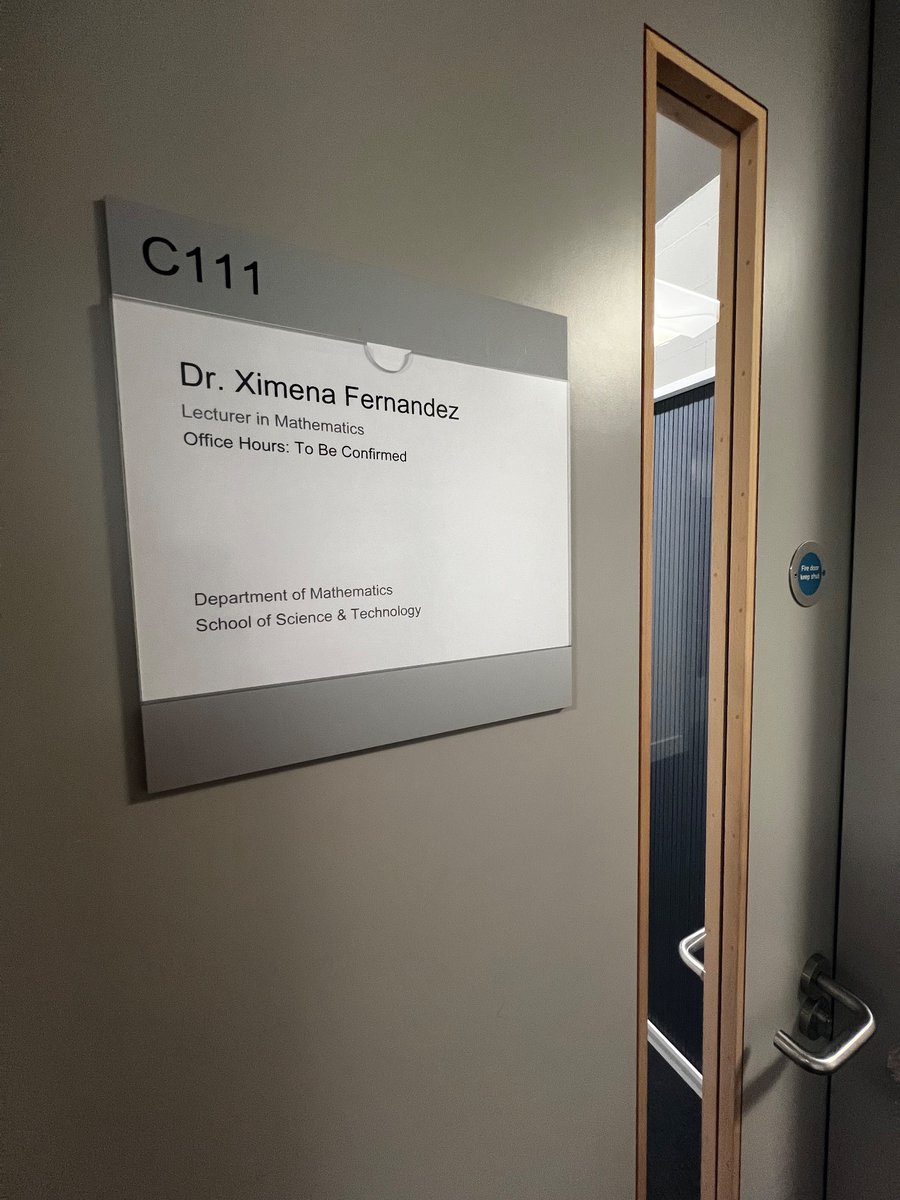
A day of great talks on Topological Data Analysis, plus a celebration of my new appointment at @CityStGeorges.
Info: https://t.co/0DH9RDCRka
Register (no fees, but limited spots): https://t.co/AmBHUmUuNR
Happy to announce the Tube Neighbourhood Meeting – July 17 in London!
A day of great talks on Topological Data Analysis, plus a celebration of my new appointment at @CityStGeorges.
Info: https://t.co/0DH9RDCRka
Register (no fees, but limited spots): https://t.co/AmBHUmUuNR
@Pseudomanifold@ERC_Research Massive congratulations Bastian!
It’s almost HOLES GPT: Higher Order Learning of Essential Structures with Geometry, @Pseudomanifold and Topology
@RaphalHOAREAU1@caeater_7306 Sounds fascinating! Indeed I recently travelled to Nagoya 🇯🇵 to collaborate with the cosmology research group at the University.
@BanikGurudas Trust in the process, it is hard but it is also gorgeous when you finally understand it. It takes patience and a lot of effort. Good luck!