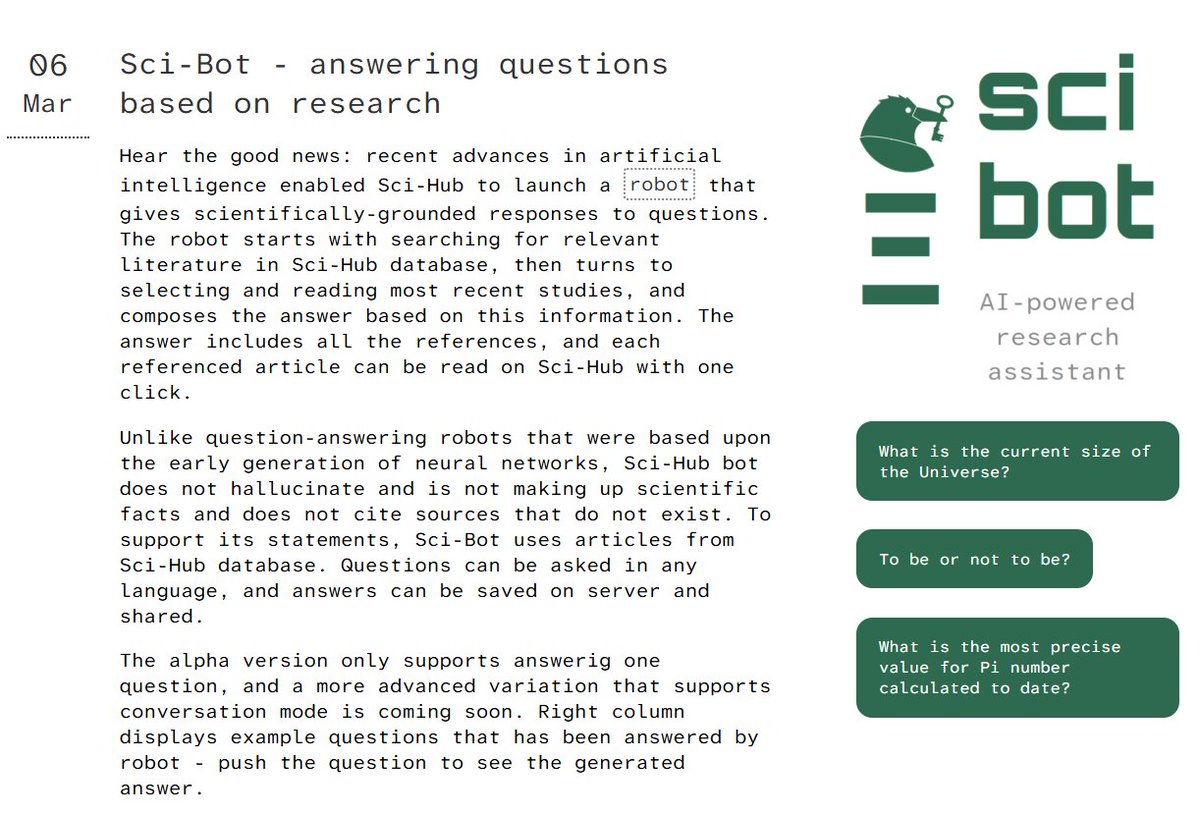
Sci-Hub just stepped into the AI game 🤖📚
They’ve launched Sci-Bot ..... a research-powered chatbot that scans real papers, cites sources and avoids hallucinations.
Basically, ChatGPT but backed directly by academic literature.
If this scales… it could change how we search science forever.
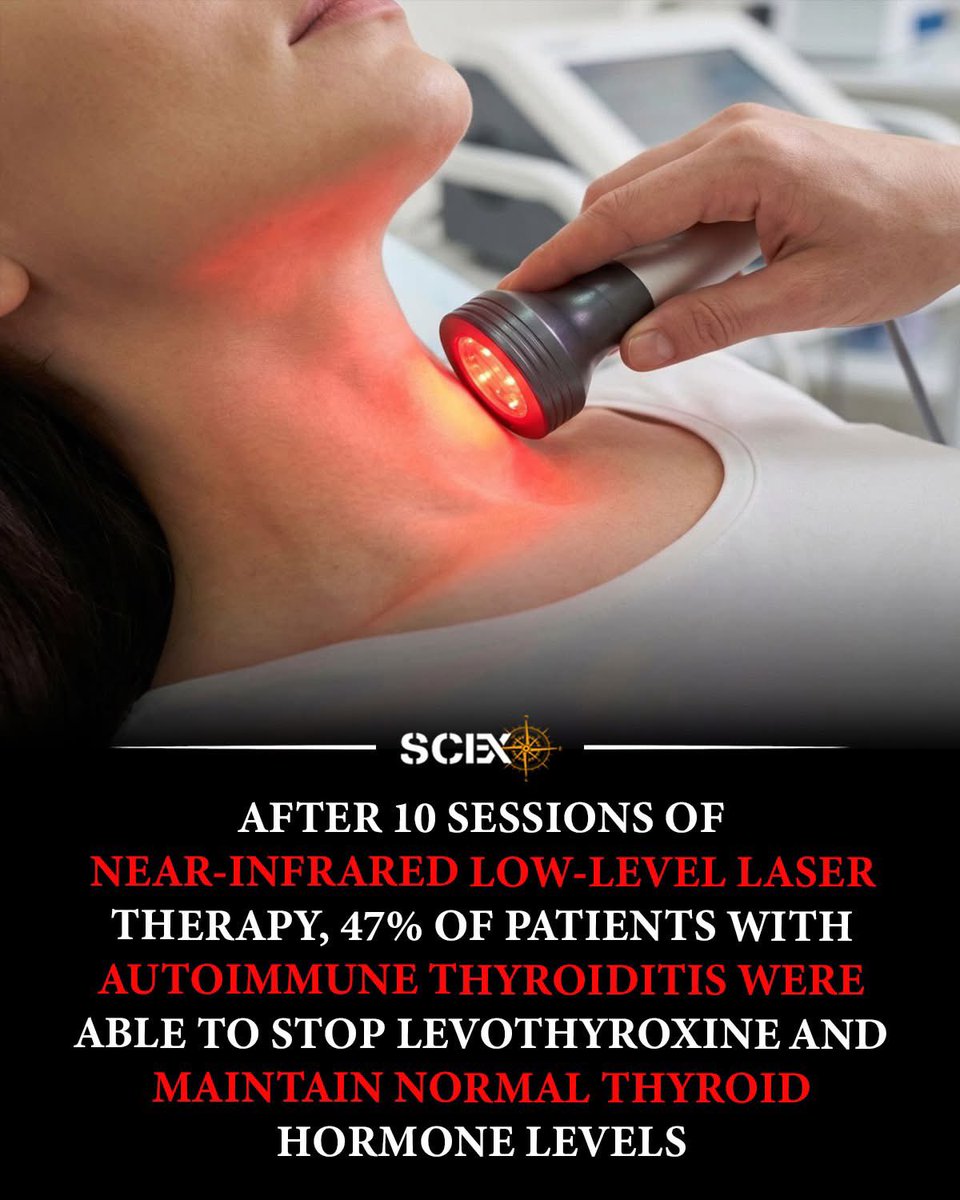
🚨 2026 Thyroid Hope: Could Light Therapy Let ~47% of Hashimoto’s Patients Drop Daily Meds? 🔦🛡️
Hashimoto’s (chronic autoimmune thyroiditis) usually means lifelong levothyroxine.
But clinical research on low-level laser therapy (LLLT / photobiomodulation) is turning heads.
In a randomized, placebo-controlled trial:
• Patients got 10 sessions of near-infrared laser to the thyroid area.
• ~47% stopped levothyroxine completely → stayed off with normal thyroid levels for up to ~9-12 months.
• The rest often needed much lower doses.
• Benefits: lower TPO antibodies (less autoimmunity), better thyroid tissue on ultrasound, improved vascularization & mitochondrial function for cell repair.
Recent studies (2023-2025) build on this—combining LLLT with supplements shows even better results on oxidative stress, quality of life, fatigue, and thyroid volume normalization.
It’s non-invasive, painless, no side effects in trials—but not a guaranteed cure.
Not everyone responds the same, and maintenance might be needed.
Always under endocrinologist supervision, not at-home gadgets.
Could this shift autoimmune thyroid care?
Science says promising, especially for reducing med dependency.
Thyroid warriors:
Thoughts on trying photobiomodulation?
Share below! 👇
#Hashimotos #ThyroidHealing #Photobiomodulation #RedLightTherapy #AutoimmuneThyroid #LLLT #Endocrinology #HealthBreakthrough #Science2026 #ThyroidHealth
Separate sources :
📚 Verified Sources: LLLT / Photobiomodulation for Hashimoto’s Thyroiditis
Core trial with the ~47% discontinuation stat:
• Höfling DB et al. (2013). Low-level laser in the treatment of patients with hypothyroidism induced by chronic autoimmune thyroiditis: a randomized, placebo-controlled clinical trial. Lasers in Medical Science. https://t.co/RkRRaTuaTl (43 patients; LLLT group had major reductions in levothyroxine needs, TPOAb drop, improved function & ultrasound.)
Pilot study:
• Höfling DB et al. (2010). Low-level laser therapy in chronic autoimmune thyroiditis: a pilot study. Lasers in Surgery and Medicine. https://t.co/YtapeiIbNj
Long-term safety:
• Höfling DB et al. (2018). Safety and efficacy of low-level laser therapy in autoimmune thyroiditis: long-term follow-up. https://t.co/5LqrLDgRYw (PMC full: https://t.co/v3OeUcIbEV)
Recent supporting/combination research (2022-2025):
• Review on mechanisms: https://t.co/KLxEYjv6jt (anti-inflammatory, regeneration effects)
• 2023 combo with supplements: https://t.co/ZT4kq4CNcd (better homeostasis vs supplements alone)
• 2025 thyroid volume study: https://t.co/BpuzAuBUr3 (PBM + supplements normalized volume more effectively)
• Ongoing trial example: NCT06735040 (photobiomodulation on fatigue/behavior in Hashimoto’s) https://t.co/8rWBd1exrb
• Oxidative stress/quality of life trial: NCT04754607 https://t.co/OLAkcAGCgy
Promising but still emerging—not standard care yet.
Consult your doctor!
Research keeps evolving. 📖 #ThyroidScience #EvidenceBasedHealth
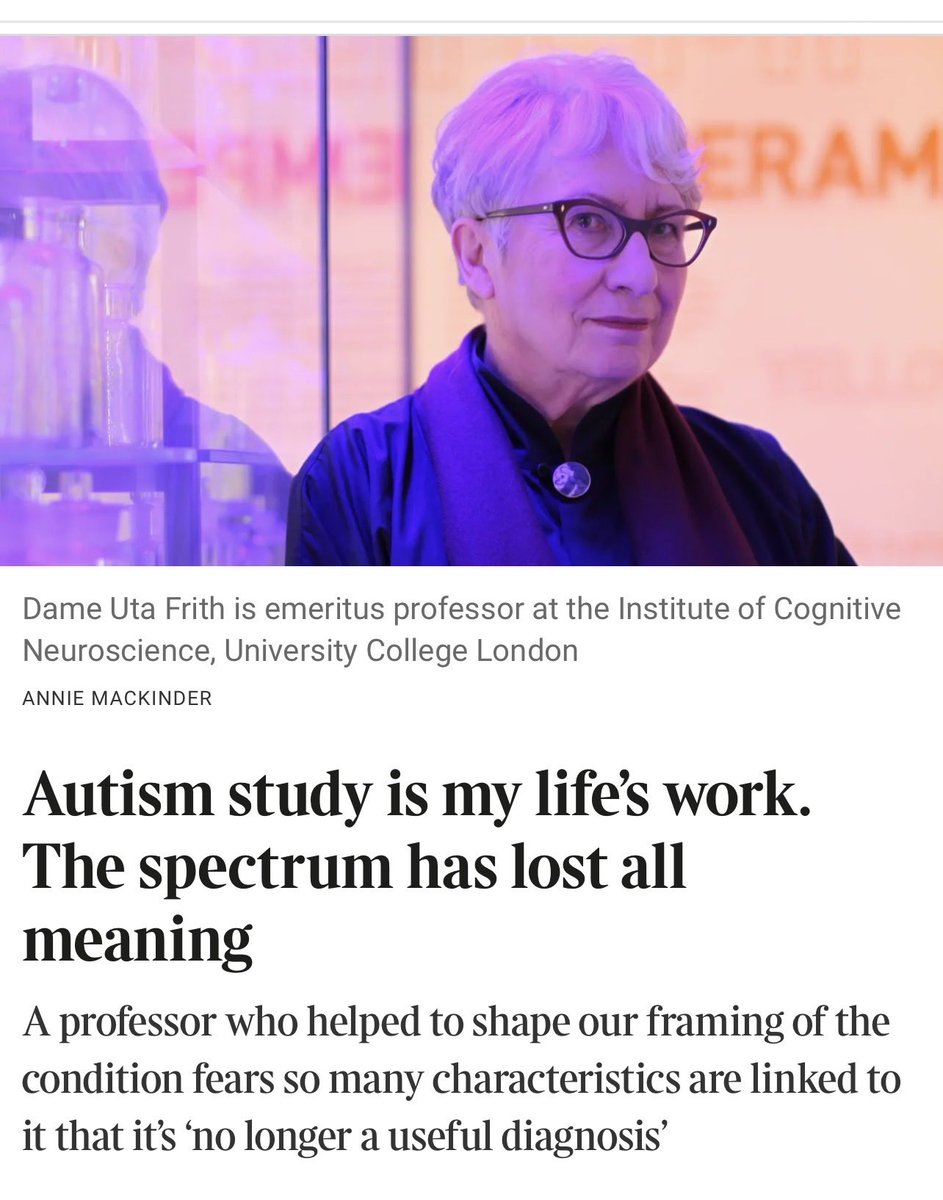
Autism:
“The spectrum has become so accommodating that I fear that it has now been stretched so far that it has become meaningless and is no longer useful as a medical diagnosis.”
Problem is that psychologists, and increasingly a flood of master’s level therapists have come to rely on the autism diagnosis to support their practice. Their livelihood. I suspect schools face a similar reliance on autism diagnoses for extra funding.
Furthermore: Parents love it because their child gets extra services. Students love it because it makes them special. Drug companies love it because they profit from drugs.
Psychologists are supposed to be the gatekeepers on diagnoses, but we are not doing very well at it.
@EnsedeCiencia Cómo si no recordaran las 4 armas letales en The Avengers dirigidas contra cualquier a que ellos consideraran peligroso (todo el mundo) darles poder es firmar sentencia de ☠️
@carlos_arnaud@doctormacias Colega esto es todos los días.
Debemos aprender a poner límites y recalcar que WhatsApp es RED SOCIAL y no es parte del expediente clínico.
Si así lo consideran los médicos, están actuando fuera de la NOM.
WHATSAPP no es urgencia y no es consulta, para eso está el consultorio.
@robertlufkinmd OK, for once, I would agree the effect over inflammation although the muscle loss and osteoporosis are not to be ignored, definitely more studies needed
La Clase Funcional de la
@opsoms
es uno de los varios indicadores clave de la evaluación de pacientes con hipertensión pulmonar que proporciona información valiosa para determinar la gravedad, la mejora, el deterioro o la estabilidad de la enfermedad.
#LATAMrespira2022#fhpr
Free online course by Johns Hopkins University Introduction to systematic Review and Meta Analysis #freecourse#freeonlinecourse https://t.co/IyM9GJAl2m
INSÓLITO: AUTISMO, TDAH Y ANOREXIA COMPARTEN UN MISMO PATRÓN ALTERADO EN LA MICROBIOTA INTESTINAL
Un estudio reciente reveló algo que podría cambiar nuestra comprensión del eje intestino-cerebro: el autismo (TEA), el TDAH y la anorexia nerviosa comparten un desequilibrio microbiano casi idéntico en el intestino.
Los investigadores analizaron muestras fecales de 117 niños con alguno de estos trastornos y las compararon con las de 52 niños sanos.
El resultado fue sorprendente:
• Los tres grupos presentaron la misma relación elevada Bacteroidetes/Firmicutes.
• Mostraron menor diversidad microbiana, un indicador clave de disfunción intestinal.
• Aparecieron alteraciones comunes en géneros como Faecalibacterium, Bifidobacterium y Escherichia–Shigella.
Este patrón compartido sugiere que la microbiota podría tener un rol mayor y hasta ahora subestimado en síntomas neurológicos, conductuales y metabólicos.
Los científicos advierten que aún no se sabe si estas alteraciones son causa o consecuencia, pero el hallazgo abre una vía completamente nueva en la investigación del eje intestino-cerebro.
Una pieza inesperada que podría unir trastornos que, hasta ahora, parecían muy distintos entre sí.
FUENTES CIENTÍFICAS:
• Soltysova M. et al. Gut Microbiota Differences in Children and Adolescents with Autism, ADHD and Anorexia Nervosa… Neuroscience (2025). DOI: 10.1016/j.neuroscience.2025.08.020
• MDPI — Children 2025; 12(11):1561
• ScienceAlert — cobertura del estudio