UANL en tesis de PhD en educación, estudio las relaciones entre docentes, formadora de formadores, Investigadora en Escuela Normal Superior, bilingual teacher.
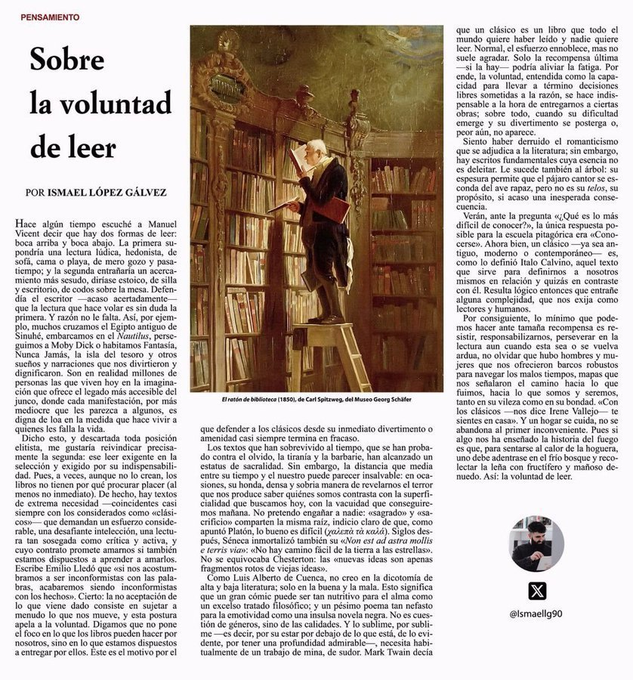
La importancia de la lectura no como una obligación o una meta de acumulación de libros, sino como un acto de placer y libertad personal
Descubrir su valor intrínseco, su capacidad de deleitar y de abrir nuevas puertas al conocimiento y la comprensión del mundo
NotebookLM es una de las herramientas de IA más potentes (y subestimadas) para lo que buscan aprender, para docentes e investigadores
Transforma PDFs, apuntes, artículos o transcripciones en conocimiento accionable en cuestión de minutos
PhD Students - Here is an example of a good discussion section.
A good discussion section should answer 6 questions.
1. What is different in your findings compared to previous research?
2. What is similar in your findings compared to previous research?
3. How different sections of your results section correlate?
4. What are the implications of your findings for practitioners?
5. What are the implications of your findings for researchers?
6. What are the limitations or threats to the validity of your findings?
Que un alumno esté sentado y en silencio no significa que esté pensando.
La OCDE (2025) define el “compromiso cognitivo” como esfuerzo sostenido para entender ideas complejas y resolver problemas. Está asociado a mejores resultados, motivación y autoestima.
Claves docentes: desafío adecuado, contexto real, múltiples enfoques y metacognición.
https://t.co/xebYy9A0za
https://t.co/7zv4fmPoJD
Si solo te puedes leer un libro este año que sea Hipercomplejidad.
Y si tienes que elegir un solo episodio de Charlando con libros, que sea el de este librazo con el autor.
Como son 4 horas (de puro oro) lo he dividido en bloques:
- 00:00 Los problemas de este libro
- 11:23 Bloque complejidad
- 42:00 Bloque gobernanza e historia
- 2:17:38 Bloque moralidad
- 2:44:15 Bloque mente
- 3:35:51 Bloque IA y algoritmos culturales
Aquí para disfrutarlo:
* iVoox: https://t.co/nvekW4vHrK
* Youtube: https://t.co/etoaLKG9Rh
* Spotify: https://t.co/uKNZUuRer7
Baja California, Quintana Roo y Ciudad de México presentan la menor persistencia en pobreza laboral.
Guerrero, Oaxaca, y Chiapas con la mayor persistencia en el país.
Los ingresos del trabajo de tu familia ¿alcanzan para cubrir la canasta alimentaria?
My first research paper was rejected by five journals.
One review said: "The research is fine. The paper is not."
That stung, because I thought good research was enough. It is not. A paper is not judged on what you know. It is judged on how you let the reader see it.
"Guía rápida para docentes" acerca del método para creación de recursos educativos adaptativos bayesianos con IA: Recursos que cambian según las respuestas del alumnado.
👉 https://t.co/tF9Nmcrjgb
¿Cómo se reparte el poder en México?
A nivel municipal, el poder es un mosaico de fuerzas mucho más fragmentado de lo que parece.
Ahora puedes explorar este mosaico en nuestro mapa interactivo.
Abrimos hilo con algunas de las posibilidades 👇
In 1964, a 17 year old from San Diego conducted the most dangerous psychology experiment ever attempted by a teenager.
Randy Gardner stayed awake for 264 hours (11 days) with:
• No stimulants
• No caffeine
• No medical suppressants
And Stanford sleep researchers realized too late they couldn't stop him.
What happened inside his brain during those 264 hours rewrote everything we thought we knew about consciousness.
By day three, Randy's short term memory had completely collapsed. He couldn't remember starting a sentence by the time he reached the end of it. Researchers would ask him to count backward from 100, and he'd stop at 65, staring blankly, having forgotten the entire concept of numbers.
But the terrifying part wasn't the memory loss.
Randy's brain began creating a second reality that ran parallel to the real one.
He'd have full conversations with people who weren't there. He'd walk to locations that didn't exist. His eyes stayed open, his body kept moving, but his mind was living inside elaborate hallucinations that felt completely real to him.
Sleep researchers had predicted cognitive decline. They hadn't predicted that the sleep deprived brain would start *manufacturing* an alternate conscious experience to fill the gap.
Dr. William Dement, the Stanford researcher monitoring Randy, discovered something that changed sleep science forever. The hallucinations weren't random. They followed the exact same patterns as REM sleep dreams, complete with narrative arcs, emotional themes, and symbolic imagery. Randy's brain was dreaming while awake, projecting dream content directly onto his waking perception.
The boundary between sleep and consciousness was more than binary. It was fluid, and without sleep to maintain the separation, the two states began bleeding into each other.
By day nine, Randy couldn't distinguish between his hallucinations and reality. He became convinced that Dr. Dement was plotting against him. He accused the researchers of being imposters. His paranoid delusions were so convincing that even the people documenting his mental breakdown began questioning their own perceptions.
Randy's EEG readings showed something unprecedented. His brain waves were cycling through all four stages of sleep while he remained physically awake and mobile. His neurons were firing in sleep patterns, but his motor cortex kept his body upright and functioning. He had become a walking sleeper, a conscious dreamer, a person experiencing two incompatible states of being simultaneously.
When Randy finally slept after 264 hours, he didn't collapse into a coma. He slept for 14 hours and 40 minutes, then woke up completely normal. The hallucinations vanished. The paranoia disappeared. His memory returned.
But the Stanford team realized they had documented something extraordinary about human consciousness that nobody talks about.
Your brain doesn't need sleep to *function*. Randy proved the human body can operate for weeks without it. What your brain needs sleep for is to maintain the distinction between internal mental reality and external physical reality. Sleep isn't rest for your body. Sleep is a firewall for your mind.
Without that firewall, the dream world and waking world merge into a single, indistinguishable experience where hallucinations become as real as the room you're sitting in.
Randy recovered completely, but sleep researchers never attempted the experiment again. The ethical implications were too severe. They had accidentally discovered that consciousness is far more fragile than anyone suspected, held together by nothing more than eight hours of unconsciousness every night.
Every time you go to sleep, your brain is performing the most critical maintenance operation in human biology.
It's rebuilding the wall between dreams and reality.
And without that wall, there is no difference.
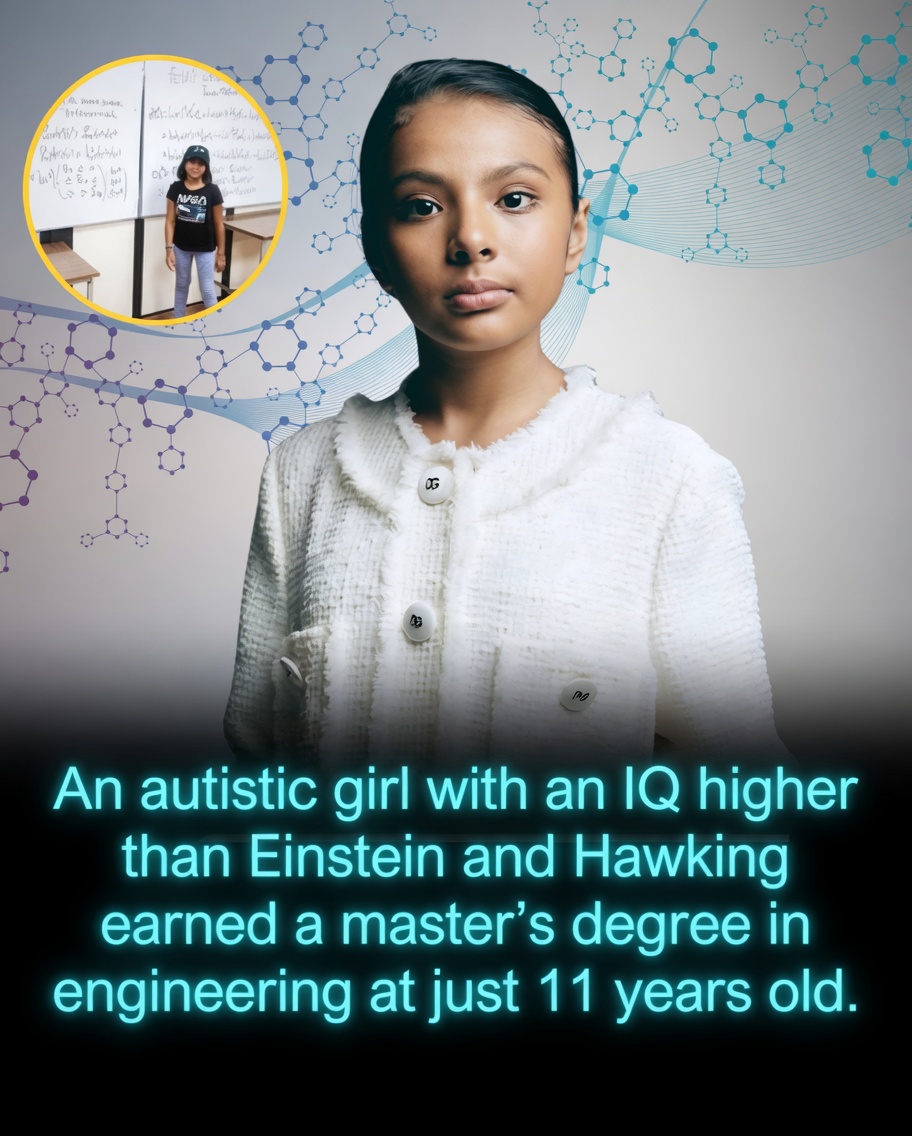
Adhara Pérez Sánchez, a young prodigy from Mexico, has captivated the world with her remarkable intellect and extraordinary achievements. With an IQ of 162 — higher than those estimated for Albert Einstein and Stephen Hawking — Adhara was diagnosed with autism at age three. She faced significant challenges in traditional schooling, including bullying, until her mother enrolled her in the Center for Attention to Talent, where her exceptional abilities were finally recognized and supported.
Adhara’s academic journey is astonishing: she finished elementary school at age five, middle school at six, and high school at seven. She went on to earn bachelor’s degrees in Systems Engineering and Mathematics Engineering, and at just 11 years old, she received a master’s degree in Industrial Engineering with a focus on Mathematics from the National Polytechnic Institute, becoming the youngest person in Mexico to achieve this feat.
Beyond academics, Adhara has been named one of Mexico’s most powerful women by Forbes. She has also authored a book titled Don’t Give Up, in which she shares her experiences living with autism and inspires other children to chase their dreams. Her ultimate ambition is to become an astronaut with NASA and contribute to future missions to the Moon and Mars.
#النشر_العلمي
المجلات المفهرسة في Scopus والتي تنشر البحوث بدون إجور نشر Free publication journals indexed in Scopus رابط المجلات https://t.co/cA4Y5D2M14عند الضغط على الرابط وظهور الصفحة سوف تجد على الجهة اليسرى للصفحة المجلات مرتبة حسب الموضوع. https://t.co/qoVrZXbeNR👇👇
🤖📚 Maestro, descargue la nueva guía “Inteligencia Artificial en el Aula” con 80 páginas de ideas, herramientas y estrategias prácticas para innovar sus clases y ahorrar tiempo. 🚀✨📄 Enlace de descarga: https://t.co/gdFLjFQqoB
🔴 20 Prompts de NotebookLM para APRENDER MÁS RÁPIDO
1. Resumen Instantáneo
Convierte documentos largos en ideas digeribles.
👉 Prompt:
"Resume esta fuente en las 10 ideas más importantes, argumentos clave y conclusiones prácticas en inglés sencillo."
2. Explicación para Principiantes
Haz que los temas complejos sean fáciles de entender.
👉 Prompt:
"Explica este material como si yo fuera un principiante absoluto. Usa analogías simples, lógica paso a paso y evita el argot técnico."
3. Análisis Profundo por Capas
Entiende el tema capa por capa.
👉 Prompt:
"Descompón esta fuente en conceptos centrales, suposiciones ocultas, matices de nivel experto y lo que la mayoría de los lectores suele pasar por alto."
4. Comparación De Fuentes
Detecta acuerdos y contradicciones.
👉 Prompt:
"Compara todas las fuentes subidas. Muestra dónde están de acuerdo, dónde entran en conflicto y qué ideas únicas aporta cada fuente."
5. Constructor de Notas de Estudio
Crea notas limpias al instante.
👉 Prompt:
"Convierte este contenido en notas de estudio estructuradas con encabezados, puntos de viñeta, definiciones y ejemplos memorables."
6. Generador de Tarjetas de Memoria
Convierte la información en recuperación activa.
👉 Prompt:
"Genera 25 tarjetas de memoria de alta calidad a partir de este material con pregunta al frente y respuesta concisa al reverso."
7. Ponme a Prueba
Evalúa tu comprensión.
👉 Prompt:
"Crea un cuestionario progresivo de fácil a difícil basado solo en esta fuente. Espera mis respuestas y califícame."
8. Anclas de Memoria
Haz que la información se quede pegada.
👉 Prompt:
"Crea mnemotécnicas, analogías y anclas de memoria que me ayuden a retener las partes más importantes de este contenido."
9. Extracción de Línea de Tiempo
Organiza eventos cronológicamente.
👉 Prompt:
"Extrae cada evento, hito o desarrollo importante de estas fuentes y organízalos en una línea de tiempo clara."
10. Buscador de Citas Clave
Encuentra la evidencia de apoyo más fuerte.
👉 Prompt:
"Extrae las citas más impactantes, puntos de datos y evidencia de estas fuentes que pueda citar en escritos o presentaciones."
11. Brechas de Investigación
Ve qué falta.
👉 Prompt:
"Identifica preguntas sin respuesta, argumentos débiles, evidencia faltante y brechas de investigación en estos materiales."
12. Debate Ambos Lados
Afina el pensamiento crítico.
👉 Prompt:
"Presenta los argumentos más fuertes a favor y en contra de la tesis principal de estas fuentes como si dos expertos estuvieran debatiendo."
13. Convierte en Marco
Extrae sistemas repetibles.
👉 Prompt:
"Convierte las ideas en estas fuentes en un marco práctico, lista de verificación o sistema repetible que pueda aplicar."
14. Reutilización de Contenido
Convierte la investigación en contenido publicable.
👉 Prompt:
"Usa estas fuentes para generar una publicación de LinkedIn, esquema de artículo, hilo de tweets e idea de boletín."
15. Modo Entrevista con Experto
Haz preguntas al cuaderno.
👉 Prompt:
"Actúa como el mejor experto del mundo en estos materiales subidos. Responderé preguntas solo a partir de las fuentes."
16. Resumen Ejecutivo
Condensa para la toma de decisiones ocupada.
👉 Prompt:
"Crea un resumen ejecutivo de 5 minutos con solo las ideas estratégicas más importantes, implicaciones y puntos de acción."
17. Creador de Plan de Lecciones
Transforma notas en un currículo.
👉 Prompt:
"Convierte este cuaderno en un plan de aprendizaje de 7 días con lecciones diarias, ejercicios y puntos de control."
18. Generador de Ideas
Usa fuentes para nuevo pensamiento.
👉 Prompt:
"Genera 20 ideas originales, oportunidades o aplicaciones inspiradas en los materiales subidos."
19. Simplifica para Enseñar
Prepárate para explicar a otros.
👉 Prompt:
"Reescribe las ideas clave de estas fuentes en un guion de enseñanza que pueda explicar a alguien en 5 minutos."
Más 👇👇👇
En la actualidad, los jóvenes se preguntan cómo habitar la masculinidad en un mundo vibrante, lleno de posibilidades expresivas y afectivas, pero también atravesado por contradicciones, donde la manósfera y el antifeminismo prevalecen. Recomendamos leer el ensayo "Encrucijadas de la Gen Z: feminismos, masculinidades y manósfera", publicado en @revista_unam.🔗👉 https://t.co/gtwcBeclKk
🖌️ Aoki Quiroz, «Autorretrato», 2023
La Asociación Nacional de Universidades e Instituciones de Educación Superior, propuso la transición de un modelo universitario corporativo hacia uno social y solidario, fundamentado en la premisa de que la educación es un bien público y un derecho humano https://t.co/qlZxPX4QH1
Scaffolding is not a synonym for support.
It should be temporary, responsive, and designed to disappear.
5 principles for effective scaffolding https://t.co/CQYXMfua7q