Don’t stop pretraining! Or something like that…
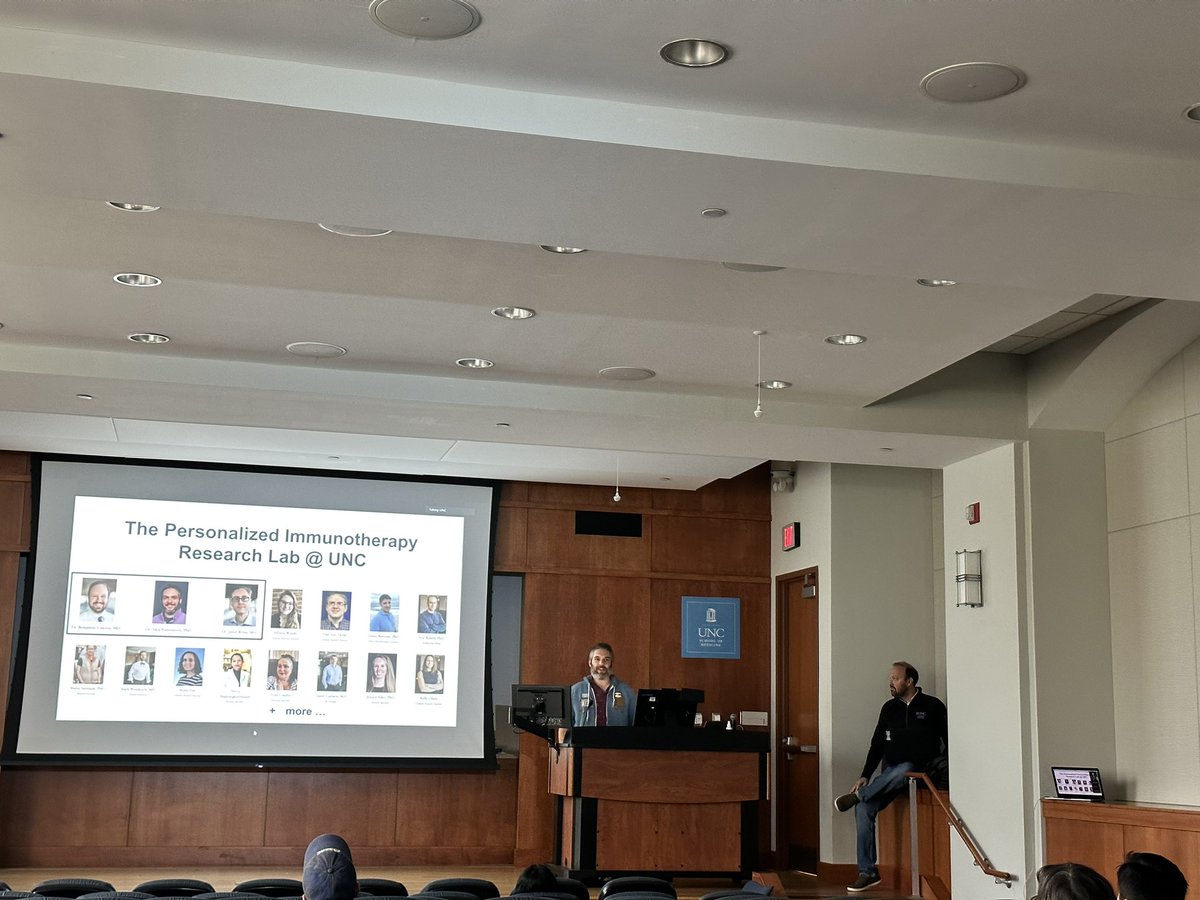
Excited to be presenting work from @pirl_unc at #MLCB2023. If you’re interested in learning about how a model for few-shot facial recognition from 2015 can help encode semantic similarity between Tcell epitopes, stop by poster143!
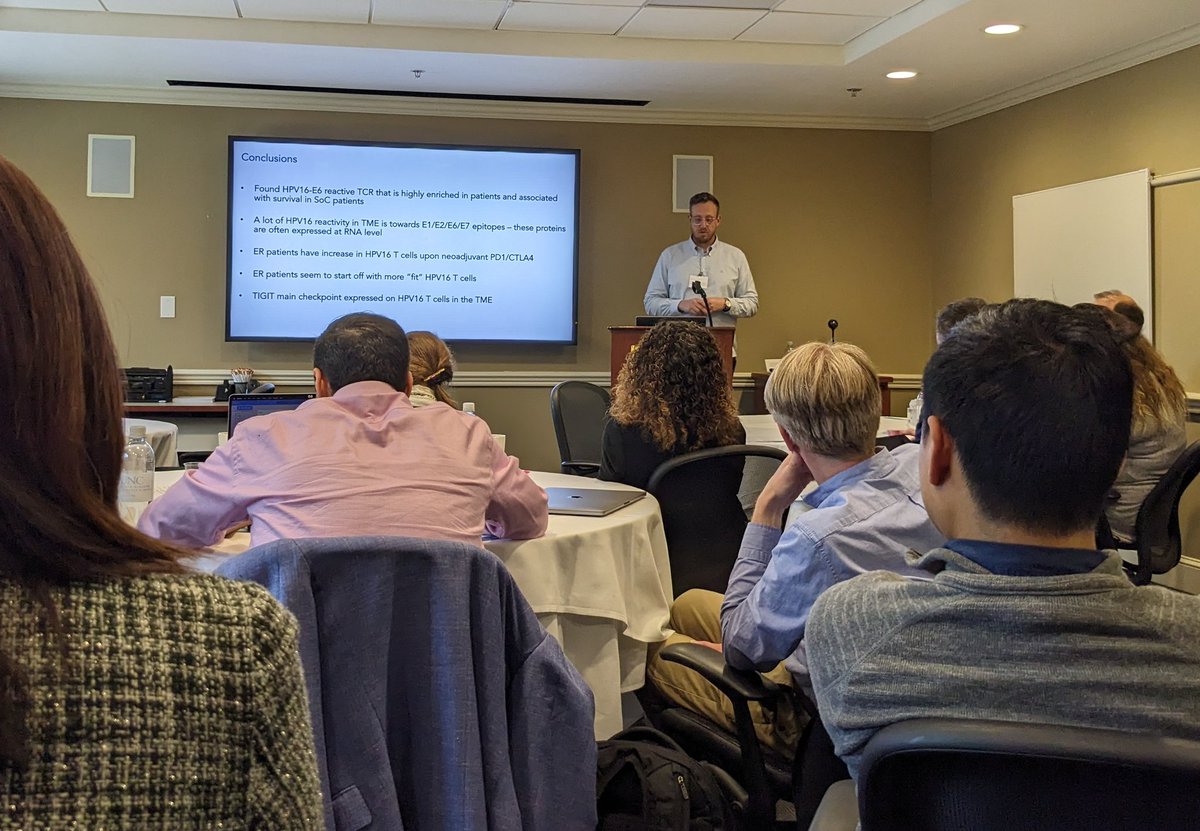
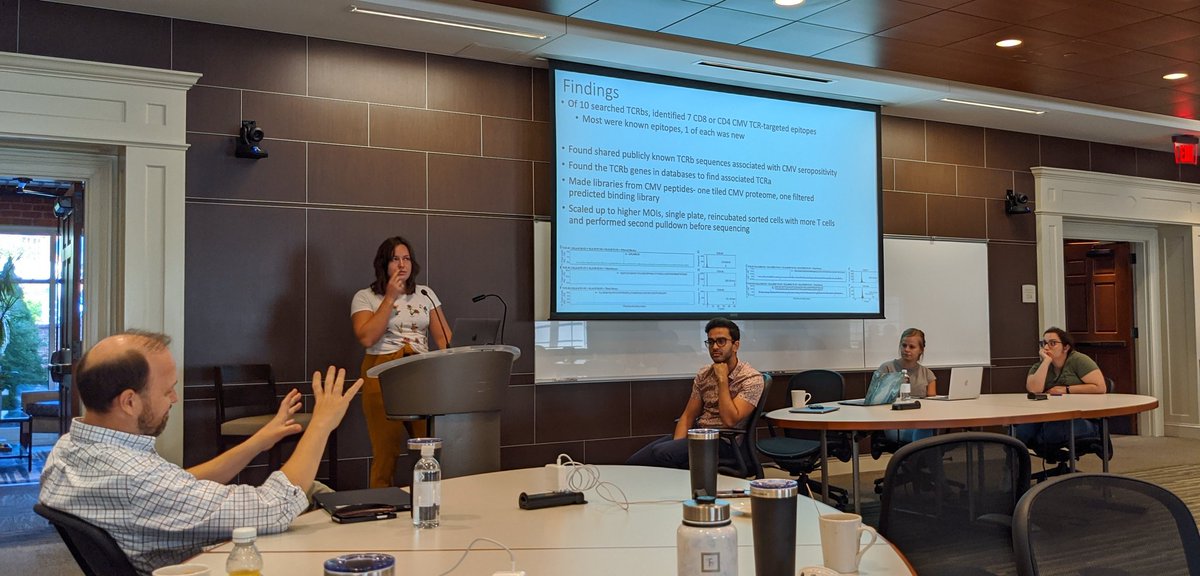
@NP_Rudqvist presenting on HPV specific TCRs, lots of cool, interesting, unexpected results (high level of E1 specificity, ability of cancers to lose E7 expression, &c)
Congratulations to Dr. @KOimmuno on successfully defending her PhD!
It’s been wonderful having you as a part of PIRL and we're excited to see what you do next!
We have taken a deep interest in NUT carcinoma at @pirl_unc and have a few ideas for how it could be treated (eg therapeutic vaccination targeting NUTM1)
Looking for a staff molecular biologist (ideally immunologist) to do some of the preclinical work:
https://t.co/7JiR1P50fn
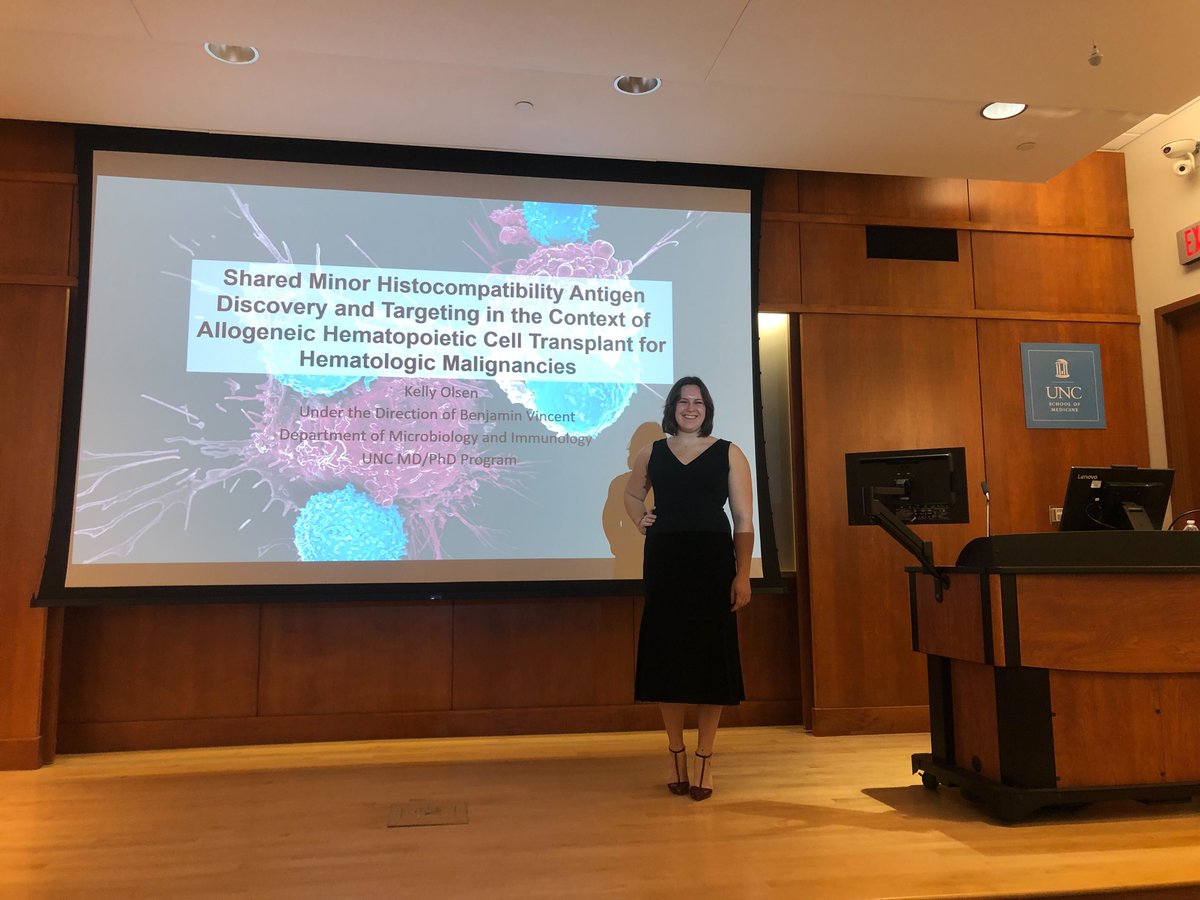
Thrilled to announce that our new paper is out at @BloodAdvances now! Please check out our work on shared minor histocompatibility antigens, including discovery of 24 novel shared mHAs! Done with @BenjaminGVincen and Paul Armistead, with @laraesucheston 🧵https://t.co/u62xZmpIRF
Another blog post by @iam_js_lee diving deeper into using Rust to speed up Python bioinformatics code (using some recommendations from @michaellazear and @nomad421 to go 3x faster than our best previous implementation)
Here is an update to my recent blog post. Thanks to @michaellazear and @nomad421, the Rust+Python implementation is now 10x faster than the pure Python equivalent for k-mer counting.
https://t.co/y1s5QeSBDb
New post by Jin Seok (Andy) Lee:
Shaking the Rust Off Python
https://t.co/8vKQJ3Lec0
He tries to speed up parallel nucleotide kmer counting by moving the inner loop from Python to Rust and finds it surprisingly difficult to get more than 3x faster
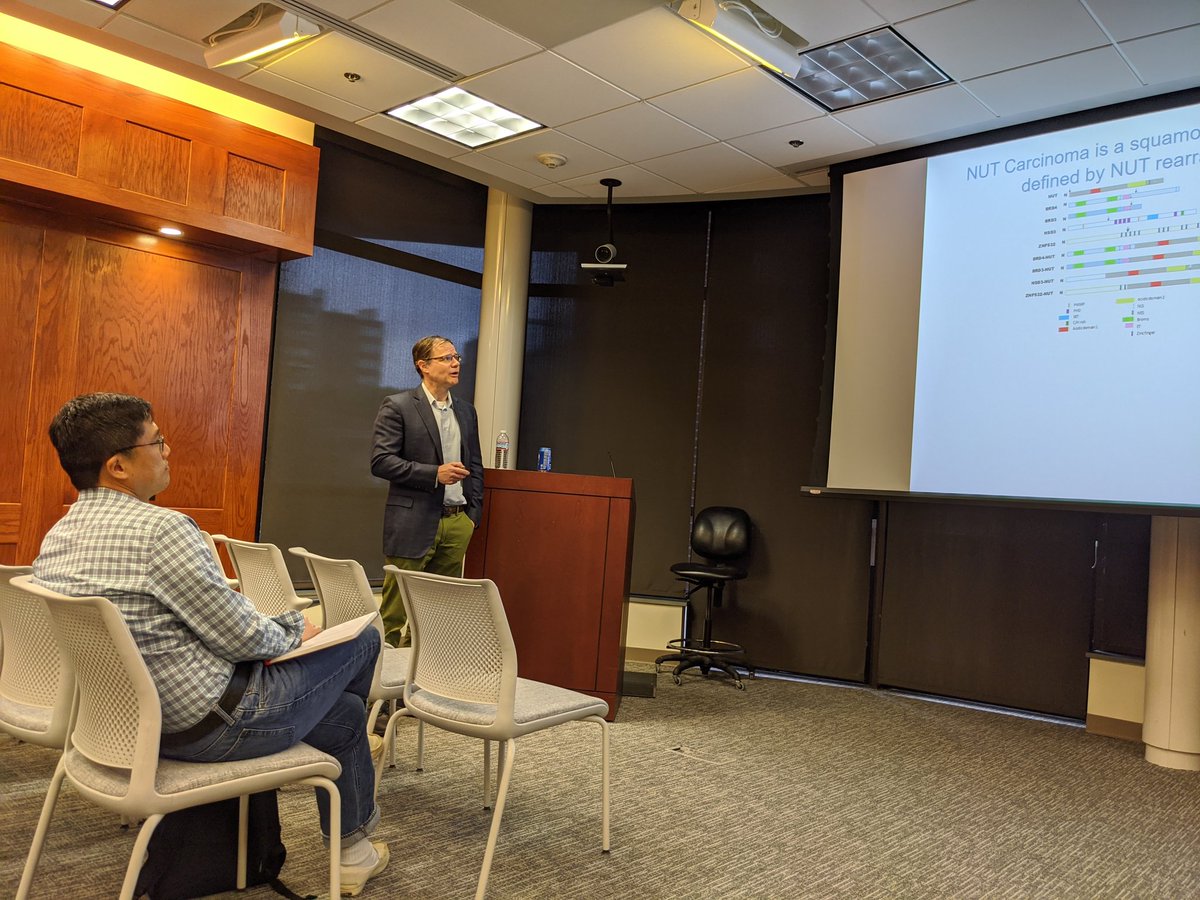
Seminar at @UNC_Lineberger by Dr. Chris French about NUT carcinoma, which is an under-studied cancer our lab has recently taken significant interest in.
Presentation by Dhuvi Karthikeyan @DhuviKarthikey1 on immunogenicity prediction
Lots of models based on either antigen sequence and/or structure, unclear if any of them out-perform just peptide-MHC affinity in predicting T-cell responses.
#pirlsymposium
Dante Bortone presenting a massive reanalysis of different published RNA based predictors of response to checkpoint blockade
tl;dr the situation is pretty bad