#education for those wondering why Oil prices turned negative for the US. Its as a result of the May Forward contracts expiring Tuesday 21/04/2020, notwithstanding the agreement by Russia and Saudis to cut down the daily output of crude that as caused a glut. #USOIL
That's Jeff Bezos as CEO of a small startup called Amazon
His desk is a door; see the cheap logo. Jeff probably did it himself. The computer is old school. When this picture was taken, Jeff was already a billionaire from Amazon, yet see his office
Why?
He says, "It's a symbol of spending money on the things that matter to customers, and not spending money on the things that don't."
Key phrase: “matter to customers”
Nigerian first-generation banks installed air conditioning and had computers in their banking halls because it was essential to their customers. That's why they gobbled up market share and challenged the legacy banks
It shows in the financials. Amazon reinvested almost all it made in turnover back to growing and scaling the business; today it's a Mag 7 Stock
Now, this is Bezos' philosophy: he does not sell to customers from his office. I bet his website has modern servers and routers
The lesson here is to be very frugal with corporate start-up cash, especially as a CEO, if you were hired as a President at Amazon, and you see Jeff’s office, it's difficult for you to order a $5000 L-shaped table from Paris
Jeff is leading by example; this is what is called communicating Vision
𝗪𝗲𝗮𝗹𝘁𝗵 𝗯𝘆 𝗖𝗼𝗿𝗽𝗼𝗿𝗮𝘁𝗲 𝗔𝘀𝘀𝗼𝗰𝗶𝗮𝘁𝗶𝗼𝗻: 𝗪𝗵𝗮𝘁 𝗔𝗶𝗿𝗹𝗶𝗻𝗲𝘀 𝗔𝗹𝗿𝗲𝗮𝗱𝘆 𝗞𝗻𝗼𝘄
I was at the airport yesterday. As the flight boarded, I remembered an article about how airlines love business class because many individuals rarely pay for their own tickets. Their companies do. So for the airlines, it's a very lucrative B2B product segment.
𝗬𝗼𝘂𝗿 𝗖𝗼𝗺𝗽𝗮𝗻𝘆 𝗠𝗮𝘆 𝗕𝗲 𝗬𝗼𝘂𝗿 𝗙𝗶𝗿𝘀𝘁 𝗜𝗻𝘁𝗿𝗼 𝘁𝗼 𝗪𝗲𝗮𝗹𝘁𝗵
It made me think of how the first introduction to wealth, lifestyle and structure for many employees will be their companies.
I used to work in consulting. At the time, I was attached to a project in Abuja where the client put my team up at the Hilton. After a while, I accrued so many Hilton Honours points that after the assignment, I got free upgrades any time I stayed at a Hilton around the world.
The first time I traveled abroad, it was my company that paid. I don't think I could have afforded the ticket or hotel on my own.
𝗛𝗶𝗱𝗱𝗲𝗻 𝗖𝗼𝗿𝗽𝗼𝗿𝗮𝘁𝗲 𝗟𝗼𝗴𝗶𝘀𝘁𝗶𝗰𝘀
In my consulting days, I worked with almost every front line bank in the country. When we facilitated strategy sessions, I observed the executives coming in. Before they arrived, the venue would have been booked, hotel rooms arranged, travel sorted, estacode prepaid – all by the company's corporate affairs and protocol teams.
The execs would arrive and be taken care of. They didn't know just how much logistics had been taken off their plates.
It's like when you see oil & gas workers being escorted by protocol officers at the airport. They rarely go through the normal immigration and customs lines. They are fast-tracked and then whisked away in their police-protected convoys. Some don't even wait for their luggage - they hand the bag tags to the protocol officers to sort out.
𝗘𝘅𝗲𝗰𝘀 𝗗𝗼𝗻'𝘁 𝗥𝗲𝗮𝗹𝗶𝘇𝗲 𝗪𝗵𝗮𝘁 𝗧𝗵𝗲𝘆 𝗛𝗮𝘃𝗲
This company-provided structure is why when execs leave their organizations for entrepreneurship, they get flustered by the sheer ambiguity of running a business. Things seem so chaotic. It's because their companies protected them from all of that. And, their former brands opened unseen doors of access for them.
𝗣𝗿𝗲𝗽𝗮𝗿𝗲 𝗙𝗼𝗿 𝗧𝗿𝗮𝗻𝘀𝗶𝘁𝗶𝗼𝗻 𝗘𝗮𝗿𝗹𝘆
If you currently earn a very high income in a corporate organization, please prepare for your transition to prevent a very rude awakening. Even having access to a team is a blessing. You are probably insulated from mediocrity by three levels of staff who all report to you. The day you have to recruit in the open-market for your own company, you might be surprised.
𝗧𝗿𝗲𝗮𝘀𝘂𝗿𝗲 𝗧𝗵𝗲 𝗚𝗶𝗳𝘁 𝗢𝗳 𝗣𝗮𝗶𝗱 𝗘𝗺𝗽𝗹𝗼𝘆𝗺𝗲𝗻𝘁
Earning an above-average income that consistently gets paid is a gift. Treasure it and use it to plan for retirement or entrepreneurship. It's the kind of stability many covet. The access, structure and honour you have should be harnessed way before you leave paid employment.
I wish you all the best.
Before the year end, swipe to see what we found online. It's a list of all sources of income you can get in 2025 if you don't put all your eggs in one basket.
It is more than a wise saying for egg safety. It is a reflection of how important diversification of assets is.
@EditiEffiong It is a testament to the quality and execution of the project. You did a good job. The actors, too, did wonderfully well. Thanks for helping the image of Nigeria in your own way.
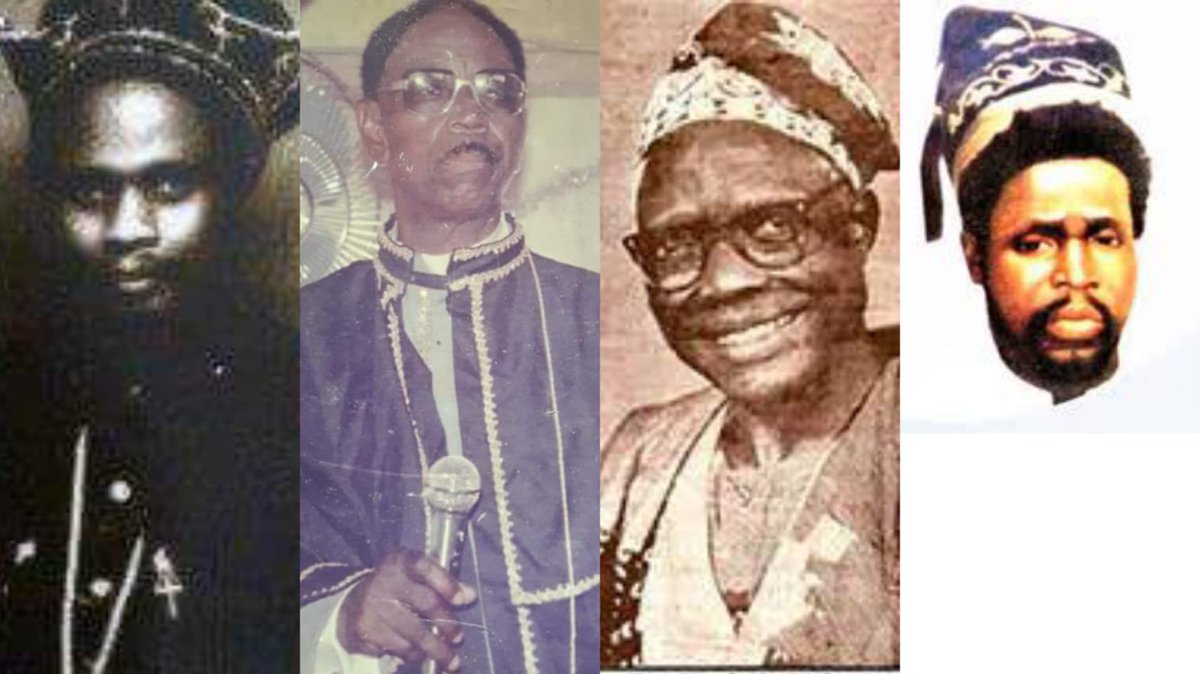
Of Orimolade, Akindayomi, oshoffa and Ositelu.
The making of Pentecostalism in Nigeria 2
"In the vast tapestry of Nigerian religious history, the name of Moses Orimolade Tunolase emerges as an immutable presence, a luminary that illuminates the shadows of colonial Nigeria. Through his resolute dedication to the gospel, he ignited a conflagration of revival that transcended the confines of time and space, reshaping the religious fabric of the nation. Within the realms of this enduring scholarly and philosophical homage, we embark upon a profound expedition, unravelling the transformative influence encapsulated within Orimolade's existence. We delve into his pioneering initiatives, extraordinary accomplishments, and the enduring legacy reverberating through the corridors of time."
Dele Osunmakinde
'another prophet 'Moses' by name, was busy during the week holding open-air revival services. He professed to have been translated to the worlds above, where he saw a vision and was taught to read though he attended no school. He advances the ability to invoke angels and prescribes prayers of his own creation to meet all conditions and desires…Many throng around him: some of whom we regard as intelligent and sensible people…He has found a disciple in an ordained minister of a particular denomination who heads the procession of religious fanatics to be seen holding meetings at cemetery street on Thursday evenings,
Nigerian Spectator Newspaper September 1, 1925
The indelible impact and enduring relevance of the white garment churches, specifically the Cherubim and Seraphim Church, Celestial Church of Christ, Church of the Lord Aladura, as well as the Eternal Sacred Order of the Cherubim and Seraphim, demands meticulous examination within a scholarly and philosophical framework. This discourse endeavours to explore the historical contributions of these indigenous groups to the rich tapestry of Pentecostalism and Christianity in Nigeria, highlighting the significant roles played by Moses Orimolade Tunolase, Christiana Abiodun Akinsowon, Samuel Bilewu Joseph Oschoffa, and Josiah Olunowo Ositelu.
1 The white garment revival in Nigeria unfolded through fascinating circumstances, led by individuals who exhibited extraordinary spiritual experiences and devotion. Christiana Abiodun Akinsowon, later known as Captain Abiodun, a member of St. Paul's Church in Breadfruit, commenced her journey in 1925 when she began experiencing angelic visitations, culminating in an extended trance. Recognising the need for divine intervention, she and Moses Orimolade, revered as "BABA ALADURA," embarked on a spiritual quest that resulted in her revival under his prayerful guidance.
2 Orimolade assumed the role of guardian and mentor to Akinsowon, and together, they conducted regular prayer meetings and ministered to individuals at his residence, known as "Ago Isofin." However, as the group experienced exponential growth, transcending the confines of a private dwelling, a transition to a public space became imperative.
3 These gatherings were characterised by Intense and prolonged prayers, soul-stirring musical worship, and scriptural exhortations. Orimolade's cherished hymn, "Let us with a gladsome mind, praise the Lord for He is Kind," sung with deep devotion and faith in the Yoruba language, resounded throughout the meetings, serving as a testament to the profound spirituality and unwavering conviction of the participants.
4 As the group continued to expand, Orimolade contemplated the necessity of formalising their identity. Initially lacking a specific appellation, the group functioned as a prayer movement, attracting individuals from diverse church backgrounds who shared a common desire for spiritual growth. However, the transition to a public setting necessitated adopting a name, as the confines of Orimolade's residence could no longer accommodate the burgeoning numbers.
12. Babalola and his team did not systematically teach the biblical doctrine of healing, unlike the faith tabernacle leaders. Instead, they relied on the manifestation of the Holy Spirit's healing gift, which many possessed in abundance.
13. The meetings typically included a powerful message delivered by Babalola, Olatunji, or Orekoya, followed by enthusiastic singing and prayers. Specific instructions were given to the sick and oppressed, providing them with a means to receive healing for their ailments. One prominent instruction involved the application of holy water, and the crowd eagerly sought to touch their garments, firmly believing in their power.
14. Subsequently, the government initiated a crackdown on Babalola and his team's activities due to pressure from mission churches losing members and traditional chiefs who accused the revivalists of causing unrest. 1932 Babalola was arrested and imprisoned for six months, representing the height of the government's intervention. While Babalola was a member of the faith tabernacle, many of his converts recognized him as their leader but did not have a direct connection to the faith tabernacle movement. Surprisingly, Babalola submitted himself to the leadership of the faith tabernacle movement.
15. Two distinct streams emerged from the revival: the faith tabernacle stream, led by Odubanjo, and the healing revival stream, led by Babalola. Both streams believed in divine healing, but Odubanjo was the overall leader, providing crucial financial support to many evangelists, including Babalola.
16. The movement faced continuous challenges from authorities and was constantly forced to move from place to place, reaching a point where the situation became overwhelming. Consequently, the leaders sought a partnership with British missions that shared similar doctrines.
17. Eventually, Odubanjo discovered a publication from the Apostolic Church in Britain, which he studied and corresponded with the leaders. They sent numerous literary materials to him, leading Odubanjo to believe that the Apostolic Church was the suitable partner, mainly as it was a tongue-speaking British church and Nigeria was a British colony.
18. After studying the Apostolic Church's literature on the baptism of the Holy Spirit and the evidence of speaking in tongues, Odubanjo and his team decided to hold revival meetings in Lagos in 1930, focusing explicitly on tarrying for the Holy Spirit baptism.
19. When the leaders from Bradford, England, representing the Apostolic Church, arrived in Lagos, the power of the Holy Spirit was remarkably felt. Men and women in the church were overwhelmed, weeping with tears of joy as they were baptized in the Holy Spirit. The meetings, led by D.P. Williams, the founding president of the Apostolic Church, attracted people from different walks of life and various denominations. Similar meetings were held in Ijebu-Ode, Abeokuta, and Ibadan, witnessing multitudes filled with the Holy Spirit.
20. This gathering, conducted by the leadership of the Apostolic Church from Bradford, England, marked the birth of the modern-day Pentecostal movement in Nigeria. It brought together individuals from different regions and denominations, filling the meetings. The Nigerian leaders, including Odubanjo, Babalola, and Akinyele, attended the meeting in Ibadan, where the final decision was made to form a partnership with the Apostolic Church of Great Britain.
21. In Lagos, in 1931, the Apostolic Church of Great Britain, accepted as the governing authority of the emerging Apostolic Church of Nigeria, ordained seven leaders from the former faith tabernacle into the pastoral office. These leaders were Babatope, Odubanjo, Mensah, Akinyele (who later became the Olubadan of Ibadan), Esisinade, Adegboyega, and McCauley.
After deliberation, the faith tabernacle leaders adopted "The Apostolic Church, Nigeria."
You will Succeed in the name of Jesus Christ.
Good morning, do have a blessed Tuesday.
Remember we are fasting, don't just go without food but find time to pray. Read and Pray using Paslm 91.
Do not fear failure but rather fear not trying.
Your hardest times often lead to the greatest moments of your life. Keep going, tough situations build strong people in the end.
Note that every seed has a story, but only the ones that make it from the ground get to tell theirs.
Here's an exercise to help you with box breathing. Breath with the dot and follow the instructions. This can help you to exit fight or flight mode from your sympathetic nervous system and help you enter rest and digest mode from your parasympathetic nervous system. #thursdayvibes