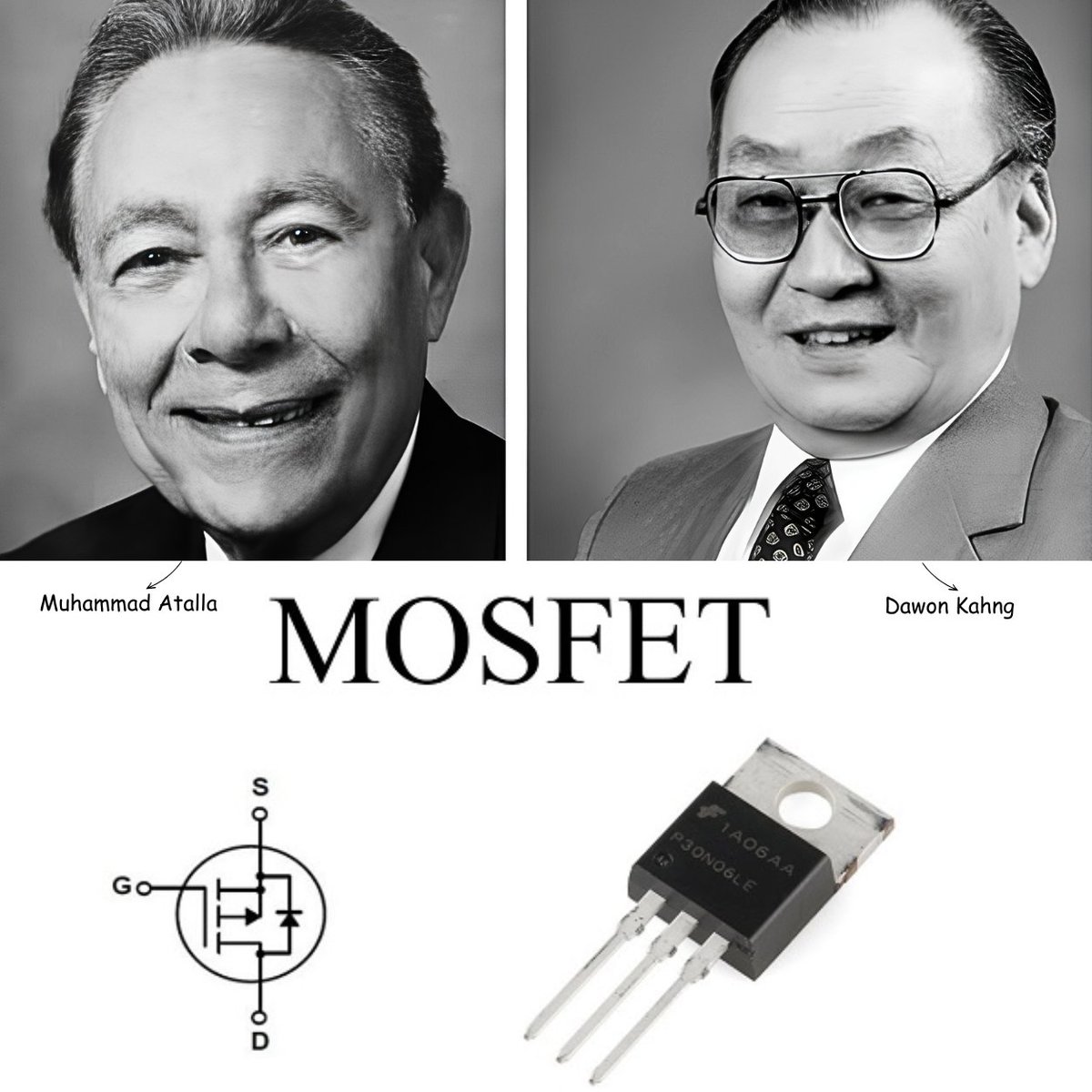
The most manufactured device in human history was not invented by Edison, Tesla, or Steve Jobs. It came from Mohamed Atalla and Dawon Kahng, two scientists whose own employer failed to see what they had created.
Atalla was born in Port Said, Egypt.
He moved to the United States, earned his PhD, and joined Bell Labs in 1949.
At the time, scientists were trying to make smaller and more reliable electronic switches from silicon.
But they kept running into the same problem.
The surface of silicon trapped electrical charges. This made it difficult to control the electricity flowing through it.
Atalla spent years studying that surface.
He eventually discovered that growing a thin layer of silicon dioxide over silicon could protect it and allow electricity to be controlled properly.
It sounded like a small improvement.
It became the foundation of modern electronics.
In 1959, a young Korean scientist named Dawon Kahng joined Bell Labs after completing his doctorate at Ohio State University.
Atalla asked him to use this new method to build a type of transistor scientists had imagined for decades but had never managed to make work.
Kahng succeeded.
The device had three simple layers: metal, oxide, and silicon.
That is where its name came from.
The metal-oxide-semiconductor field-effect transistor.
Or MOSFET.
Think of it as a microscopic switch.
It can turn electricity on and off. Put enough of these switches together, and they can store information, perform calculations, display images, run software, and process almost everything a computer does.
Atalla and Kahng had found a way to make these switches small, cheap, and easy to place together on a chip.
They showed their invention to Bell Labs.
The company saw a slow device that solved no urgent problem in its telephone network. It decided not to pursue it.
Kahng tried to explain what they were missing.
In a 1961 memo, he pointed out that the device was easy to manufacture and could be packed into integrated circuits.
Bell Labs still placed it on the shelf.
Researchers at RCA and Fairchild Semiconductor understood its potential and continued developing it.
By 1964, the first commercial MOS devices had arrived.
Then the entire industry began to change.
MOSFETs required less power and took up less space than the transistors used before them. Manufacturers could place thousands on one chip, then millions, and eventually billions.
They entered calculators, memory chips, personal computers, digital cameras, phones, cars, satellites, medical equipment, and almost every other electronic machine.
Modern AI chips contain billions of them.
Every time you unlock your phone, start your car, open a website, send a message, or ask an AI a question, huge numbers of MOSFETs switch on and off to make it happen.
By 2018, the Computer History Museum estimated that humanity had manufactured 13 sextillion MOS transistors.
That is 13 followed by 21 zeros.
No other human-made device has been copied more often.
Atalla and Kahng never became household names.
Their invention became so common that it disappeared inside everything.
The next time your phone turns on or an AI answers you in seconds, remember the two scientists who made it possible.
Mohamed Atalla and Dawon Kahng.
@retrokram Hat nochmal jemand 33 geboten? Ich wollte ihm ein schlechtes Gewissen machen, dass er bei Dir nicht unmittelbar zugeschlagen hat, und hab mal 29,99 zur Insel rübergeschickt... Aber sieht aus, als hätte er mittlerweile Textbausteine vorbereitet, die Antwort kam mir bekannt vor 😅
@retrokram haha, dann erhöhe ich jetzt mal auf 32,70, nimm das! Wir könnten noch anfragen ob die Atari Disks auch auf dem Amiga laufen LOL. Er wird seine Aktion schon bald bereuen höhöhö. 😈
@duemmster_user @kepu94 im Spiel Thimbleweed Park gibt es extra eine over/under Toilet paper Option, da es kontroverse Diskussionen gab, wie rum das Papier hängen soll :D https://t.co/lCWrqWpA9s
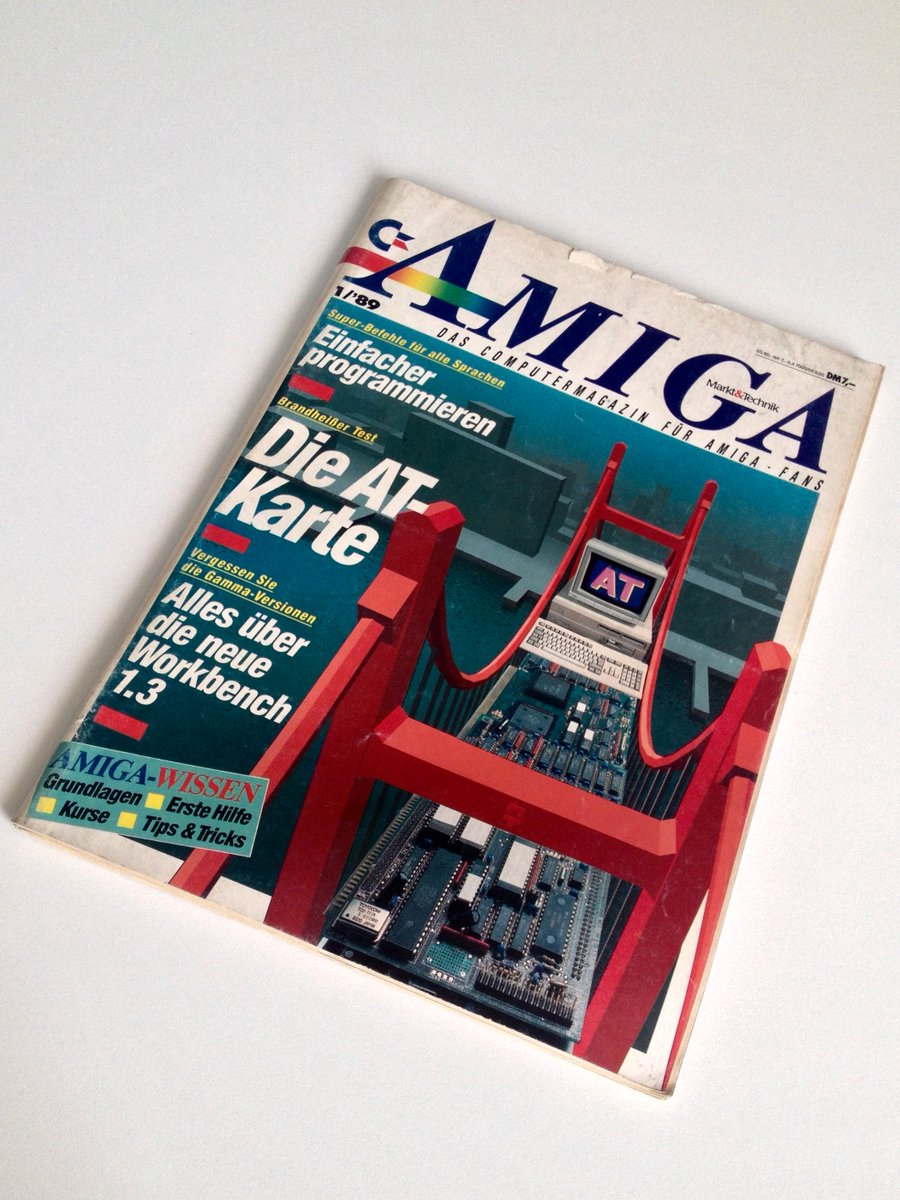
Wo haben die Computerkids vor 30 Jahren eigentlich ihre Infos herbekommen? Der #DepotDienstag verrät‘s: Zum Beispiel aus dem AMIGA-Magazin 🗞️
Wie ihr seht, gibt es Wissenswertes, hübsche Schaubilder und eine 8MB-Speichererweiterung für den Amiga500 für ...🥁... 4650 Mark! 🤣😳
Ein Lebenszeichen von Drift Stage! Ich hoffe das Spiel kommt tatsächlich irgendwann noch final raus! Bis dahin muss es diese alte, für die Öffentlichkeit neue Demo tun. #retro#indie
Heute hat uns eine wunderbare Spende erreicht! 📦 Und zwar ein Telespiel auf Basis eines AY-3-8500-Chips. Das Stück wurde 1981 in der DDR gefertigt – und zwar von einem kreativen Handwerksmeister, der seine Konsole einfach aus Chip, Seifendosen und Frischebox fertigte! 🕹️🔩🔧
@philscomputerlb@Beelinkofficial Thanks for your quick reply! Of course, I also watched your recent ACEPC video :-) I prefer the Beelink 6GB RAM option, even if the ACEPC is a little bit faster. On C: I need more space, thats why I asked & thought about swapping disks. (above, of course, I meant MSATA, not M.2)
Self-publishing for retro computers is still an unusual niche today. In 2016, we published the world's first retro book about the Atari ST. In 2017 Microzeit Verlag was awarded for its creative business idea. The third book will no…https://t.co/RcVugtyFdS https://t.co/2DAn6WRDYY
@kepu94 Da hab ich auch schon drüber nachgedacht, aber lohnt sich das denn? Je nach Alter kostet das schließlich bis zu 90€ pro Jahr und ehrlich gesagt bin ich bisher auch so überall reingekommen...
The wonderful @BlackMesaDevs is one of a number of mods we pay homage to in our Half-Life doc. @radiatoryang worked on the project for a time, and explains the design of the Sector C lobby.
WATCH THE DOC HERE: https://t.co/tUJrhnp5Ik
Die ursprünglichen Xen Levels mochte ich ja nicht so, aber wie das Remake Black Mesa immer mehr Form annimmt, kann ich es mittlerweile kaum erwarten, Xen nach 20 Jahren noch einmal zu erleben! #halflife