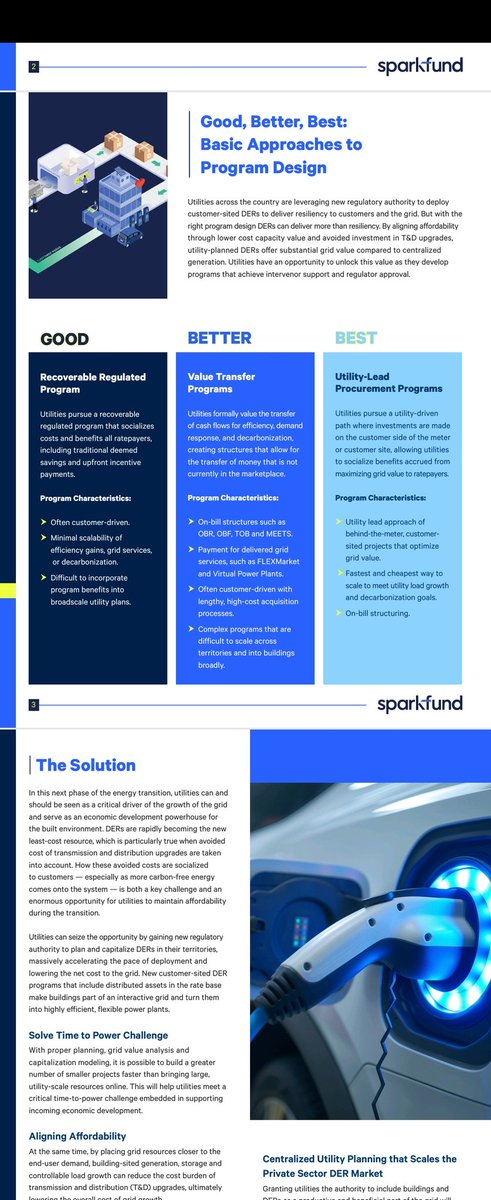
Could distributed energy resources help meet AI's growing power needs? @plafarge of @sparkfunder makes the case for utilities leading "distributed capacity procurement" — deploying customer-sited solar & storage faster than building new plants.
https://t.co/2FGTPWyDYF
There's a key point here many are missing on data center and AI energy use: It's Time to Power, and not Cost of Power, that's the key variable for data center buildout right now. Energy is a small fraction of overall compute cost. While time is everything in the AI race.
@drvolts@duncancampbell@duncancampbell the https://t.co/x03THfBxa8 paper y'all just put out is amazing work, read every word this morning. I see it as very much a complementary line of thinking to the DCP approach. the reality is we'll need a lot of both to meet challenge of speed and scale.
Looking forward to #Deploy24 and discussing the Distributed Capacity Procurement model. Let's take distributed energy to grid scale with utility-led planning, siting, dispatch & deployment — with systems designed, built & installed by competitive local ecosystems of DER vendors.
New data centers are set to double grid capacity (driven by AI). Owner/operators should partner with utilities to pick up new tools — like #DERs — at scale and get the power they need. I shared more thoughts on this topic recently in @DatacenterDynamics: https://t.co/cVrlMIsOpu
Was asked about counterarguments to Distributed Capacity Procurement:
1️⃣ Utility-scale generation is cheaper per MWh than distributed generation.
2️⃣ Utility-led DER deployment gives a regulated monopoly a powerful new role.
As for the second, giving utilities the role of planning what assets they need and where they need them most is actually their core role. The DCP model also includes competition in its design by tapping into an ecosystem of local vendors to deliver, build and maintain the DERs.
@NREL @GreenMtnPower@xcelenergy I like the @sparkfunder approach to integrate #DERs smack into the same modeling as new/incremental capacity planning As long as #DERs can still get paid for all services they also provide as capacity, like grid stabilizing or frequency control. @DER_Task_Force@allisonwannop
@XcelEnergyMN If you're not familiar with distributed capacity procurement, we have some helpful resources on the @Sparkfund site: https://t.co/aIF8UJu1gR #REplus24
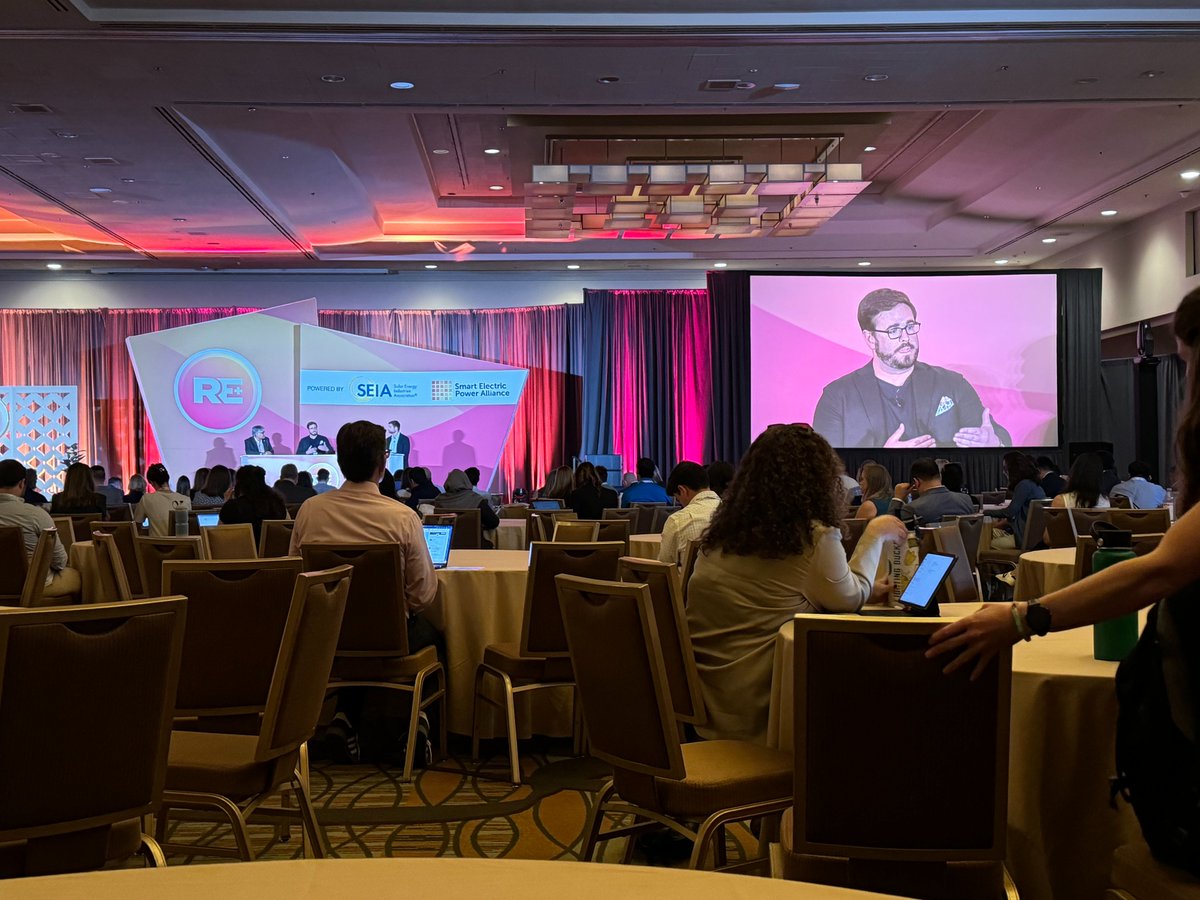
Had a great time discussing distributed capacity procurement at #REplus24. A theme of collaboration across utilities, building owners and DER companies stood out.
As Ryan Long from @XcelEnergyMN put it, the DCP model brings together developer expertise, utility planning, low-cost capital and accessible space to host the asset, all for more strategic, faster and scaled #DER deployment. Let’s create value at grid scale. #REplus24
The solar/battery industry proved the value of #DERs. Now, with a utility-led deployment model, utilities can become the biggest wholesale customer of solar/batteries in history. More on the @Sparkfund blog: https://t.co/ngzleF0Ods
I joined @EngelsAngle on the 'Factor This' podcast to discuss Distributed Capacity Procurement — a new model that's accelerating DER deployment in utility territories. It's something we're laser focused on at @Sparkfund. Check it out: https://t.co/rJqIc1Tlr2
At #REplus24, I'm joining @JigarShahDC, Ryan Long, and @InfraJosephine to discuss a new utility-led DER deployment model — Distributed Capacity Procurement — that builds on the success of VPPs to deploy capacity faster and at scale. #DERs#VPPs
Today we’re proud to announce that Sparkfund has inked a historic partnership with Shell to offer a new bundled energy solution to commercial customers, Shell Energy Inside.
This new approach has the potential to redefine how comm…https://t.co/3gpdkB9ZuT https://t.co/chbmYSwrME