The challenge is building capacity at the pace demand actually materializes. DCP enables utilities to scale infrastructure incrementally by deploying front-of-the-meter batteries on the distribution grid. Smaller deployment cohorts improve utilization of existing infrastructure and give utilities a flexible way to support near-term growth as larger generation and grid investments move through longer development timelines.
See how utilities are using DCP to add grid capacity: https://t.co/zLNYTU6NgF
At @Edison_Electric 2026, our CEO, @plafarge will join utility and hyperscaler leaders to discuss one of the industry's biggest infrastructure questions: how to bring large new loads online without leaving existing customers behind.
The panel will explore how the next generation of AI infrastructure agreements are being structured, including distributed assets and load flexibility to faster paths for utility-grade capacity.
Don’t miss the conversation around how industry leaders are approaching the next phase of grid growth.
Today on Volts: MN utility Xcel is installing small-scale batteries on commercial & industrial land. It may not sound like much, but @plafarge says it augurs a new chapter for the US grid, wherein storage will enable big new loads like data centers to reduce rates for everyone.
The next chapter of grid growth won’t be solved by just one resource or planning tool. It’ll require a more practical capacity toolkit.
@plafarge joined #Volts for a wide-ranging conversation on why distributed capacity is becoming a critical part of that toolkit, especially as utilities work to meet rising demand.
As Pier puts it, batteries are “time machines for electrons.” When planned and deployed where the grid needs them most, they can help utilities deliver capacity faster, with less reliance on long-lead infrastructure alone.
Listen here: https://t.co/RZd6JXJlNv
We're hiring: Director, Safety & Compliance to lead safety across a portfolio of battery energy storage and infrastructure projects. Build the program from scratch. Field-first. Real stop-work authority.
📍 Minneapolis, MN
💰 $140K-$195K
Apply 👉 https://t.co/NGQ3xQy0Z3
#SafetyLeadership #NowHiring #EnergyJobs
Behind every battery deployed through Distributed Capacity Procurement is a system-wide plan, led by the utility, grounded in real-time analytics, and designed for grid impact. Sparkfund coordinates deployment and works with local hosts, but it’s the utility that determines where assets are needed most. Because the value is in how we use the grid we’ve already built.
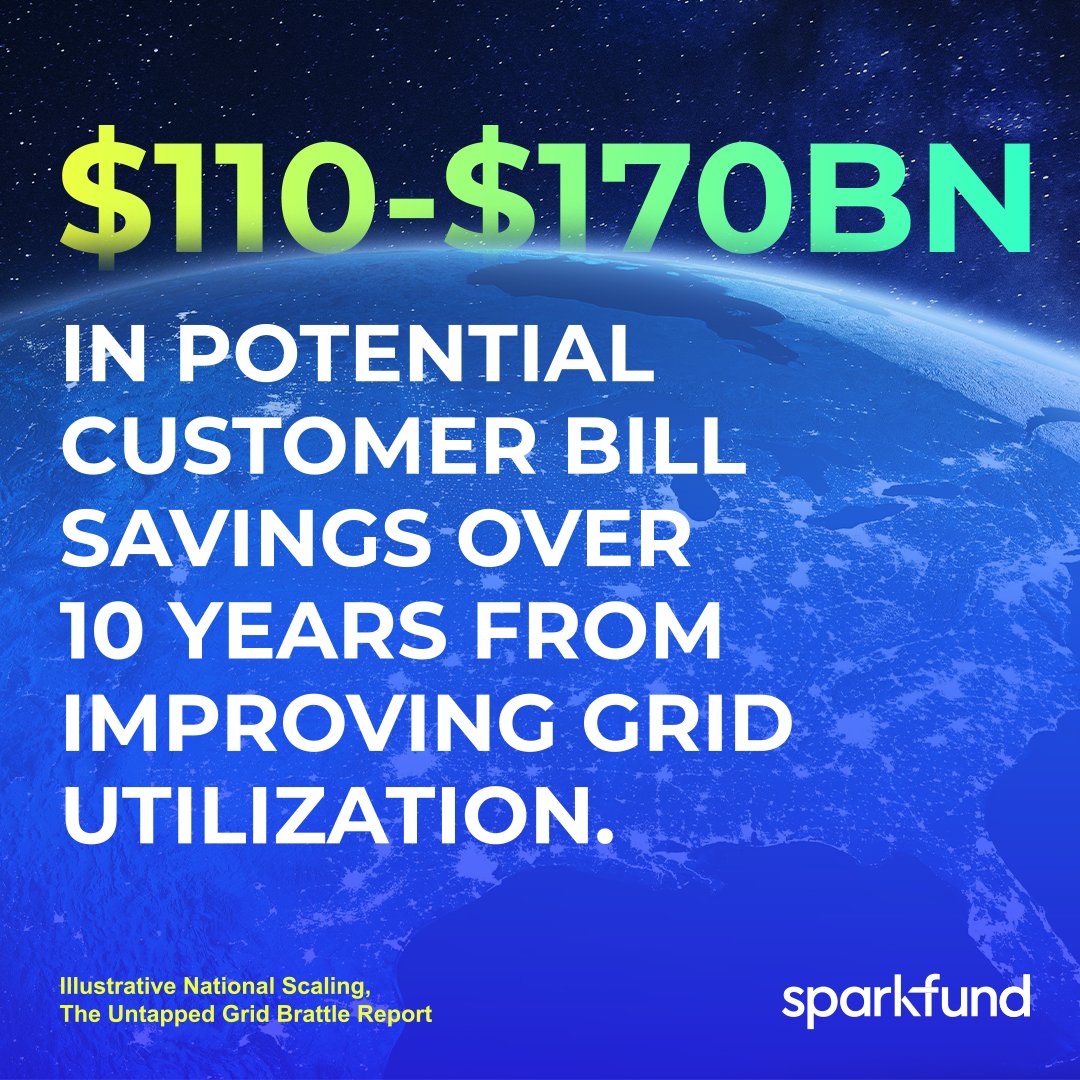
There’s a direct link between how the grid is used and what customers pay.
Improving utilization is one of the clearest paths to lowering costs while supporting growth.
Get the full @TheBrattleGroup report: https://t.co/rXJj04gZya
❌ Myth: Only massive transmission projects can meet growing load.
✅ Reality: Batteries on the distribution system can unlock hundreds of MWs of utility-grade power—without the wait.
Distributed Capacity Procurement (DCP) changes the math, bringing real capacity online in 24–36 months.
Load shows up fast. Capacity doesn’t.
A BYOC (Bring Your Own Capacity) model gives hyperscalers and large-load customers a way to pair new demand with front-of-the-meter battery capacity on the distribution grid, helping projects move forward faster and more reliably.
Behind the scenes, that capacity can be structured in different ways—aligned with regulatory requirements, utility planning, and long-term system needs.
When demand and capacity align, the grid is better positioned to support growth without delay.💡
https://t.co/sifyLDgPpd
Earlier this year, Sparkfund joined companies across the energy and technology ecosystem to launch the Utilize Coalition, focused on a powerful idea: the U.S. power system has more potential than we’re currently using.@TheBrattleGroup found that because the grid is built to serve rare demand peaks, much of its capacity sits underused for most of the year. Read the report here: https://t.co/V86Q2xLF3W
We had the opportunity to host the Wharton Energy and Climate Club at the Sparkfund office here in DC!
Sparkfund’s VP, Brendan Reed, led a conversation with the group on how utilities are approaching capacity and what it takes to deploy solutions at the scale and speed the moment demands. It was a thoughtful discussion on how the industry is evolving—and where it’s headed next.
Appreciate the Wharton team making the trip and bringing such great questions to the table.
How do you deploy gigawatts of distributed batteries across the US grid?
Nobody actually knows yet.
@XcelEnergy and @sparkfunder are running one of the most interesting experiments to find out.
@timothyhade and @JigarShahDC break it down 👇
New @BrattleGroup research out today: batteries are the first of nine tools for improving grid utilization. Sparkfund’s DCP enables utilities to deploy distributed batteries as grid infrastructure — unlocking capacity fast. Read the report: https://t.co/Yys6Yfjlzo #TheUntappedGrid #GridAffordability
Rapid load growth is raising big questions about how the grid will grow, adapt, and deliver for customers. In a recent Canary Media Inc. article, Pier LaFarge shared his view on why the regulated utility model may hold more potential than many people realize. 👇
Read the full article: https://t.co/5K1PA239yE
The next evolution of an integrated grid synchronizes planning and operations, from bulk system generators to end-use resources. Our Director of System Engineering will join @EnergySystemsIG's Spring Technical Workshop to discuss how distributed, front-of-the-meter batteries can serve as an integrated capacity resource, supporting system reliability while aligning long-term grid planning with real-time operations.
If you’re attending ESIG, we’ll see you there!
Sparkfund joins @UtilizeCoalition as a founding member — tech leaders putting grid utilization at the center of how we meet growing demand affordably. The U.S. grid runs at 53% capacity on average. Front-of-the-meter batteries are how we unlock what’s already there. Learn more: https://t.co/5L79HIG6Cr
#GridUtilization #BatteryStorage
The fastest way to scale distributed energy is by building a structure that supports it. A utility-led model with public filings, transparent rules, and performance accountability makes room for vendor partners, aggregators, and local participants.
If we want to move from one-off pilots to real impact, we need infrastructure that’s built to scale, so every qualified partner can plug in and contribute.
https://t.co/RY4aF0E6SD
Behind every battery deployed through Distributed Capacity Procurement is a system-wide plan, led by the utility, grounded in real-time analytics, and designed for grid impact. Sparkfund coordinates deployment and works with local hosts, but it’s the utility that determines where assets are needed most. Because energy storage only works if it works for the grid.
Learn about DCP 👇
https://t.co/Mwb6UjtQlD
Wisconsin’s clean energy future won’t build itself. 👀
That’s why we’re sponsoring the 2026 RENEW Wisconsin Summit, supporting conversations that move distributed energy forward across the state. Whether it's batteries or solar, we believe reliable, affordable power starts with smarter use of the grid we’ve already built.
#RENEWSummit
https://t.co/eVxHVuWGmh