@RailwaySeva@RailMinIndia
People pay full price for tickets to travel back home and celebrate Diwali happily with their families.
It's 1:45 am and the B9 coach of NDLS->GKP Gorakhdham Express is stuffed with people with no tickets. Suffocating in here!
#DiwaliAndIndianRailways
The Indian Railways need to install ticket readers at the entrance of railwah stations like metro stations. Hopefully, that will take care of the people proudly travelling AC coaches without any ticket.
#IndianRailsAndDiwali@RailMinIndia@RailwaySeva
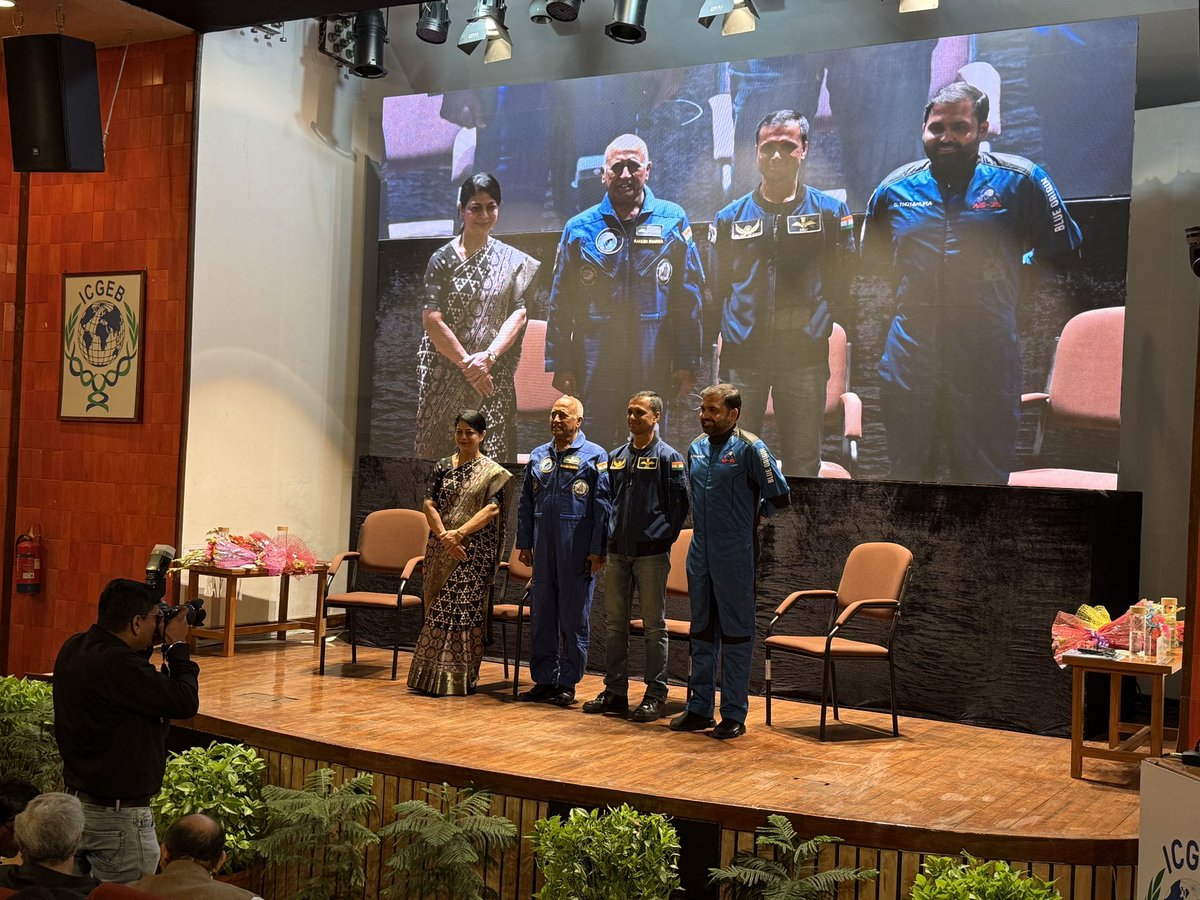
An amazing Day at #ICGEBNewDelhi !
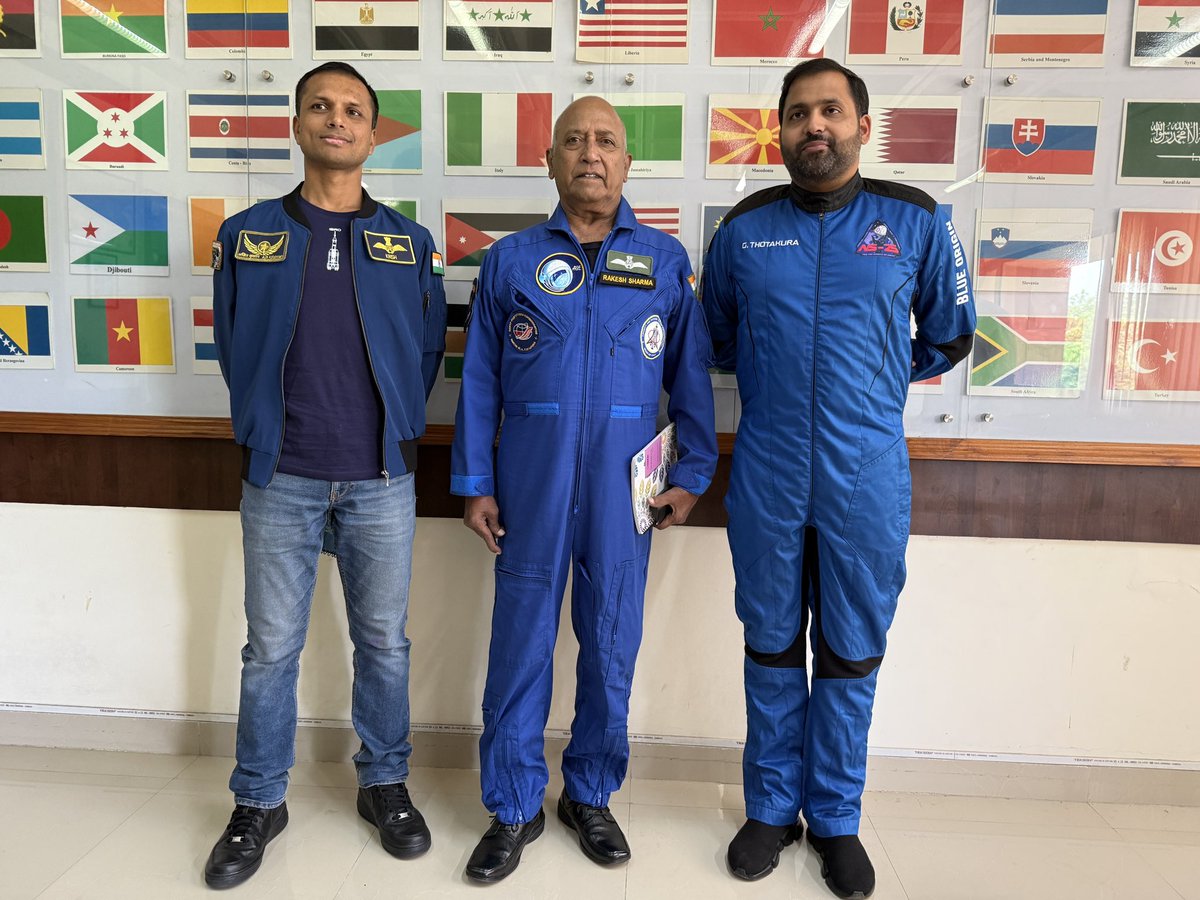
Today, we had the incredible honour of hosting India’s first astronaut, Wing Commander (Retd.) #RakeshSharma; @isro’s Gaganyatri, Gp Capt. #AjitKrishnan & India’s first space tourist, @ICGEBNewDelhi.
The distinguished guests interacted with the Dr. Rajesh Gokhale, Secretary of @DBTIndia , and Dr. Ramesh Sonti, Director @ICGEBNewDelhi , along with the faculty members. The interaction also featured directors of @NImmunology , @NABI_India , @NIPGRsocial , & @unescorcb . This was followed by a vibrant session with PhD students and researchers from ICGEB and other @BricDbt7510 institutes. Their inspiring stories, thought-provoking insights, and candid answers to questions from our young minds sparked a sense of wonder and renewed curiosity about space and science.
Truly a day to remember for the scientific community!
#ICGEB #SpaceBiotechnology #RakeshSharma #AjitKrishnan #GopiThotakuran #DBTIndia #ScienceForTheFuture #ISRO #SpaceExploration
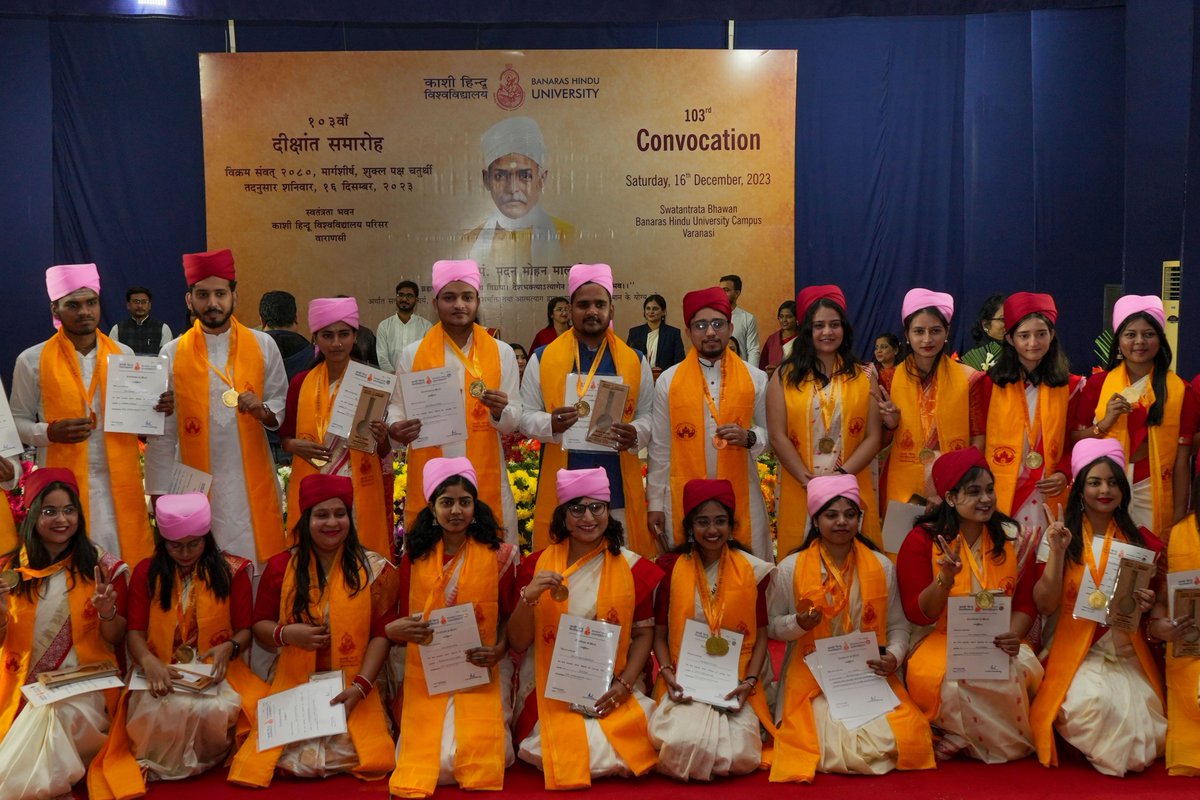
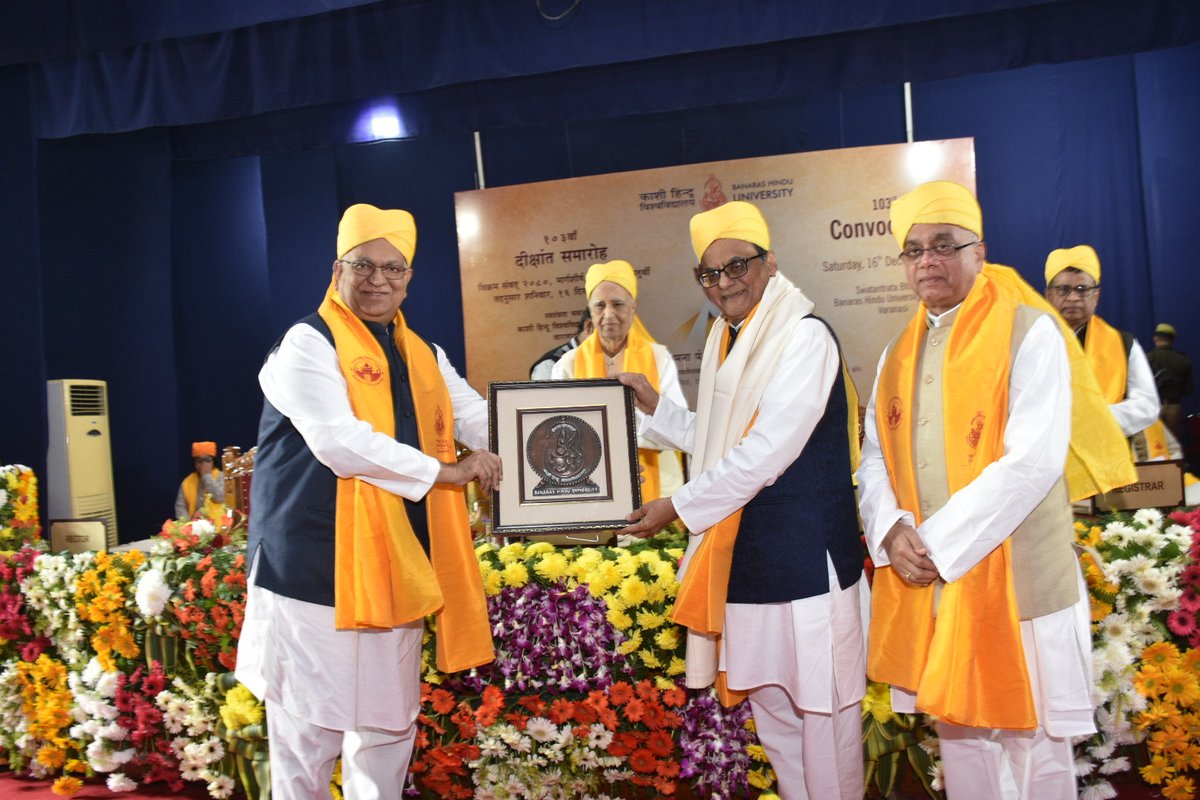
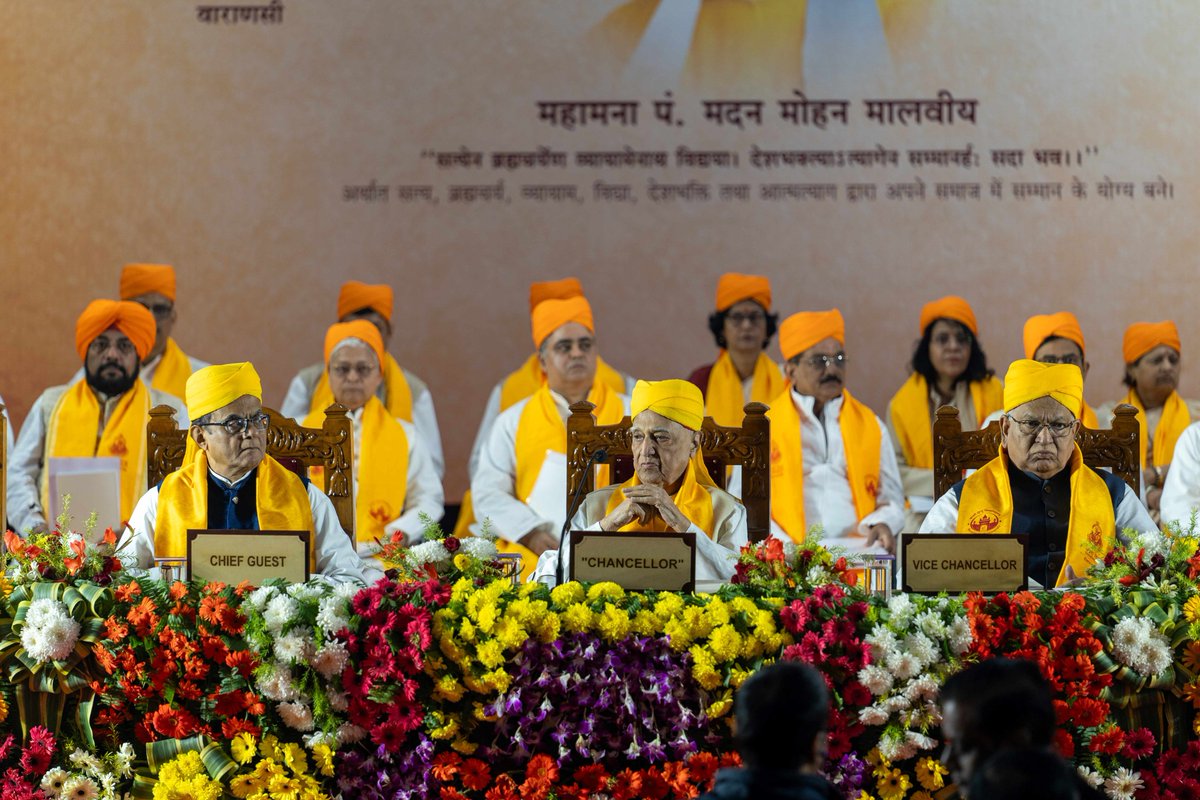
The university today conferred 14680 degrees to the graduands at its 103rd #convocation. The main ceremony at the Swatantrata Bhawan was graced by Prof. Ajay Kumar Sood, Principal Scientific Advisor to the Govt. of India, as the chief guest.
#BHUConvocation
Totally agreed. Why are scientists from the global south subjected to scrutinies when they have equal potential as the west and why is the west not equally critically enquired?
The lead author Prof. John Ioannidis himself has 75 papers in 2023 i.e. a paper in every 5 days.
Or, at Stanford it’s fine but frm global south, it’s questionable?
Surge in number of ‘extremely productive’ authors concerns scientists https://t.co/AnmlGWcuRi
Is your sample playing host to a ghost (of dead cells past)? Soup-er news ahead! You can now decrease false positive results with the iQ-Check Free DNA Removal Solution by @BioRad! Ensure those phantom DNAs rest in peace, leaving your PCR happy and as fresh as a garden salad! 🥗👻 Let’s taco ‘bout revolutionizing food, cannabis, water, and environmental sample testing! 🌮🔬Learn more here https://t.co/Ihtnbc5oib #FoodSafety #ThinkFoodSafetyThinkBioRad #Ad
Day 14 of great synthetic biology papers. Storing a video in DNA.
“CRISPR–Cas encoding of a digital movie into the genomes of a population of living bacteria,” by Shipman et al. (2017).
This is the GIF that made synthetic biology go viral. But how did it actually happen?
*****
DNA is an incredible way to store information.
It is information dense (it can store nearly 1.5 terabits per square millimeter of space, 800-times more dense than a hard drive) and extremely durable (last year, scientists sequenced a 2.4 million-year-old DNA sequence from an ice sheet in Greenland.)
Another way to think about this, from my prior essay: "a coffee mug filled with nucleic acids could store all the data produced in the last two years.” (https://t.co/odrTLYBVJC)
Despite the promise of DNA storage, this 2017 paper is the first demonstration of a movie being encoded in a living cell. The video itself is a recreation of Eadweard Muybridge’s running horse movie, which was made by stitching together still images in the late 1800s.
But how was it made?
***
To encode a video inside of living cells, we must first make the DNA.
DNA includes four letters, or nucleotides: A, T, G, and C. Each letter can be used to encode a distinct color, such as white, light gray, dark gray, or black. That is four colors in total; one for each letter. It is possible to encode more colors if you use pairs or triplets of nucleotides.
So that’s our colors sorted. But how do we know which color goes where in the image? In other words, how do we encode spatial information in DNA?
The secret is that DNA itself contains spatial information. We often say things like, “Gene A is encoded on Chromosome 6,” or “Gene B is located upstream of Gene C.”
We can take advantage of DNA's natural spacing to encode our video.
If you wanted to encode a 50 x 50 pixel image in DNA, for example, you would first map out the color of each pixel. Let’s say A = white, T = light gray, and so on. Then, you would synthesize a DNA strand, 50 letters long, for each row in the image. Next, you would insert these DNA strands into the genome in the order of their rows, such that the sequence located furthest upstream corresponds to row 0, and the strand located furthest downstream in the genome corresponds to row 49.
The challenge, of course, is getting the DNA snippets into the genome in the correct order, so that this spatial information is preserved. But there's an easy way to do that, too.
***
If you insert all the strands into the genome at random places, there will be no way to read them back out and reconstruct the image. The spatial information will be lost.
But there is a solution for this. In a 2016 Science paper, Shipman and co. figured out a clever way to insert DNA into the genome in a specific order. This technology has made all the difference for embedding videos in DNA. (https://t.co/QglKlLgPFH)
The 2016 paper shows that two proteins, called Cas1 and Cas2, can grab onto snippets of DNA that are electroporated into cells (literally, a pulse of electricity forces DNA into the cell) and then integrate them in the genome. These special proteins ALWAYS insert DNA in the same location, such that the first DNA snippet is inserted at position 0. A second DNA snippet is inserted at position 0, and the first DNA snippet moves to position 1. And so on.
After Cas1 and Cas2 have inserted dozens or hundreds of DNA strands into the genome, the final outcome is that the DNA snippet located furthest from position 0 must have been the first one to be acquired by the cells!
For the 2017 paper, Shipman synthesized all the DNA needed to encode the various pixels for each frame in the running horse paper. He then "shocked" this DNA into a population of cells. These cells took in the DNA snippets, embedded them in their genomes, and went about their day as if little had happened. When the researchers later sequenced these DNA arrays and averaged the results over mllions of cells, the team was able to retrieve the video’s information with >90% overall accuracy.
This paper is a beautiful demonstration of how a simple discovery (DNA acquisition via Cas1 and Cas2) can be used to capture and inspire people’s imagination. I like it a lot.
Are you interested in participating in the fifth round of our mentorship program?
Can you spare one hour a week for 4 weeks? (mid August - mid September)
Read on 👇
We’re excited to share our #ABACUS2 paper, where we describe a new FRET #biosensor for the #plant#hormone#AbscisicAcid#ABA. ABACUS2 allows us to visualise ABA patterns, in plants, and show how #phloem ABA allows roots to keep growing at low humidity. https://t.co/06hEawlEA7
An year back our dept @bhupro decided to resurrect our herbarium that was recognized by @NYBG decades back. Today, the algal herbaria got sorted out finally and we figured out that we had 102 algal genera deposited by people around the world!
Other plant groups being sorted too!
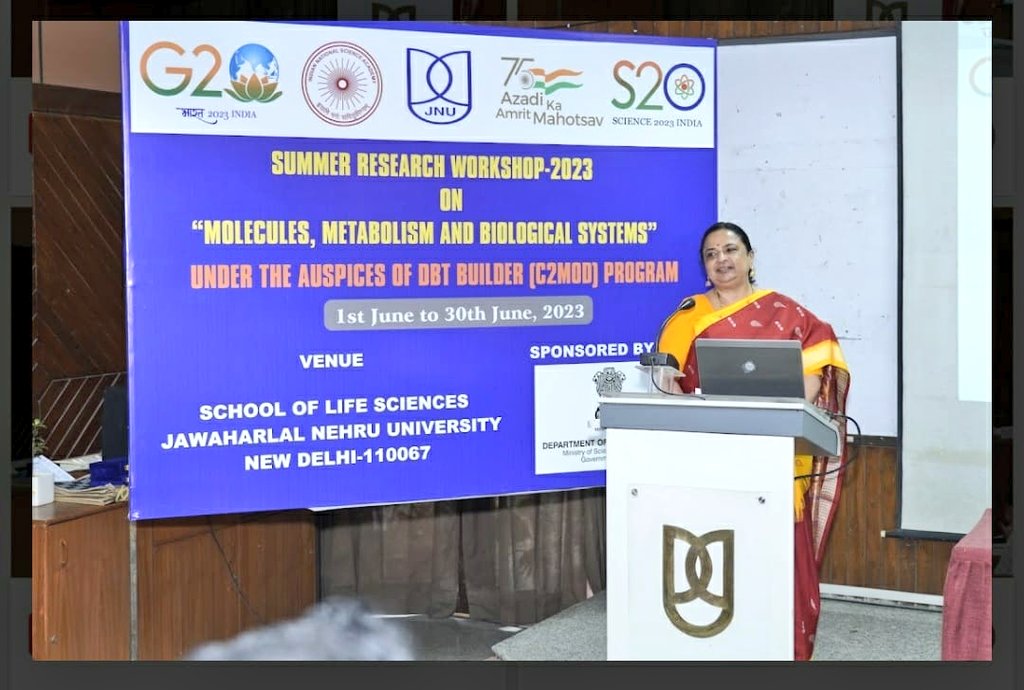
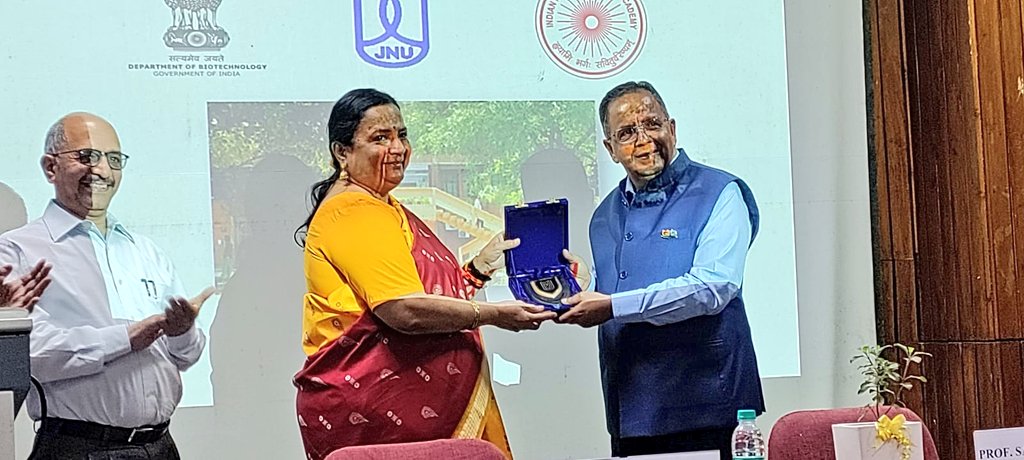
JNU VC inaugurated the month-long Summer Research Workshop at SLS, JNU on Molecules, Metabolism & Biological Systems as part of Science 20.
Eminent Immunologist Prof Narinder K Mehra was the keynote speaker. Rector-1 Prof Garkoti & Dean Prof Supriya Chakravarty also participated.
📢New #ideas and #innovations are invited by Students of class 6th to 10th through their schools under INSPIRE Awards - MANAK scheme of @IndiaDST .
🔷Last Date of submission: 30 Sept 2022
Details▶️ https://t.co/s7QHqYg9Jz
Thank you Dr @shubhatole Ma'am. Standing at the threshold of entering a PhD life, I still find myself burdened by self doubt. This story is something that I exactly wanted to hear. You always inspire!
A young undergraduate I’ve known since her childhood started her first summer internship in a bio lab. She was fascinated with how research is done, how passionate the PhD students in the lab are. Made her consider applying to PhD programs herself when she graduates. Thread 1/n