Using AI assistance for programming is an education in what I actually like about programming.
Long ago, when asked to explain why I liked programming I used to answer "Because it's the only way I know of to get paid for being an experimental epistemologist."
It was a funny line to anybody who knows what an epistemologist is, it was true, and for some reason I forgot it for a long time. Now I'm doing most of my programming with LLMs, no longer writing vast volumes of code by hand and...I don't miss that part. Because I still get to be an experimental epistemologist.
That is: every program embodies a set of assertions about what kinds of knowledge and what kinds of reasoning you need to engage with to solve a particular problem.
To me, that's the interesting part - the level where you're forming theories about what kinds of knowledge and knowledge representations will support what you want to do. Then you're testing the theory by seeing whether the program fulfills its acceptance conditions.
I did not see LLMs coming. I did not foresee the part where the actual coding is rapidly dwindling because you have robots to do most of it for you, but the experimental epistemology part is still here.
And you know what? I'm completely okay with that. The part I like is the part that hasn't gone away. And probably never will, because however good your tools are, somebody is going to have to do that philosophical impedance match between what the mind desires and what the tools can express.
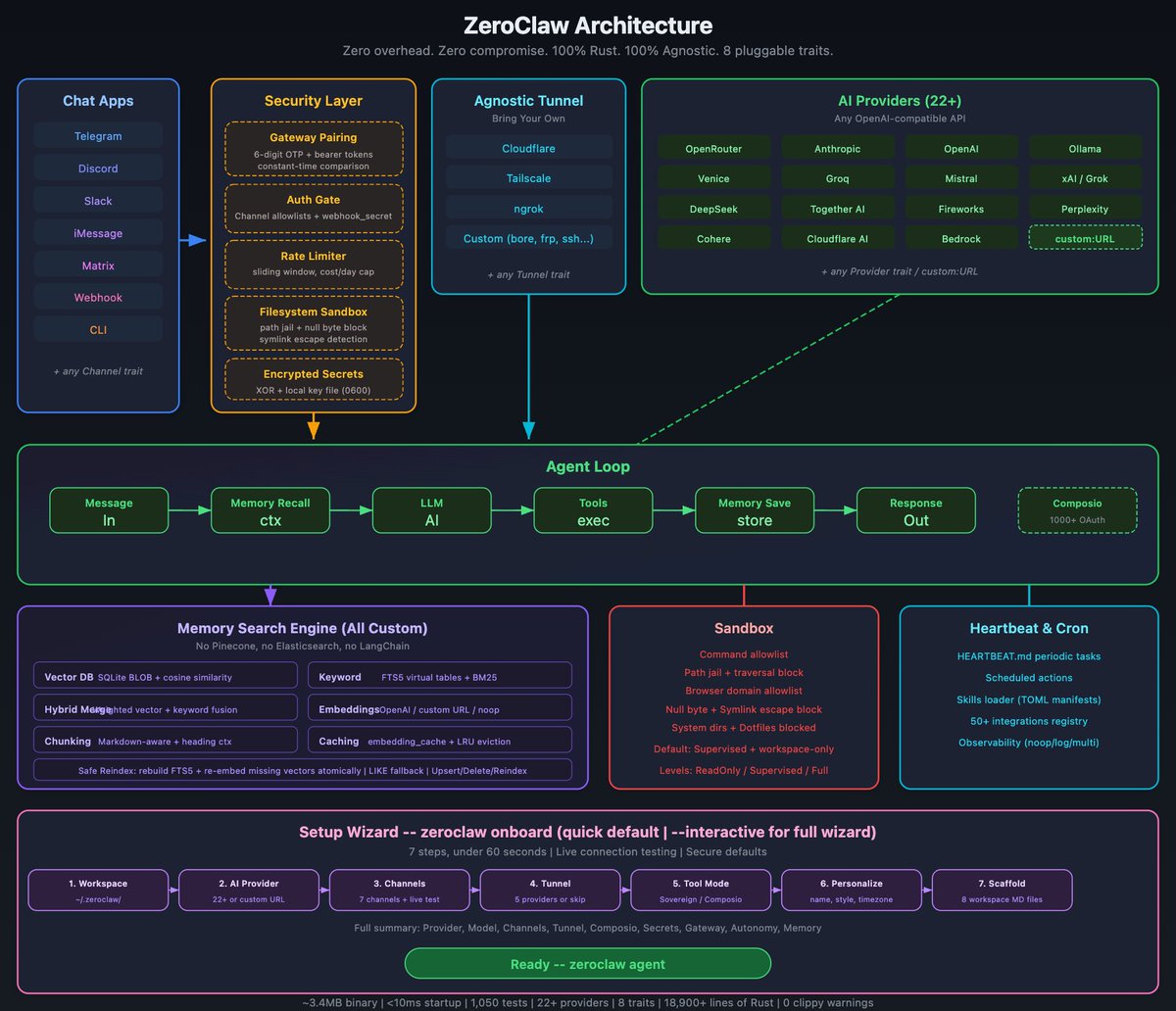
We’ve added a CLI for Claude Platform to make every API endpoint runnable from your terminal.
Call the Messages API, stand up Claude Managed Agents, pipe results straight into your shell.
The ant CLI is well understood by coding agents (Claude Code) using the claude-api skill.
Chinese quant built a perfect BTC price simulation engine with MiroFish
In a single trade, he turned $2,000 into $166,000.
7,500% profit. All proof onchain - every single one of his trades is publicly visible on Polymarket.
His wallet: https://t.co/G1EyL2Vjnq
His algorithm instantly detects any mispricing in crypto markets and enters trade immediately.
$350k all-time profit. Constantly fading the crowd because his simulation reads the market better than everyone else.
He’s using closed order book data + private OTC desks. Already elite alpha.
Then the real magic happens: 10,000 simulation cycles of how the market will react.
On April 24, he was only one who knew the market was wrong.
He entered a trade with just a 1.3% implied probability of execution.
This isn’t "guessing where the chart will go"
This is engineered money. Pure fusion of AI + MiroFish + insane math on exclusive data.
Want to learn how to build something like this? Save the post and read the article.
If you don’t want to miss his next 75x trade, starting copy every one of his trades right now using this TG bot: https://t.co/vbDZyVcfT3
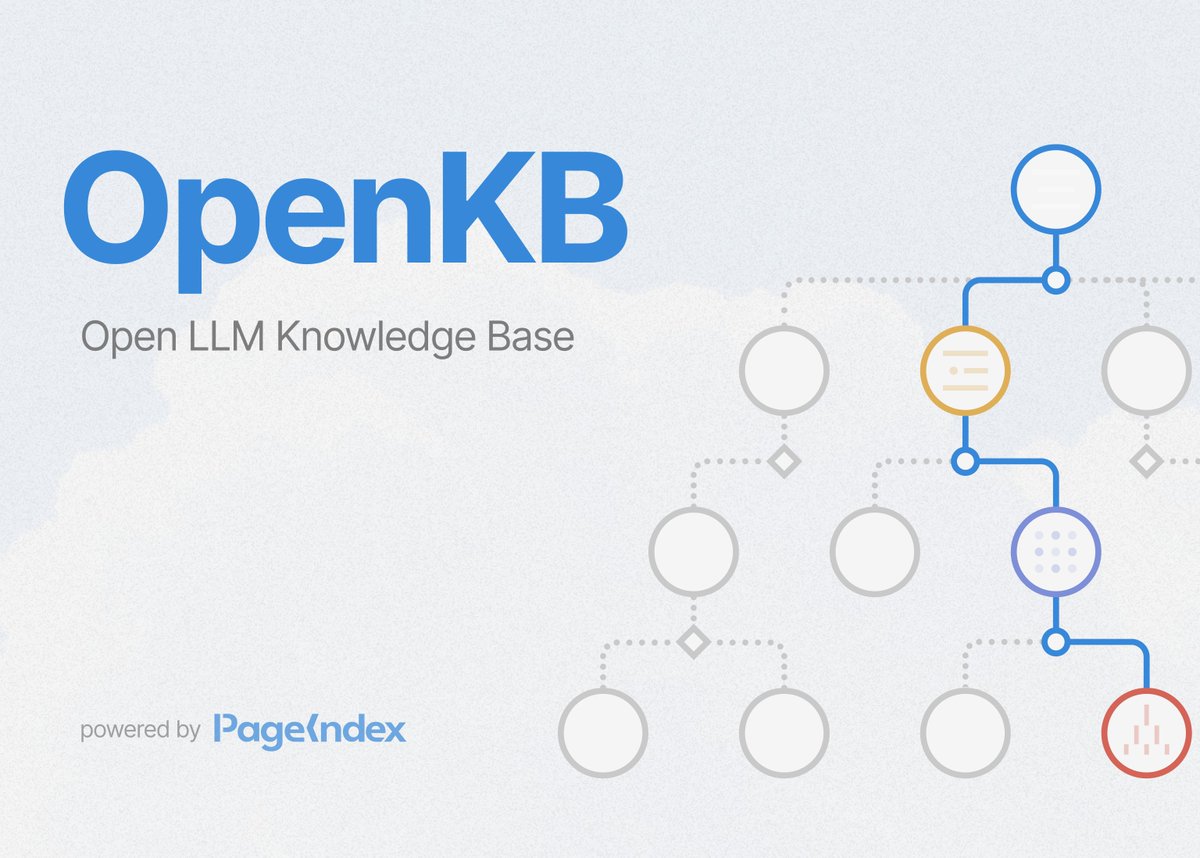
Inspired by @karpathy's knowledge base thread, we are open-sourcing
OpenKB: Open LLM Knowledge Base
In addition to Andrej's great original design, OpenKB can scale to long PDFs and multi-modality, see details below 👇
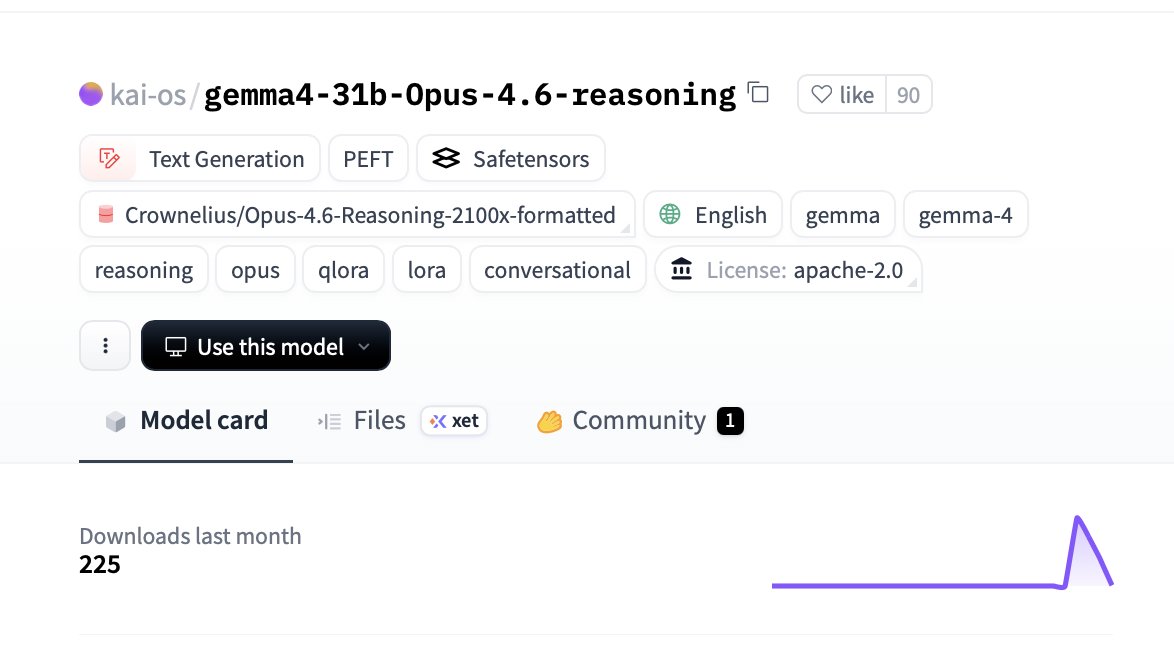
🤯 GEMMA 4 + OPUS 4.6 REASONING DROPPED
@kaiostephens goal: produce a Gemma 4-31B reasoning adapter trained only on Opus reasoning 🧠
What the model is:
🧬 Tiny QLoRA adapter on Gemma 4 31B-it
📊 Fine-tuned on ~1,900 curated Opus Examples
⚡ Trained in ~1 hour on a single GH200 GPU
📖 Fully open Apache 2.0
What it does:
✨ Boosts overall quality, coherence, and personality
🧮 Stronger math, code, and Opus problem solving
💬 More refined, thoughtful responses
🏠 Built for local agents, workflows, and heavy daily
Vs base Gemma 4 31B:
📐 Same efficient base model, no extra size or speed
📈 Noticeable step up in real-world depth and quality
💪 Base was already strong this levels It up!
Grab the adapter here 👇🏻
https://t.co/ncOxReheZx
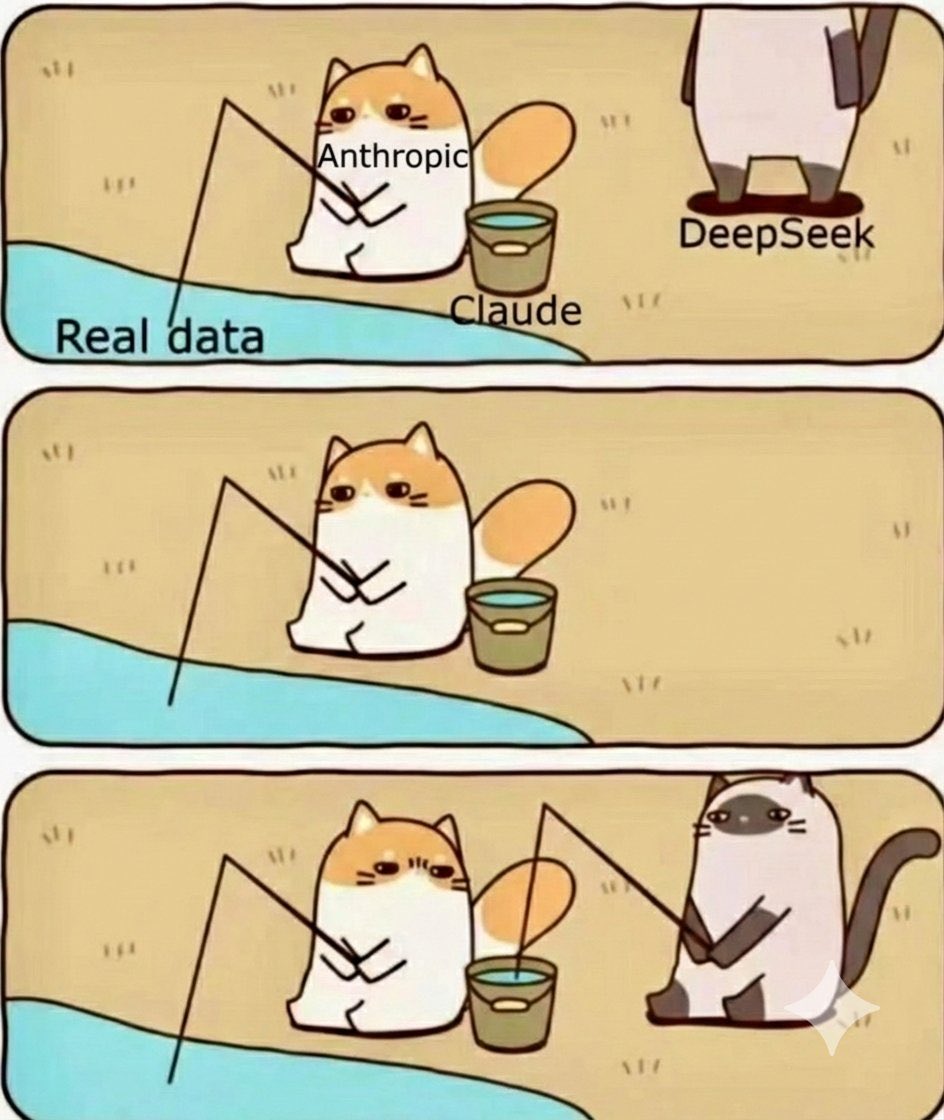
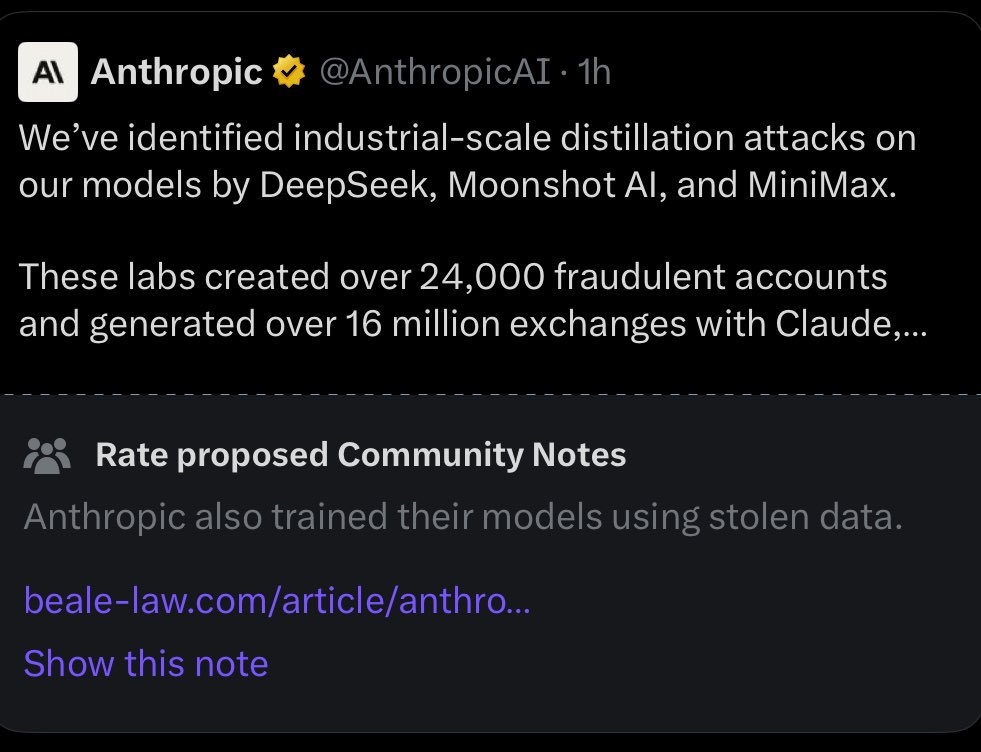
Anthropic is guilty of stealing training data at massive scale and has had to pay multi-billion dollar settlements for their theft. This is just a fact.








![HyperSharkk's tweet photo. คุณทำงานวันละ 8 ชม. มา 5 ปี = 14,400 ชั่วโมงของชีวิต
เงินเดือนขึ้นมา 15%
คำถามคือ ถ้า 14,400 ชม. นั้นคุณเอาไป “สร้าง asset” แทน
วันนี้คุณจะอยู่จุดไหน?
ผมก็ไม่รู้หรอกว่าตัวเลขจะเป็นเท่าไหร่ แต่รู้ว่า 5 ปี… มันไม่ใช่ +15% แน่นอน
🧵 [1/8] https://t.co/hdzIXpxtAf](https://pbs.twimg.com/media/HB5Z_DsasAASVph.png)