I saw a slide circulating on social media last night while working on a deadline. I didn’t comment immediately because I wanted to understand the full context before speaking. After learning more, I feel compelled to address what I witnessed during an invited talk at NeurIPS 2024 by Professor Rosalind Picard.
I deeply respect Professor Picard’s scholarship and contributions to the field. However, her comments during the talk reflected a deeply troubling and racist view of Chinese scholars. This was not just inappropriate but also profoundly disheartening.
First, it was entirely unnecessary to mention the student’s nationality when discussing an incident of cheating. The point about academic integrity could have been made without emphasizing nationality. Yet, Professor Picard chose to highlight it. This choice perpetuates harmful stereotypes about Chinese scholars and reflects a broader bias against Asians, often rooted in the assumption that we “work hard, avoid conflict, and don’t push back.”
This needs to change. Asians, like everyone else, have the right to speak out and demand accountability when racism occurs. We will ensure that being racist against Asians has consequences, including here, Professor Picard.
What made this incident worse was how it unfolded during the Q&A session. A Chinese attendee asked a professional and thoughtfully articulated question. She began by thanking Professor Picard for her talk and posed this question:
Are you calling out the student’s nationality because you find most Chinese scholars honest, and the fact that the cheating student was Chinese is rare? Is that why you emphasized nationality?
This was a generous and high-EQ question, offering Professor Picard an opportunity to reconsider or clarify her comments. Unfortunately, she doubled down instead.
Professor Picard reinforced her remarks by quoting the student’s excuse —that ethics wasn’t taught in their school—and generalized this as a broader issue with Chinese education. This statement is both factually incorrect and deeply offensive.
There are glaring logical flaws in this argument:
1.If the student cheated, why would their excuse about ethics education be taken at face value? A serious scholar would investigate the claim before making it a central part of their argument.
2.Even if the student’s school didn’t teach ethics (which is false for schools in China), other sources like family and community often instill strong ethical values. Ignoring this nuance is careless and reinforces stereotypes.
What is most heartbreaking is that Professor Picard couldn’t even acknowledge something as simple as: “Most Chinese scholars are honest and upright.” Instead, she focused on the singular exception and added, “Of course, with this one exception in this case” in her response.
I regret that this happened at NeurIPS. I regret that this happened in my research community—a place I have cherished and contributed to for over 14 years. I regret that this happened at MIT, an institution of excellence and aspiration for many Chinese scholars.
Racism has no place in academia, and incidents like this tarnish the principles of inclusion and respect that we, as a global research community, should uphold.
I hope NeurIPS and the broader academic community take this as a wake-up call to address the biases and systemic issues that enable such comments to go unchallenged. We must do better.
@MIT_CSAIL@NeurIPSConf
Beyond excited to share that this is now out in @Nature!
We show that despite efforts to remove overt racial bias, LLMs generate covertly racist decisions about people based on their dialect.
Joint work with amazing co-authors @ria_kalluri, @jurafsky, and Sharese King.
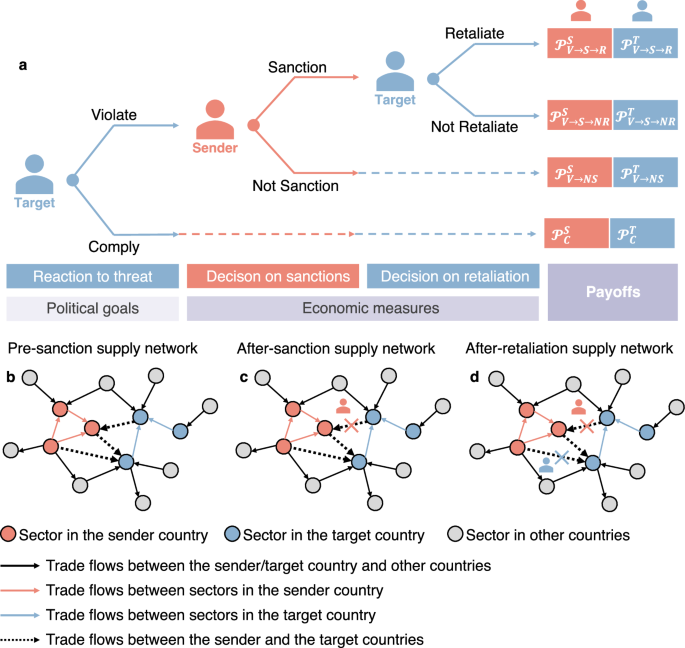
Published today: The futility of economic sanctions in a globalized and interdependent world: a data-driven game theoretical study https://t.co/EcxfuK0uyu
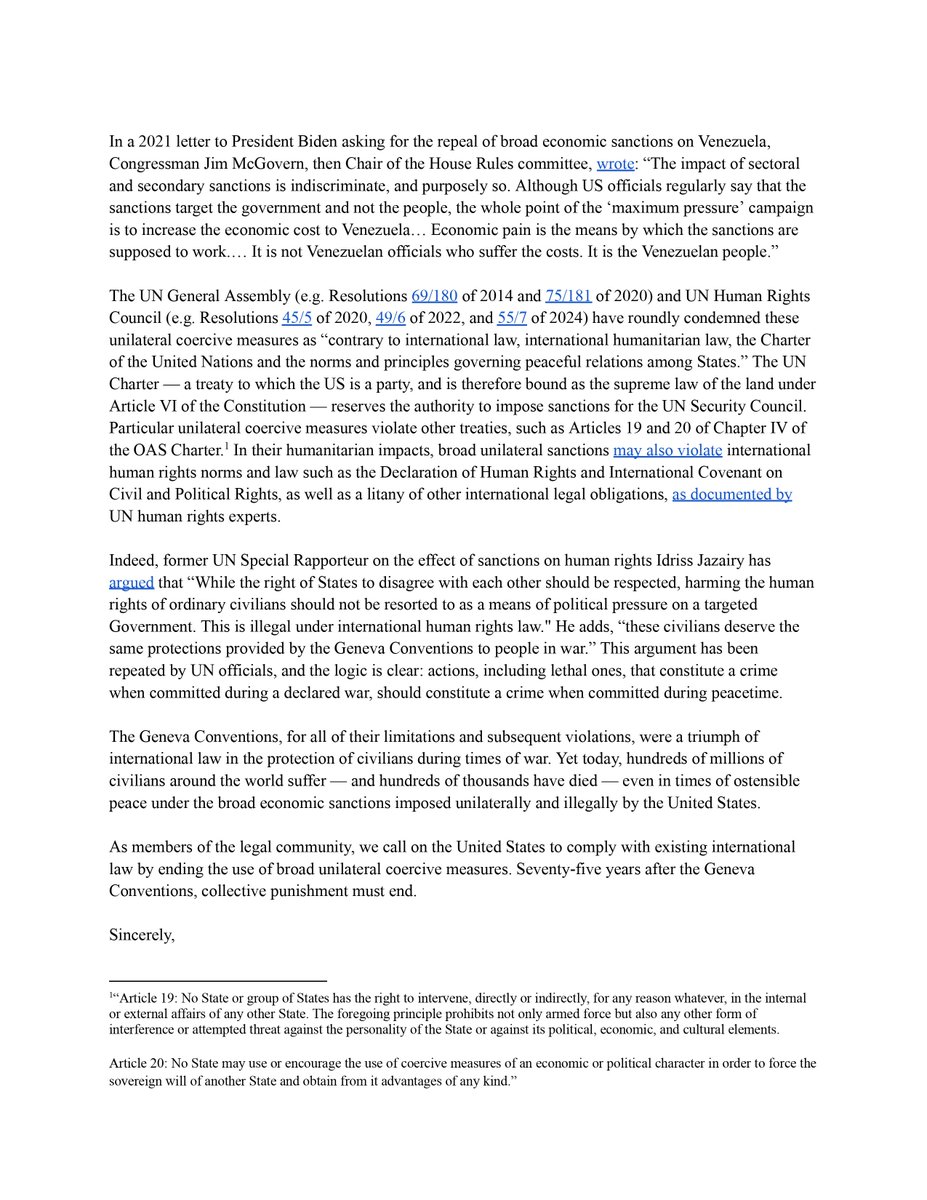
NEW: ~40 legal orgs and 200 lawyers, including top scholars, say broad US economic sanctions amount to collective punishment and violate international law.
Signers below👇
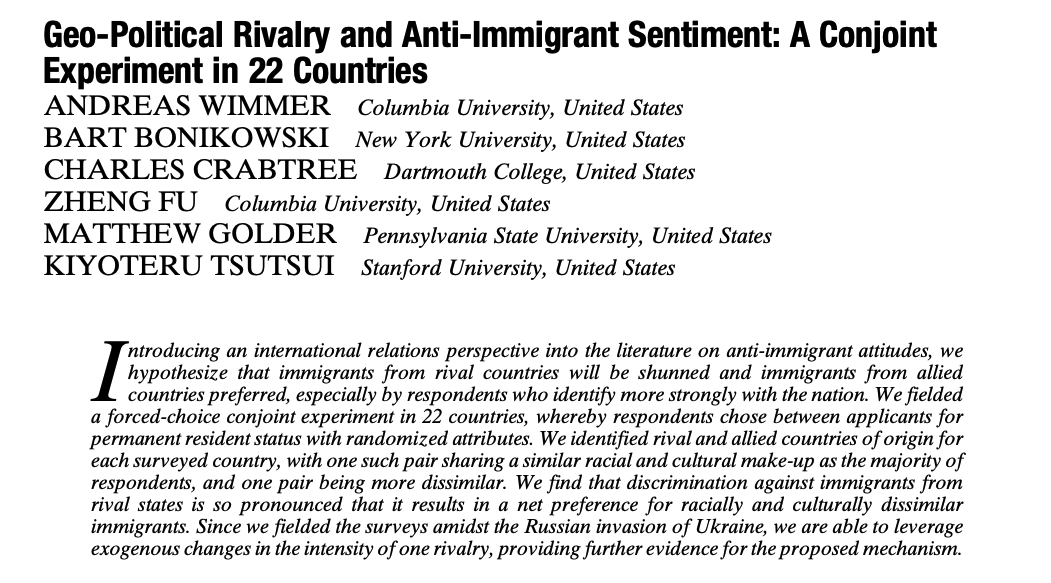
Just published on APSR First View: "Geo-Political Rivalry and Anti-Immigrant Sentiment: A Conjoint Experiment in 22 Countries" by Andreas Wimmer, Bart Bonikowski, Charles Crabtree, Zheng Fu, Matthew Golder, and Kiyoteru Tsutsui. https://t.co/eL5cjJHeUh
A tenure-track job of asisstant professor of sociology in race and ethnicity at the Universit of Illinois at Urbana-Champaign. Feel free to share/repost, and above all, appy! https://t.co/uOY8trdD4w
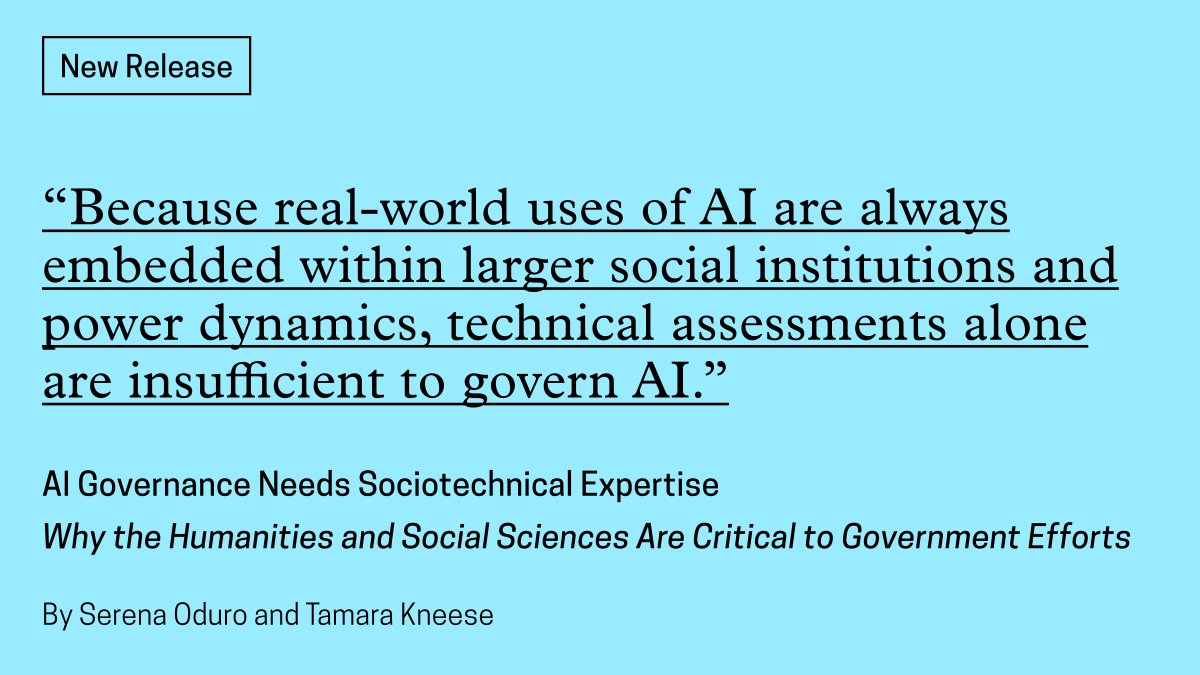
📣New policy brief! Successful AI governance requires expertise in the *sociotechnical* nature of AI systems. @SerenaOduro & @tamigraph outline why the humanities & social sciences are critical to government efforts, and offer a set of recommendations. 1/4 https://t.co/hjvyQLThUD
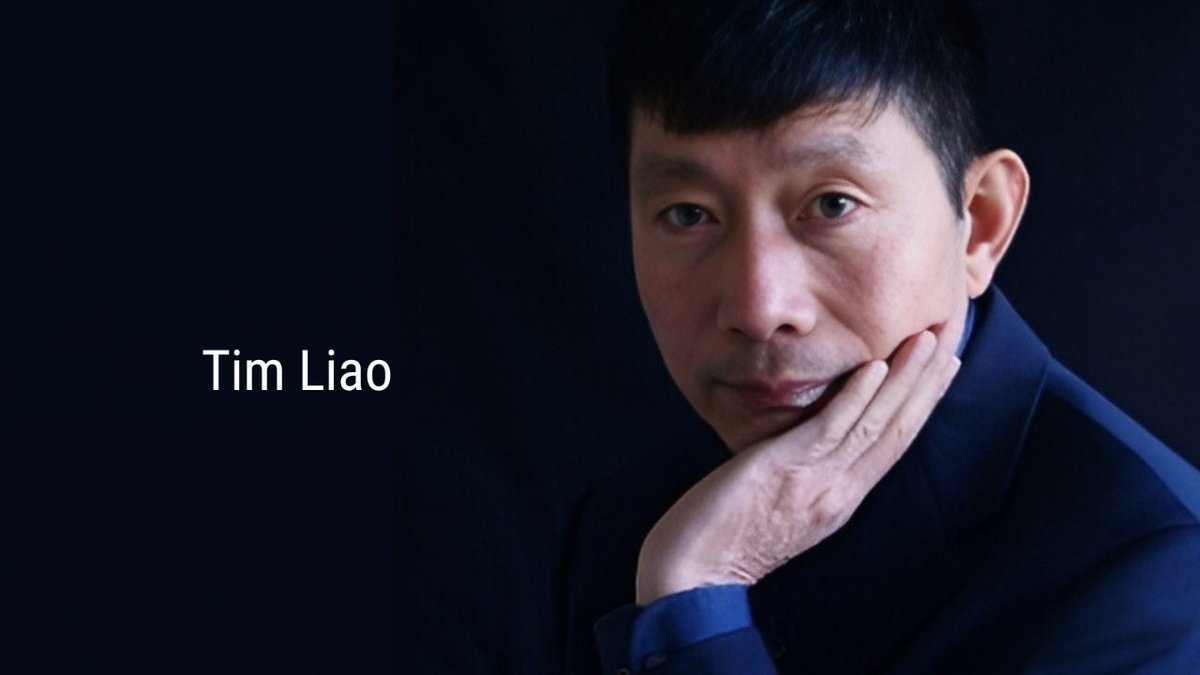
We are pleased to announce that Tim Liao @tfliao@SBU_Sociology will be the next editor of the ASA journal Socius: Sociological Research for a Dynamic World @SociusJournal.
Fellow STS scholars 🙌, for #easst24 anyone knows what's gonna happen if your panel got cancelled and your submission is currently under "Transfer" ? Should we find and reach out to other target panels ourself?👀
🚨 Our three remaining award deadlines are coming up! Remember to nominate yourself, colleagues, and friends:
- Hacker-Mullins Student Paper Award (3/15)
- Ida B. Wells-Troy Duster Award **3/25**
- Emancipatory Practice Award **3/25**
Link 🔗: https://t.co/mgdA5rjqO1
Ever wondered about the impacts of algorithms on policing? Or perhaps our courts?
Enjoy @Sarah_Brayne & @AngeleChristin "Technologies of Crime Prediction" to learn more https://t.co/j6lpW2YSIW