Orthopedic surgeon and clinical researcher in Heidelberg.
I’ll share what I’m learning about hip and knee arthroplasty, robotic surgery, medical AI, and building local-first clinical software around real clinical workflows.
PEPPER vs. EPCAT III: aspirin missed noninferiority on VTE here, the anticoagulants missed it on safety. Less a verdict against aspirin than a case for risk-stratified prophylaxis instead of one default for every hip and knee. https://t.co/fNsuizENhf
A trial of venous thromboembolism (VTE) prophylaxis after hip or knee arthroplasty did not show that aspirin was noninferior to rivaroxaban or warfarin for symptomatic VTE or death. Warfarin and rivaroxaban were not noninferior to aspirin for safety. Full PEPPER trial results: https://t.co/x99wawQaDe
Editorial: Aspirin Therapy — Enough after Arthroplasty https://t.co/azVWf3Byln
Automated AI hip measurements can be reliable and save substantial time. Beyond routine care, I see huge potential for analysing large patient cohorts at scale. A major gain for clinical research. @ImageBiopsyLab
https://t.co/UaDslG8Xy2
One of the best arthroplasty conversations I've heard in a long time.
Jason Snibbe & @matthewsloanmd on precision, patient care and why knowing when NOT to operate matters.
https://t.co/dggAcX3hr5
CendovaPlan: open-source hip, knee & shoulder planning. Just drop your DICOM file. Runs locally.
New in v0.1.4: CPAH femoral profiling + osteotomy simulation (HTO/DFO/double-level).
Research tool. Not CE-certified; not for clinical use.
https://t.co/ZzBB5PGesR
#OrthoTwitter
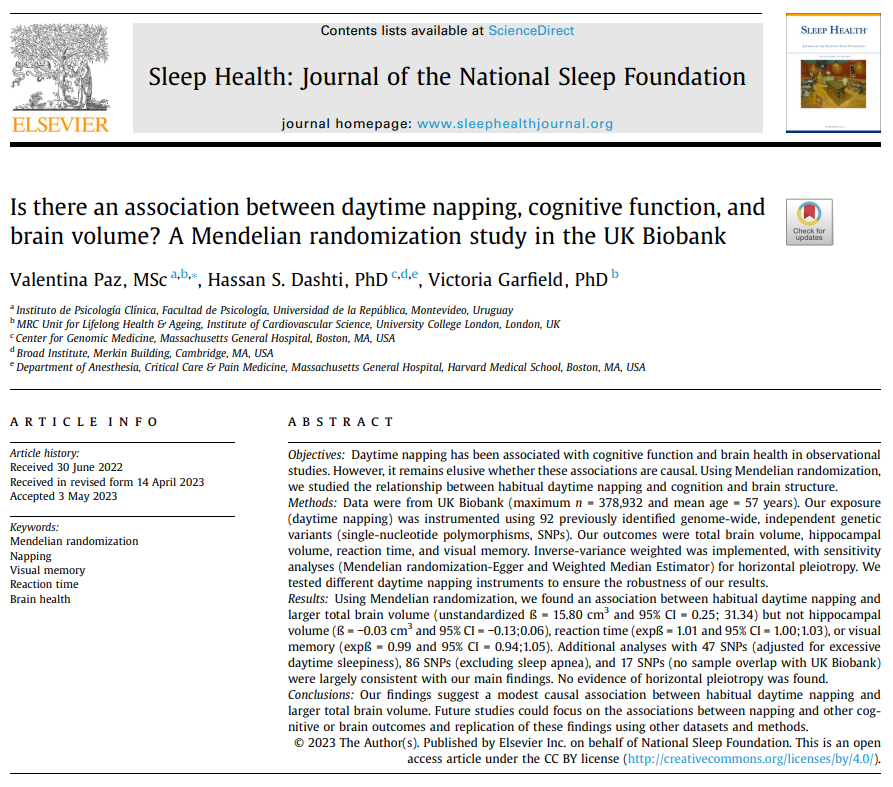
@witcheer I use Hermes a lot for a workflow I call "digest": I screenshot a post about a research paper on my phone and send it to Hermes. It finds the original paper, summarizes it, and saves the summary with a source link to my Obsidian vault.
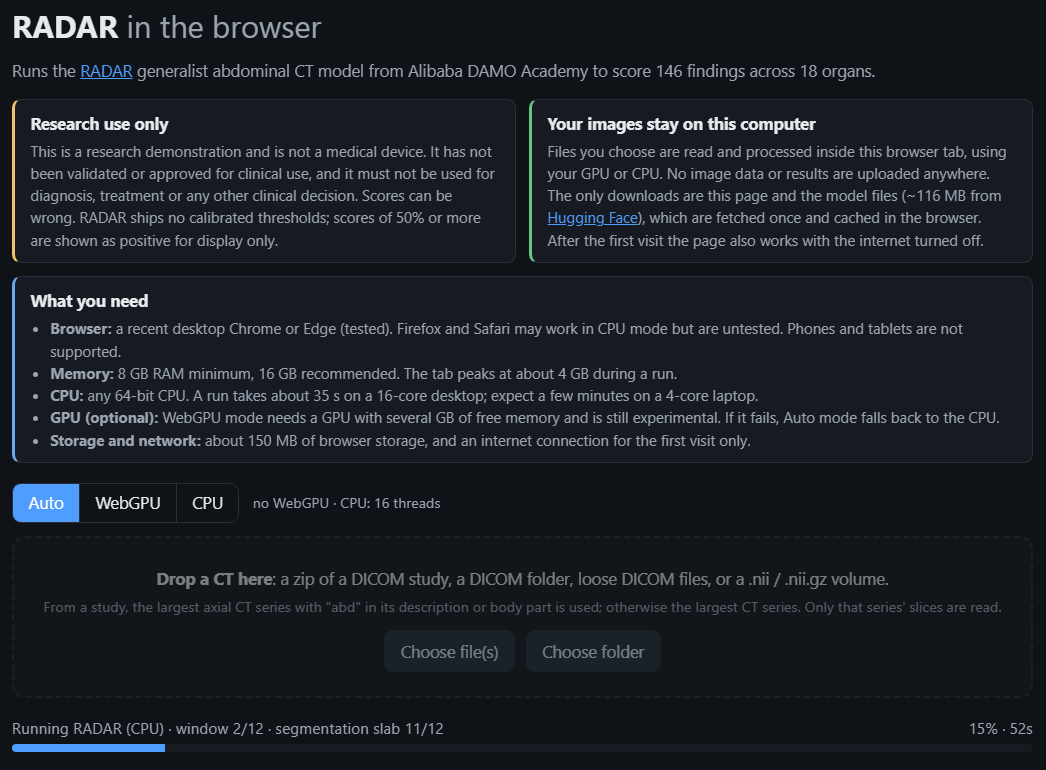
RADAR is a generalist research model for contrast-enhanced abdominal CT: 146 findings across 18 organs, trained on clinical reports from 424,911 exams, no manual labels. Code and weights are open source now.
https://t.co/OIJO3QT8uy
https://t.co/UX1jVyFMXH
You can locally run that abdominal CT AI model (RADAR) from the recent Science paper, thanks to this browser implementation by @jarrelscy
Drop in a DICOM series: https://t.co/4fjdMS3o2q
Examples from different sources below🧵
The opportunity is scale: multimodal AI could rapidly analyze large sets of THA radiographs and link image features to verified long-term outcomes. That could lay the groundwork for dedicated prediction models. https://t.co/eN76KlRGQ0
AI-based analyses can accurately and consistently evaluate postop THA x-rays. One system showed the best balance between sensitivity/specificity, AI-assisted interpretation may serve as a reliable adjunct to clinical f/u for early complication prediction.
https://t.co/ARHS2YR7UY
Artificial-intelligence systems can generate hypotheses, design experiments and analyse data — but humans still need to decide what makes sense
https://t.co/Ay4hLGj2MG
@patrick_kuhnke_ i use fable for code, and astra/grok for review. it really finds tweaks and sometimes real problems… then give it back to fable to solve it, no mess!