The most puzzling AI-ism to me is probably the "Not x. Not y. But z."
Not the em-dashes (an essential piece of punctuation). Not "That isn't x, it's y" (a useful if inelegant way to clarify an argument). But consecutive examples of what your subject isn't -- conveyed in fragmentary, staccato sentences -- before a declaration of what it is.
Feel like this is an inherently irritating rhetorical device. And I don't recall regularly coming across it in pre-AI writing. So, I don't understand why LLMs are so in love with the template
𝐒𝐓𝐀𝐓𝐔𝐒 𝐎𝐅 𝐏𝐄𝐓𝐑𝐎𝐋𝐄𝐔𝐌 𝐏𝐑𝐎𝐃𝐔𝐂𝐓𝐒 𝐒𝐔𝐏𝐏𝐋𝐘 𝐀𝐍𝐃 𝐃𝐄𝐕𝐄𝐋𝐎𝐏𝐌𝐄𝐍𝐓𝐒 𝐈𝐍 𝐓𝐇𝐄 𝐏𝐄𝐓𝐑𝐎𝐋𝐄𝐔𝐌 𝐒𝐄𝐂𝐓𝐎𝐑
The Ministry of Energy and Mineral Development has reassured the country that Uganda’s petroleum products supply remains stable and secure despite ongoing global disruptions affecting international oil markets.
Speaking at a press briefing held at the Uganda Media Centre, the Permanent Secretary of the Ministry of Energy and Mineral Development, Eng.@irenebateebe ,reported that recent instability in the Middle East particularly disruptions linked to the Strait of Hormuz has significantly affected global oil supply chains and increased international fuel prices, freight, and insurance costs.
She noted that East African countries, including Uganda, have been impacted due to their reliance on petroleum imports from the Arabian Gulf region. However, she emphasised that Uganda continues to maintain adequate fuel stock levels.
Eng. Bateebe stated that the Uganda National Oil Company, working closely with its international partners including Vitol, has successfully diversified supply sources to include West Africa, Europe, India, and the Americas, ensuring uninterrupted fuel availability in the country.
She acknowledged recent increases in retail pump prices, explaining that these are largely driven by global supply constraints, increased importation costs, exchange rate fluctuations, and regional demand pressures.
She further observed that cross-border fuel demand driven by Uganda’s comparatively lower prices temporarily strained fuel availability in border areas, but supply stability has since been restored.
According to the Permanent Secretary, Uganda’s fuel market remains liberalised, with prices determined by Oil Marketing Companies, while Government continues to monitor the sector to prevent smuggling, ensure fair pricing, and protect consumers from exploitative practices.
She urged the public to remain calm, avoid panic buying, and disregard misinformation on social media, noting that Uganda continues to receive regular fuel deliveries through both the Kenya and Tanzania supply routes.
On long-term energy security, Eng. Bateebe highlighted ongoing Government interventions to strengthen petroleum infrastructure and storage capacity.
She said the Jinja Storage Terminal is being upgraded from 30 million litres to 40 million litres, while the Mahathi Infra Terminal on Lake Victoria, with a capacity of 70 million litres, continues to enhance regional supply efficiency and logistics.
She also revealed progress on the Kampala Storage Terminal in Mpigi District, which will form part of the national refined products distribution system linked to the Hoima refinery pipeline network, with a projected capacity of 320 million litres.
Regarding downstream investments, she confirmed continued progress on the Uganda Refinery Project in Kabaale, Hoima District, a 60,000 barrels-per-day facility valued at approximately US$4 billion.
The project includes a refinery complex, a 211-kilometre multi-products pipeline, and associated storage infrastructure, and is expected to significantly reduce Uganda’s dependence on imported refined products.
Eng. Bateebe added that the refinery will support industrial growth, petrochemical production, fertiliser manufacturing, LPG development, and job creation, while strengthening Uganda’s energy independence and regional trade capacity.
She further announced that Government is advancing upstream petroleum exploration, including preparations for the Third Petroleum Exploration Licensing Round scheduled for the 2026/2027 financial year, alongside new seismic surveys in Kasurubani aimed at identifying additional petroleum prospects.
On policy developments, she reported that Government has finalised the National Petroleum Policy 2025, which replaces the 2008 framework and aligns the sector with emerging trends in commercialisation, regional integration, sustainability, and the global energy transition.
She also confirmed completion of the Petroleum Supply (Liquefied Petroleum Gas Operations) Regulations, 2026, which will soon be gazetted to strengthen safety, regulation, and quality assurance across the LPG supply chain.
Eng. Bateebe concluded by reaffirming Government’s commitment to ensuring long-term energy security, stable fuel supply, and maximisation of national benefits from Uganda’s petroleum resources, noting that strategic investments in infrastructure, refining, storage, and exploration are positioning the country for sustained energy resilience.
#OpenGovUg
Nothing beats seeing young entrepreneurs give firsthand testimony of how a tool has boosted their sales, profitability, and business growth, while making tax compliance seamless.
It is incredibly heartwarming to see policy and innovation translate into real-world impact.
Uganda’s fuel pricing model continues to demonstrate resilience, competitiveness and efficiency in the face of regional and global market volatility.
Our deregulated petroleum sector encourages healthy competition, operational efficiency and timely market responsiveness which has enabled Uganda to maintain relatively lower pump prices compared to many of our regional peers.
As @GovUganda , we shall continue to invest in critical petroleum infrastructure, strengthen supply chain resilience, and advance strategic projects including the East African Crude Oil Pipeline @EACOP_ and the Uganda Refinery to secure our long-term energy future and reduce vulnerability to external shocks.
Here are 9 of the most impactful and poignant quotes from the Attorney General’s @KiryowaKk eulogy for Mr. Peter Mulira. Thank you so much. Peter was a gentleman, generous, respected all and held vast knowledge and experience in the law. The legal community shall miss him. MHSRIP.
"Mr. Peter Mulira did not just practice law. He elevated it."
"He belonged to that generation that believed a lawyer’s first duty was to the law, the second to the client, and lastly to themselves. And in that order. Always."
".........The law is not a game. Go back and find the justice in it."
"When you get to the top, send the elevator back down."
"The Bar has lost a giant. You have lost your world."
"Peter Mulira believed the law was a noble profession. A calling, not just a business."
"Lawyers don’t like finality. So today we do not say goodbye. We say: 'With leave, My Lord.'"
"When the Bar loses a senior, the country loses part of its conscience."
"The law is a living thing. It grows through the lives of those who practice it honorably."
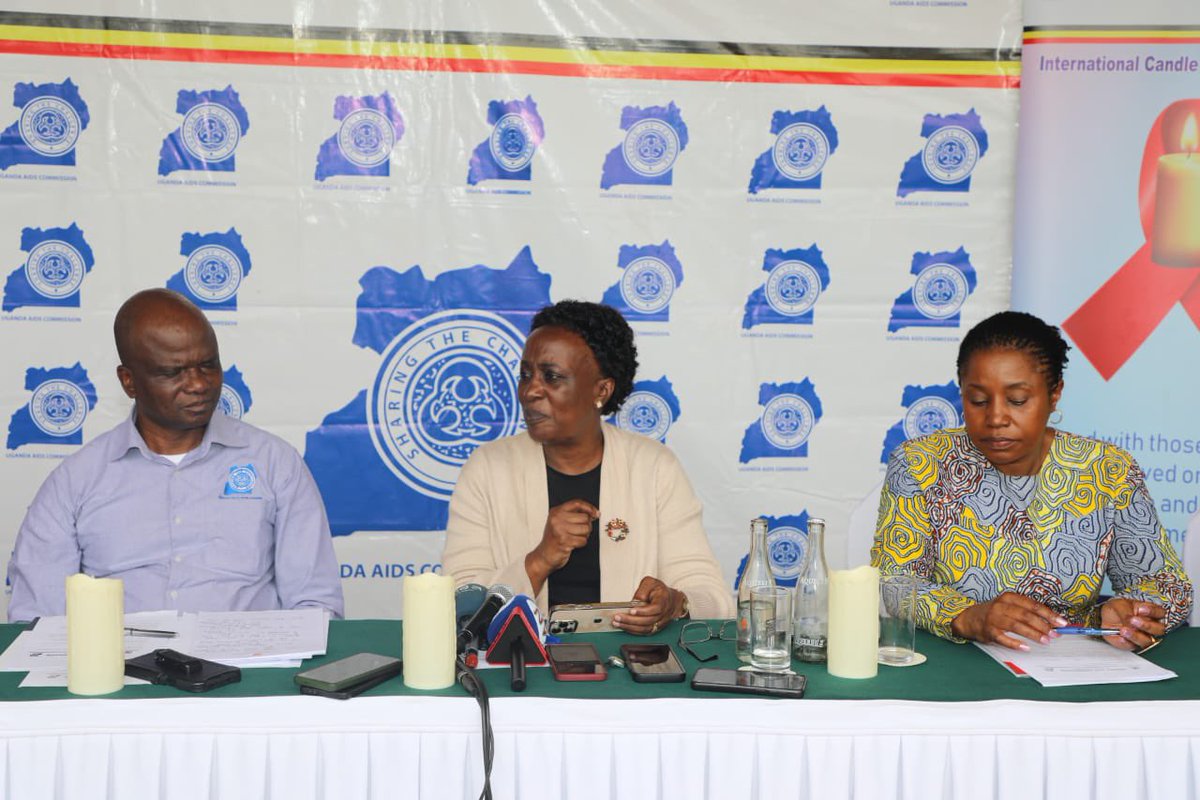
Yesterday, a press briefing ahead of Candlelight Memorial Commemoration Day, was held, addressed by myself, the UNAIDS Country Director, UAC Director General, and partners.
This year’s theme is "Ending AIDS by 2030; Embracing the Role of Women".
#EndAIDS2030Ug
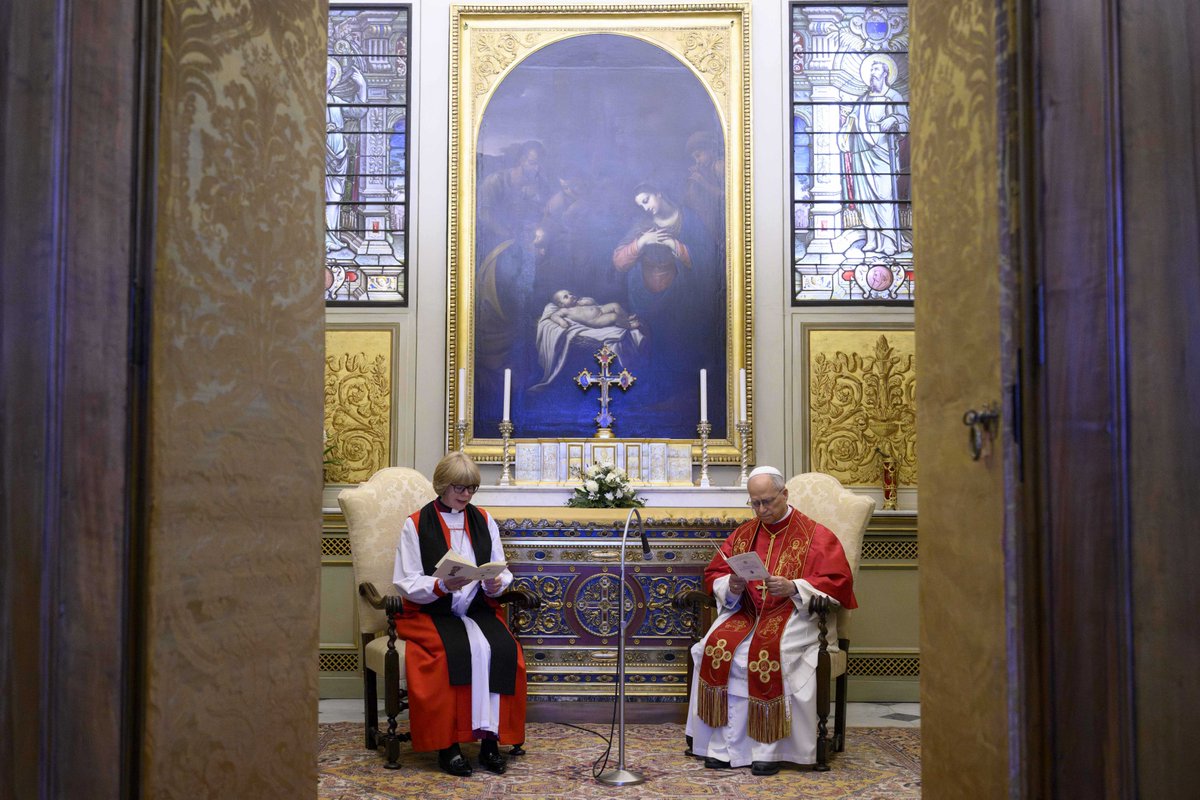
It was an honour to meet and pray with His Holiness Pope Leo XIV @Pontifex this morning. I’m deeply grateful for his gracious welcome at the Apostolic Palace.
In the years to come, I will remain united with the Pope in prayer – for peace in our world, for justice, and for every person to discover the fullness of life that God offers.
The ecumenical pilgrimage is always one we make together, as a fellowship of Christians seeking the unity for which Christ prayed. Your Holiness, as your sister in Christ, in a spirit of prayer, friendship, and hope, I commend our shared journey into the hands of God.
You can read my address to Pope Leo XIV here: https://t.co/ZL8DHbXCNj
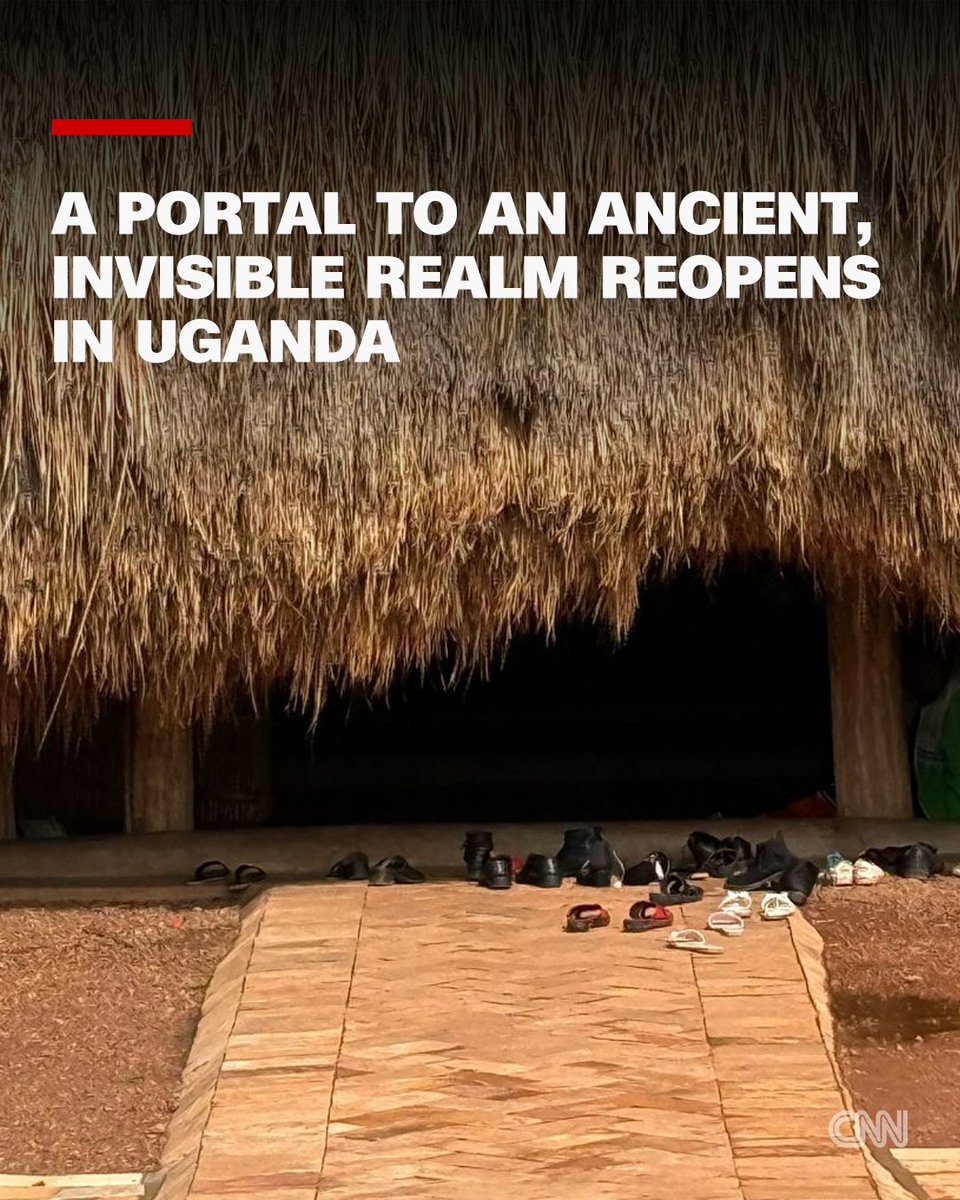
Walking through the compound that houses the Kasubi Tombs, the main path leads to what should be an entrance. But it ends at one of the layers of thatch covering the 25-foot structure known as Muzibu Azala Mpanga. It looks like a giant basket turned upside down. If it weren’t for the rows of shoes laid neatly outside, you’d never know there was a way in. https://t.co/VWEBuVooHC
𝐔𝐠𝐚𝐧𝐝𝐚–𝐂𝐡𝐢𝐧𝐚 𝐂𝐨𝐟𝐟𝐞𝐞, 𝐈𝐧𝐯𝐞𝐬𝐭𝐦𝐞𝐧𝐭 𝐚𝐧𝐝 𝐃𝐞𝐬𝐭𝐢𝐧𝐚𝐭𝐢𝐨𝐧 𝐂𝐨𝐧𝐟𝐞𝐫𝐞𝐧𝐜𝐞
The Permanent Secretary, Ministry of Foreign Affairs, Mr Vincent Bagiire Waiswa, has reaffirmed Uganda’s commitment to deepening strategic cooperation with China, as he delivered remarks at the Uganda–China Coffee, Investment and Destination Conference held in Mestil Hotel on 21st April 2026.
He welcomed the Chinese investment delegation and noted that their nationwide tour had provided a first-hand experience of Uganda’s vast potential—from its rich coffee heritage to its globally recognised tourism attractions, including the Source of the Nile, reinforcing Uganda’s standing as the Pearl of Africa.
The Permanent Secretary emphasised that the conference builds on the growing momentum of Uganda–China relations, particularly under frameworks such as the Forum on China-Africa Cooperation, and serves as a practical platform to advance trade, investment, and shared economic growth.
Highlighting opportunities within Uganda’s coffee sector, he underscored the country’s capacity to offer high-quality, unique coffee varieties and a fully liberalised, investor-friendly value chain spanning production, processing, branding, and export.
He further reiterated Uganda’s favourable investment climate, characterised by peace, stability, improved infrastructure, and competitive incentives, positioning the country as a reliable destination for long-term partnerships in manufacturing, agro-industrialisation, energy, and innovation.
Mr Bagiire invited investors to transition from trade to sustainable investment partnerships, assuring Government’s continued support at every stage.
The conference marks a significant milestone in strengthening bilateral cooperation, with Uganda remaining committed to fostering mutually beneficial partnerships that drive inclusive growth and shared prosperity. #OpenGovUg
Your hippocampus doesn't encode days that feel identical. If this Tuesday looks like last Tuesday, your brain files them as a single compressed memory. The second day never gets its own folder.
This is why decades feel like they disappeared. The hippocampus uses novelty as its filter for "worth storing." Repetitive routines trigger temporal compression. Same commute, same desk, same dinner, same bedtime: the brain deduplicates the whole sequence into one entry. You lived 365 days. You filed 40.
Research from Jeffrey Zacks at Washington University has tracked this with fMRI. As people move through continuous experience, the hippocampus and medial prefrontal cortex fire in discrete bursts at moments the brain flags as "something changed." Each burst becomes a retrievable memory later. In stretches with no boundaries, the bursts flatten. Participants with more boundaries in a given period remembered more of it afterward. Segmentation literally builds memory.
Sleep is the second mechanism. During slow-wave sleep, the hippocampus replays the day's episodes and transfers them to the neocortex for long-term storage. This is when memory actually gets filed. Cut sleep short and encoding efficiency drops. Chronic sleep debt means experiences you had never complete the transfer. The memory existed. It just never made it to disk.
The third mechanism is where dopamine meets attention. Novel stimuli trigger the ventral tegmental area to release dopamine into the hippocampus, which gates what gets encoded. Mind-wandering does the opposite. When your default mode network takes over (phone scrolling, rumination, email during dinner), the hippocampus stops tagging the present. You were at the wedding. Your hippocampus was in your inbox.
Three independent systems working against you. Novelty collapse compressing repetitive days into single entries. Sleep debt blocking consolidation. Default mode network swallowing attention before encoding completes.
The fix comes straight out of the mechanism. New locations, new food, new people, new routes home. The brain needs boundaries to build memories. Go to bed earlier so replay actually runs. Put the phone down when something is happening so the dopamine signal can fire.
The more forgettable the day, the shorter the decade.
PERFORMANCE OF THE ECONOMY REPORT FOR MARCH,2026
The high frequency indicators of economic activity shows continued strengthening of economic conditions, as highlighted by an upward trend in the Composite Index of Economic Activity (CIEA) over the past months. The index grew by 0.6 percent between January & February 2026, reaching 185.6, a performance underpinned by export growth,rising aggregate demand, stable inflation & steady growth in private sector credit in the months leading to March 2026.
The Purchasing Managers’ Index (PMI) was registered at 54.3 in March 2026, up from 54.2 in the previous month, which showed continued improvements in business conditions in the Ugandan private sector. The improvements were mainly observed in output & new orders, prompting firms to increase input (raw material) purchases & hire more staff hence increasing employment.
Sentiments about doing business in Uganda remained positive, as shown by the Business Tendency Index (BTI), which posted 57.83 in March 2026, a reading higher than the threshold of 50. This signalled continued optimism by investors operating in Uganda, especially in the agricultural and financial sectors during the month.
Despite the rising fuel costs, annual headline inflation in March 2026 eased to 2.8 percent, down from 2.9 percent in the previous month. This was primarily driven by a slowdown in both core inflation and food crop & related items inflation.
In March 2026, the Ugandan Shilling depreciated by 4.5 percent against the US Dollar, having traded at an average midrate of Shs 3,730.53/USD compared to an average of Shs 3,568.23/USD in February 2026.
This depreciation of the shilling was partly driven by the global strengthening of the US Dollar which coincided with a strong demand for dollars by corporate entities and local importers who are paying more due to the global supply chain disruptions caused by the geopolitical tensions in the Middle East.
In February 2026, Uganda traded at a deficit worth USD 61.91 million with the rest of the world. This is a deterioration from a deficit of USD 44.54 million registered in February 2025, driven by a surge in the import bill which outpaced the growth in export earnings over this period.
However, Uganda’s export earnings grew by 63.7 percent year-on-year to USD 1,374.18 million in February 2026, compared to USD 839.28 million in February 2025.
This growth was mainly on account of a significant increase in gold and coffee export receipts over this period.
For more details👇👇👇
https://t.co/2T13WdLX6j
UGANDA ENGAGES WORLD BANK AND IMF ON DEVELOPMENT POLICY OPERATION AND EXTENDED CREDIT FACILITY:
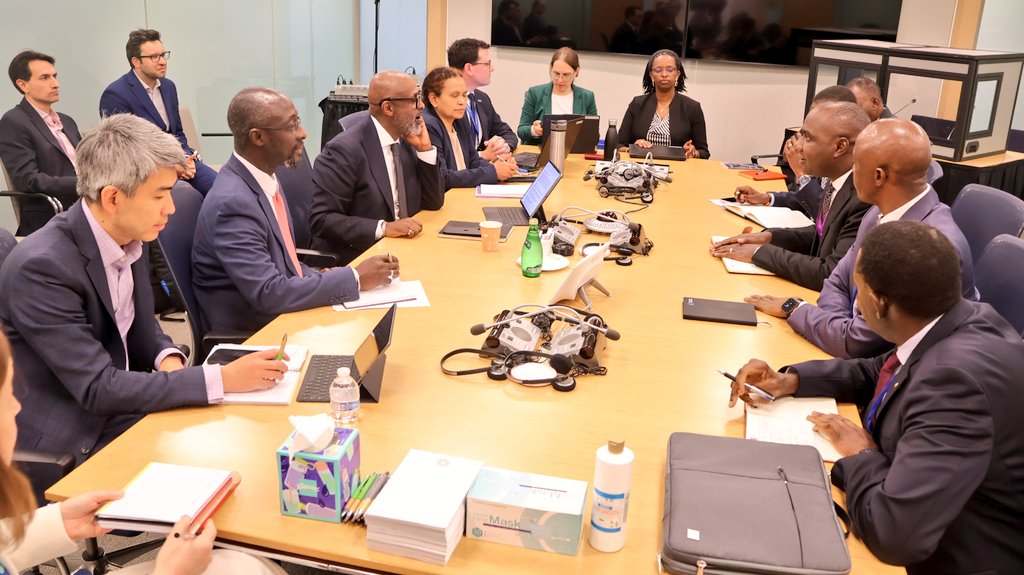
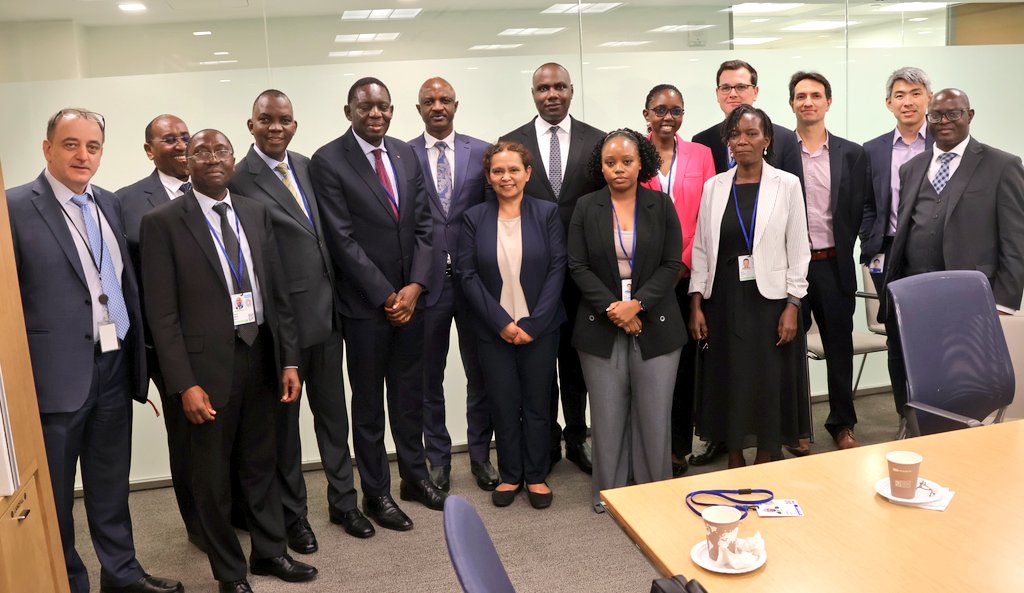
The Uganda delegation in Washington D.C for the WB/IMF Spring meetings 2026 has met with the World Bank team to discuss the Development Policy Operation (DPO) to support Uganda’s socio-economic transformation agenda through the Tenfold growth strategy.
Development Policy Financing (DPF) helps governments to design and implement a program of policy and institutional reforms that promote growth and sustainable poverty reduction.
The World Bank will in the coming days undertake a mission to Uganda in line with the DPO, and the focus areas under consideration include; human capital development, fostering private sector led job creation by strengthening fiscal sustainability and policy framework for agro-industrialisation and enabling infrastructure.
The Uganda team also had discussions on Uganda’s economy and progress on the Extended Credit Facility (ECF) program for Uganda with the International Monetary Fund (IMF) African Department Director Mr. Abebe Selassie.
The ECF provides medium term financial assistance, and is one of the IMF facilities under the Poverty Reduction and Growth Trust. The IMF is also expected to send a mission to Kampala in the days ahead regarding the implementation of the ECF.
Both the World Bank and IMF discussed with the Uganda delegation led by the Minister of State for Finance in charge of General Duties Henry Musasizi, the readiness of Uganda to deal with the crisis in the Middle East, tax policy and administrative measures to enhance revenue mobilisation, and debt management among other issues.
With reports of a “civil war” among chimpanzees in Uganda's Kibale National Park, we’re resharing this clip of a game warden breaking down past clashes and explaining why these primates turn on each other.
Watch the full #NTVTravels episode here 👉 https://t.co/TYRK0drdPD
Uganda imports its petroleum through @UNOC_UG. However OMC's (oil marketing companies) place an order via the company and pay for it. The oil @UNOC_UG is holding is already paid for by domestic clients. It is simply holding on to this supply to pass on to its clients. Uganda is not rejecting Kenya's request. It is unable to because of these arrangements. It is unfair to claim that it has capacity to do so @moneyacademyKE
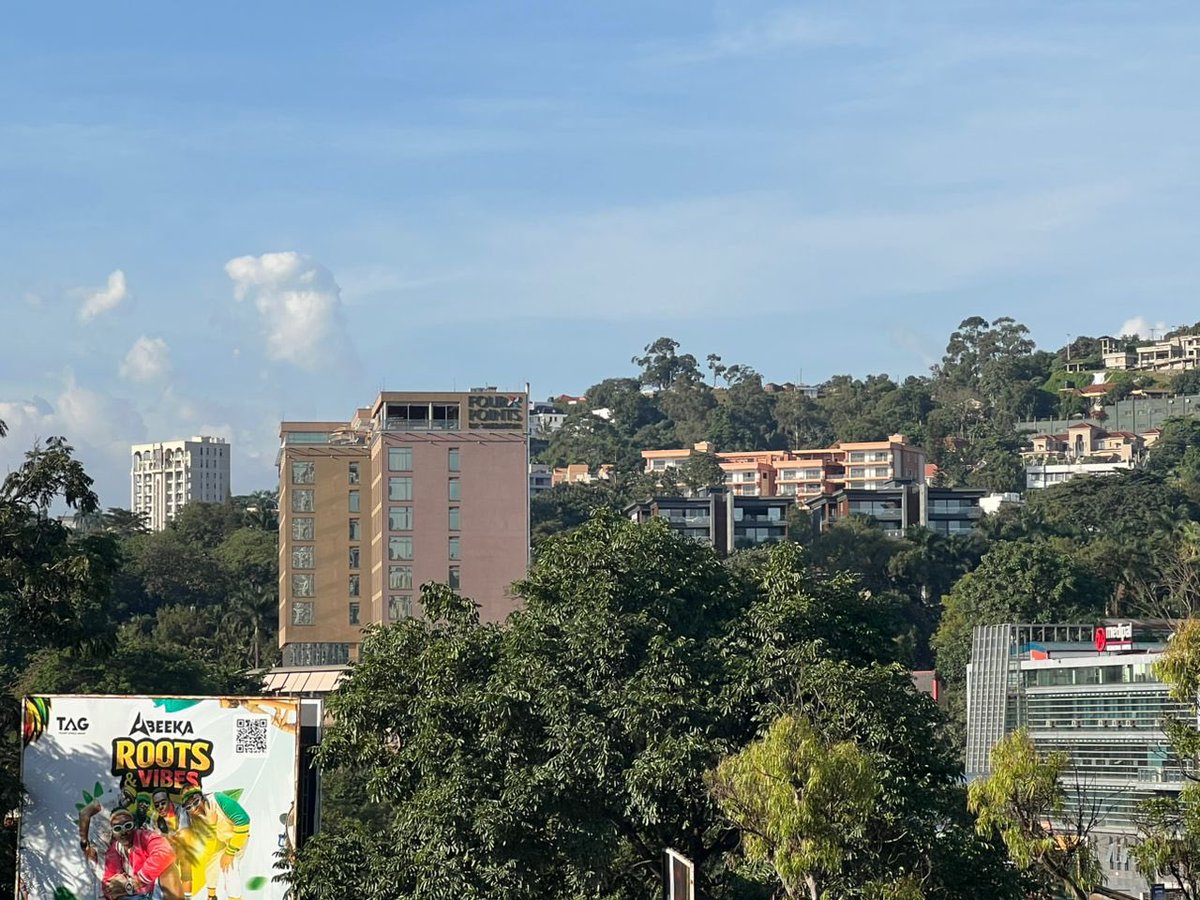
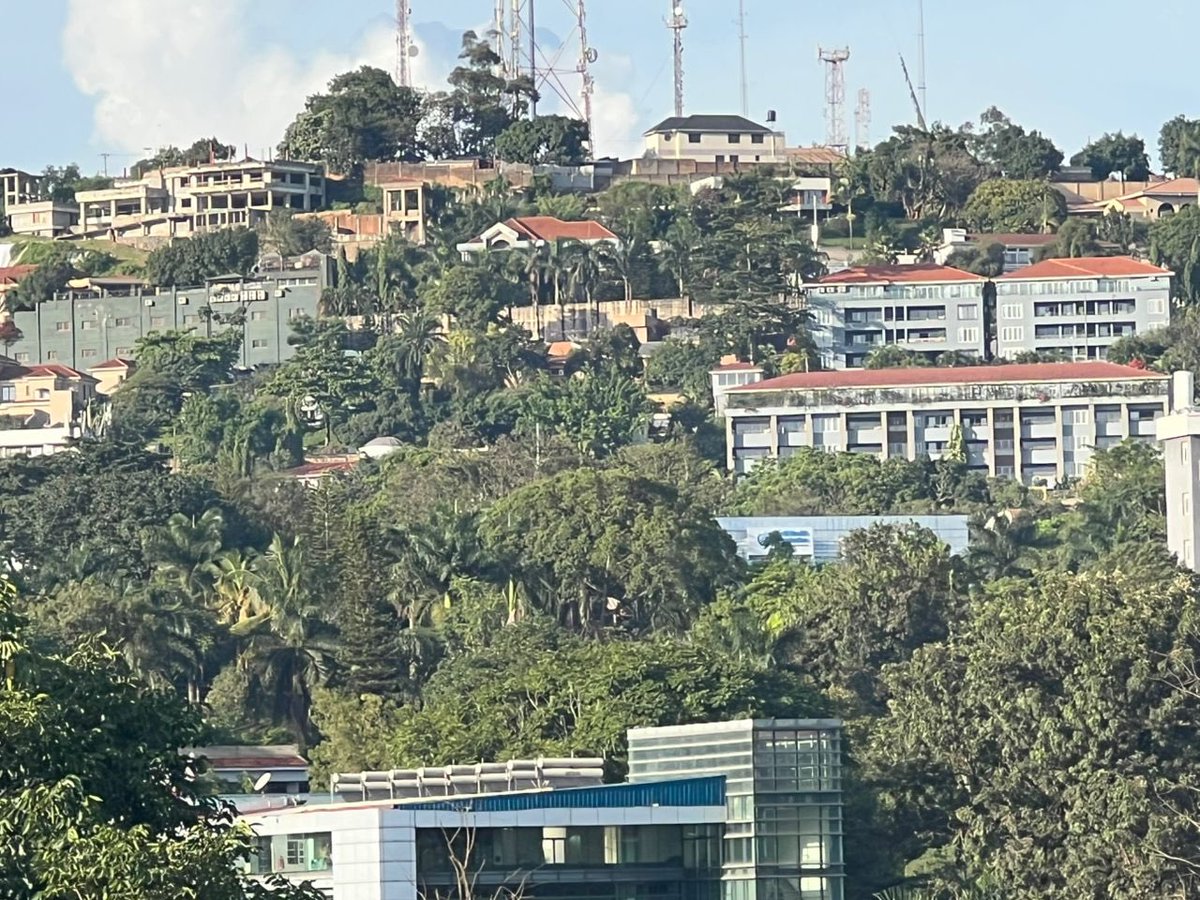
These views of Kololo Hill show that, despite the massive introduction of high rise buildings, the hill has maintained its green character. Let us all strive to make Kampala greener.