Tired of sending a pix 🏞️ to ChatGPT with a question and it gives you an answer + semi-correct, no-reference explanations? #hallucination 😓
OR that CLIP models rely so much on {class name} that adding meaningless tokens *@&%^ to prompt does not ruin its accuracy? #waffleclip 😕
Introducing NEVIS’22, a new benchmark developed using 30 years of computer vision research.
This provides an opportunity to explore how AI models can continually build on their knowledge to learn future tasks more efficiently. ➡️ https://t.co/Al2tni1nRi
We have a new tutorial for reviewers from @annargrs and @IAugenstein! This covers all aspects of writing a review, from preparation before reviewing, to basic principles of reading for review and providing useful comments, as well as common pitfalls. https://t.co/65ZIOOa0ij
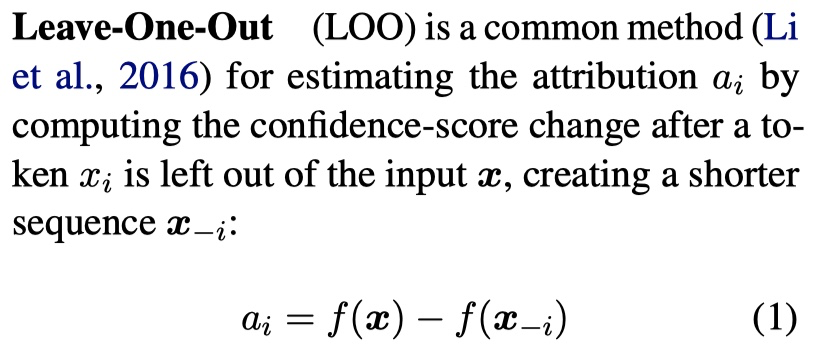
XAI 🧵: Have you used feature-attribution methods (e.g. LOO, LIME, SHAP) in #NLProc and ever been bugged by the fact that a token is replaced by UNK, PAD, or an empty string in order to measure the token's contribution (via prediction difference)? 😂
What should we do?
1/n
What a game! Congratulations #ChelseaFC - the champions of Europe who have just showed everyone that strong spirit is a key to success! 🎉🎉🎉
Also, it’s a bit late but our paper “Out of Order” was accepted to Findings of #ACL2021 🔥🔥🔥
https://t.co/r29XgXP93v
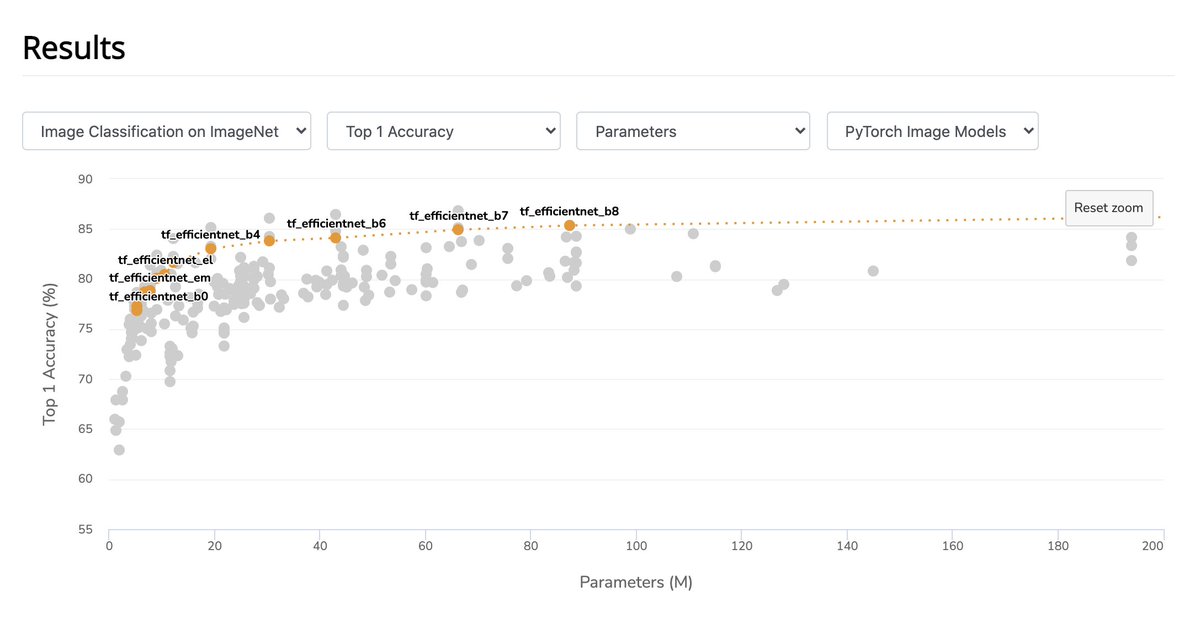
🎉 Introducing...Papers with Libraries! We are now indexing ML libraries from the community. We start with the amazing TIMM by @wightmanr. Explore 330+ models, visualize architectures, compare results and hyperparameters, and so much more! https://t.co/OZwriS2r3J
🎉 Introducing... Datasets! We are now indexing 3000+ research datasets from machine learning. Find datasets by task and modality, compare usage over time, browse benchmarks, and much more! Explore the catalogue here: https://t.co/sST84xRiSd
Ecco – See what your NLP language model is “thinking”
https://t.co/VCuXFRB9Ru
Ecstatic to release my first open-source project! Interactive visualizations in jupyter for @huggingface GPT2-based language models.
Github: https://t.co/Gs1N3VYNH7
HN: https://t.co/oPwmQL6HxV
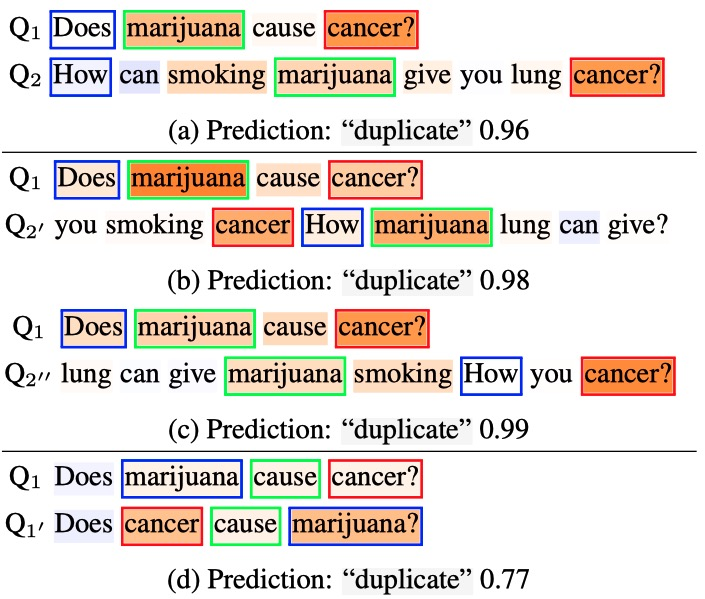
"marijuana cause cancer" == "cancer cause marijuana". Therefore, for better evaluation and later appoarches to improve the models, we need a benchmark including more challenging closed tasks. (3/3)
Our paper "Out-of-order" reveals that GLUE benchmark is not good enough to evaluate the understanding of SotA models (e.g., RoBERTa, ALBERT). The models are able to exploit the superficial cues (e.g., sentiment of key words in SST-2 or correspondence (1/3)
Do SotA natural language understanding models care about word order?
Nope 🙃, 75% to 90% of the time, for BERT-based models, on many GLUE tasks (where they outperformed humans).
"marijuana cause cancer" == "cancer cause marijuana" Ouch...
https://t.co/Kr3i3SBNXb 1/4
between question and answer in QNLI) to solve the NLU tasks, and they even outperform human performance. However, finetuning these models on downstream tasks can make them easily get fooled since word order is not taken into account: (2/3)
Announcing a new dataset: the Pile! A free and publicly available 800GB dataset of diverse English text for language modeling!
Download: https://t.co/DDUikP5Igz
Paper: https://t.co/9XqVw3y8nY
1/7
Improving Zero-Shot Translation by Disentangling Positional Information
Achieving up to 18.5 BLEU points gain on zero-shot translation by removing residual connections in an encoder layer.
https://t.co/le4p1eFN90
Excited to share a preprint, “Making Pre-trained Language Models Better Few-shot Learners”!
GPT-3's huge LM amazingly works directly for few-shot learning. We take things further, and propose fine-tuning techniques to make smaller LMs work better too.
https://t.co/iIQf3ND4hE
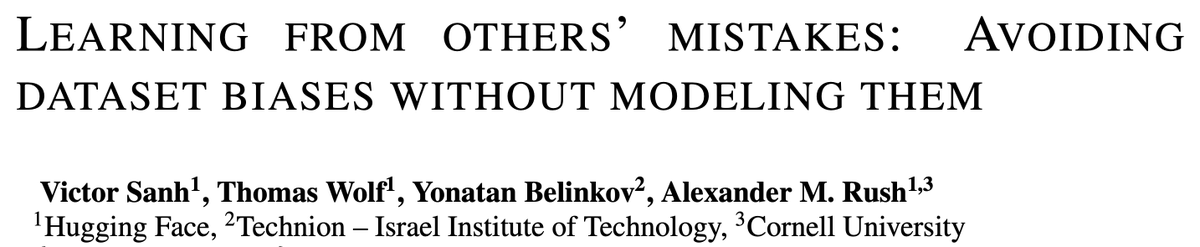
🚨New pre-print on avoiding dataset biases
We show a method to train a model to ignore dataset biases without explicitly identifying/modeling them by learning from the errors of a “dumb” model.
Link: https://t.co/UqodTR58P1
W/ 🤩 collaborators @Thom_Wolf, @boknilev & @srush_nlp
Powerful LMs such as GPT-3 and T5 have impressive ability to answer questions by continuing a textual prompt. However, how can we know when an LM knows the answer with confidence, and when it's making a random guess? Our new preprint asks this: https://t.co/Gupb7WP9zS 1/N