

Top Tweets for #ContrastiveLearning

DMAPLM: A multimodal pretrained framework for computational drug repositioning.
1 DMAPLM reframes drug–disease association prediction as cross-modal representation alignment: a lightweight dual-encoder maps drug SMILES (ChemBERTa-2) and disease multi-field text (BioBERT) into a shared space, improving generalization when curated associations are sparse.
2 The most distinctive design choice is explicit contrastive learning (InfoNCE) between drug and disease embeddings, encouraging true drug–disease pairs to be close while pushing unrelated pairs apart; this yields markedly better separability (e.g., higher positive-pair cosine similarity and lower negative-pair similarity) and supports similarity-based interpretability.
3 For drugs, DMAPLM avoids graph construction and instead uses attention-weighted pooling over ChemBERTa-2 token embeddings, letting the model emphasize informative SMILES tokens/substructures; attention visualization highlights pharmacologically relevant motifs (e.g., rapamycin’s macrolide core/epoxide consistent with FKBP12–mTOR binding chemistry).
4 For diseases, it encodes three complementary text fields (name, synonyms, definition) separately with BioBERT and fuses them via weighted aggregation, then projects to a compact embedding; clustering analyses show these PLM disease embeddings align better with MeSH taxonomy than TF-IDF or random baselines.
5 The final prediction step is intentionally simple and robust: a Random Forest classifier operates on concatenated multimodal features (raw + projected embeddings + interaction features), and a Youden-index threshold converts probabilities to binary calls for practical screening.
6 The authors also contribute an updated benchmark curated from DrugMAP 2.0 (Approved associations only): 2,622 drugs, 1,455 diseases, 5,993 associations, with very low density (0.16%), reflecting realistic incompleteness and making generalization a central challenge.
7 On 5-fold CV, DMAPLM reports AUROC 0.8919 and AUPR 0.9116, outperforming six baselines (including graph-based and heterogeneous transformer methods) by up to ~9% on AUROC/AUPR, suggesting the PLM+alignment strategy can compete with heavier graph pipelines.
8 Cold-start evaluation follows standard C1/C2/C3 protocols: new drugs (C1) AUROC/AUPR 0.8150/0.8338, new diseases (C2) 0.7805/0.8098, and double cold-start (C3) 0.7456/0.7355—highlighting the benefit of pretrained encoders when entities lack training-time links.
9 Biological plausibility is supported via case studies and docking: top cold-start predictions (e.g., rapamycin–prostate cancer) are backed by PubMed evidence, and docking against the FKBP12-rapamycin-FRB mTOR complex (PDB 4FAP) yields a best Vina affinity of -9.921 kcal/mol with consistent poses, reinforcing mechanistic consistency rather than purely statistical ranking.
💻Code: github.com/LiNiuNiuYa/DMAPLM
📜Paper: doi.org/10.1371/journal.pcbi…
#DrugRepositioning #DrugRepurposing #ComputationalBiology #BiomedicalNLP #Chemoinformatics #ContrastiveLearning #BioBERT #ChemBERTa #MultimodalAI #ColdStart

Structure-guided molecular design with contrastive 3D protein–ligand learning
1 The paper proposes a unified pipeline that connects two usually separate steps in structure-based drug discovery: (i) fast 3D protein–ligand compatibility retrieval via contrastive learning, and (ii) de novo molecule generation via an autoregressive chemical language model, while explicitly steering outputs toward purchasable/synthetically accessible commercial spaces.
2 At the core is CLIPP-SET: an SE(3)-equivariant Transformer encoder that maps 3D pockets and 3D ligands into a shared embedding space, enabling cosine-similarity screening without docking ultra-large libraries and without target-specific fine-tuning (zero-shot).
3 A key technical detail is how they handle “false negatives” in contrastive learning caused by pocket collisions (many ligands bind the same pocket): they use Collision-Free InfoNCE (CF-InfoNCE), selecting (for pocket→ligand) the strongest-affinity ligand among those sharing the same pocket as the positive, rather than treating all off-diagonal pairs as negatives.
4 On LIT-PCBA zero-shot virtual screening (15 targets), CLIPP-SET pocket-based screening shows particularly strong early enrichment: best BEDROC, EF(0.5%), and EF(1%) among compared baselines, indicating it prioritizes actives near the top of the ranked list even if broader AUROC/EF(5%) can favor some docking-based methods.
5 The work then tests “realistic scale” retrieval on Enamine REAL (5.9B compounds): pocket-only queries (no reference ligand) retrieve top-100 candidates per target with higher predicted pIC50 on 13/15 targets and much higher internal diversity than 2D Morgan fingerprint search, suggesting the embedding captures binding-relevant geometry rather than just 2D similarity.
6 Because ligands and pockets share the same embedding space, the same system supports ligand-based search for scaffold hopping: given a known active, it retrieves molecules with high 3D shape/pharmacophore similarity but low 2D similarity (lower Tanimoto than Morgan FP), aligning with the goal of finding chemically novel scaffolds that preserve 3D binding features.
7 For generation, they introduce an MCLM (multimodal chemical language model): a Llama2-style autoregressive SMILES decoder conditioned by prepending a learned structural embedding token (from the frozen contrastive encoder) plus a learned dataset token [ds] that controls which chemical space distribution to emulate.
8 The dataset token is the mechanism for “commercial space steering”: trained on a 287M conformer–SMILES corpus labeled by source (PubChem, Enamine Diversity, Mcule, ChEMBL, GEOM-drugs), the model can be prompted with an “Enamine” token at inference to bias outputs toward Enamine-like chemistry; an ablation shows the token increases nearest-neighbor similarity to Enamine REAL and raises the fraction of exact catalog matches.
9 In structure-conditioned de novo design on LIT-PCBA (100 molecules/target), ligand-conditioned generation achieves the highest predicted affinity metrics (affinity probability and predicted pIC50) among evaluated methods, while pocket-conditioned generation (despite the decoder being trained only with ligand embeddings) remains competitive without reference ligands and yields the highest diversity, highlighting practical utility when only target structure is available.
📜Paper: arxiv.org/abs/2604.19562
#ComputationalBiology #Cheminformatics #DrugDiscovery #StructureBasedDrugDesign #GenerativeAI #MachineLearning #ProteinLigand #EquivariantNetworks #ContrastiveLearning #VirtualScreening

Contrastive Geometric Learning Unlocks Unified Structure and Ligand-Based Drug Design
1. A novel approach in computational drug design, ConGLUDe integrates structure-based and ligand-based training into a single model, overcoming traditional limitations of disjoint data sources. This unified method significantly enhances the efficiency and accuracy of drug discovery tasks.
2. ConGLUDe leverages a geometric protein encoder that predicts whole-protein representations and implicit binding site embeddings, removing the need for predefined pockets. This innovation allows for ligand-conditioned pocket prediction, virtual screening, and target fishing—all within a unified framework.
3. The model achieves state-of-the-art performance in zero-shot virtual screening without binding pocket information, outperforming existing methods on challenging target fishing tasks. It also demonstrates competitive results in ligand-conditioned pocket selection, highlighting its versatility.
4. ConGLUDe's training involves alternating between structure-based and ligand-based batches, utilizing a novel three-way InfoNCE loss function. This approach aligns protein, ligand, and binding site embeddings, enabling efficient large-scale screening.
5. The study evaluates ConGLUDe across diverse benchmarks, demonstrating superior performance in tasks like virtual screening and target fishing. The model's ability to generalize across datasets underscores its potential as a foundational tool for drug discovery.
6. Limitations include uncertainty in performance on proteins with predicted structures and the current lack of support for phenotypic assays. However, the potential for future extensions, such as integrating generative models for ligand design, suggests exciting prospects for this approach.
📜Paper: arxiv.org/abs/2601.09693v1
#ContrastiveLearning #DrugDesign #ComputationalBiology #AIinPharma #ProteinLigandInteractions

ConforFormer: Representation for Molecules through Understanding of Conformers
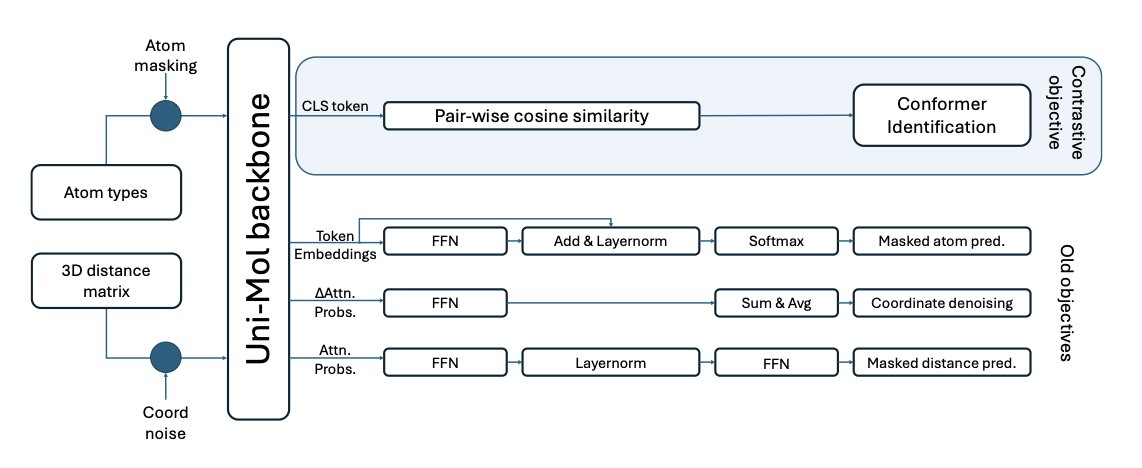
1. ConforFormer introduces a novel approach to molecular representation by explicitly accounting for the diversity of 3D conformations, addressing a critical gap in existing models that often rely solely on 2D molecular graphs. This method enhances the prediction of molecular properties by capturing the conformational diversity that influences chemical behavior.
2. The model employs a contrastive learning objective to align embeddings across multiple conformations of a molecule, producing task-agnostic and conformation-agnostic vector representations. These embeddings can be generated once and directly applied to downstream tasks such as property prediction and structural similarity analysis without extensive retraining.
3. ConforFormer builds upon the Uni-Mol architecture, leveraging its strengths in 3D structure representation while introducing a new weakly supervised contrastive learning objective. This allows the model to learn more informative and general-purpose representations without direct access to molecular graph information during training.
4. The study demonstrates significant improvements in performance on established chemical benchmarks compared to previous models, especially in tasks requiring an understanding of 3D molecular geometry. The model also shows an emergent capability to distinguish between conformers and isomers, suggesting it can infer molecular graph-like features from 3D geometries alone.
5. ConforFormer’s training on the OpenMolecules dataset further enhances its performance, achieving state-of-the-art results on several quantum-chemical benchmarks. The model’s ability to learn from high-quality molecular geometries highlights its potential for applications in drug discovery and materials science.
6. The authors introduce a new benchmark dataset, PharmIsomer, to evaluate the model’s ability to distinguish between conformers and isomers. ConforFormer demonstrates superior performance in this task, outperforming traditional methods and showing promise for similarity search applications in chemistry.
📜Paper: doi.org/10.26434/chemrxiv-20…
#ConforFormer #MolecularRepresentation #ContrastiveLearning #Chemistry #MachineLearning
Thin Bridges for Drug Text Alignment: Lightweight Contrastive Learning for Target Specific Drug Retrieval
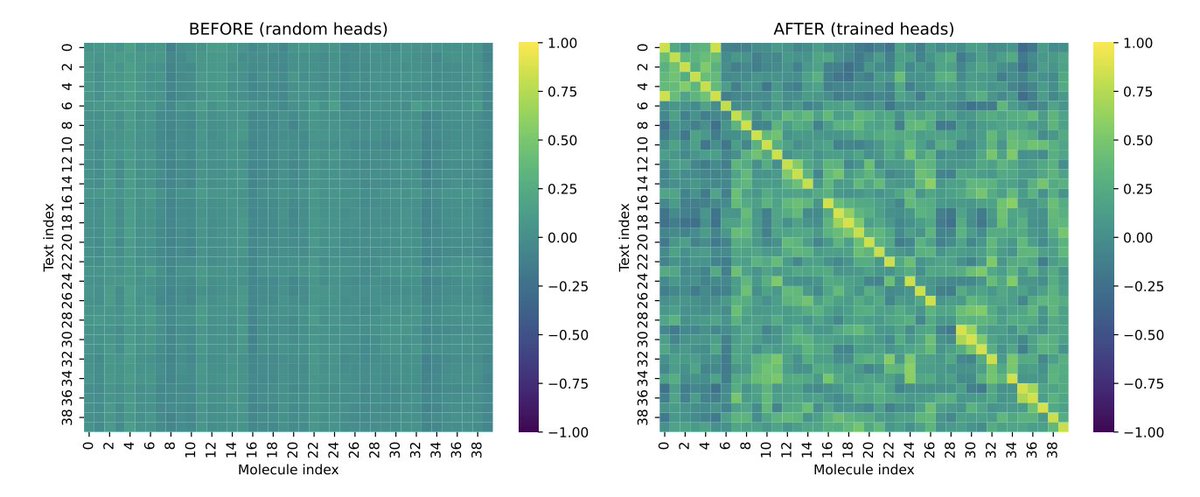
1. The study explores a novel approach in drug discovery and biomedical applications, using lightweight contrastive learning to align chemical and textual representations without the need for heavy pretraining or large-scale multimodal corpora. This method, termed “thin contrastive bridges,” offers a computationally efficient alternative to existing models.
2. The researchers utilized paired mechanisms from ChEMBL to align ECFP4 molecular fingerprints with biomedical sentence embeddings through dual linear projections trained with a contrastive objective. A key innovation is the incorporation of hard negative weighting and a margin loss to better handle drugs sharing the same therapeutic target.
3. Evaluation under scaffold-based splits demonstrated that the thin bridges approach achieves non-trivial cross-modal alignment and significantly improves within-target discrimination compared to frozen baselines. This suggests that the method can generalize across disjoint chemical cores and enhance target-specific retrieval in precision medicine.
4. The study highlights the use of lightweight projection heads over frozen unimodal encoders, which are trained to map representations into a shared embedding space. This approach not only reduces computational costs but also maintains high performance, making it scalable for downstream generative drug discovery tasks.
5. The dataset constructed from ChEMBL v28 includes 3,030 high-quality drug–target pairs with both chemical and textual representations. This paired multimodal resource is well suited for contrastive drug text alignment tasks and provides a foundation for further exploration of efficient multimodal alignment methods.
6. The results show that the thin bridges approach achieves Recall@1 of 0.762 and MRR of 0.863 when combining ECFP4 molecular fingerprints with enriched text descriptions. Even under scaffold splits, the method maintains meaningful performance, with Recall@1 of 0.150 and MRR of 0.228.
7. The study concludes that thin contrastive bridges can serve as a scalable foundation for downstream generative drug discovery. By enabling efficient retrieval of molecule–mechanism pairs, this framework supports rapid in silico screening and provides interpretable links between chemical structure and biological function.
📜Paper: arxiv.org/abs/2510.03309
#DrugDiscovery #BiomedicalResearch #ContrastiveLearning #MultimodalAlignment
PepCCD: A Contrastive Conditioned Diffusion Framework for Target-Specific Peptide Generation
1. A groundbreaking study introduces PepCCD, a novel framework for generating target-specific peptides using only protein sequence information. This approach leverages contrastive learning and diffusion models to create peptides with high binding affinity and diversity, outperforming existing methods in terms of both quality and efficiency.
2. PepCCD addresses a critical challenge in modern drug discovery: targeting "undruggable" proteins. Traditional peptide discovery methods are either too slow or rely heavily on high-resolution protein structures, which are often unavailable. PepCCD bypasses these limitations by using sequence-based conditioning, making it a powerful tool for peptide drug design.
3. The framework employs a three-stage training strategy: protein-peptide alignment, unconditional peptide pre-training, and target-guided fine-tuning. This progressive approach enhances the model's ability to generate peptides that are both specific to the target and diverse in sequence, ensuring a wide exploration of the peptide sequence space.
4. In extensive experiments, PepCCD demonstrated superior performance compared to state-of-the-art methods. It achieved higher binding affinity, lower sequence similarity to natural peptides, and better bioactivity scores. Notably, PepCCD also showed significantly faster inference times, making it highly scalable for practical applications.
5. An ablation study confirmed the importance of each component in PepCCD. The alignment stage ensures precise semantic alignment between proteins and peptides, while the pre-training stage enhances sequence diversity. Removing either stage led to a notable decline in performance, highlighting the necessity of the full framework for optimal results.
6. Molecular dynamics simulations further validated the stability and binding affinity of the peptides generated by PepCCD. These simulations showed that PepCCD-designed peptides had the lowest binding free energies and the most consistent performance, indicating their potential effectiveness in real-world biological contexts.
📜Paper: biorxiv.org/content/10.1101/…
#PepCCD #PeptideGeneration #DrugDiscovery #ContrastiveLearning #DiffusionModels #ComputationalBiology #Bioinformatics

Valid Property-Enhanced Contrastive Learning for Targeted Optimization & Resampling for Novel Drug Design
1. The article introduces VECTOR+, a novel framework for drug discovery that combines contrastive learning and latent sampling to generate new molecules with optimized pharmacological properties. This approach is particularly effective in low-data regimes, a common challenge in targeted drug design.
2. VECTOR+ leverages property-guided representation learning to structure the chemical latent space according to biological function. This enables the generation of meaningful molecular representations from limited datasets, addressing a significant bottleneck in drug discovery.
3. The method is validated on two distinct datasets: a curated set of PD-L1 inhibitors and a set of receptor kinase inhibitors. Despite limited training data, VECTOR+ successfully generates novel, synthetically tractable candidates with superior docking scores compared to known inhibitors.
4. VECTOR+ demonstrates superior performance over state-of-the-art generative models like JT-VAE and MolGPT across multiple metrics, including docking score, novelty, uniqueness, and Tanimoto similarity. This highlights its potential for reproducible, AI-accelerated drug design.
5. The framework is broadly generalizable and can be extended to accelerate drug discovery across diverse therapeutic targets. It also introduces a curated dataset of 296 small-molecule PD-L1 inhibitors, providing a valuable resource for future research in this critical immuno-oncology task.
6. The authors provide a detailed methodology, including the use of a transformer-based encoder, contrastive learning, and Gaussian Mixture Model (GMM) for targeted molecule generation. This pipeline enables efficient exploration and generation of target-specific, structurally novel molecules.
7. Computational evaluations, including molecular docking and molecular dynamics simulations, confirm the binding stability and potential efficacy of the generated molecules, further supporting the practical impact of VECTOR+ in drug discovery.
📜Paper: arxiv.org/abs/2509.00684v1
#DrugDiscovery #AI #ContrastiveLearning #GenerativeModeling #LowDataRegime

Prediction of human pathogenic start loss variants based on self-supervised contrastive learning @BMCBiology
1. A novel method called StartCLR has been introduced to predict pathogenic start loss variants. This method combines self-supervised contrastive learning with supervised fine-tuning, effectively leveraging both labeled and unlabeled data to improve prediction accuracy.
2. StartCLR integrates embedding features from multiple DNA language models, including GPN-MSA and HyenaDNA, to capture variant context information from different dimensions. This dual-feature fusion approach enhances the model’s ability to identify pathogenic variants.
3. The study demonstrates that pre-training on a large amount of unlabeled data significantly boosts the model’s performance. Fine-tuning with high-confidence labeled data further improves prediction accuracy, highlighting the importance of high-quality labels.
4. StartCLR outperforms 13 other existing pathogenic variant prediction methods across two independent test sets. It shows superior generalization ability and robustness, even when trained with limited labeled data.
5. The method focuses on single nucleotide variants (SNVs) at the start codon and aims to address the challenge of limited labeled data. Future work will expand the scope to include other types of variants and refine the approach to minimize label noise.
📜Paper: bmcgenomics.biomedcentral.co…
💻Code: zenodo.org/records/15117521
#ComputationalBiology #Genomics #PathogenicVariants #SelfSupervisedLearning #ContrastiveLearning

Towards Domain Specification of Embedding Models in Medicine
1. A new medical text embedding model called MedTE has been introduced, which is trained using self-supervised contrastive learning on a diverse corpus of medical texts. This model outperforms existing domain-specific and general-purpose models in various medical NLP tasks.
2. The authors developed a comprehensive benchmark suite, MedTEB, consisting of 51 tasks across classification, clustering, pair classification, and retrieval. This benchmark is tailored to evaluate the nuances of medical text embeddings more effectively than existing benchmarks.
3. MedTE leverages a wide range of medical data sources, including PubMed abstracts, Wikipedia medical articles, ClinicalTrials.gov entries, MIMIC-IV clinical notes, and large-scale medical QA datasets. This diversity in training data helps capture the complexity of medical terminology and semantics.
4. The model achieves state-of-the-art performance on the MedTEB benchmark, demonstrating the effectiveness of self-supervised contrastive learning in generating robust medical text embeddings. This approach is shown to be particularly beneficial for specialized domains like healthcare.
5. The study highlights the importance of domain-adaptive training strategies and comprehensive multi-task benchmarking in medical NLP. It also provides insights into the limitations of current medical embedding models and the need for more robust domain-specific training techniques.
6. The MedTE model and MedTEB benchmark are publicly available, providing a valuable resource for researchers and practitioners in the field of medical NLP to further develop and evaluate their models.
📜Paper: arxiv.org/abs/2507.19407
💻Code: github.com/MohammadKhodadad/…
#MedicalNLP #TextEmbeddings #Benchmarking #ContrastiveLearning #HealthcareAI

Contrastive Multi-Task Learning with Solvent-Aware Augmentation for Drug Discovery
1. This paper introduces a novel pre-training method that incorporates solvent-specific enhancements to molecular conformations, capturing both structural flexibility and environmental context in a unified manner. The model achieves significant improvements in binding affinity prediction, molecular docking, and virtual screening.
2. The framework integrates molecular reconstruction, interatomic distance prediction, and contrastive learning to build solvent-invariant molecular representations. These components work together to improve prediction accuracy and generalizability across different biochemical conditions.
3. The solvent-aware data augmentation pipeline generates ligand conformers under diverse solvent conditions, enabling the model to learn context-dependent interactions and structural diversity. This approach addresses the limitations of conventional models that often neglect solvent effects.
4. The method demonstrates state-of-the-art performance in downstream tasks, including a 3.7% gain in binding affinity prediction, an 82% success rate on the PoseBusters Astex docking benchmarks, and an area under the curve of 97.1% in virtual screening.
5. A case study shows sub-angstrom docking accuracy with a root-mean-square deviation of 0.157 angstroms, highlighting the model’s ability to provide atomic-level insights into binding mechanisms and advance structure-based drug design.
6. The framework supports solvent-aware, multi-task modeling and produces consistent results across benchmarks. It combines binding-pose estimation, affinity prediction, and interaction classification into a single model, reducing the need for manual postprocessing.
💻Code: github.com/1anj/SolvCLIP
📜Paper: arxiv.org/abs/2508.01799
#DrugDiscovery #ProteinLigandInteractions #SolventAwareModeling #ContrastiveLearning #MultiTaskLearning #VirtualScreening

CELLCLIP LEARNING PERTURBATION EFFECTS IN CELL PAINTING VIA TEXT-GUIDED CONTRASTIVE LEARNING
A new multi-modal contrastive learning framework, CellCLIP, has been introduced to address challenges in high-content screening data analysis. This framework significantly improves retrieval performance and reduces computation time compared to current open-source models.
CellCLIP leverages natural language encoders to represent diverse perturbation types, such as small molecules and CRISPR gene knockouts, in a unified latent space. This approach allows for broader applicability compared to previous methods that focused solely on chemical perturbations.
The framework incorporates a novel channel encoding scheme called CrossChannelFormer, which efficiently captures relationships between different microscopy channels in Cell Painting images. This design is more computationally efficient and allows for the reuse of off-the-shelf pretrained vision models.
CellCLIP outperforms existing methods in both profile-to-perturbation and perturbation-to-profile retrieval tasks. It also demonstrates strong performance in perturbation detection and matching, indicating its ability to identify meaningful biological relationships.
A key innovation of CellCLIP is its use of mean perturbation profiles for alignment during training, rather than individual images. This strategy helps to mitigate noise from technical issues in Cell Painting screens and leads to more stable model training.
The study found that foundation models trained on natural images, when combined with CellCLIP's channel-specific adjustments, can achieve competitive performance on Cell Painting data, suggesting their transferability despite domain differences.
📜Paper: openreview.net/forum?id=xyDN…
#CellPainting #ComputationalBiology #MachineLearning #ContrastiveLearning #AIinBiology #HighContentScreening #BiomedicalResearch

Multimodal Contrastive Representation Learning in Augmented Biomedical Knowledge Graphs
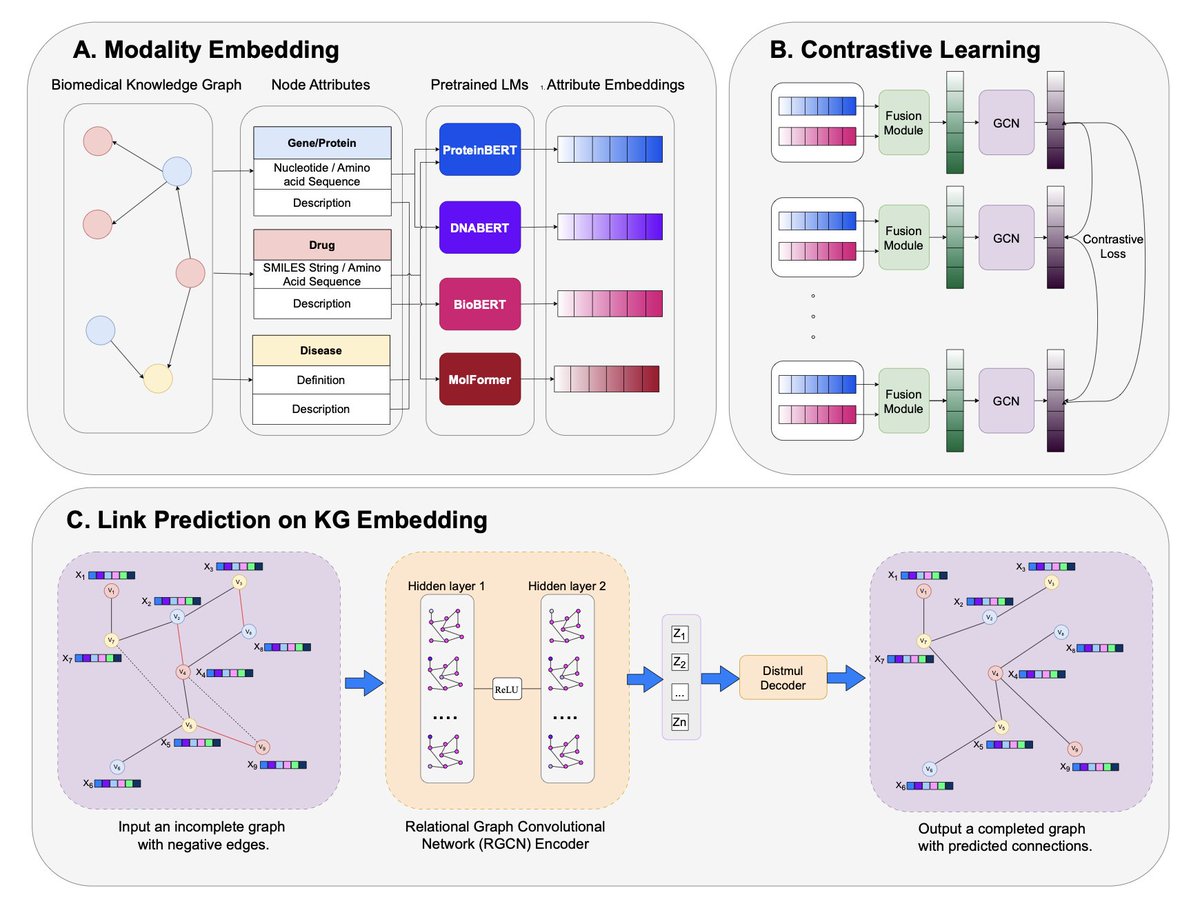
1.This work introduces a new framework for enhancing node embeddings in biomedical knowledge graphs (BKGs), combining pre-trained language models (LMs) with graph contrastive learning (GCL) for both semantic and structural representation.
2.The authors developed PrimeKG++, a significantly enriched BKG that integrates biological sequences (e.g., SMILES, amino acids, nucleotides) and detailed textual descriptions across all entity types including drugs, diseases, and genes/proteins.
3.Unlike most prior methods relying on single-modality inputs, this approach fuses multiple modalities per node through a carefully designed fusion module using techniques like Attention Fusion and ReDAF, leading to richer and more informative node representations.
4.The key technical innovation is a modular pipeline: (1) encode entity attributes using domain-specific LMs, (2) fuse the modality-specific embeddings into unified representations, (3) enhance intra-node relationships using GCL, and (4) apply knowledge graph embedding for inter-node learning and link prediction.
5.Experiments show strong and consistent link prediction performance on both PrimeKG++ and an independently augmented DrugBank drug-target interaction (DTI) dataset, especially in challenging settings with high negative sampling ratios.
6.GRACE + ReDAF consistently achieved the best performance, with AP as high as 0.996 and F1 scores up to 0.983, outperforming baselines including random initialization and direct LM-based embeddings, especially under sparse or unseen data conditions.
7.Latent space visualizations confirm that integrating LM embeddings with GCL leads to better clustering of biologically related entities, demonstrating that the learned representations are more semantically and relationally meaningful.
8.The framework generalizes well to unseen entities and novel datasets, supporting downstream applications such as drug-target and drug-disease link prediction, and potentially accelerating drug repurposing and therapeutic discovery.
9.Importantly, the authors clarify that the focus is not to beat SOTA metrics, but to demonstrate that pretrained multimodal embeddings can substantially enhance robustness, interpretability, and generalizability in biomedical KGs.
10.All data, models, and code are publicly released, offering a strong resource for the community and enabling researchers to build on this work for diverse biomedical tasks involving complex multimodal relationships.
💻Code: github.com/HySonLab/BioMedKG
📜Paper: arxiv.org/abs/2501.01644v2
#BiomedicalAI #KnowledgeGraphs #ContrastiveLearning #MultimodalLearning #DrugDiscovery #GraphNeuralNetworks #RepresentationLearning
EC-Bench: A Benchmark for Enzyme Commission Number Prediction
1.EC-Bench introduces the first comprehensive, open-source benchmark platform dedicated to enzyme function prediction using EC numbers. It provides a standardized and extensible framework to evaluate a wide range of predictive models under uniform conditions.
2.Unlike prior efforts like CARE, CAFA, or TAPE, EC-Bench includes not just datasets but also implementations of 10 representative models across homology-based, deep learning, contrastive learning, and language model (LLM) approaches.
3.EC-Bench evaluates models on three core tasks: exact EC number prediction, EC number completion (inferring missing parts), and partial/additional EC number recommendation. These tasks mirror real-world challenges in enzyme annotation.
4.In exact EC number prediction, EnzBert (an LLM) trained with learned thresholds outperformed others in generalization, particularly under low sequence similarity (30%), while BLASTp dominated at high similarity (100%).
5.A stacked ensemble model combining predictions from diverse models achieved the highest overall performance at 100% similarity, though its advantage diminished on out-of-distribution data like Price-149, revealing trade-offs in ensemble generalizability.
6.CLEAN, a contrastive learning model, stood out in EC number completion by producing the most complete annotations and showing the highest agreement with other models, indicating robustness in ambiguous annotation cases.
7.For partial EC number recommendation, EnzBert-learnt again excelled at low similarity, suggesting superior generalization for rare or novel enzyme sequences. At high similarity, CLEAN and ProteinBERT performed best.
8.Models also varied in their ability to recommend additional EC numbers for multifunctional enzymes. EnzBert and ProteinBERT showed strong performance, proposing functionally relevant secondary predictions based on reaction similarity scores.
9.EC-Bench’s data pipeline ensures high-quality benchmarking: training/test sets are curated from Swiss-Prot, with careful filtering based on sequence similarity thresholds and inclusion of only enzymes with AlphaFold-predicted 3D structures.
10.Efficiency metrics were also assessed. ECRECer and ProteinBERT are fastest at inference, while CLEAN requires extensive training time but remains efficient once trained. Memory/storage usage varies widely among models.
11.To optimize predictions, EC-Bench incorporates threshold learning and adaptive decision-making strategies for multi-label classification, accounting for varying confidence requirements across EC classes.
12.Interactive sunburst plots allow users to explore where different models succeed or fail across the EC hierarchy, offering intuitive insights into strengths and limitations at fine-grained resolution.
13.EC-Bench is designed to be modular and extensible: researchers can add new models, tasks, and metrics to benchmark their methods on standardized data with consistent evaluation criteria.
14.This platform will help guide method development in EC prediction by enabling fair comparisons, identifying task-specific strengths, and supporting the community in enzyme function annotation at scale.
💻Code: github.com/dsaeedeh/EC-Bench
📜Paper: biorxiv.org/content/10.1101/…
#ComputationalBiology #ProteinFunction #EnzymeAnnotation #DeepLearning #Benchmarking #Bioinformatics #ECnumber #LanguageModels #ContrastiveLearning #EnzymePrediction

ContrastQA: A Label-guided Graph Contrastive Learning-based approach for protein complex structure quality assessment
1.ContrastQA introduces a novel framework for protein complex model quality assessment by integrating label-guided graph contrastive learning with geometric graph neural networks. It is the first method to guide sample pairing using interface quality scores (DockQ), significantly improving protein structure embedding learning.
2.Unlike traditional contrastive learning that relies on random data augmentations, ContrastQA defines positive and negative pairs based on domain knowledge—specifically, the DockQ score—which reflects interface quality. This label-guided strategy allows more precise learning of local and global structural features.
3.The model architecture combines GVP-GNN for geometric reasoning with a customized contrastive loss that weighs negative pairs by DockQ score differences. This ensures better differentiation between high-quality and low-quality decoys from the same target.
4.On the CASP16 dataset, ContrastQA achieved state-of-the-art performance among 12 advanced methods, with the lowest TMscore Top1 loss (0.123) and GDT-TS Top1 loss (0.116), representing improvements of 10.9% and 8.7%, respectively, over the second-best approaches.
5.ContrastQA is particularly strong on difficult targets. For CASP16 hard targets, it reduced TMscore ranking loss by 14.9% compared to the next best method, showcasing its potential for evaluating challenging and template-free protein complexes.
6.The method also excels on high-precision datasets. On the ABAG-AF3 dataset, derived from AlphaFold3 predictions, it achieved a 0.028 TMscore ranking loss—9.7% lower than VoroIF-GNN—and 0.021 GDT-TS loss—22.2% lower than the runner-up, demonstrating broad applicability across datasets.
7.Ablation studies show the graph contrastive learning module is critical: removing it worsened CASP16 ranking loss by up to 37.9%. The weighted contrast loss design also had a substantial impact, reinforcing the importance of their novel contrastive learning strategy.
8.ContrastQA requires far less training data than other top competitors. It was trained on ~20,000 decoys, compared to millions used by CASP16 teams like GuijunLab-QA, yet still achieved superior performance—suggesting strong generalizability and sample efficiency.
9.Future extensions will include integrating physicochemical interface features into sample pairing and expanding from global to local (interface or residue-level) accuracy estimation, moving toward multi-task EMA frameworks for protein complexes.
💻Code: github.com/Cao-Labs/Contrast…
📜Paper: biorxiv.org/content/10.1101/…
#ProteinComplex #StructuralBiology #GraphNeuralNetwork #ContrastiveLearning #AlphaFold #DeepLearning #Bioinformatics #ProteinQA

TRIDENT: Tri-Modal Molecular Representation Learning with Taxonomic Annotations and Local Correspondence
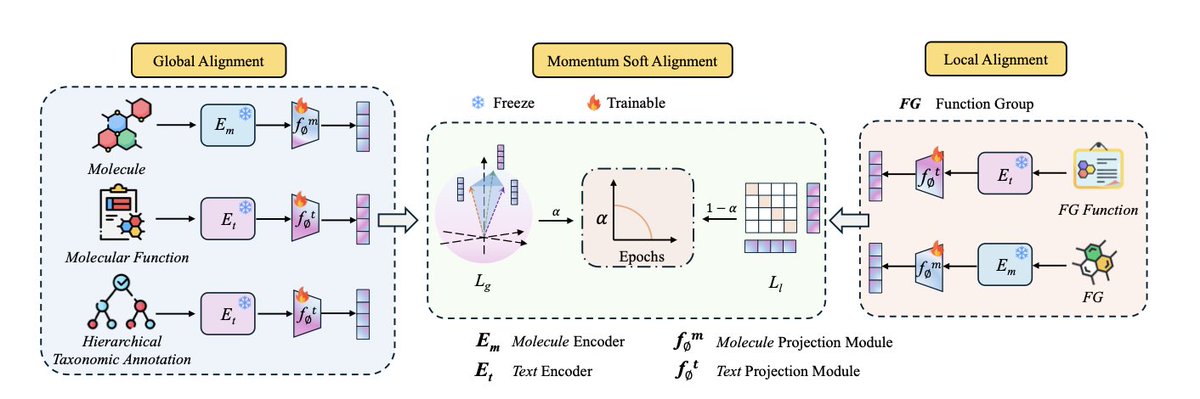
1.TRIDENT introduces a tri-modal molecular learning framework that jointly models chemical SMILES, natural language descriptions, and hierarchical taxonomic annotations (HTA) to build richer and more interpretable molecular embeddings.
2.Unlike most previous models that only use molecular graphs or simple text, TRIDENT integrates 32 taxonomic classification systems to encode nuanced, multi-level functional knowledge for each molecule, significantly improving semantic understanding.
3.TRIDENT replaces standard contrastive learning with a geometry-aware volume-based alignment loss. This enables soft, global alignment across three modalities, capturing higher-order interactions rather than just pairwise similarities.
4.Beyond global alignment, TRIDENT incorporates a novel local contrastive objective that aligns molecular substructures (like functional groups) with specific sub-spans in text. This fine-grained matching captures substructure-function relationships critical for many tasks.
5.To effectively integrate global and local alignment, TRIDENT introduces a dynamic momentum-based mechanism that adjusts their balance during training, ensuring stable convergence and optimal performance across modalities.
6.The authors curate a new dataset of 47,269 <SMILES, Text, HTA> triplets from PubChem, enriched using GPT-4o to synthesize high-quality taxonomic descriptions, providing a unique resource for structured semantic molecular learning.
7.TRIDENT achieves state-of-the-art performance on 11 downstream property prediction benchmarks, including MoleculeNet and TDC datasets. It consistently outperforms strong baselines like Atomas, MolFM, and MoleculeSTM.
8.Ablation studies show that each component—HTA, local alignment, and volume-based loss—substantially contributes to model accuracy. Removing any one leads to significant drops in ROC-AUC across tasks such as Tox21, ToxCast, and BBBP.
9.Even on data-scarce tasks like DILI and Skin Reaction, TRIDENT maintains high performance, showing strong generalization ability. This robustness is particularly important for real-world applications in drug discovery and toxicity prediction.
10.The model architecture is modular: encoders are frozen during training, and only projection layers are optimized. This design allows TRIDENT to remain lightweight while integrating strong prior knowledge from pretrained language models.
11.TRIDENT’s tri-modal, globally and locally aligned representation space opens the door to more interpretable and biologically grounded machine learning in chemistry, potentially enabling better molecular retrieval, classification, and generation.
12.This work highlights the importance of structured semantic reasoning in molecular modeling—pointing to a future where deep learning systems can understand molecules not just as flat structures, but as entities embedded in biological, ecological, and pharmacological contexts.
📜Paper: arxiv.org/abs/2506.21028v1
#AI4Science #DrugDiscovery #MultimodalLearning #MolecularRepresentation #MachineLearning #Bioinformatics #ContrastiveLearning
JASMINE: A powerful representation learning method for enhanced analysis of incomplete multi-omics data
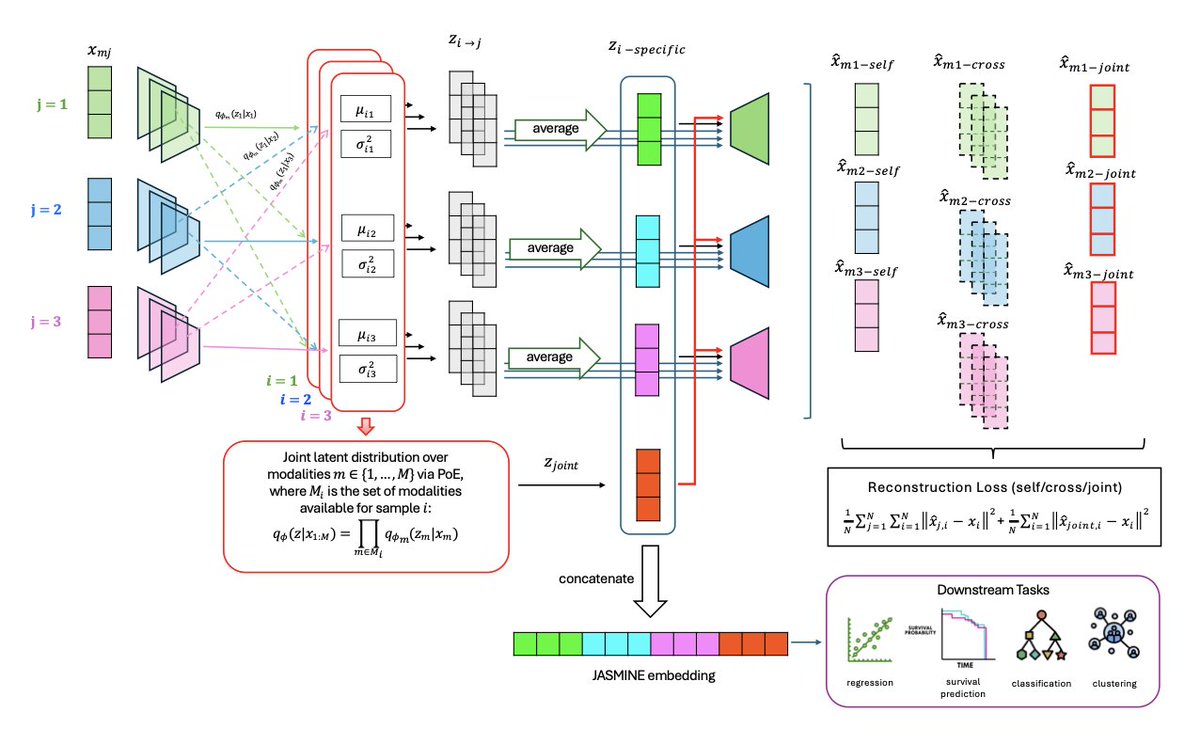
1.JASMINE is a new self-supervised representation learning framework designed to handle incomplete multi-omics data. Its key strength lies in learning compact embeddings that retain both shared and modality-specific information, enabling robust performance across diverse downstream tasks even under high rates of missing data.
2.Unlike many existing methods, JASMINE does not require retraining for each prediction task. A single training run per dataset produces task-agnostic embeddings that can be directly applied to classification, regression, survival prediction, or clustering.
3.To handle missing modalities, JASMINE combines cross-encoders (for modality-specific embeddings) and product-of-experts (PoE) models (for joint embeddings). These components are concatenated to form the final representations, allowing flexible integration of arbitrarily missing data.
4.JASMINE introduces dual contrastive learning: modality-level CL enforces consistency across modalities of the same sample, while sample-level CL uses deep clustering to preserve inter-sample relationships. This enhances the discriminative structure of the learned embeddings.
5.Orthogonality constraints are applied between joint and modality-specific representations to reduce redundancy and encourage the learning of complementary features, aligning with biological principles like consensus and complementarity.
6.In simulation studies, JASMINE outperformed baselines (MVAE, CLUE, IntegrAO, DCCA, GCCA) especially under extreme missingness (up to 99%) and unbalanced missing patterns. It was particularly robust when the number of modalities increased and the sample size was small.
7.In real-world data from TCGA (cancer) and ADNI (Alzheimer’s), JASMINE achieved top or near-top performance in all tasks.
8.Interpretability analyses revealed that the most predictive embedding feature (for cancer survival) aligned with known biological mechanisms. Enriched pathways included MAPK and Wnt signaling, GABA synthesis, and interleukin signaling—all well-documented in cancer progression literature.
9.JASMINE also revealed inter-modality biological correspondences. Key genes such as MAP2K1 and MAPK9 were identified across mRNA, methylation, proteomics, and miRNA layers, confirming that the model captures biologically meaningful cross-modal associations.
10.Overall, JASMINE presents a scalable, flexible, and biologically grounded solution for multi-omics integration, addressing both missing data and task generalization challenges in a principled manner.
💻Code: github.com/PennBBL/JASMINE
📜Paper: biorxiv.org/content/10.1101/…
#MultiOmics #RepresentationLearning #Bioinformatics #Alzheimers #CancerResearch #MachineLearning #DeepLearning #SelfSupervised #ContrastiveLearning #ComputationalBiology
Squidly: Enzyme Catalytic Residue Prediction Harnessing a Biology-Informed Contrastive Learning Framework
1.Squidly is a sequence-only method for catalytic residue prediction that outperforms structure-based machine learning models while being over 50x faster, enabling high-throughput enzyme annotation without requiring 3D structures.
2.It combines per-token embeddings from large protein language models (ESM2) with a biologically informed contrastive learning scheme, focusing on hard-negative pairs derived from enzyme class (EC) numbers and amino acid identity.
3.Unlike previous state-of-the-art tools like AEGAN and SCREEN, Squidly does not rely on structural input, making it applicable to proteins without known or predicted structures—especially in metagenomics or de novo design contexts.
4.Squidly achieves F1 scores over 0.85 on standard benchmarks and maintains strong performance (F1 = 0.64–0.68) on CataloDB, a new benchmark created by the authors to fairly assess performance on low-sequence and low-structure identity proteins.
5.In low-homology settings (<30% sequence identity), Squidly significantly outperforms BLAST (F1 = 0.64 vs 0.37), showing that contrastive learning on PLM embeddings can generalize to remote homologs better than alignment-based tools.
6.When combined with BLAST in an ensemble model, Squidly achieves state-of-the-art results across all tested benchmarks, with optimal performance when using Squidly below 50% sequence identity and BLAST above it.
7.Three contrastive pairing schemes were tested. Scheme 3, which incorporates both EC divergence and amino acid variation in negative pairs, yields the best performance (F1 = 0.86 using ESM2-15B).
8.The model architecture includes a contrastive embedding projection followed by a bidirectional LSTM classifier. It uses predictive entropy for uncertainty quantification, allowing users to filter low-confidence predictions.
9.Squidly is built to scale—its smaller ESM2-3B model processes ~6 sequences per second on an H100 GPU, making it suitable for large-scale database annotation and screening of synthetic enzyme libraries.
10.To address benchmarking limitations in catalytic residue prediction, the authors introduce CataloDB, a curated test set of 232 enzymes with <30% sequence and structural identity to training data, filtered from SwissProt using FoldSeek and mmSeqs2.
11.The study highlights the limitations of current datasets and models, noting that public annotations are biased towards well-characterized EC classes (e.g., hydrolases), and future work should target underrepresented classes like EC 6 and 7.
12.The authors argue that biology-informed contrastive learning, grounded in ontologies like EC numbers, can improve learning across hierarchical and evolutionarily structured biological data—a principle applicable beyond enzyme prediction.
💻Code: github.com/WRiegs/Squidly
📜Paper: biorxiv.org/content/10.1101/…
#EnzymeEngineering #CatalyticResidues #ContrastiveLearning #ProteinLanguageModels #ComputationalBiology #Bioinformatics #Metagenomics #MachineLearning

Predicting Spatial Transcriptomics from H&E Image by Pretrained Contrastive Alignment Learning
1.A new deep learning framework, CarHE, accurately predicts spatial transcriptomics (ST) from H&E images alone, covering over 17,000 genes—17x more than previous methods—while achieving >0.7 Pearson correlation across tissues and species.
2.CarHE leverages a two-step contrastive alignment: (1) cell-type-based transcriptomic transfer using scGPT and HIPT, and (2) image-based refinement using Grad-CAM to precisely localize gene expression patterns at single-cell resolution.
3.It not only identifies fine structures like tertiary lymphoid structures (TLS) in BRCA, lung, melanoma, and ccRCC, but also reconstructs 3D spatial transcriptomics from H&E images alone, including brain cortex layering in DLPFC.
4.On lung cancer H&E slides (>1,600 patients), CarHE outperformed all baselines in predicting disease-free survival (DFS), achieving AUC of 0.734 vs 0.586–0.643 from prior methods.
5.On benchmarking with BRCA and melanoma ST data, CarHE consistently outperformed HisToGene, Hist2ST, and STEM in both spatial localization and gene-level accuracy, especially on key immune genes like CD3D, CD74, and COL3A1.
6.The model generalizes across species—demonstrated on mouse intestine Visium HD data—with AUROC >0.9 for cell type classification and accurate spatial gene localization (e.g., Lyz1 in gland regions).
7.CarHE was pretrained on over 2 million cells across four platforms (Visium, Visium HD, Xenium, MERFISH) and 10+ organs, using both scRNA-seq and histology data, enabling cross-tissue and cross-technology transfer learning.
8.Technically, the model combines a pre-trained HIPT encoder for multi-scale H&E features and a projection network aligned to scGPT-derived RNA embeddings via CLIP-like contrastive learning, then refines mappings using iterative Grad-CAM.
9.CarHE is not only cost-efficient and scalable but also robust across modalities and data qualities, setting a new standard for image-to-transcriptome inference in spatial biology.
💻Code: github.com/Jwzouchenlab/CarH…
📜Paper: biorxiv.org/content/10.1101/…
#SpatialTranscriptomics #DeepLearning #Histopathology #SingleCell #ContrastiveLearning #CancerBiomarkers #ComputationalBiology #Bioinformatics

Deciphering DEL Pocket Patterns through Contrastive Learning
1.A new contrastive learning framework called ErePOC is introduced to identify and characterize binding pockets targeted by DNA-encoded libraries (DELs). It significantly improves the ability to classify pockets by their ligand-binding properties, using evolutionary-informed ESM-2 embeddings.
2.Unlike traditional structural alignment tools, ErePOC learns latent representations that align pocket features based on the chemical similarity of their ligands. This enables it to capture subtle functional similarities even when 3D pocket geometries differ.
3.DEL-binding pockets were found to be significantly larger and more hydrophobic than those binding natural ligands. ErePOC revealed that these pockets share distinct amino acid and physicochemical profiles, helping to explain DELs' unique interaction patterns.
4.When tested in zero- and few-shot settings, ErePOC outperformed baseline ESM-2 representations in classifying seven ligand-bound pocket types, achieving near-perfect accuracy in neural network classifiers and remaining robust under ablation conditions.
5.ErePOC can generalize beyond known datasets: applying it to over 23,000 AlphaFold2-predicted human proteins, the authors identified 2,739 proteins with high-scoring DEL-compatible pockets.
6.Among the predicted human targets, classes like transferases, hydrolases, oxidoreductases, and multifunctional enzymes were highly enriched, echoing known DEL screening trends and highlighting potential for expanding target space.
7.The model also revealed that DEL pockets tend to occupy diverse regions of the latent space, overlapping extensively with those of FDA-approved drugs, indicating that DELs can explore broad druggable target landscapes.
8.Detailed comparisons show that ErePOC captures functionally relevant similarities between pockets that are not evident in global or local structural alignments, making it a valuable tool for both drug discovery and protein function annotation.
9.The authors suggest ErePOC could benefit downstream applications such as virtual screening, ligand generation, lipid-binding prediction, and protein design when integrated with tools like AlphaFold3.
10.This work builds a compelling case for using contrastive learning on protein pocket representations to better leverage DEL screening, offering a generalizable approach to identify new therapeutic targets.
💻Code: github.com/JingHuangLab/EreP…
📜Paper: biorxiv.org/content/10.1101/…
#ProteinDesign #DrugDiscovery #DEL #AIinBiology #ContrastiveLearning #PocketRepresentation #ComputationalBiology

MULTI-MODAL REPRESENTATION LEARNING FOR MOLECULES
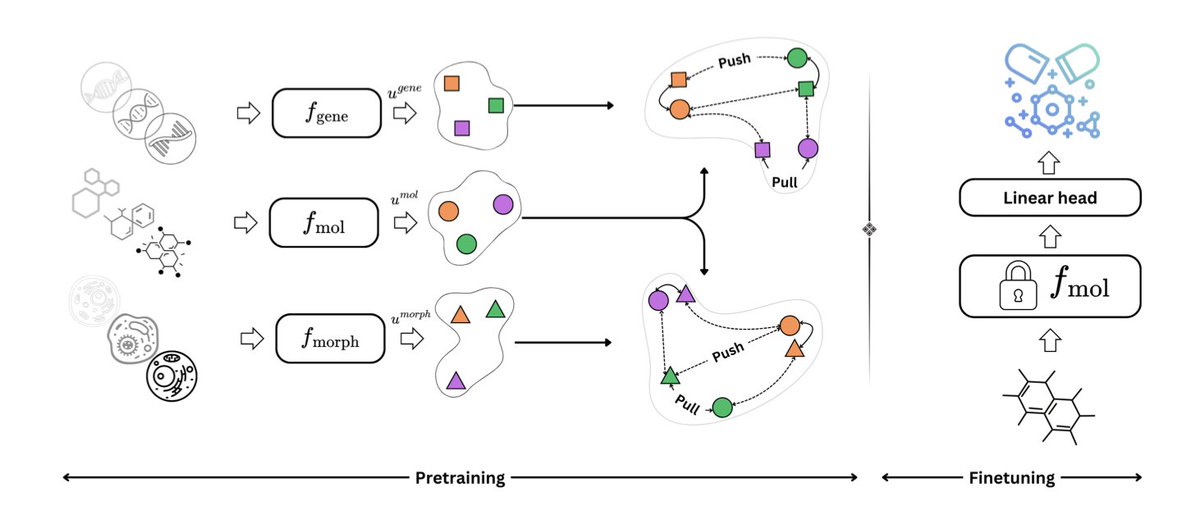
1.This paper proposes a practical and scalable framework for multimodal molecular representation learning by integrating chemical structures with biological readouts: morphological features from Cell Painting and transcriptomic profiles from the LINCS L1000 dataset.
2.The key innovation is that the model learns from paired data—(molecule-morphology) and (molecule-gene expression)—without needing complete triplets. This relaxes a major limitation of prior multimodal approaches that required fully matched datasets.
3.Contrastive learning is used to align molecular embeddings with their biological context across modalities, even in the absence of complete data alignment. Positive and negative pairs help the model learn shared semantic structure across data types.
4.The framework employs separate encoders for molecules, morphology, and gene expression. These encoders are trained to project inputs into a shared embedding space, using cosine similarity-based InfoNCE losses across modalities.
5.The model uses augmented inputs for gene expression, incorporating condition embeddings (cell line, time, dose), enabling finer-grained alignment of biological responses with molecular inputs.
6.For evaluation, the authors pretrain the encoders and freeze them to assess performance using linear probing on the ChEMBL20 dataset (1,320 tasks). This evaluates the quality of the learned molecular embeddings without additional finetuning.
7.In low-data regimes, adding Cell Painting data in pretraining boosts downstream AUROC by 6%. Adding transcriptomics yields further gains of up to 2%, showing the cumulative value of multimodal biological context.
8.The best-performing model achieved a mean AUROC of 0.724, significantly outperforming models trained solely on molecular graphs. Gains are most evident in data-scarce scenarios, highlighting improved generalization.
9.The work is grounded on rich and publicly available datasets: 700K morphology profiles from JUMP-CP, 540K gene expression signatures from LINCS L1000, and 450K molecules with bioactivity annotations from ChEMBL20.
10.This approach opens a path for integrating large-scale biological assays into molecular modeling without requiring fully matched samples, bridging structural and functional domains in drug discovery.
11.By enriching molecular embeddings with biological context, the method improves the interpretability and robustness of predictions in toxicity and efficacy modeling—critical for AI-driven drug development.
📜Paper: openreview.net/forum?id=WT7B…
#ICLR2025 #DrugDiscovery #ContrastiveLearning #MolecularRepresentation #MultimodalAI #ComputationalBiology #Bioinformatics
Multi-modal Contrastive Learning with Negative Sampling Calibration for Phenotypic Drug Discovery
1. A novel contrastive learning framework, MINER, addresses the critical issue of incorrectly labeling similar molecular phenotypes as negative pairs, significantly enhancing phenotypic drug discovery accuracy.
2. MINER dynamically calibrates negative sampling by estimating the likelihood that molecule pairs truly represent negative examples, rather than relying on traditional, binary labeling of contrastive learning methods.
3. The method introduces a Mixture-of-Experts fusion strategy, effectively integrating multimodal data (e.g., molecular structure, cellular images, gene expression), crucially improving the handling of datasets with missing modalities.
4. Unimodal denoising modules reduce noise within each modality, enhancing the quality of molecular representations and providing more robust inputs to multimodal fusion layers.
5. Extensive experimental validation on ChEMBL2K and Broad6K datasets demonstrates significant improvements over existing models in molecular property prediction tasks, especially under scenarios of substantial missing data.
6. MINER notably surpasses existing multimodal retrieval methods, achieving superior performance in molecule-phenotype retrieval accuracy, reflecting enhanced capability in linking molecular structures and biological effects.
7. Practical application examples show MINER successfully identifies drug repurposing candidates for Alzheimer's disease, with several candidates validated by existing literature.
8. Visualization using t-SNE confirms that MINER-generated molecular embeddings clearly differentiate phenotypic categories, underscoring the framework’s robustness and interpretability.
💻Code: github.com/biomed-AI/MINER
📜Paper: openaccess.thecvf.com/conten…
#MachineLearning #DrugDiscovery #Bioinformatics #ContrastiveLearning #ComputationalBiology #PhenotypicScreening

DeepAden: an explainable machine learning for substrate specificity prediction in nonribosomal peptide synthetases
1.This paper introduces DeepAden, a two-stage explainable AI framework for predicting substrate specificity in NRPS A-domains, significantly outperforming prior methods, especially for non-proteinogenic substrates and low-data settings.
2.DeepAden uniquely integrates a graph attention network (ABP-GAT) for binding pocket prediction with cross-modal contrastive learning between protein pockets and substrate molecules, enabling accurate pairing even across divergent sequences.
3.The binding pocket predictor constructs a 2D protein graph from a 1D sequence using ESM2-derived embeddings and a ResNet-predicted contact map, identifying 27 key residues that form the binding pocket with high accuracy (F1 = 0.979).
4.The contrastive learning stage aligns binding pockets and substrates in a shared embedding space using ABP-ESM2 and MoLFormer, effectively capturing substrate preferences and enabling retrieval-based prediction for novel A-domains.
5.DeepAden introduces SHAP-based explainable AI to identify residue-level contributors to specificity. For example, it reveals Cys-specific ABPs utilize 18Gly and 20Ala, which enhance loop flexibility and favor distinct ligand conformations.
6.XAI-guided data augmentation allows targeted residue substitutions that preserve structural logic while enhancing model robustness, improving generalizability under few-shot and low-similarity scenarios.
7.Across three independent test sets (common, new, and few-shot substrates), DeepAden achieves the highest F1 scores (up to 0.822), improving by 12–80% over previous tools like NRPSpredictor2 and PKS/NRPS Analysis.
8.Unlike conventional tools relying on 10-AA or 34-AA SCC templates from a single species, DeepAden’s 27-AA ABP-based approach generalizes across evolutionary divergence and captures both proteinogenic and non-proteinogenic substrates.
9.In practical applications, DeepAden successfully mapped orphan biosynthetic gene clusters (BGCs) to experimentally validated compounds (nyuzenamide, octaminomycin), identifying multi-substrate A-domains missed by other predictors.
10.Interpretability is central to DeepAden: SHAP values highlight three key functional regions in ABPs—substrate entry, ATP-binding loop, and side chain contact zone—providing insights into evolution and enzyme engineering.
11.The model leverages pretrained PLMs and CLMs but freezes their weights, using only lightweight MLPs for projection, making DeepAden computationally efficient and easier to adapt across tasks.
12.By replacing alignment-dependent SCCs with interpretable, structure-informed sequence models, DeepAden paves the way for substrate-specific mining, rational NRPS design, and synthetic biology applications.
💻Code: github.com/Qinlab502/DeepAde…
📜Paper: biorxiv.org/content/10.1101/…
#NRPS #SubstrateSpecificity #ExplainableAI #DeepAden #ProteinDesign #BindingPocket #ContrastiveLearning #NaturalProductDiscovery #SyntheticBiology #ComputationalBiology

Structure-Aligned Protein Language Model
1.Structure-Aligned Protein Language Model (SaPLM) augments sequence-only protein language models (pLMs) with structural knowledge by aligning their representations with those from pre-trained protein graph neural networks (pGNNs), achieving large gains on structure-aware tasks without compromising sequence generality.
2.The key innovation is a dual-task framework: (1) a latent-level contrastive learning task that aligns residue embeddings from the pLM and pGNN across different proteins, capturing inter-protein structural patterns, and (2) a physical-level task that predicts structural tokens from pLM outputs, encoding intra-protein structural geometry.
3.To avoid noisy or overly simple residues during training, a residue loss selection module is introduced. It selects residue losses with high excess learning potential by comparing the current model’s losses to a high-quality reference model trained on curated structures.
4.Applying this structure alignment method to ESM2 and AMPLIFY yields SaESM2 and SaAMPLIFY, which significantly outperform their unaligned counterparts on multiple benchmarks. SaESM2 improves contact prediction P@L/5 by 13% and stability prediction Spearman correlation by 4.5%.
5.Unlike prior models that use structural input during inference (e.g., structure tokens), SaPLM requires only sequences at inference time, maintaining the generality and scalability of pLMs while enhancing structural reasoning via pretraining.
6.On mutation effect prediction tasks, SaESM2 achieves the highest performance on binding fitness (GB1) and stability prediction, outperforming even ESM2-s and ISM models explicitly trained on these tasks.
7.SaESM2 also achieves state-of-the-art results on 6 out of 9 downstream property prediction tasks (e.g., metal binding, DeepLoc, EC number classification), showing the effectiveness of structural alignment for biologically relevant function prediction.
8.Ablation studies confirm that both the latent- and physical-level tasks are critical for performance, with the latent-level alignment contributing the most. Replacing the GearNet embeddings with AlphaFold Evoformer embeddings significantly degrades performance.
9.Residue embedding visualization using UMAP shows that aligned models (SaESM2, SaAMPLIFY) learn more structured latent spaces, with better separation of secondary structure types and physicochemical similarity among amino acids.
10.Structure alignment emerges as a generalizable and efficient way to enrich pLMs with structural context using only sequence input. SaESM2 and SaAMPLIFY set a new benchmark for structure-aware yet sequence-only protein modeling.
💻Code: github.com/chandar-lab/AMPLI…
📜Paper: arxiv.org/abs/2505.16896
#ProteinLLM #StructureAlignment #pLM #ProteinStructure #ContrastiveLearning #GNN #ComputationalBiology #SaESM2 #AMPLIFY #AI4Science

Memo-Patho: Bridging Local-Global Transmembrane Protein Contexts with Contrastive Pretraining for Alignment-Free Pathogenicity Prediction
1.Memo-Patho is a new deep learning framework for predicting the pathogenicity of mutations in transmembrane proteins (TMPs), combining local and global sequence contexts using contrastive pretraining and requiring no multiple sequence alignments (MSAs).
2.Unlike traditional tools that rely on MSAs or structural templates, Memo-Patho uses protein language models (PLMs) and predicted structural features to represent the mutational landscape efficiently and scalably.
3.A central innovation is its contrastive pretraining scheme, where the model learns to distinguish pathogenic from benign variants within the same protein by pulling together representations of benign variants and pushing away pathogenic ones.
4.The model architecture employs dual-stream feature extraction: local features are derived from the mutation site, while global features summarize the entire protein context. These are fused via a multi-head Transformer to produce a unified representation.
5.Memo-Patho achieves state-of-the-art performance, with accuracy up to 0.93 on benchmark datasets and 0.84 accuracy on a novel KCNQ1 variant set experimentally validated for cardiac pathogenicity.
6.Compared to AlphaMissense, PROVEAN, MutPred2, and other state-of-the-art tools, Memo-Patho delivers higher accuracy and better generalization, particularly in unseen-protein scenarios (Ind test set).
7.Ablation studies confirm the importance of integrating both local and global features. Attention analysis shows that local features become more critical when generalizing to novel proteins.
8.Memo-Patho predictions are strongly correlated with evolutionary conservation (Pearson r ≈ 0.69), indicating that the model captures biologically meaningful signals relevant to mutation effects.
9.Its alignment-free architecture enables high-throughput analysis: over 15,000 variants can be processed in under 80 minutes, making it well-suited for large-scale variant screening and prioritization.
10.In-depth case studies (e.g., TMPRSS3 and KCNQ1) demonstrate Memo-Patho’s capacity to capture functional impacts of clinically important variants, offering valuable support for diagnostics and precision medicine.
💻Code: github.com/RoarBoil/Memo-Pat…
📜Paper: biorxiv.org/content/10.1101/…
#PathogenicityPrediction #TransmembraneProteins #ProteinVariants #DeepLearning #ContrastiveLearning #ProteinLanguageModels #PLM #GenomicMedicine #PrecisionMedicine #Bioinformatics

Rapid and accurate protein structure database search using inverse folding model and contrastive learning
1.mTM-align2 is a fast and accurate protein structure search framework that uses embeddings from an inverse folding model (ESM-IF) optimized by contrastive learning. It enables structure retrieval across large protein databases with high precision and speed, outperforming existing methods on both monomers and multimers.
2.The method converts 3D protein structures into 512-dimensional embeddings via ESM-IF, followed by refinement with a Siamese contrastive learning network trained on over 7 million structure pairs. This embedding captures structural similarity directly, enabling cosine-based similarity scoring.
3.For monomeric structures, mTM-align2 completes searches within seconds and achieves over 90% precision for top 10 hits. It is significantly faster than Foldseek, yet competitive or superior in recall and sum TM-score metrics across various test sets.
4.Multimeric structure search is supported via a dual-module system: one uses 3D Zernike polynomials to capture global shape, while the other decomposes multimers into monomeric subunits processed through the ESM-IF pipeline. Results from both modules are fused via a weighted Q-score.
5.In benchmarks against 286 multimeric queries, mTM-align2 outperforms Foldseek-MM-TM in both precision and recall. At a TM-score threshold of 0.5, mTM-align2 achieves up to 97.14% top-10 precision, demonstrating its robustness even for novel or complex structures.
6.SCOPe classification tests show that mTM-align2 embeddings align well with domain-level protein structure definitions, maintaining high precision across fold, superfamily, and family levels. Removing structure-based filters reduces performance, confirming the necessity of both embedding and alignment stages.
7.t-SNE visualizations of over 15,000 SCOPe structures show that mTM-align2 embeddings effectively cluster proteins by structural class. The model also reveals likely misclassifications and ambiguous definitions in SCOPe, suggesting its potential for aiding structural annotation.
8.On AlphaFold DB, mTM-align2 accurately clusters high-confidence structures across five diverse InterPro domains. It can detect sub-clusters corresponding to multi-domain or oversized proteins, highlighting its capacity to handle real-world structural variability.
9.Ablation studies confirm that both the Siamese contrastive learning module and structure alignment filtering are critical to performance. Removing either component significantly degrades precision, demonstrating their synergistic effect.
10.mTM-align2 integrates deep learning with classic structure alignment in a scalable pipeline. Its speed, precision, and broad applicability make it a powerful tool for structural bioinformatics, with a web server publicly available for use.
📜Paper: biorxiv.org/content/10.1101/…
#ProteinStructure #StructuralBioinformatics #InverseFolding #ContrastiveLearning #TMAlign #Foldseek #AlphaFold #ComputationalBiology #mTMAlign2

DPAC: Prediction and Design of Protein-DNA Interactions via Sequence-Based Contrastive Learning
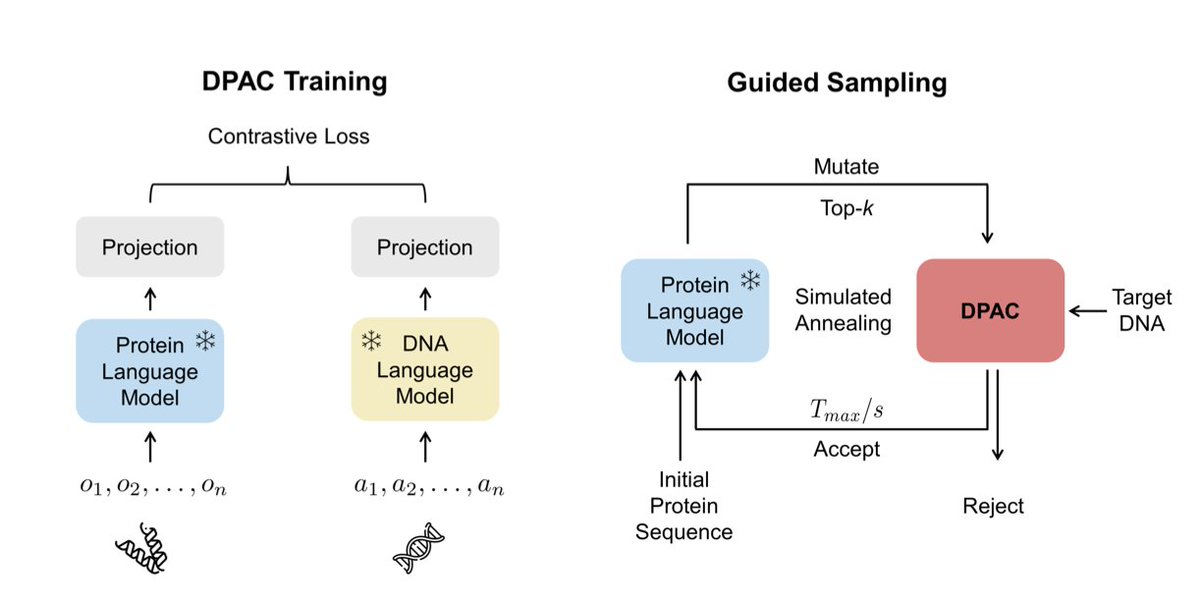
1.This work introduces DPAC, a fully sequence-based framework that uses contrastive learning to predict and design protein-DNA interactions—bypassing the need for structural data and offering a scalable alternative to AlphaFold 3 and RosettaFoldNA.
2.DPAC aligns pre-trained protein (ESM2) and DNA (Nucleotide Transformer) language models into a shared latent space using a CLIP-style two-tower architecture, achieving high performance in both retrieval and design tasks.
3.On a low-identity benchmark (unseen protein-DNA pairs), DPAC significantly outperforms structure-based baselines (RFAA and RFNA), with an AUC of 0.617 vs. 0.546 and 0.456, respectively—demonstrating strong generalization.
4.The model supports inverse design using simulated annealing guided by DPAC logits, enabling the generation of protein sequences that maximize binding to target DNA motifs.
5.A case study on the Zif268 zinc finger shows that DPAC recovers up to 20% of binding affinity (ipTM score) in silico after introducing up to 50% sequence corruption, with restored amino acids spatially clustering near the DNA-binding interface.
6.DPAC-generated sequences also maintain biological plausibility, scoring favorably under ProGen2 perplexity metrics, and achieving comparable performance to LigandMPNN-based structure-guided design pipelines.
7.Extensive benchmarking confirms that DPAC’s performance is robust across embedding strategies, sequence identity levels, and temperature settings—reaching up to 0.85 AUC on high-identity sets with optimal encoder configurations.
8.DPAC also shows a statistically significant correlation between its logit scores and real binding affinity (Kd) across 68 protein-DNA binding datasets from PDBBind (p = 9e-5), supporting its use as a virtual screening tool.
9.Unlike structure-based models, DPAC is effective even for disordered or flexible DNA-binding proteins such as transcription factors, which pose challenges for co-folding approaches like AlphaFold 3.
10.By combining language model embeddings with contrastive learning and fast simulated annealing, DPAC sets a precedent for efficient, large-scale, and structure-free modeling of DNA-binding protein design.
11.The authors note future directions such as incorporating PTMs, exploring discrete diffusion-based generation, and applying DPAC to downstream applications in genome editing and transcriptional regulation.
💻Code: github.com/programmablebio/d… 📜Paper: biorxiv.org/content/10.1101/…
#ProteinDesign #DNABinding #ContrastiveLearning #LanguageModels #SyntheticBiology #AI4Science #GenomicEngineering #ComputationalBiology
Prot2Text-V2: Protein Function Prediction with Multimodal Contrastive Alignment
1.Prot2Text-V2 introduces a powerful framework that generates free-form natural language descriptions of protein function directly from amino acid sequences, moving beyond structured labels like GO terms.
2.Its architecture combines the ESM-3B protein encoder with LLaMA-3.1-8B-Instruct as the language decoder, connected via a lightweight two-layer nonlinear modality projector that avoids complex cross-attention.
3.The core innovation is H-SCALE (Hybrid Sequence-level Contrastive Alignment Learning), which aligns mean- and std-pooled protein embeddings with intermediate text representations using InfoNCE contrastive loss.
4.This contrastive alignment ensures protein and text representations reside in the same semantic space, enabling the decoder to generate biologically meaningful text from protein input.
5.After alignment, the model is instruction-tuned using LoRA to teach it how to generate accurate captions conditioned on protein features and optional metadata.
6.Prot2Text-V2 is trained on 250K curated SwissProt entries and evaluated under low-homology conditions, where it outperforms both traditional homology-based tools (e.g., BLAST) and LLM-based baselines.
7.The model shows especially strong performance on proteins with low sequence similarity to training data, confirming its superior generalization in the weak-homology regime.
8.In experiments, Prot2Text-V2 achieves state-of-the-art results across lexical (BLEU, ROUGE) and semantic (BioBERT, RoBERTa, GPT-4 judge) metrics, demonstrating both precision and contextual accuracy.
9.Compared to previous models like Prot2Text and ProtT3, Prot2Text-V2 is simpler to train and deploy, while achieving better alignment and generation quality, particularly under constrained homology conditions.
10.Extensive ablations confirm the value of H-SCALE contrastive pretraining, outperforming variants without it and other encoder-decoder configurations.
11.The authors emphasize that unlike general-purpose LLMs, Prot2Text-V2 is tailored to protein biology and trained on well-curated datasets, ensuring domain-relevant predictions.
12.For future work, the team plans to validate predictions experimentally and expand the framework to incorporate structural modalities and deeper reasoning capabilities.
💻Code: github.com/ColinFX/Prot2Text…
📜Paper: arxiv.org/abs/2505.11194v1
#ProteinFunction #MultimodalLearning #ContrastiveLearning #BioNLP #ComputationalBiology #LLM #Prot2TextV2

A unified multimodal model for generalizable zero-shot and supervised protein function prediction
1.This study introduces FunBind, a multimodal foundational model that predicts protein function by integrating five heterogeneous modalities: sequence, structure, InterPro domain annotations, textual descriptions, and GO terms—enabling both supervised and zero-shot predictions.
2.FunBind uses contrastive learning to align all modalities into a shared embedding space, using sequence as the central anchor—allowing it to operate even when some data modalities are missing, a major advance over existing models.
3.The model excels at zero-shot function prediction, assigning GO terms never seen during training to proteins based solely on modality similarity. Its performance surpasses prior zero-shot methods, achieving high Recall@5 across CC (91.3%), MF (90.5%), and BP (78.4%).
4.Text modality turned out to be especially informative—outperforming sequence across all metrics—and its emergent alignment with GO terms via the sequence backbone reveals strong latent cross-modality connections.
5.FunBind achieves the best performance when combining modalities: a weighted consensus approach using sequence, structure, InterPro, and text leads to Recall@5 up to 93% and Mean Reciprocal Rank of 0.90 in CC.
6.The model architecture includes frozen encoders (ESM2-t48 for sequence, ProtST for structure, LLaMA2 for text and GO terms) and a Mixture of Experts gating module that produces diverse, modality-specific embeddings.
7.For supervised classification, FunBind is fine-tuned to predict pre-selected GO terms using available modalities. On a large test set, it outperforms current SOTA models (DeepGO-SE, TransFew, SPROF-GO) across all metrics in all GO categories.
8.In terms of AUPR for Biological Process (BP), FunBind reaches 0.429, over 10 percentage points higher than the best SOTA baseline, indicating substantial improvement in annotating complex biological functions.
9.FunBind also generalizes well to novel proteins with less than 30% sequence identity to training data. On this “Test Novel” set, it continues to outperform all existing methods, confirming strong robustness and transferability.
10.Textual annotations drive especially strong gains in BP and MF predictions, while InterPro and sequence offer complementary stability. Structural features (from FoldSeek’s 3Di) contribute modestly, suggesting room for richer representations.
11.The authors propose extending FunBind to incorporate protein–protein interaction networks and to fine-tune the backbone encoders for further gains, especially in settings where structure or domain data is sparse.
12.Overall, FunBind establishes a new standard for zero-shot and supervised protein function prediction, offering a flexible and interpretable model that supports robust function inference—even for novel proteins or rare annotations.
💻Code: github.com/jianlin-cheng/Fun…
📜Paper: biorxiv.org/content/10.1101/…
#ProteinFunction #ZeroShotLearning #MultimodalAI #Bioinformatics #DeepLearning #ContrastiveLearning #GOterms #GeneOntology #ProteinAnnotation #FunBind #GNN #ProteinEmbedding #AI4Bio

AI4CellFate: Interpretable Early Cell Fate Prediction with Generative AI
1.This work presents AI4CellFate, a generative AI framework that predicts single-cell fate from microscopy images using only early time points—enabling high-throughput, low-bias, and interpretable live-cell imaging analysis.
2.Unlike traditional feature engineering approaches, AI4CellFate learns biologically meaningful representations through an adversarial autoencoder combined with multi-objective loss, including reconstruction, adversarial, contrastive, and covariance terms.
3.The model predicts whether a cell will divide (fate 1) or not (fate 0) using just the first frame from live-cell imaging, achieving precision of 72%, significantly outperforming hand-crafted tabular feature baselines capped at ~65%.
4.Latent space engineering ensures that the two learned features (z₀, z₁) are interpretable and disentangled: z₀ correlates with ERK activity (signal intensity), and z₁ with cell size—both biologically linked to future proliferation.
5.Visual perturbations in latent space enable synthetic generation of nuclei images along interpretable axes, offering visual insight into what cellular changes drive fate predictions—bridging prediction and understanding.
6.Performance remains stable across the cell lifetime and generalizes well with as few as 500 annotated cells, highlighting its suitability for data-scarce, high-variability biological systems like drug-tolerant persister cells.
7.Compared to 78 combinations of hand-selected tabular features, AI4CellFate's latent representation consistently provides superior accuracy and reproducibility, while avoiding human bias and feature selection pitfalls.
8.Training is lightweight (fewer than 10⁶ parameters), runs efficiently on standard hardware, and is guided by a principled early-stopping protocol based on latent space separation, KL divergence, and classification metrics.
9.This interpretable latent space and early-fate prediction capacity make AI4CellFate ideal for integration into smart microscopy pipelines, accelerating biological discovery in cell signaling, drug response, and cancer resistance.
10.The framework exemplifies how generative AI and contrastive learning can be used not just for image synthesis but as scientific tools for extracting and interpreting actionable biological insights from high-dimensional data.
💻Code: github.com/ComputationalMicr…
📜Paper: biorxiv.org/content/10.1101/…
#CellFate #LiveCellImaging #GenerativeAI #AdversarialAutoencoder #ContrastiveLearning #ComputationalMicroscopy #CancerBiology #ExplainableAI #AI4Science #BiomedicalAI

Supervised learning of protein melting temperatures: cross-species vs species-specific prediction
1. This study challenges the optimistic view of supervised models for protein melting temperature (Tm) prediction, revealing that high reported correlations often stem from species-level amino acid composition differences, not true variant-level accuracy.
2. The authors show that Spearman rho over cross-species datasets can mislead, inflating performance metrics due to interspecies Tm differences rather than genuine prediction of intra-species variation.
3. They benchmark five supervised learning strategies—including simple ESM2 embeddings, PiFold-augmented features, contrastive learning (Rank-N-Contrast), a dual-loss model using optimal growth temperature (OGT), and LoRA fine-tuning—on the FLIP Meltome dataset.
4. Across all approaches, models trained specifically per species consistently outperform cross-species models, despite having access to less data, with significant reductions in RMSE and error rates.
5. Even advanced transfer-learning and fine-tuning strategies fail to generalize well across species, suggesting that the challenge lies not in data size, but in the lack of transferable intra-species thermodynamic signals.
6. A key insight is that simple baseline models predicting the species-mean Tm perform surprisingly well—highlighting how current models often fail to go beyond this trivial benchmark.
7. The dual-loss model provides a biologically grounded architecture by decomposing the predicted Tm into species-level and variant-level components, aligning with optimal growth temperature and variant-specific biases.
8. The contrastive learning approach, though theoretically appealing, yields limited robustness in small species datasets, and performance gains are modest compared to simpler alternatives.
9. These findings urge caution in interpreting cross-species generalization claims and call for species-aware benchmarking frameworks and better evaluation metrics beyond global correlations.
10. The work provides actionable guidance for protein engineering applications: for accurate variant-level stability prediction, species-specific models are preferable, and cross-species transfer remains an unsolved challenge.
💻Code: github.com/deltadedirac/ther…
📜Paper: biorxiv.org/content/10.1101/…
#ProteinStability #MeltingTemperature #TransferLearning #ESM2 #InverseFolding #ContrastiveLearning #ProteinEngineering #ComputationalBiology #Thermostability #AI4Science
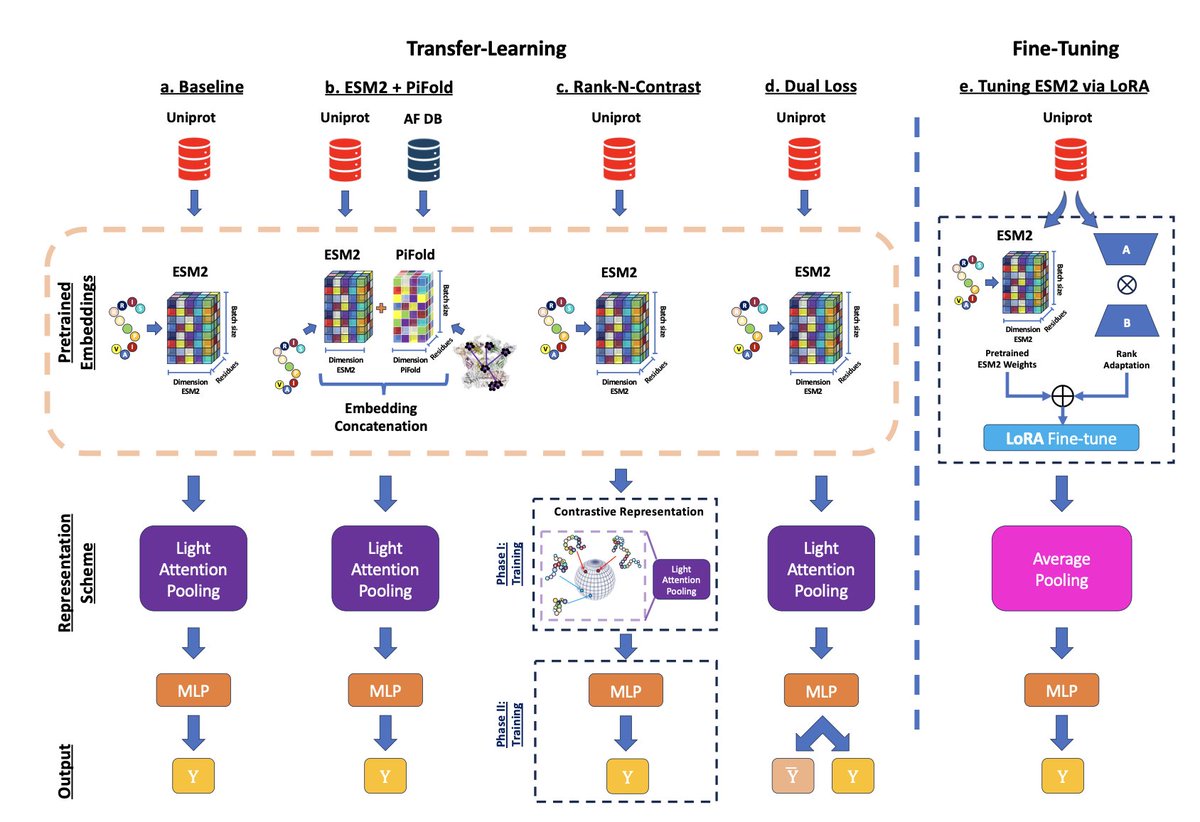
Last Seen Hashtags on Sotwe
青岛ts
Seen from United States
كحبه
teeNagegirl(*************************)*********************** filter:native_video
Seen from Panama
encoxada
Seen from United States
candids
Seen from Turkey
chudai
Seen from Germany
incestlove
Seen from Italy
tranny
Seen from Netherlands
snaphack
Seen from Canada
cum #waxing
Seen from Turkey
Most Popular Users

Elon Musk 
@elonmusk
240.3M followers

Barack Obama
@barackobama
118.6M followers

Cristiano Ronaldo
@cristiano
114.4M followers

Donald J. Trump
@realdonaldtrump
111.8M followers

Narendra Modi
@narendramodi
106.9M followers

Rihanna
@rihanna
98.7M followers

NASA
@nasa
92.2M followers

Justin Bieber
@justinbieber
91.7M followers

KATY PERRY
@katyperry
89.9M followers

Taylor Swift
@taylorswift13
83.9M followers

Lady Gaga
@ladygaga
75.4M followers

Virat Kohli
@imvkohli
73.3M followers

Kim Kardashian
@kimkardashian
70.8M followers

YouTube
@youtube
68.6M followers

Neymar Jr
@neymarjr
66.3M followers

Bill Gates
@billgates
65.2M followers

Selena Gomez
@selenagomez
63M followers

The Ellen Show
@theellenshow
62.1M followers

CNN
@cnn
61.7M followers

X
@x
60.6M followers