𝑪𝒐𝒏𝒈𝒓𝒂𝒕𝒖𝒍𝒂𝒕𝒊𝒐𝒏𝒔 to Kanokwan Klahan on the publication of her recent research, 'Unraveling the Effects of Fe Incorporation on High-Performance Water-Splitting Photoanodes,' in the Journal of the American Chemical Society.
Read the full paper here: https://t.co/45XSCnm3xf
Excited to share new work with David Jenkins on NHC monolayers for biosensing! Phattananawee Nalaoh & Vincent Clark show aptamer-clicking to NHCs is possible. Still facing capacitive & peroxide issues but stronger gold bonding is a big step forward!
https://t.co/aeM00GoDtt
We just made a new approach using a copper-free click strategy on the gold surface electrode.
Thank you Dr. Jenkins, Dr. Arroyo, and Vincent for their great support on this sensor work (and to me as a synthetic chemist!).
Hope you guys enjoy it!
https://t.co/EE0jEDFzv3
We are saddened to hear of the passing of George Sheldrick. A dedicated professional with a distinguished career, his work and leadership touched countless lives. Our hearts go out to his family during this difficult time. Remember George with us: https://t.co/wy3ZYsr0UP
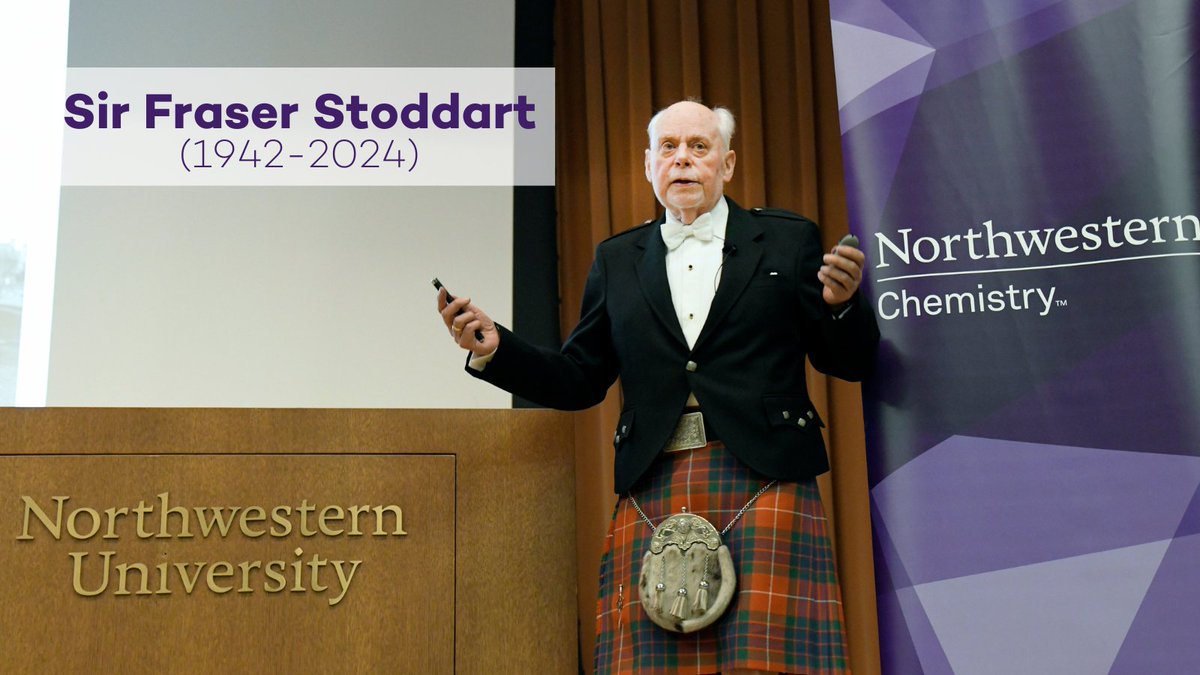
With profound sadness, we announce the passing of Sir Fraser Stoddart, Nobel Laureate and cherished member of @NorthwesternU. His groundbreaking contributions transformed the field of #chemistry and inspired countless scientists worldwide.
➡️ https://t.co/S7e0nwfruD
Melt kneading of Cu-azolate coordination polymers yields unique ductile alloys. The fracture point reaches 128% without binder/filler; ductility is retained when soaked in liquid N2. @J_A_C_S#OpenAccess@VISTEC_Thailand
https://t.co/tgHiAB7ULi
I haven't posted about politics for so long but this news makes my home country much more unpleasant to live in.
Imagine living in a state where the political parties, that won the election, keep getting dissolved/disbanded throughout your lifetime...
https://t.co/Kx3yR0jmU4
"Authors should adhere to the scientific method and present reasonable #CrystallographicModels for publication...When this fails...we all have the responsibility to raise concerns and keep the literature reliable" 😀😀https://t.co/basrg7FH0a @IUCr#crystallography#education
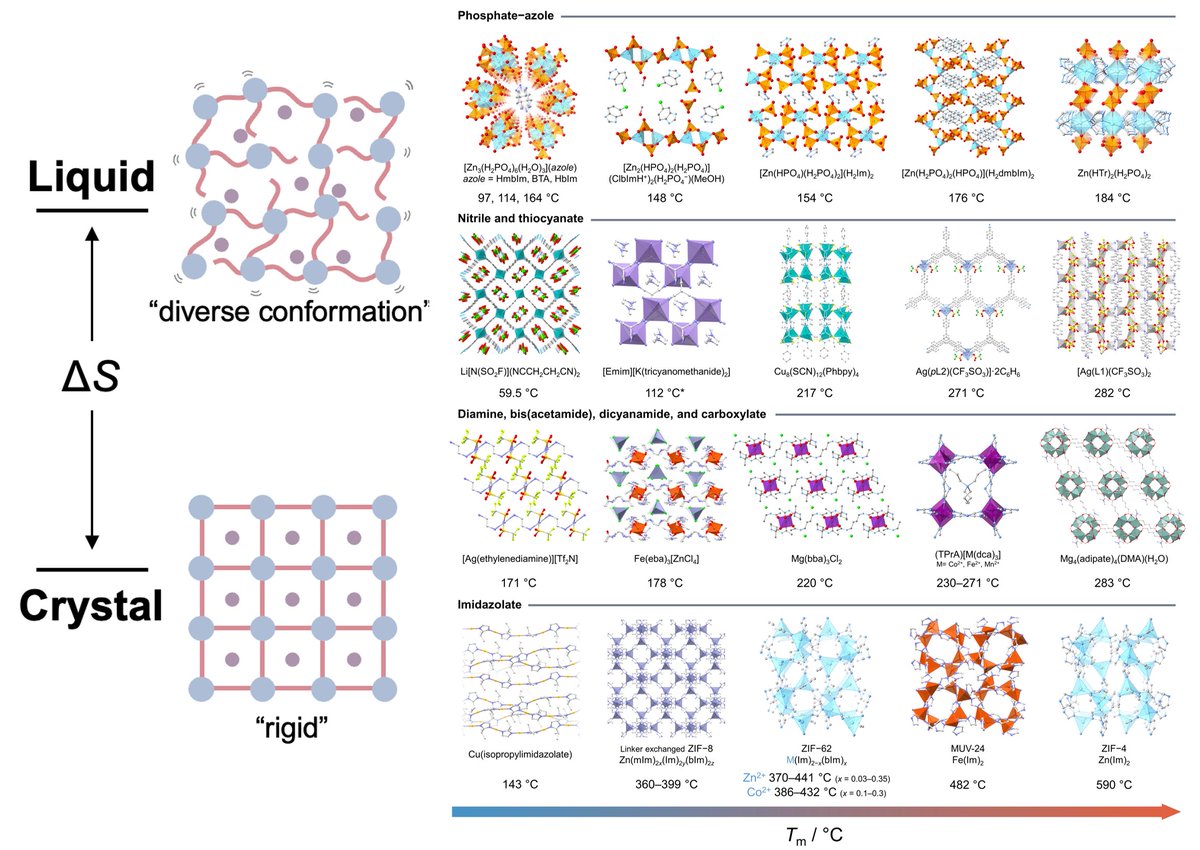
We know MOF melts, HOIP melts, but are they networked liquids? anisotropic? This review tries to describe these functional (supercooled) liquids with reference to metal-ionic liquids, and porous liquids. Thanks @ChemicalScience for this opportunity🙇
Modular Design of Highly Stable Semiconducting Porous Coordination Polymer for Efficient Electrosynthesis of Ammonia (Susumu Kitagawa and co-workers) @KitagawaGroup https://t.co/lhn5CP5vOk
How should we learn academic writing (especially scientific)? This seems to be problematic for students at all levels these days. Students take many lab courses, so they should experience this kind of writing already. My experience does not suggest that they get it.
Extremely excited to share one of my final PhD projects on @ChemRxiv! We take dynamic zirconocene chemistry to the limit, ultimately making a nanocarbon so large and entangled we ended up defining a new class of molecular topology to best describe it!
https://t.co/syfeF1gn5d
1/8
It’s a story of how academia goes wrong. And how it self-corrects.
A must read for everyone:
2020 - A discovery of room-temperature superconductivity is published in Nature by Ranga Dias
2023 - The second RT superconductor is reported by Dias in Nature
2024 - The first paper is retracted. Then the second. No one could replicate his results.
The forth investigation by external experts showed that ‘he concealed information from his students, manipulated them and shut them out of key steps in the research process’.
▫️
The story looks like this:
1. Dias proposed that adding carbon to H3S might lead to RT superconductivity.
2. His PhD students could NOT observe the signs of superconductivity in the samples (no resistivity drop, no susceptibility change).
3. Suddenly, Dias emailed everyone and announced the discovery of RT superconductivity. Students were shocked.
4. The draft was sent to the team at 5.13 p.m. and SUBMITTED to Nature at 8.26 p.m. In just TWO hours! No one had time to read it.
5. Dias told the students he ‘had taken all the resistance and magnetic-susceptibility data before coming to Rochester’.
6. 3 reviewers were concerned. Only one supported publication. It was published on 14 October 2020.
7. A year(!!!) later Dias made raw data publicly available. This prompted data check where ‘data points were separated by suspiciously regular intervals’.
8. Then, Nature initiated post-publication review by 4 experts. Two said there were big problems.
9. Following rebuttal & responses, Nature retracted the manuscript. Dias did NOT tell the students about the post-publication review process and data fabrication concerns.
▫️
Now, the 2nd paper raised concerns about PhD students:
- Dias sent them the draft at 2.09 am and asked for comments by 10.30 am (same day). The draft had NO figures.
- The students convinced Dias to postpone submission by one day.
- The students raised concerns about the pressure data because none of it was “anything that we actually measured”. Dias dismissed it with: “Pressure is a joke.”
- Then ‘Dias gave them an ultimatum: remove their names, or let him send the draft’. It was very intimidating. The students gave in: “What if I [object] and he makes the rest of my life miserable?”
▫️
My conclusions:
1. This situation shows how easily a supervisor can manipulate inexperienced students into publishing and believing the results. I am sure there are many other examples in academia that just haven’t surfaced.
2. All data must be publicly available. Before publication.
3. Nature took the case professionally, asking for extra refereeing and post-publication review multiple times as things were unfolding. BUT it's not so common. I heard many stories where some journals just didn’t care.
4. Finally and MOST importantly - students suffer the most.
As one of them said:
“My thesis is going to be full of fabricated data. How am I supposed to graduate in this lab?”
#academia #PhD #research
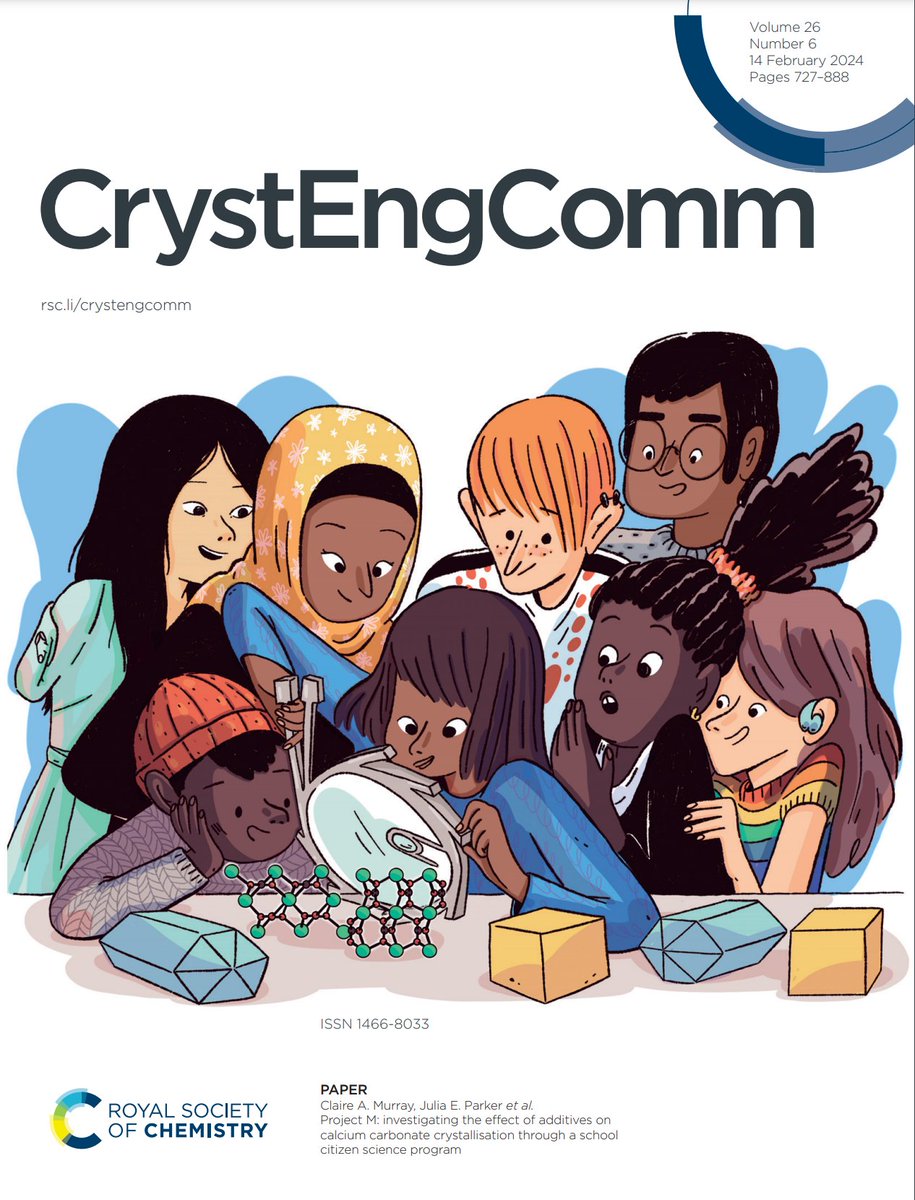
This @CrystEngComm front cover is for all our Project M Scientists. We appreciate you and your contributions to #CitizenScience and to #Chemistry. Our project would not have been the same without you, and it was an honour to be co-authors on our paper!
https://t.co/v9uNkzU6o1



![Andrew_Akbashev's tweet photo. It’s a story of how academia goes wrong. And how it self-corrects.
A must read for everyone:
2020 - A discovery of room-temperature superconductivity is published in Nature by Ranga Dias
2023 - The second RT superconductor is reported by Dias in Nature
2024 - The first paper is retracted. Then the second. No one could replicate his results.
The forth investigation by external experts showed that ‘he concealed information from his students, manipulated them and shut them out of key steps in the research process’.
▫️
The story looks like this:
1. Dias proposed that adding carbon to H3S might lead to RT superconductivity.
2. His PhD students could NOT observe the signs of superconductivity in the samples (no resistivity drop, no susceptibility change).
3. Suddenly, Dias emailed everyone and announced the discovery of RT superconductivity. Students were shocked.
4. The draft was sent to the team at 5.13 p.m. and SUBMITTED to Nature at 8.26 p.m. In just TWO hours! No one had time to read it.
5. Dias told the students he ‘had taken all the resistance and magnetic-susceptibility data before coming to Rochester’.
6. 3 reviewers were concerned. Only one supported publication. It was published on 14 October 2020.
7. A year(!!!) later Dias made raw data publicly available. This prompted data check where ‘data points were separated by suspiciously regular intervals’.
8. Then, Nature initiated post-publication review by 4 experts. Two said there were big problems.
9. Following rebuttal & responses, Nature retracted the manuscript. Dias did NOT tell the students about the post-publication review process and data fabrication concerns.
▫️
Now, the 2nd paper raised concerns about PhD students:
- Dias sent them the draft at 2.09 am and asked for comments by 10.30 am (same day). The draft had NO figures.
- The students convinced Dias to postpone submission by one day.
- The students raised concerns about the pressure data because none of it was “anything that we actually measured”. Dias dismissed it with: “Pressure is a joke.”
- Then ‘Dias gave them an ultimatum: remove their names, or let him send the draft’. It was very intimidating. The students gave in: “What if I [object] and he makes the rest of my life miserable?”
▫️
My conclusions:
1. This situation shows how easily a supervisor can manipulate inexperienced students into publishing and believing the results. I am sure there are many other examples in academia that just haven’t surfaced.
2. All data must be publicly available. Before publication.
3. Nature took the case professionally, asking for extra refereeing and post-publication review multiple times as things were unfolding. BUT it's not so common. I heard many stories where some journals just didn’t care.
4. Finally and MOST importantly - students suffer the most.
As one of them said:
“My thesis is going to be full of fabricated data. How am I supposed to graduate in this lab?”
#academia #PhD #research](https://pbs.twimg.com/media/GIY8mFKXgAMu1k8.jpg)