The Warriors (1979) is one of the most unique cult films ever made.
Inspired by the ancient Greek story Anabasis, the movie turns New York City into a violent urban battlefield where gangs rule the night.
Hated by many critics when it first released, it later became a midnight movie phenomenon and is now considered a true classic of street cinema.
Stylized, gritty, surreal — and unforgettable.
The great Paul Whitehouse is 68 years old today, which means I am obliged to post this (again!) - arguably the most majestically random but brilliant comedy sketch committed to celluloid for at least the last, what, forty, forty five years?
Yes, forty, forty five years.
Happy birthday Paul 🤘
On this day in history, 32 years ago…
John Smith, the Labour Party leader, was 55 years old when he died from a heart attack on May 12, 1994.
He once said:
“People in Britain today are angry: not just disappointed, not just disillusioned, but angry. They are angry at the state of Britain; angry at the total absence of leadership; angry at the absence of vision; angry at the hypocrisy and double standards; and they are angry at the incessant incompetence of a Government they no longer respect and increasingly despise.”
And tragically, his words of wisdom (aimed against the Tory government) could equally apply to Keir Starmer’s government of today.
Back to 1981.
In this interview with Ian Wooldridge, Jimmy Greaves talked about not playing in the 1966 World Cup Final.
We've seen the fun side of Greavsie but here he is getting really emotional, 15 years later.
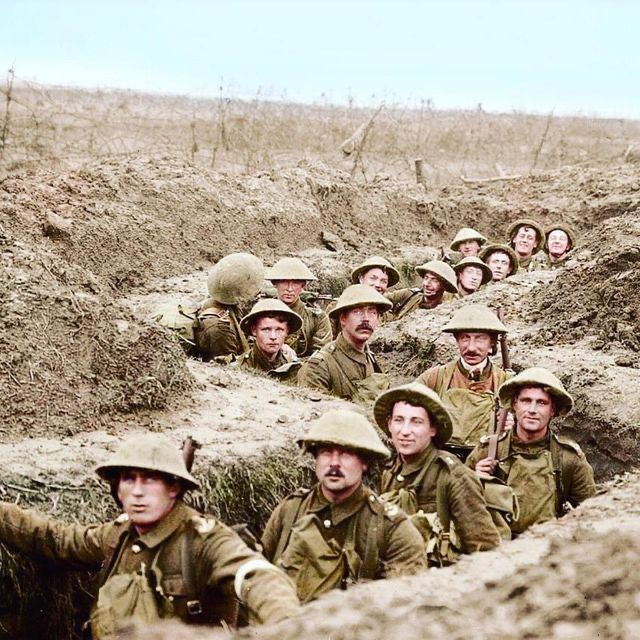
Of the estimated 6 million men who were mobilised, around 700,000 to 750,000 military personnel from United Kingdom and Ireland died during World War I, including my own family members.
On top of our working class stock suffering incredible hardships, the British middle-class served prominently as junior officers, leading infantry charges "over the top". While the aristocracy and upper-middle classes dominated early leadership.
Meaning that what would have been a considerable number of our real middle class, who were in a more likely position to have gone on to be artists, musicians, poets, architects, land owners, politicians, doctors, and a great many other things were wiped out.
World War I acted as a massive catalyst for economic and social upheaval, profoundly affecting the middle class, particularly in Britain and Central Europe. While the war brought relative economic gains to some working-class populations through higher wages and full employment, it severely eroded the savings, status, and stability of middle-class families.
As well as losing those who died, punishing inflation, rising taxes, wartime death duties (inheritance taxes) and much else squeezed the remaining middle classes who were already suffering from the war.
There was also a devastating, disproportionate impact on the upper-class families of Britain and Europe, accelerating the decline of the aristocracy through heavy battlefield casualties, severe financial strain, and massive social change. Whatever your opinion is on the upper classes today, the fact is that we do not know what they'd have been like had the one's who perished lived.
It also has to be noted that in Germany, the financial impact was even more catastrophic.
This then happened again in WW2, decreasing each class system and therefore, the Britain that would have been.
People often reflect on the major losses that both wars incurred, but I'm not so sure people stop to think about all of the things that never happened, and the people who were never born as a result of each war.
Of course, this also deeply effects many other nations, but I'm simply using Britain and Ireland as an example.
The vast majority of those to perish were our beloved working class who made up the bulk of Britain and Ireland's effort and bravery. Their reward, was to be thrown back into hell only a few years later during WW2.
It's bad enough that each of them did not get to live their lives, but it's also a harrowing thought to consider the many legacies that went with them. Their ancestors had survived until now, only for a meat grinder to thwart all of their efforts at once.
When you observe the Britain and Ireland of today, consider the fact that it would look, be, and feel very different if the world wars of the 20th century had not taken place.
What a waste.
44 years ago today, during the Falklands War, my husband stood on the front line defending our British flag in the South Atlantic.
This is him on the left, captured in this moment after the battle, hands on his head, taken as a prisoner of war. He fought with courage alongside his comrades in the bitter cold and harsh conditions, doing what so many young British servicemen did, answering the call to protect British sovereignty. Until ordered to lay down arms by the Governor Rex Hunt!
Today we remember the bravery of all who served in the Falklands. The ones who came home, the ones who didn’t, and the families who waited and worried. 🫡🇬🇧
To my husband - I’m so proud of the man you were then, and the man you are now. Thank you for your service. 🫡❤️🇬🇧
It makes me furious to watch spineless traitors like Keir Starmer eagerly handing over our sovereign lands at every opportunity and betraying everything people like my husband and his comrades fought, bled and suffered for 🤬🇬🇧
#FalklandsWar #NP8901 #LestWeForget ❤️#BritishArmedForces
Robert is thirty-six years old. In 1247, this is not young. Robert knows this. His knees know this. His back has known this since approximately 1239.
Robert lives in a village in Worcestershire with his wife Agnes, three surviving children, and two chickens he is not allowed to eat because the chickens produce eggs and the eggs matter more than the chickens.
Today is a Tuesday in March. Robert will describe it as a Tuesday in March. The concept of a 'week' as a unit of leisure is not yet something Robert has access to.
5:00am - Up. Pottage on the fire. The pottage is oats, leeks, and some dried parsnip from the autumn store. There is a small piece of salted pork in it, approximately the size of Robert's thumb. It is mostly flavouring. Robert eats around it for as long as possible, then eats it, then thinks about it for the rest of the morning.
6:00am - Field. Robert works the lord's strip first, then his own. The ground is still cold. His boots have a hole. He has had the hole since October. He has packed it with rags. The rags are wet. They will remain wet until June.
Robert is technically eating a plant-based diet. He is not doing this by choice. He is doing this because meat belongs to the lord, the deer belong to the king's forest, and the last man in this village who was caught with an unlicensed rabbit spent a period in the stocks that his family still doesn't fully discuss.
10:00am - Brief rest. Rye bread, hard. A small onion. Robert thinks about the pig that was slaughtered in November. He thinks about this often. The memory of fat is a specific and enduring thing when you don't have much of it.
1:00pm - Back to the field. Robert's average daily calorie intake is somewhere between 1,500 and 2,000 calories, the majority from grain. He is doing agricultural labour that modern exercise scientists would classify as extremely high intensity. He is, measurably, running on insufficient fuel. He is aware of this in the way that you are aware of things that cannot be changed: completely, and without drama.
4:00pm - Home. Agnes has made more pottage. It is similar to this morning's pottage. Robert eats it. Robert's teeth hurt. They have hurt for two years. There is no dentist. There is a barber-surgeon in the market town seven miles away. Robert cannot afford the barber-surgeon and cannot take the day from the fields. His teeth continue to hurt.
7:00pm - Sleep. Robert will be awake again at five. He is thirty-six. He will probably not see forty. The leading cause of death for men in his position is a combination of infection, injury, and the slow arithmetic of malnutrition across a lifetime.
Somewhere, eight hundred years from now, someone will describe Robert's diet as "ancestral," "plant-forward," and "aligned with the earth."
Robert would have a great deal to say about this.
Robert does not have the energy.
In Goodfellas, this is the most layered realization ever. De Niro's just looking, thinking. Then, he glances down. His eyebrow twitches just a bit... he glances back up, and there's a new spark in his eyes.
One that says he just decided to kill Murray.
Tony Wilson interviews @ianbrown
My 5 personal fav bootlegs in no particular order are:
Glasgow Green 90, Valencia 1989, Copenhagen 1990, Mcr Int 26.6.87, 1993 In The Studio 1&2.
What I wish was in existence are Roadmenders 1989, Trent Poly 89, more SC rehearsal stuff
Sir Trevor Phillips was knighted in 2022 for services to equality and human rights. A former Labour politician who was the first Chair of the Equality and Human Rights Commission (EHRC).
We are being told by the man on the inside, that Labour and the left are hiding industrial scale Muslim rape gangs to win votes.
This country has gone to war for less.
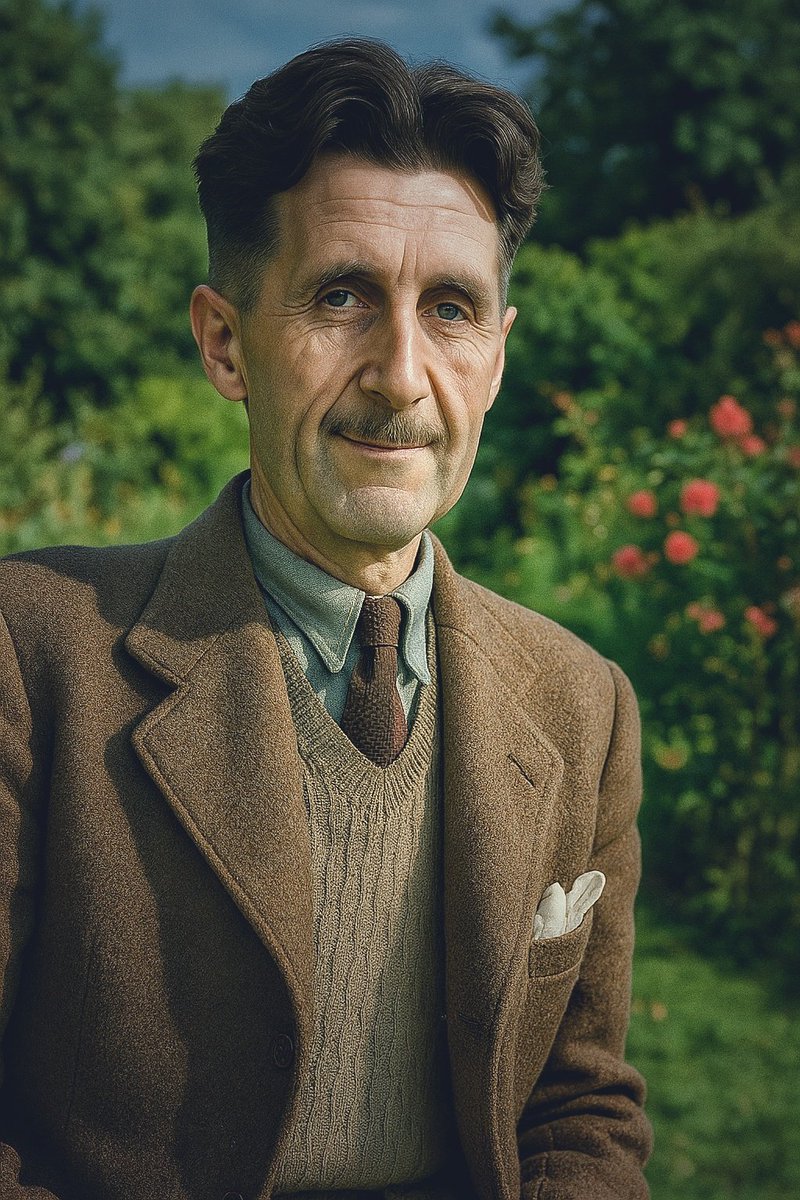
“In left-wing circles it is always felt that there is something slightly disgraceful in being an Englishman, and that it is a duty to snigger at every English institution, from horse-racing to suet puddings. It is a strange fact, but it is unquestionably true, that almost any English intellectual would feel more ashamed of standing to attention while ‘God Save the King’ was played than of stealing from the poor-box.”
— George Orwell, The Lion and the Unicorn (1941)
Orwell was pointing out a type of person who sneers at their own country as if that makes them clever. Not because they’ve thought deeply about anything, but because they think mockery itself is a mark of superiority. The tone of it hasn’t changed. The same kind of people are still here. The same smirk. The same false performance of being “above” England.
You see it across media, universities, arts, politics - this little ritual of laughing at everything English: the history, the songs, the traditions, the parades, the accents, the villages, the old ways of doing things. As if scorn is the height of sophistication.
Meanwhile the ordinary Englishman hasn’t changed. He doesn’t make a spectacle of loyalty, but it’s there - in how he speaks about home, in how he looks after his own, in how he stands when something needs to be stood for. It’s quiet, steady, and real.
The divide Orwell talks about is still obvious:
There are those who feel duty and belonging.
And there are those who think they are above both.
The first group doesn’t need to explain itself. 🏴