Just in time for #WorldKidneyDay, I'm happy to share our latest work on human kidney endothelial cells published today in BJC Reports. We use single-cell RNA-seq, tissue & cell-based validation studies to study the unique phenotypes of these cells. (1/14) https://t.co/XqaLA34uSp
Correction: my talk will be at 11:30am on Oct. 26, Room 6A. Other speakers in the 10:30-12:30 session are Sanjeev Sethi, Cynthia Nast, and Pinaki Sarder. It should be an exciting session! #KidneyWk2024
At @ASNKidney#KidneyWk 2024 next week in San Diego, I will discuss the potential of clinical translation of spatial transcriptomics technologies. Saturday, Oct. 26 at noon, Room 6A, including some unpublished preprint data: https://t.co/Bz1MfVHE5r
Also, while there is a kidney focus in this review, the concepts and principles are generally applicable. So please share with your non-kidney friends! 😉
This was an awesome collab with @oligopain! Thanks to @NatRevNeph editors and staff for guiding us through this huge undertaking. We couldn't cover everything, but we hope this is a useful primer for studying the 3D and 4D genome in the kidney: https://t.co/uMbG0VGxDr
The inherent complexity of the kidney makes it an ideal validation platform for showcasing topographical molecular mapping: Multiscale topology classifies cells in subcellular spatial transcriptomics | Nature https://t.co/qm2pX3mfGm
⚡️🔬📣 Excited to share our new @Nature article building and evaluating PathChat, a multimodal generative AI copilot and chatbot for human pathology. Article: https://t.co/OAIG31ofWJ Open Access Link:
https://t.co/tvw6W6qmT9
We leverage our previous success in building foundation models for computational pathology such as UNI / CONCH and combine it with the advancements of large vision language models and generative AI to enable PathChat to answer diverse pathology-related queries. We assessed PathChat using both multiple choice diagnostic questions and open-ended questions.
Congratulations to @MYLu97@chenbowen118 @DFKW_MD @richardjchen and everyone else who contributed to this work.
Also see blog post from @MYLu97 about this work: https://t.co/exjpKMnrQp , also teasing the development and preview of PathChat 2, a successor to PathChat 1 bringing new capabilities and substantially improved performance to the state-of-the-art.
Spatial transcriptomics technologies have great potential for clinical translation. In this commentary, @kelsmith_path, myself and colleagues discuss practical considerations, costs, and challenges in moving these technologies to the clinic: https://t.co/1dhhBVwwso
This work was supported by a DOD Kidney Cancer Research Program TRPA, an NCI pilot award and the Cancer Therapeutics Endowment. Shared Resources of the Fred Hutch/UW Cancer Consortium (P30 CA015704) and the HPC team at Fred Hutch funded by ORIP grant S10OD028685. (14/14) 🙏
Did you catch that? Tumor endothelial cells have distinct immune cell binding preferences. T-regs and monocytes are more likely to bind to them. So, even before cell-based immunotherapies can interact with the tumor, they have to interact with the tumor endothelium... (12/14)
And the tumor endothelium really holds the 🗝️ to accessing the tumor mass! Their unique properties deserve further study and we hope our dataset helps with that. Yuexin also created an easy lookup tool: https://t.co/6Iy8dzVbWI (13/14)
Finally, we studied the functional properties of kidney tumor endos in culture. We asked if various immune cells (isolated from the same patient's tumor, normal adjacent tissue (NAT) or PBMC) could preferentially adhere to their tumor or normal endos (11/14)
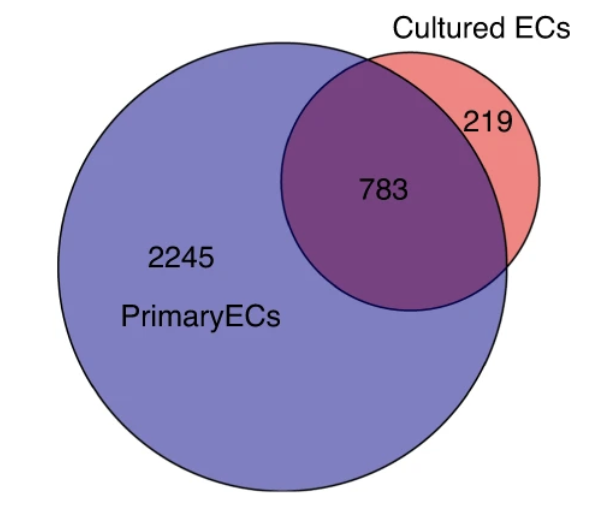
We next asked if we could study primary tumor and normal endos in culture. While they became 'simpler', cultured endothelial cells maintained a large fraction of their expression programs stably in culture even without tumor cells, immune cells or the microenvironment! (10/14)
Let that sink in... This means that normal endothelial cells are diverse and fulfill unique functions in their host organ. By contrast, tumor endothelial cells from liver and kidney cancers (and maybe other tumors) have a convergent/shared phenotype!! 🤯 (9/14)
Comparing to liver cancer, we found that while the normal endos from kidney and liver were distinct and varied, 92.4% of RCC tumor endos overlapped with liver cancer endothelial cells. Here's a combined UMAP of both datasets. Most tumor cells overlap shared clusters (8/14)
Just in time for #WorldKidneyDay, I'm happy to share our latest work on human kidney endothelial cells published today in BJC Reports. We use single-cell RNA-seq, tissue & cell-based validation studies to study the unique phenotypes of these cells. (1/14) https://t.co/XqaLA34uSp
Our study is the *deepest* dataset of primary ccRCC tumor endothelial cells (the normal endothelial dataset is pretty deep too). Next we decided to see if tumor endothelial cells from different tumors shared similar gene expression programs... (7/14)
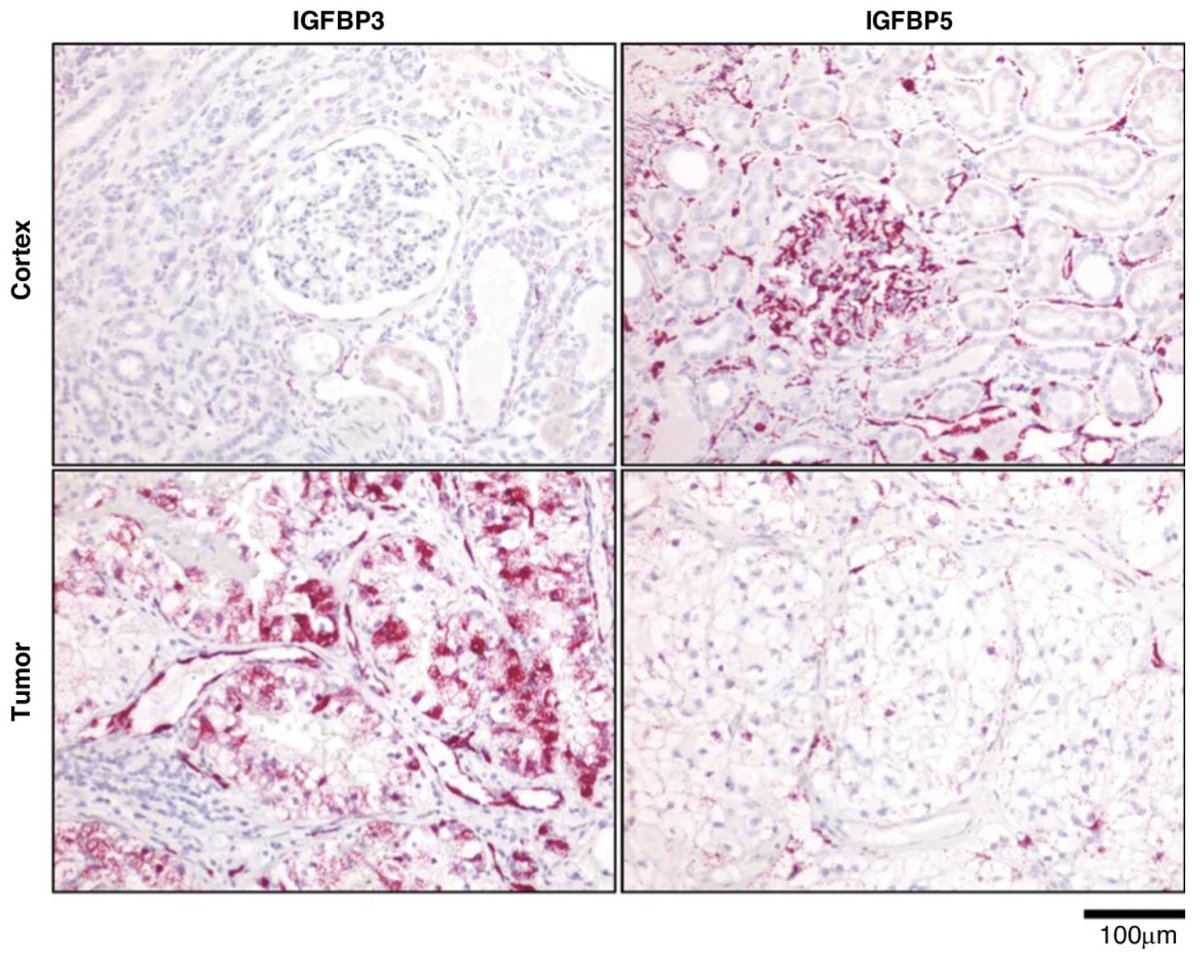
We validated the ex vivo scRNA-seq findings using RNA in situ hybridization (RNA-ISH) on intact normal kidney and kidney tumors. These stains validated our scRNA-seq findings (plus, soooo pretty! 😍) (6/14)
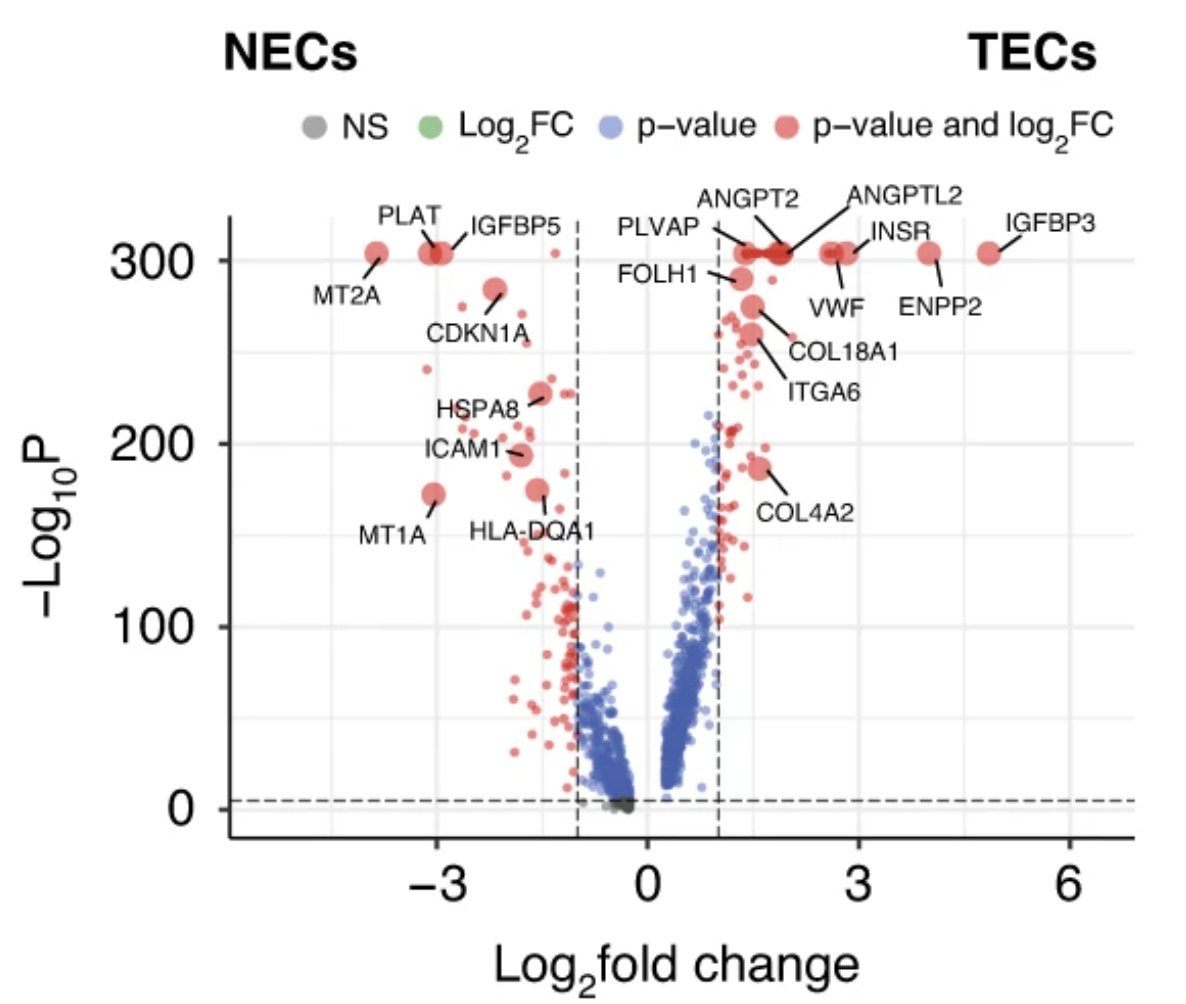
Interestingly, the IGF signaling proteins IGFBP3 and 5 were the most differentially expressed genes between TECs and NECs. Other pathways regulating the matrix, immune cell attachment and cytokine signaling were also different. Hmmm... Any IGFBP experts out there? (5/14)
First, we isolated tumor and normal endothelial cells from n=4 tumor nephrectomy specimens and performed single cell RNA-seq. There was great overlap in the endothelial cells from all 4 donors and the TECs and NECs had distinct phenotypes. (4/14)
❓The most common malignant kidney cancer, clear cell carcinoma (ccRCC) has prominent vasculature. In all tumors, the tumor vessels represent the first barrier for immune cells. We decided to characterize these tumor endos (TECs) and compare them to normal endos (NECs) (3/14)
This opus was primarily driven by Dr. Yuexin Xu & was a collaboration between my lab @uwlabmedpath & Dr. Scott Tykodi's lab with assistance from Dr. Hootie Warren's group @fredhutch, Dr. Ying Zheng & Dr. Chris Miller. Major funding from DOD's KCRP & @kidneycan advocacy! (2/14)