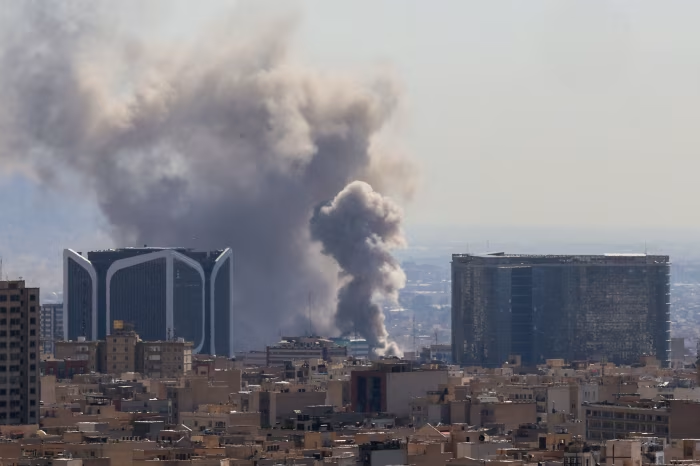
If you watched US media you might think Hezbollah was invading Lebanon, not Israel. No, whether you like them or not, Hezbollah is defending Lebanon from an invading army - the IDF. Israel is attacking Lebanon and plans to take southern Lebanon. They are clearly the aggressors.
Honestly guys, how can anyone watch this and justify it by blaming Hezbollah?
It's one thing destroying a militia and their infrastructure, it's another destroying every single home and wiping out entire villages
South Lebanon is becoming like Gaza
🇮🇱🇵🇸 In 2024, Hala Khreis was holding a white flag and walking with her grandson in northern Gaza.
They were walking along a route that had been declared safe by the IDF, yet an Israeli sniper shot and killed her.
Never forget Gaza.
🚨🇺🇸🇮🇷🇮🇱 The Wall Street Journal just dropped a bombshell report on the inside story of the Iran war...
The key revelations:
Trump used to call the Middle East "blood and sand" and wanted nothing to do with it.
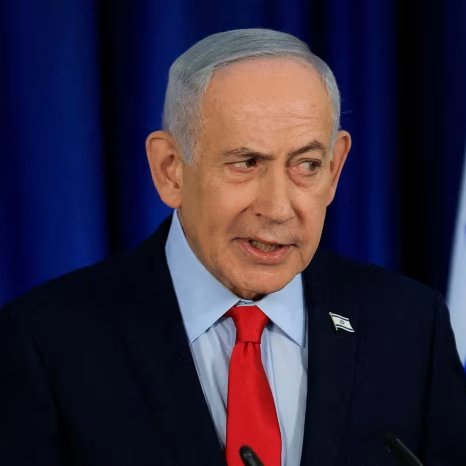
Then Netanyahu gave him a "persuasive February briefing" in the Situation Room, backed by repeated calls from Lindsey Graham, and Trump changed his mind.
He thought it would be as easy as Venezuela.
Trump was "in awe" of the scale of the bombs, watching clips of explosions every morning.
But he did "little to sell the American public on the war" and grew frustrated when he didn't get praised for it.
His own team showed him midterm polling that proved the war was dragging down Republican candidates.
He "quickly began ruminating on how the military action could turn into a catastrophe."
On the Strait: Trump told his team before the war that Iran would "likely capitulate before closing the strait."
His advisers were "caught off guard" that tanker traffic stopped so quickly.
Trump later "marveled at the ease with which the strait was closed," saying "a guy with a drone can shut it down."
By late March, before the F-15 was even shot down, Trump ordered his team to find a way to start talks.
The war was already over in his mind weeks before the ceasefire.
His aides begged him to stop doing impromptu interviews because he was contradicting himself publicly.
He agreed to stop, then went right back to calling reporters.
The April 1 address to the nation was Susie Wiles' idea to "reassure the country Trump had a plan."
Trump didn't want to do it because, in his own words, he couldn't declare victory and didn't know where it was going.
This report paints a picture of a president who was talked into a war by Netanyahu and Graham, realized it was a mistake within weeks, spent the rest of the conflict looking for the exit, and was frustrated that nobody would give him credit along the way.
The war was an impulse, sold by an ally with different objectives, enabled by advisers who couldn't say no, and sustained by a president who was too proud to admit the mistake until the economy forced his hand.
🇮🇷 Ghalibaf delivers the most honest and strategically significant statement of the entire war:
"We are not militarily stronger than America.
They have more money, equipment, resources, and experience.
But we fought an asymmetric war in such a way that we pushed the enemy back."
Then the line that really cuts deepest:
"The U.S. government claims America First is important to it, but in practice it has shown that Israel is first, because it makes decisions based on false information from Israel."
He's not boasting about firepower.
He's saying Iran won because America made bad decisions, and America made bad decisions because Israel fed it bad intelligence.
The convergence is remarkable.
American veterans, American journalists, the American Vice President, and Iran's Parliament Speaker have all independently arrived at the same conclusion: this war was fought on Israeli intelligence, for Israeli objectives, with American blood and money.
Source: @clashreport