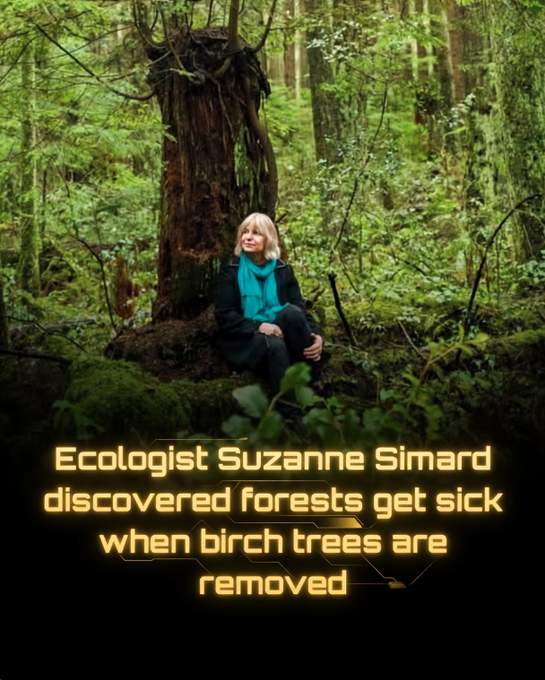
In the 1990s, Canadian ecologist Suzanne Simard made a groundbreaking discovery that challenged everything we thought we knew about how forests work. While studying managed forests in British Columbia, she noticed something puzzling: when birch trees were removed to promote the growth of valuable Douglas firs, the firs did not flourish as expected, they actually struggled and grew more slowly.
Determined to understand why, Simard traced the movement of nutrients using radioactive carbon isotopes. What she found was astonishing. Trees were actively sharing resources through vast underground fungal networks known as mycorrhizae. These delicate, thread-like fungi connect the roots of different trees across the forest floor, forming a complex web that allows the exchange of carbon, water, nutrients, and even chemical signals, sometimes between entirely different species.
She discovered that older, larger trees often serve as central "hubs" or "mother trees," supporting younger saplings by redistributing vital resources and helping the entire ecosystem remain resilient. When these key trees are removed, the underground network weakens, and the health of the remaining forest declines.
Simard’s research overturned the traditional Darwinian view of forests as battlegrounds of ruthless competition. Instead, she revealed a far more sophisticated reality: forests operate as highly cooperative systems where trees communicate, support one another, and even warn neighboring trees about threats like drought, disease, or insect attacks.
What appears to the human eye as a silent, still forest is, in truth, a vibrant, interconnected living network, built not on isolation and rivalry, but on deep connection and mutual aid.
THIS IS BIG!
The Cancer Cells That Changed Their Minds
A KAIST team just reversed cancer without killing a single cell — and the method may matter more than the result.
For a century, oncology has had exactly one strategy: find the cancer and destroy it.
Chemotherapy poisons it. Radiation burns it. Surgery cuts it out. Immunotherapy teaches the body to hunt it. Every weapon differs in precision, but not in philosophy. The tumor is an enemy. You win by killing.
Now a team at South Korea's KAIST has proposed a heresy: *what if the tumor doesn't need to die?*
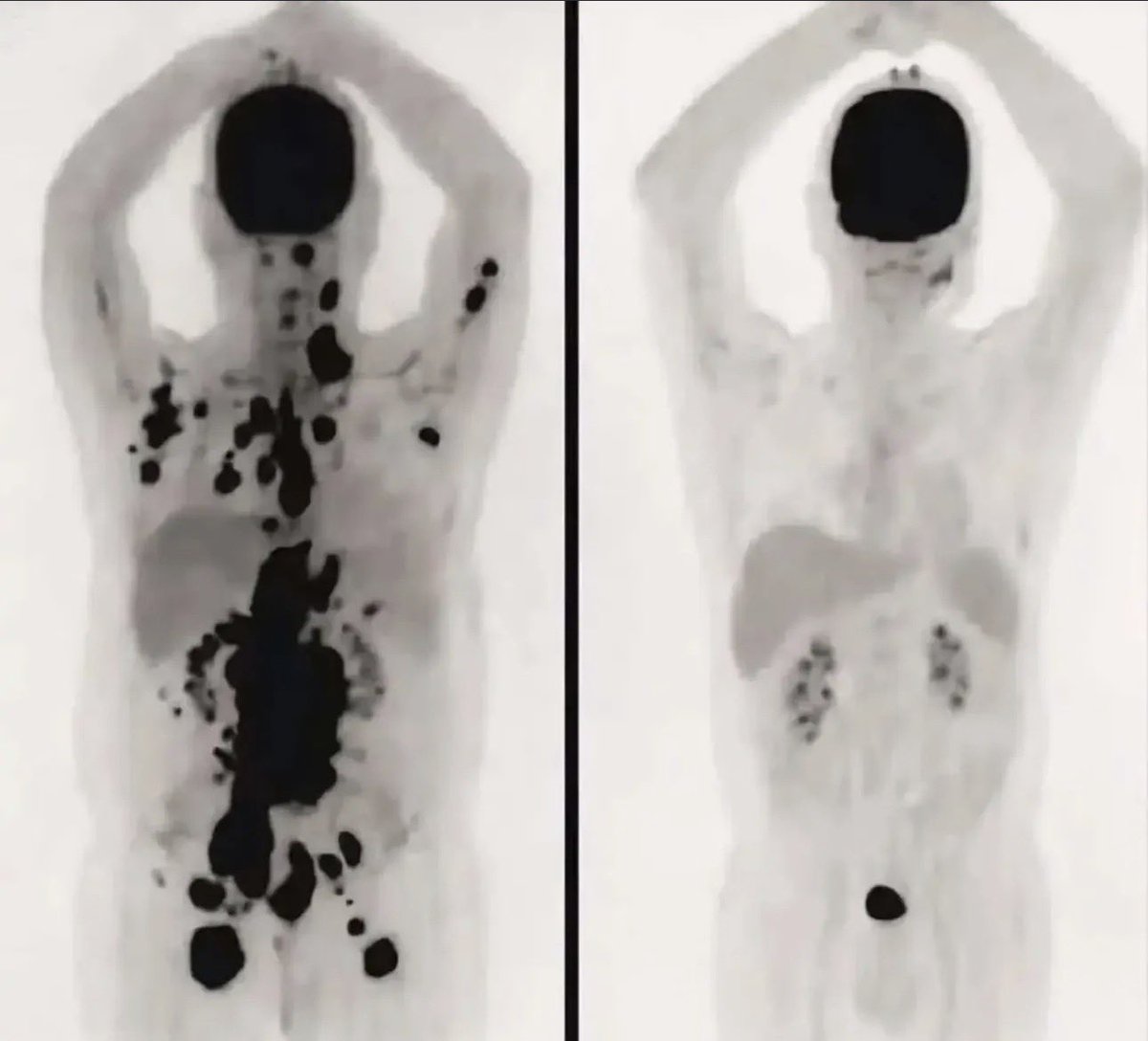
In a study led by Professor Kwang-Hyun Cho of the Department of Bio and Brain Engineering, published in Advanced Science ("Control of Cellular Differentiation Trajectories for Cancer Reversion," DOI 10.1002/advs.202402132), researchers took colon cancer cells and — without poisoning, irradiating, or cutting them — turned them back into normal cells.
Not dead. Not damaged. Just normal again.
The tumors, grown in mice, shrank dramatically. The surrounding tissue was left intact, because there was never an attack to survive.
This is early research — cell lines and animal models, no human trials, real obstacles still unsolved. But the conceptual break is the story. For the first time, cancer treatment has a second verb. Not just destroy. Also: convert.
The digital twin of a cell
The KAIST team's insight begins with a redefinition of what cancer is.
The conventional view treats cancer as a pile of broken machinery: mutations accumulate, checkpoints fail, cells proliferate. Cho's group looked at the same evidence and saw something different — a trajectory. During oncogenesis, they observed, normal cells don't just break. They regress, sliding backward along the differentiation path they followed when they matured. A colon cell becomes, in effect, a confused stem cell: immature, proliferative, lost.
If cancer is a wrong turn on a developmental road, then the treatment question changes. You don't blow up the road. You build a map and find the turn.
That map is what the team calls a digital twin — a complete computational model of the gene network governing a cell's differentiation. Using data from 4,252 intestinal cells, they reconstructed a network of 522 interacting components, capturing how genes regulate one another as a cell matures or degrades.
Then they did the audacious thing: they asked the simulation which levers, flipped together, would push a cancer cell back down the road toward normalcy.
The answer came through a system they built called BENEIN (Boolean Network Inference and Control), which models gene interactions as logical relationships and systematically tests which interventions redirect the network's state. The simulation pointed to three master regulators — the genes MYB, HDAC2, and FOXA2 — acting together as the switch that holds the cancerous state in place.
Turn all three off simultaneously, the model predicted, and the cell would stop proliferating and differentiate into something resembling a normal intestinal cell.
They tested it, and it worked.
In three colon cancer cell lines, suppressing MYB, HDAC2, and FOXA2 together strongly induced differentiation into normal-like cells. The cancer cells began expressing markers of healthy intestinal tissue. Proliferation collapsed — not because the cells died, but because they grew up.
In animal models, tumors formed from the reprogrammed cells were dramatically smaller than controls, and under the microscope they looked far more like normal tissue. The signature achievement, and the one that would matter most to any patient reading this: there was no collateral damage. Nothing was poisoned, burned, or irradiated. The healthy tissue never came under fire, because there was no fire.
1 of 2
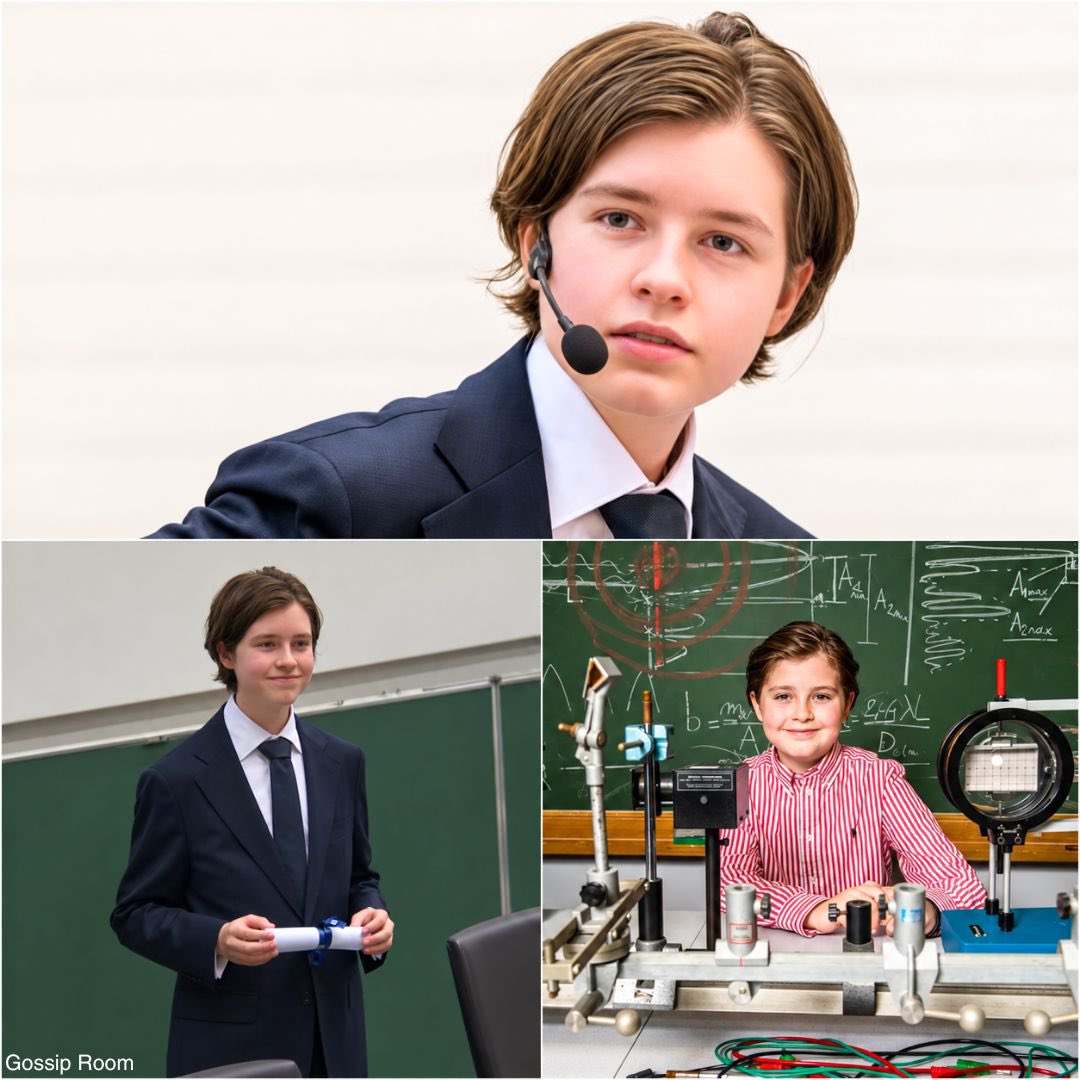
🚨 À seulement 16 ans, le prodige belge Laurent Simons est déjà docteur en physique quantique et fait partie des plus jeunes docteurs au monde.
Son parcours est exceptionnel : école primaire terminée à 6 ans, secondaire à 8 ans, formation en ingénierie à 9 ans, licence en physique quantique à 11 ans, puis doctorat obtenu à 15 ans. Aujourd'hui, il poursuit un second doctorat dans le domaine médical.
Depuis l'enfance, Laurent rêve de développer des organes artificiels pour prolonger la vie humaine, une ambition née notamment des problèmes cardiaques de ses grands-parents. 🧠 (via RTBF)
✨ 🇨🇳 Campus d’une école secondaire chinoise filmée par drone: toits-terrasses avec des courts de tennis, piste d’athlétisme , espaces verts intégrés et collines boisées en arrière-plan. Au moins les Chinois savent où part l’argent de leurs impôts.
#Chine 🇨🇳 Devenu l'une des activités extrascolaires les plus populaires chez les adolescents, le pilotage et programmation de #drones est désormais obligatoire dans les programmes de plus de 1200 collèges et lycées techniques. RT CGTN
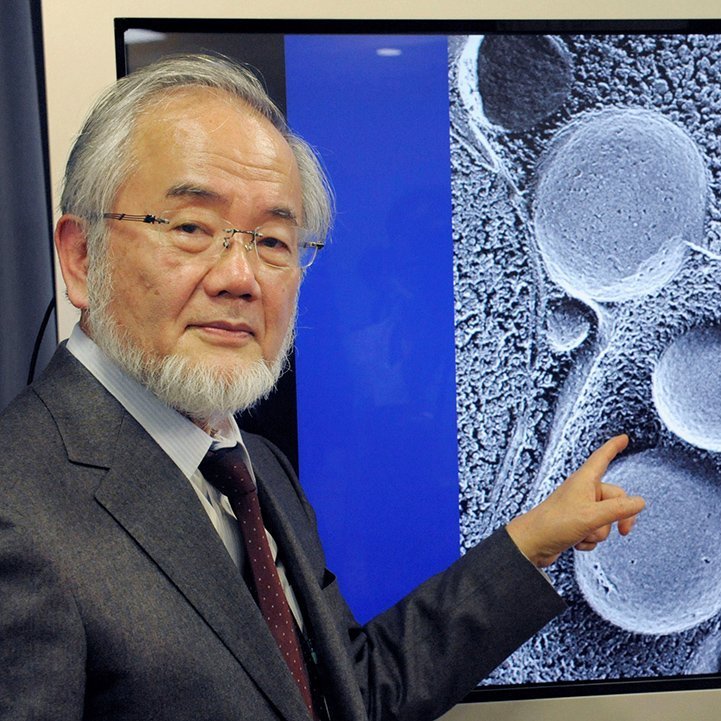
🚨: Japanese biologist Yoshinori Ohsumi won the Nobel Prize for discovering the mechanism by which the body cleanses itself by "eating" its damaged cells when starved.
China’s wind turbines alone generated more electricity in 2025 than all of Japan.
640 GW of installed wind capacity is 4 times the US’s and 8 times Germany’s.
This is not a target. It’s already built.
China isn't holding back.
If the USA is determined to play "Trade-War Tantrum" China is just going to move on, and leave the USA in a museum of 20th century artifacts.
The ONLY way the US advances is WITH China.
Fifteen billion miles from home, the farthest machine humans have ever built is still doing science on less memory than a blank Word document and a data recorder that is, quite literally, an 8-track tape.
Voyager 1, launched in 1977, is roughly 15.9 billion miles out—closing in on one light-day from Earth—and still reporting from interstellar space with about 69 kilobytes of computer memory total, plus a digital 8-track that has to overwrite old data to make room for anything new. Its signal takes nearly a day to reach us, carried by a transmitter weaker than a hallway bulb.
Compound found in broccoli kills 90% of cavity-causing bacteria.
Scientists have discovered that a molecule produced when we eat cruciferous vegetables — like broccoli, kale, cabbage, and Brussels sprouts — can wipe out the bacteria that cause cavities. The compound, known as 3,3′-Diindolylmethane (DIM), killed 90% of Streptococcus mutans biofilms in lab tests, according to a new study by Ben-Gurion University, in collaboration with researchers from Singapore and China.
Streptococcus mutans is the main culprit behind plaque and tooth decay. It forms sticky biofilms on tooth enamel, which trap acids that erode the surface and cause cavities. DIM appears to disrupt the bacteria’s ability to form those films, effectively dismantling their protective layer and leaving them vulnerable.
The findings are still preliminary — the experiments were conducted in vitro, not yet in humans — but researchers believe DIM could someday be added to toothpaste or mouthwash to prevent decay naturally.
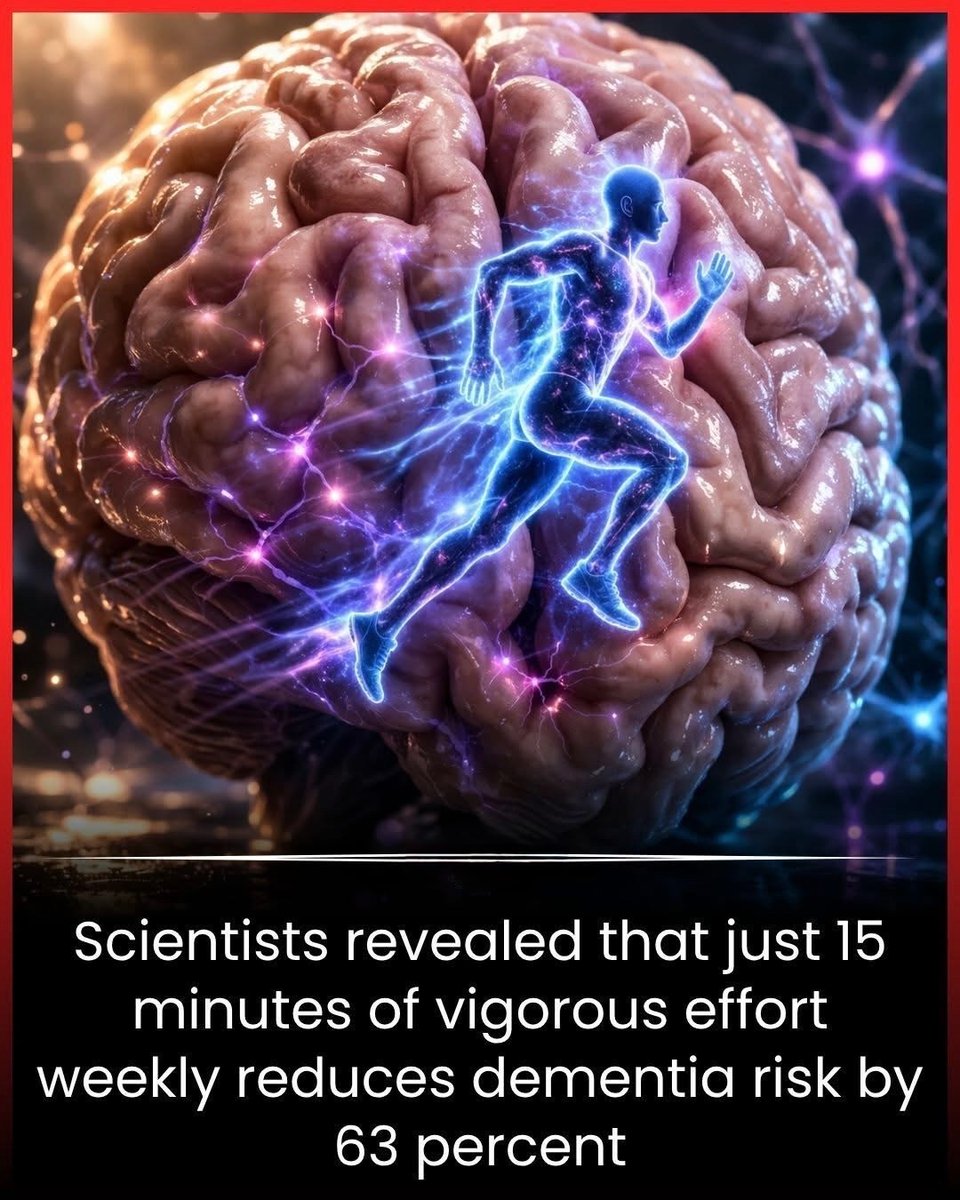
🧠 Just 15 Minutes Could Protect Your Brain…
Scientists have discovered that just 15 minutes of intense, heart-pumping activity each week is linked to a 63% lower risk of developing dementia. That’s less than half an episode of your favorite show—but the impact on your brain could be enormous.
The secret isn’t just long workouts or expensive gyms—it’s short bursts of vigorous effort, enough to make you breathe harder and feel alive. People who managed this small routine saw their brains stay sharper and healthier as they aged. Could this tiny habit be the key to protecting your mind?
Don’t wait. Your brain might thank you sooner than you think.
Source: People First Info. Short bursts of hard exercise each day can slash risk of major diseases
🛑 Are You Pleasing Everyone… at the Cost of Your Health?
What if constantly saying “yes” and putting everyone else first could secretly be harming your body? Scientists are uncovering a hidden link between chronic stress from people‑pleasing and your immune system. Your brain reacts to emotional pressure much like physical stress — and over time, this stress can trigger inflammation and weaken your defenses. While being kind and helpful feels good, researchers warn that burying your own needs could quietly increase your risk for serious immune problems. Could your need to please be more dangerous than you think?
Stay aware. Protect your health. Your body might be whispering a warning.
Source: Knowewell. (n.d.). Mind‑body connection and autoimmune disease
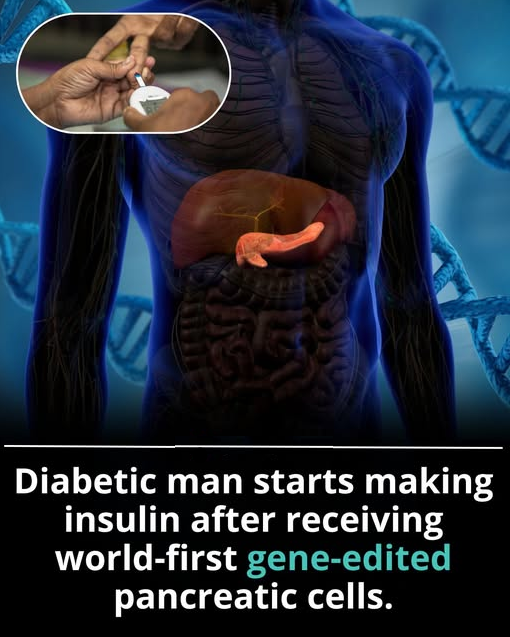
A man with diabetes is making his own insulin after cell transplant.
A 42-year-old man with type 1 diabetes has become the first patient in the world to naturally produce insulin again after receiving gene-edited pancreatic cells.
Using CRISPR-Cas12b technology, scientists reprogrammed donor islet cells to evade immune system attacks that normally destroy transplanted tissue in diabetics. This breakthrough eliminates the need for lifelong immunosuppressive drugs, which often carry severe side effects.
The patient received nearly 80 million of these “hypoimmune” cells, which survived and thrived in his body. Four months later, doctors confirmed the cells were producing insulin by detecting C-peptide spikes after meals.
While still in early trials, this marks a potential revolution in diabetes care, showing that the disease could one day be managed without daily insulin injections. If scaled, it could transform the lives of millions living with type 1 diabetes worldwide.
[Carlsson, Per-Ola, et al. “Survival of Transplanted Allogeneic Beta Cells with No Immunosuppression.” The New England Journal of Medicine, Aug. 4, 2025.]