🚨New @NEF research out today on benefits conditionality:
🫵strict & prescriptive conditionality is pushing people into poor quality work or away from support altogether
📋the public is open to a more flexible & supportive approach that prioritises engagement
Find out more👇🧵
"The simple fact is that mental health services haven’t kept pace with rising demand"
Great to hear this from @andyburnham
Today's announcement of new neighbourhood mental health centres is a positive step towards a more open access model of support https://t.co/MDCmdgbnsh
People with mental health problems often wait too long for (or never get) a really good conversation about why they're struggling & what help they need
I've written for @NewStatesman about how a 'same-day open access' model could transform outcomes https://t.co/VCInRnt67P
I subsequently worked with @wearenewlocal to set out a blueprint for how a devolved model of employment support, following the right design principles, could much more effectively meet the needs of people facing complex barriers, including disabilities 5/5
https://t.co/NbkMjo8X8g
If Burnham does look to devolve much of the DWP's current remit, as seems likely, he should use that as an opportunity to try to tackle deep-rooted cultural & institutional issues in the department that have constrained & distorted policy thinking & delivery for too long... 1/5
A senior figure in the Department for Work and Pensions loudly “joked” about disability equality and reasonable adjustments as he waited to give evidence to a committee of MPs, Disability News Service can reveal.
#DWP
https://t.co/Latd218d6H
I wrote about this 'benefit lens', as well a crushing risk aversion & a lack of imagination about how things could be done differently, in this @Demos paper about my time on secondment at DWP. The paper called for much of DWP's functions to be devolved 4/5 https://t.co/VnvZlNXnMB
Important work by @rcpsych, @natfednews & @lookaheadtweets on the impact that a shortage of appropriate housing has on the ability of mental health hospitals to move people safely back into the community https://t.co/qoEMFqXSrn
Helping people with poor health back to work is a hugely complex challenge, requiring a compassionate response focused on support & opportunity. Trying to shortcut the problem with crude cuts to benefit eligibility will do nothing to fix the underlying problems 4/4
This proposal from the Tony Blair Institute shows a complete misunderstanding of both mental health & the benefits system. Declaring some conditions 'non work-limiting' is a discriminatory & simplistic response to a hugely complex challenge 1/4 https://t.co/qLyvaYCxx1
In any case, people don't get additional benefits because of a diagnosis. It's based on functional assessments of how their health/disability impacts on their ability to work and live independently. For most people this will be the impact of multiple health conditions 3/4
The scandal at St Andrew's hospital should be a watershed moment for the quality of mental health inpatient care, but it's far from clear it will be.
Important intervention from @MindCharity CEO @_Sarah_Hughes_ in @HSJnews on what needs to happen next https://t.co/ERtmr0qioI
@forwardnotback So sorry to hear this Tim - you've been such a warm, considered and hopeful presence on this platform and, as a fellow South Londoner, I've loved seeing you document your wanderings and cafe trips. Sending love to you and your family
Important moment this morning as @MindCharity CEO Dr Sarah Hughes gives evidence to the @covidinquiryuk on the impact of the pandemic on people with mental health problems, mental health services & the mental health of the nation. Watch from 10am here: https://t.co/VwGNjnc15X
NEW: The government wants to boost employment among people who receive universal credit - but our analysis suggests a lack of good-quality jobs is making this near impossible. And, in some local authorities, there’s as few as 5 vacancies for every 100 people on universal credit…
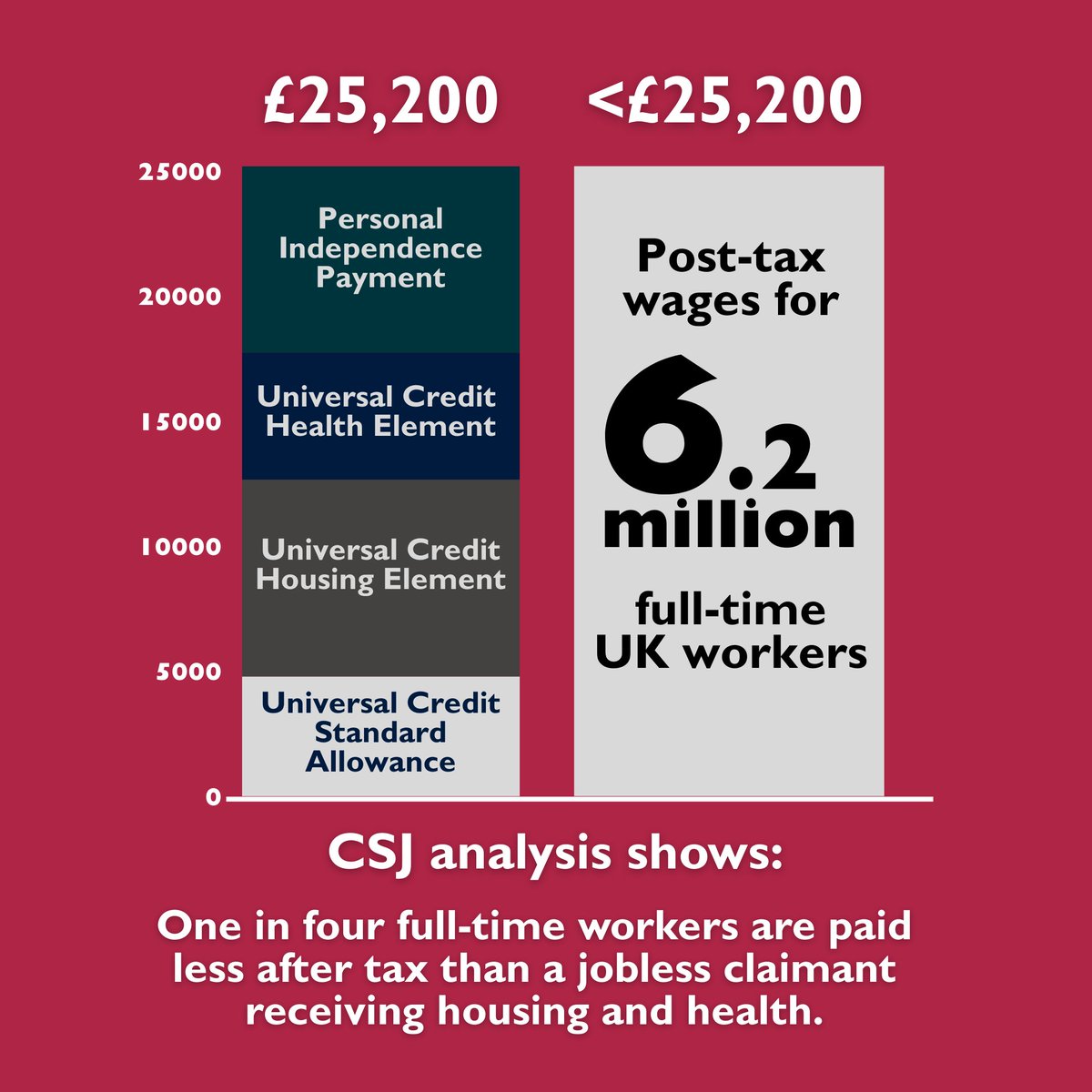
Anyone eligible for this package of benefit payments would also be able to claim Personal Independence Payment while in work. Many people in work also receive some Universal Credit, particularly for housing. So this is a completely false comparison, designed to whip up resentment
📝1,000 people every working day are being signed onto disability benefits following a surge in mental health claims.
Now, 6.2 million, or one in four, full-time workers are in roles where combined benefits would exceed their take-home pay after tax👇
Media & political noise about "overdiagnosis" has ramped up this year, crowding out more thoughtful & constructive debate about how we should respond to rising levels of mental distress, of the kind set out by Mind CEO Sarah Hughes in this @HSJnews piece https://t.co/2NnHlrqL7D