Please share widely. I am recruiting for two funded phd positions and a 2yr postdoc. Full ads: https://t.co/CajSZA9Zcg
1) PhD position in climate adaptation science (SWCASC)
2) PhD position in memory effects in forest C cycle (NSF funded)
3) Postdoc position (2yr) in 14C/NSC
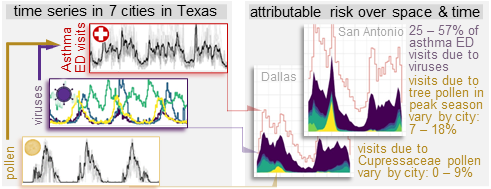
Airborne #pollen may be a major cause of asthma-related ED visits during peak pollen season, but the risk varies by location and plant composition, according to a study published in @ELSenviron by @pollenscientist. Read more here ⬇️https://t.co/PXQG6sw8Cp
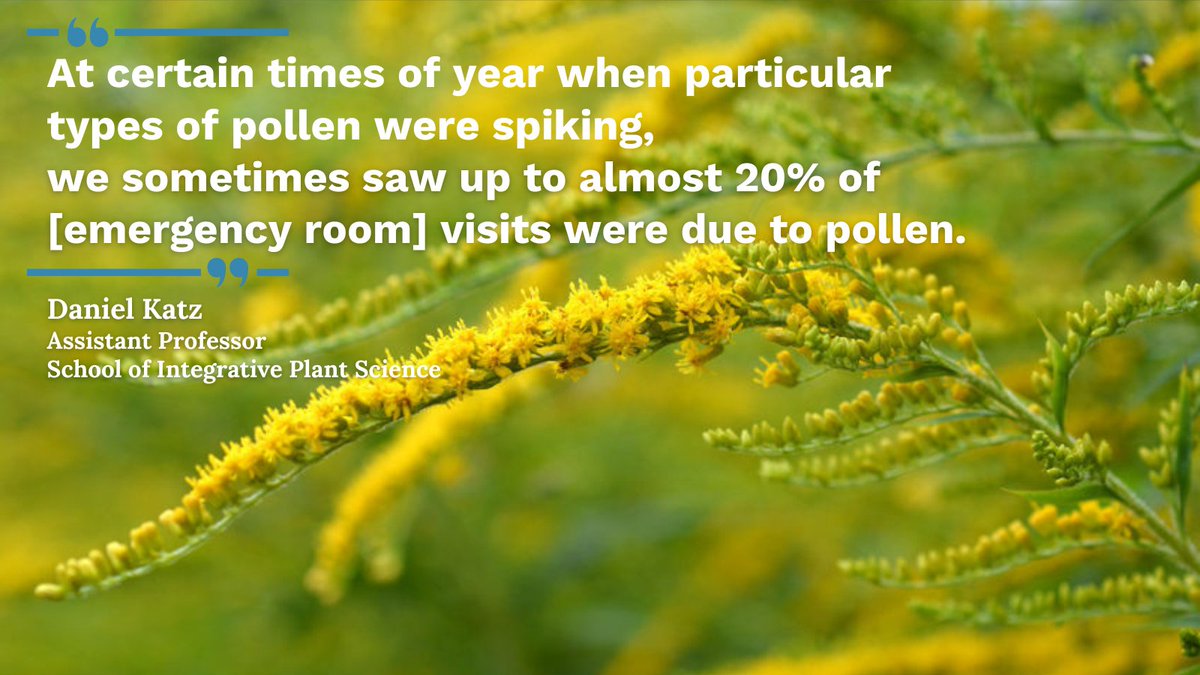
Asthma emergencies spike when allergenic pollen blooms, says a new CALS-led study from prof. Daniel Katz (@pollenscientist) highlighting the need for science-based pollen forecasts. https://t.co/4A4ufwzazw
We’re hiring a tenured/tenure-track Urban Plant Ecologist at @CornellCALS School of Integrative Plant Science. To apply: https://t.co/APH3ne54Bp Application deadline: 2024/03/10. Please share widely! @UrbanEcosystems@Becologists@ESALatAmCarib
My latest research is out to the scientific community!
Trait-related functional changes in understory forest community after invasion are driven by complementarity rather than displacement https://t.co/q4LkXHkpod
Thanks to Allasandra "Ally" Valdez for having me on for an episode of her podcast, The Happy Botanist! We chat about urban trees, pollen, and gin. Check out the interview here:
https://t.co/QNnrJ2f9vk
A new version of i-Tree will also incorporate these pollen production equations so you can easily calculate this for your city too! https://t.co/SkbOyXVr1g
Ever wondered how tree planting decisions affect airborne pollen concentrations? Or how pollen production will change as trees grow and die? Check out our new paper answering these questions in NYC
https://t.co/8azdtqNkM7
Our new article is out in @NatureComms! Cool wet places are routinely more productive during spring droughts; flux towers & remote sensing products show this but models don't. Thank you to my amazing coauthors @SeWolf_ETH, @jawsh, @BenZaitchik, @GlobalEcolUNH, & @trevorkeenan!
A nice little press release on pollen modeling in Detroit!
How 30,000 Detroit trees bloomed into a better way for researchers to predict airborne pollen https://t.co/jLpuSFS6QZ
Open flowers = pollen.
When we have good sampling, observations of trees in flower reported by #NaturesNotebook observers can serve as a useful proxy for airborne pollen, thereby supporting allergy and asthma management.
https://t.co/L3uIYfMCrM
#phenology
New postdoc position available on remote sensing, trees, and public health!
Join our interdisciplinary team working on how trees cool cities and reduce ED visits. Project is on tree ID with remote sensing including PlanetScope. DM me with your Q's!
https://t.co/KhGwfT42XB
Check out our new paper!
We predict pollen across a city by:
-identifying individual trees with remote sensing
-estimating pollen production per tree
-modeling timing of flowering
This model predicts spatiotemporal variation in airborne pollen very well
https://t.co/trMXROBCEC
Individual tree-based approaches could create more granular and accurate models of airborne pollen in cities; these can help reduce exposures and allow people to better manage their allergy medications.
Research was done @umichsph with support from @NIEHS and @UM_MICHR
Applications are now open for 10 new AI for Science postdocs (to start Fall 2023, https://t.co/0uaZYdPlJt) at Cornell, funded through the Schmidt AI in Science Postdoctoral Fellowship program. The deadline is April 15th!