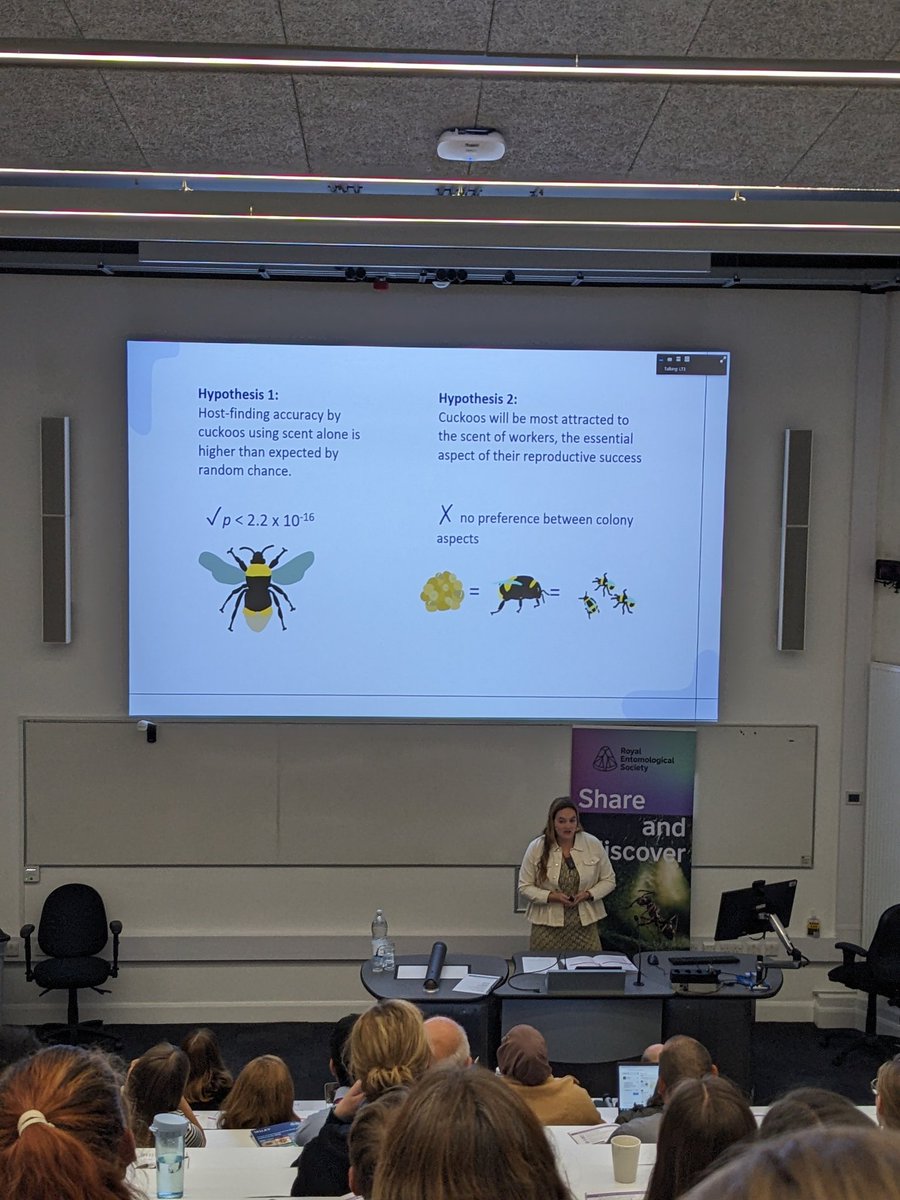
Excellent, elegant experimental design and brilliant talk from @pollinatorpal, showing that cuckoo #bumblebees can use scent to find target colonies to parasitise! 🐝
Ought to be used as model experiments for undergraduate students!
@RoyEntSoc#Ento24
What a joy it was to be back at @RockyMtnBioLab this week diving into the mathematical side of plant-pollinator interactions and discussing how to best integrate theory with data. Thank you to Professors @fevaldovinos , Berri Brosi, and Mark Novak for your time and expertise!
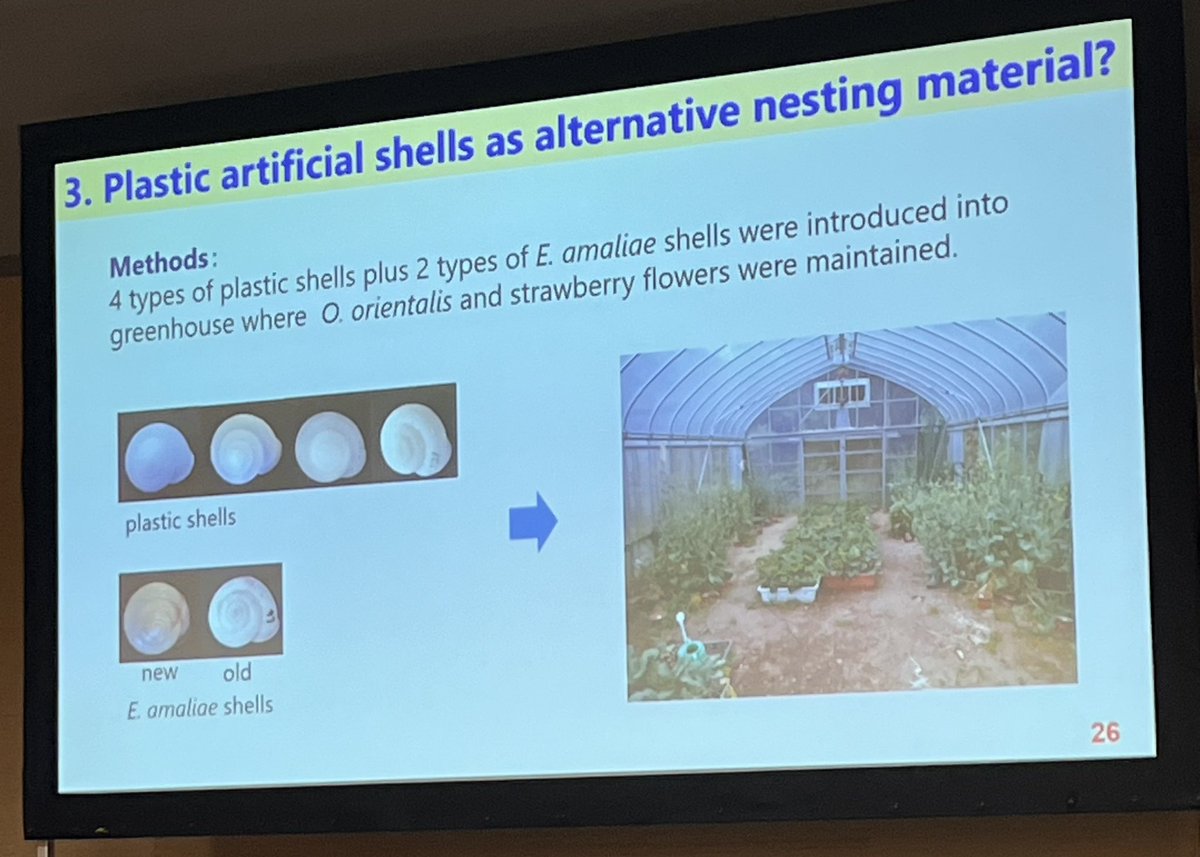
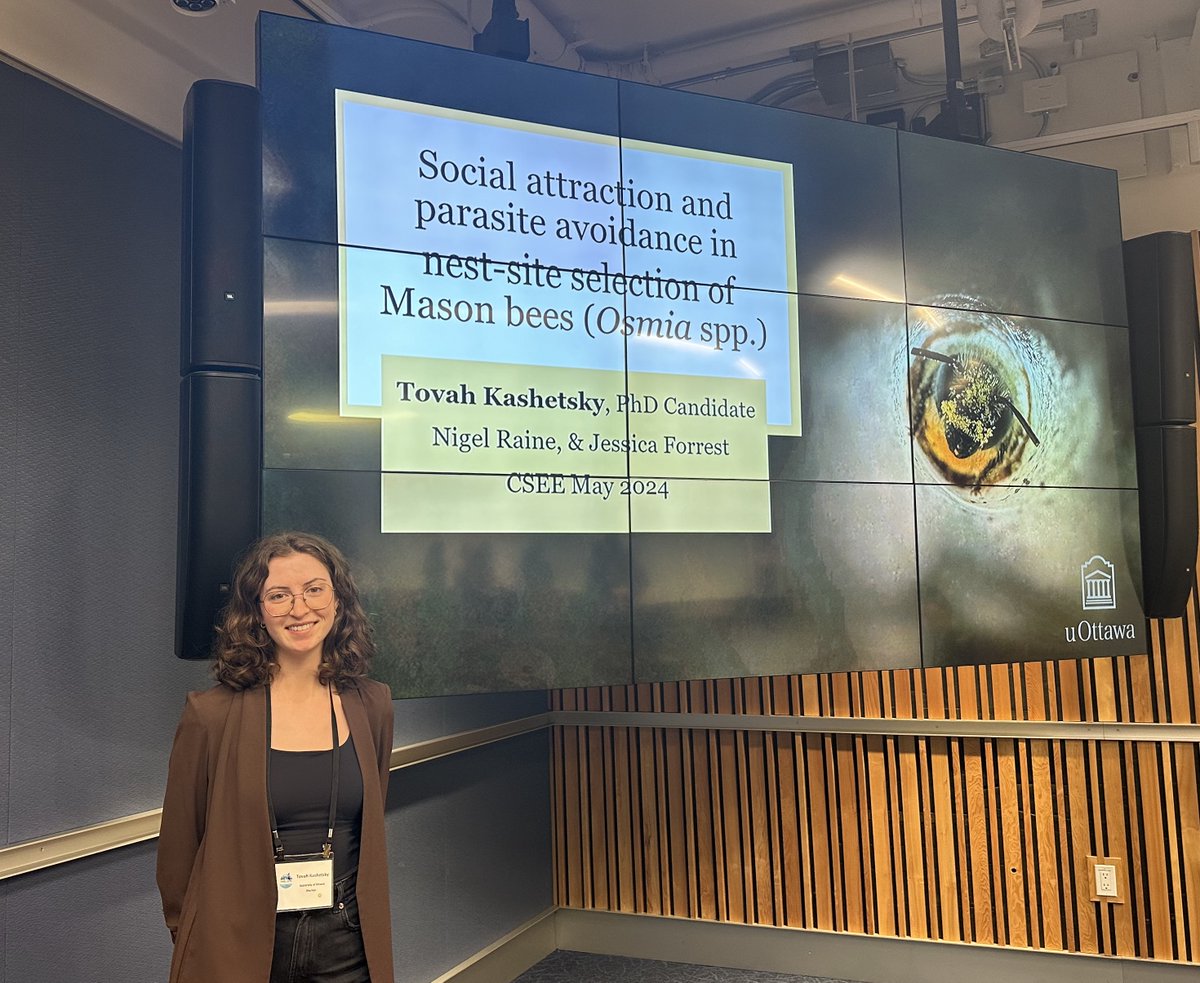
The snail shell nesting Osmia orientalis is more efficient at pollinating strawberries than honeybees - they just need somewhere to nest so Ikuo Kandori reports the use of 3D printed snail shells. @ice2024kyoto_jp#ICE2024
Whole-#genome resequencing of 77 wild & domestic Bombus terrestris 🐝 #bumblebees from #Asia & #Europe: genetic differentiation, substantial trait differences, demographic analyses show Ne variation with climate change, #gene selection for Asian habitats
https://t.co/lvAqxvm6sY
Bumble bees 🐝are assumed to be monogamous. What are the consequences of violations of this assumption for colony abundance estimations? In this study, we explore this question in Bombus impatiens. Led by @sydthebirdy https://t.co/X4D828ZGlU
Join us! We are looking for a PT technician to support the Agroecology lab @CamZoology, working on #pollinator conservation for 3 years, with the @RestPoll project. Apply by 28 August 2024. https://t.co/1ZmegAUbA6
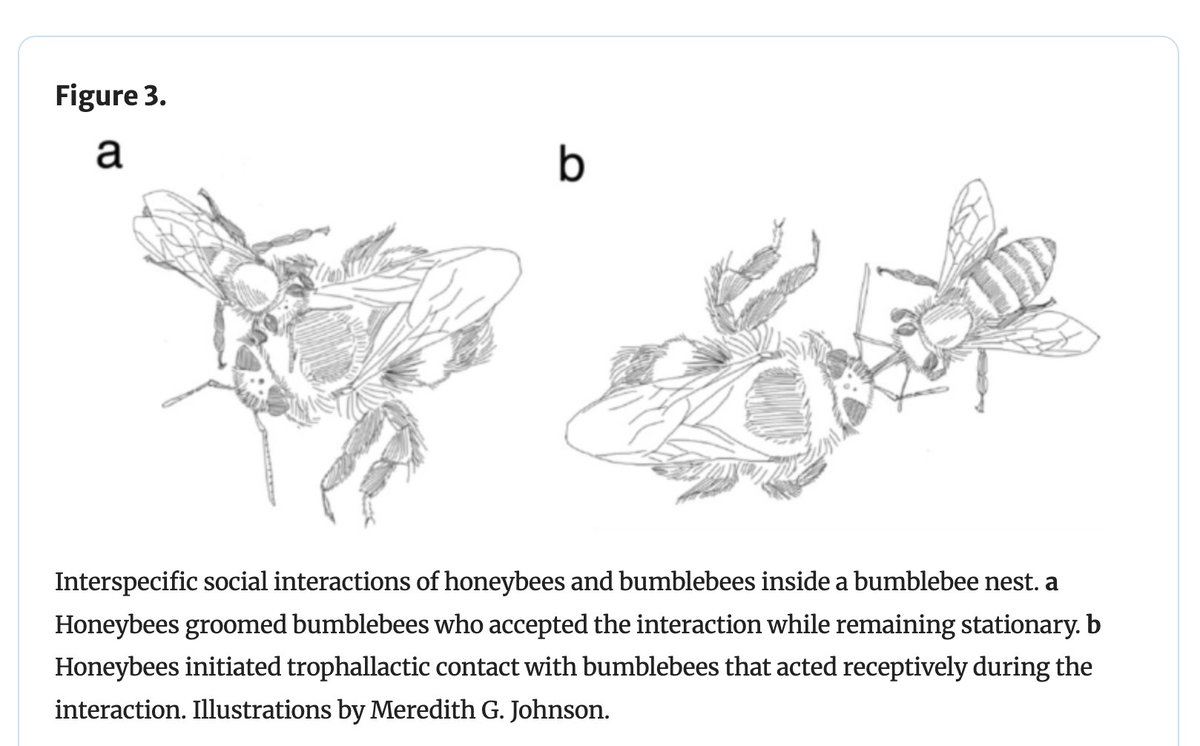
Honeybees as workers in a bumblebee colony ... what kind of cross-species interactions happen? New paper by @EricRomeroVet et al. in @Apidologie. Drawing by Meredith Johnson @MeliponiniMere https://t.co/UvttRq3nfp
1/3 to 2/3 of crop systems studied worldwide would produce higher yield if they had more pollinators (ie, suffer from pollinator limitation). Just published by lab postdoc Katie Turo in Nature Ecology & Evolution - read it here https://t.co/sfPUrGqT18
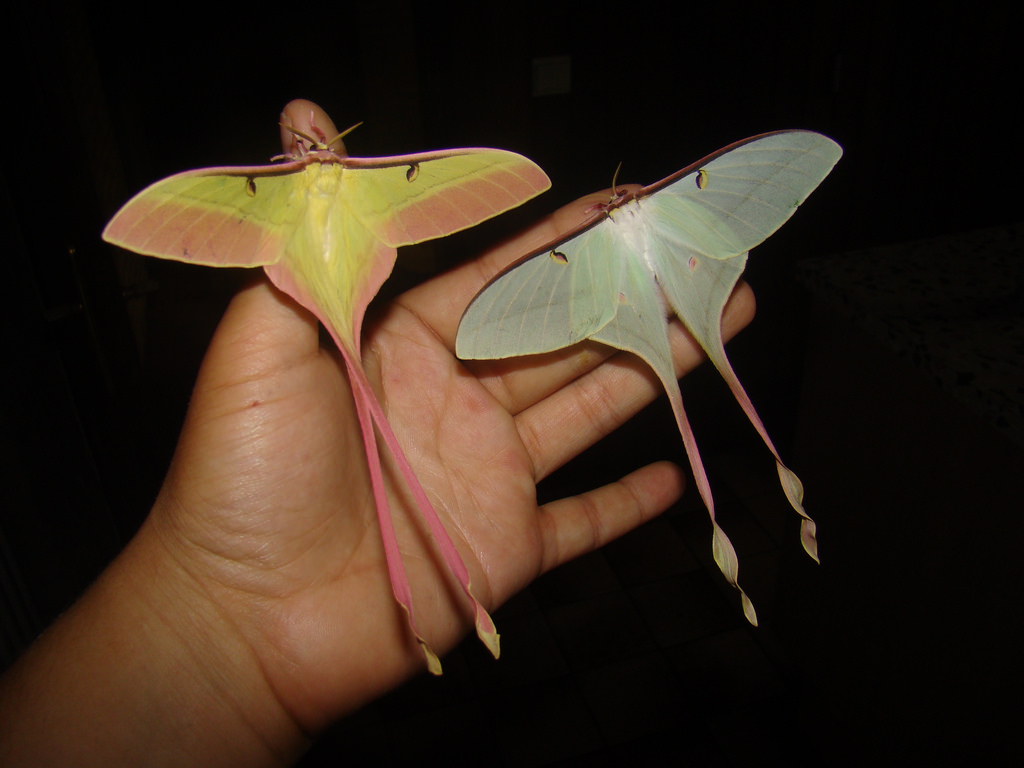
New study by Juliette Rubin and others showing that #MoonMoth tails are driven by #bat predation. Interestingly, seasonal temperature variation has exerted a nearly equally counterbalancing constraint on hindwing length. #LunaMoth#MoonMoth#evolution
https://t.co/UWIX7Ee2gV
Can #bumblebee queens endure periods of inundation while overwintering underground? New Biology Letters paper from Dr. @SabRondeau suggests that hibernating queens can survive up to 1 week submerged under water: https://t.co/hw2IFuhsWY #OpenAccess#Pollinators@RSocPublishing
Yesterday at 2pm the first honeybee (Apis mellifera) in this species’ evolutionary history managed to pull a string for reward. They are much harder to train than bumblebees, though!
It's finally here! Our new paper, out now in Nature. It's one small step for a bumblebee... and a big leap for human understanding of their cognitive capabilities.
With @LChittka , @AmandaRoyka , and others!!
https://t.co/Rs9osQXS8w
A new study by the lab shows heat response in bumble bees is impacted by many factors: Variance in heat tolerance in bumble bees correlates with species geographic range and is associated with several environmental and biological factors https://t.co/XNdqnlqEuV
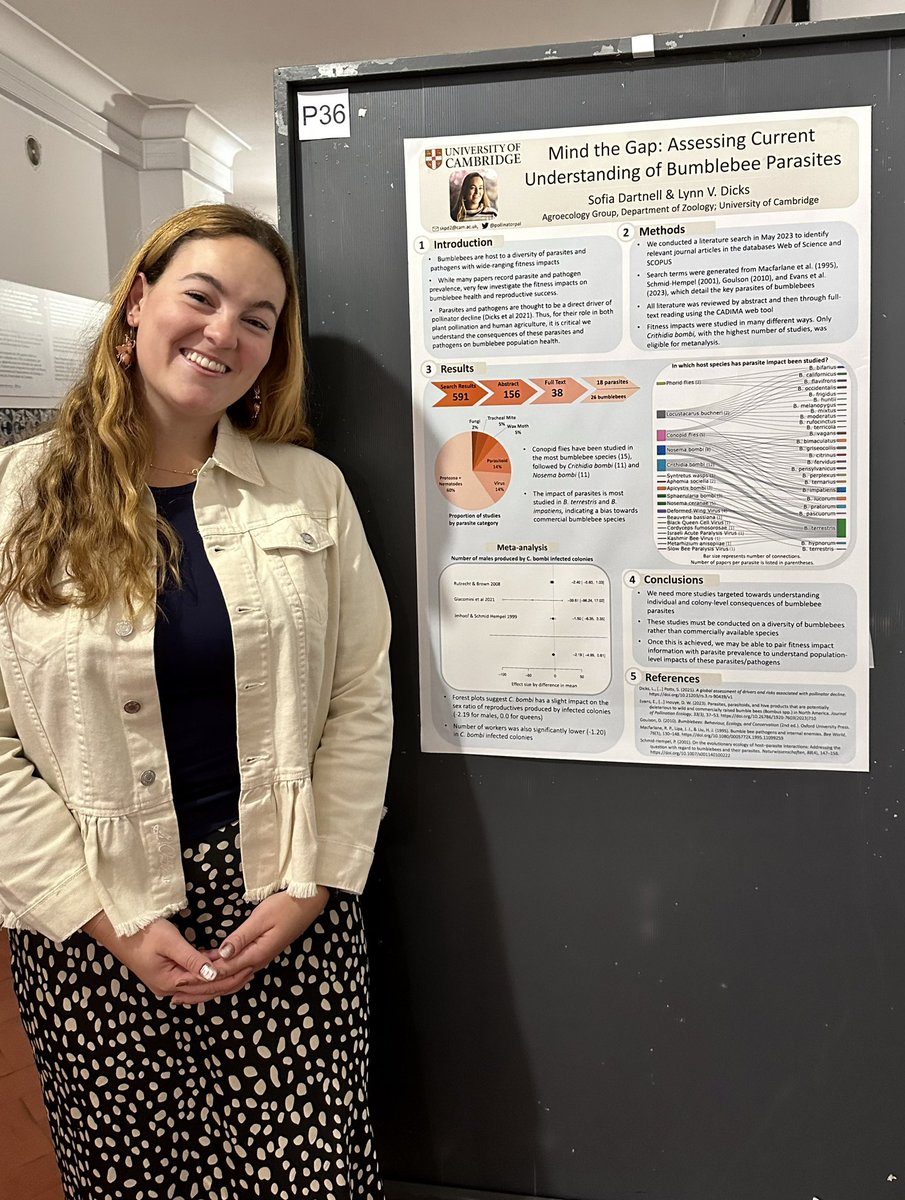
Excited to be in Coimbra, Portugal for #ECOFLOR2024 ! I’m sharing my recent research assessing our current understanding of bumblebee parasites and their fitness impacts. Come say hello during the poster session!