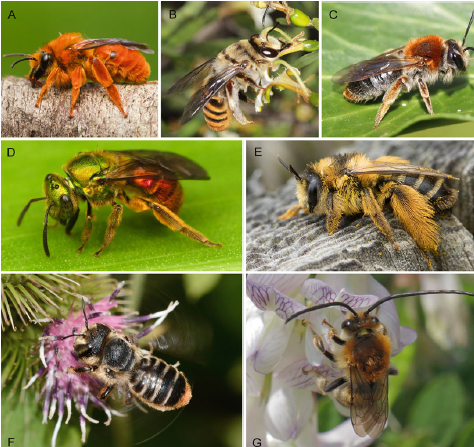
A male polyester bee (genus Colletes) visiting flowers of Erythroxylum coca, the coca plant. Indigenous peoples have utilized the leaves of this plant for thousands of years for their alkaloid content. @vhgonzab@wallacetrigona@Mlucia_Xylo
Credits: https://t.co/iX4ivZ3Gc1
Stingless bees get sugars from sap-sucking bugs' secretions (honeydew), especially in periods of scarce floral resources. Here is a species of Trigona feeding on honeydew produced by membracid bugs. #pollinators#Colombia@vhgonzab@mmlopezu
Credits: https://t.co/wN7cuk1fHE
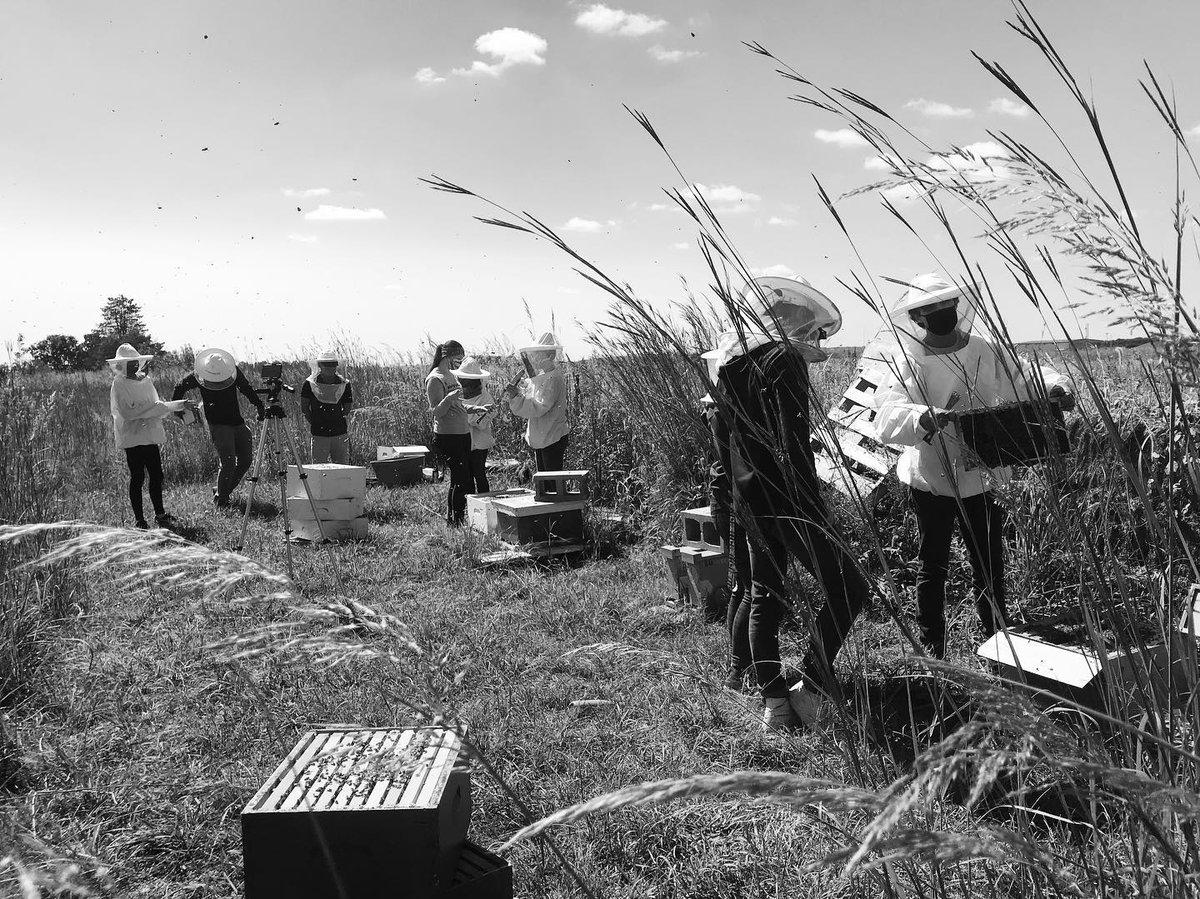
Charles Michener, R. S. Bailey, and George Bohart (left to right), at a nesting site of the alkali bee Nomia melanderi near Fillmore, Utah, Aug 1950.
Photograph by W. Murdock
Hot off the press: Towards a U.S. national program for monitoring native bees https://t.co/cjYqk2Jl8Q
Work led by @WoodardLab in collaboration with many others @DanforthLab @melittologist @rufocinctus @msuberrybugs @WilliamsBeeLab@jha_ut@CariveauLab
A solitary bee of the genus Diadasia from Colombia's dry forests, an endangered tropical ecosystem. Most species of Diadasia are restricted to Xeric environments. #Colombia#bees#pollinators
Credits: @MottaBees
Bees that walk on water! A rare behavior observed in solitary bees of the tribe Emphorini in Colombia's dry forests. Credits: @MottaBees#Colombia#pollinators