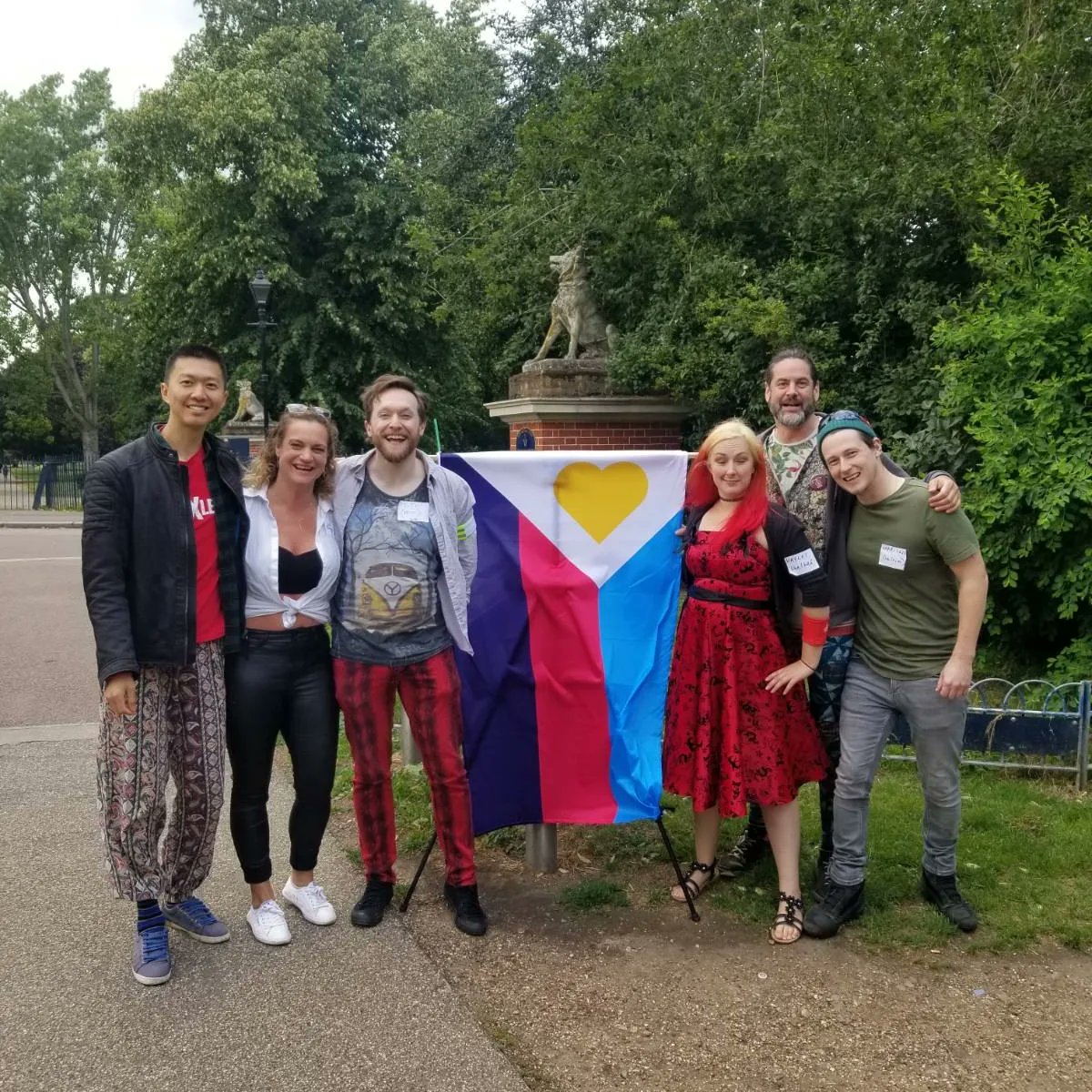
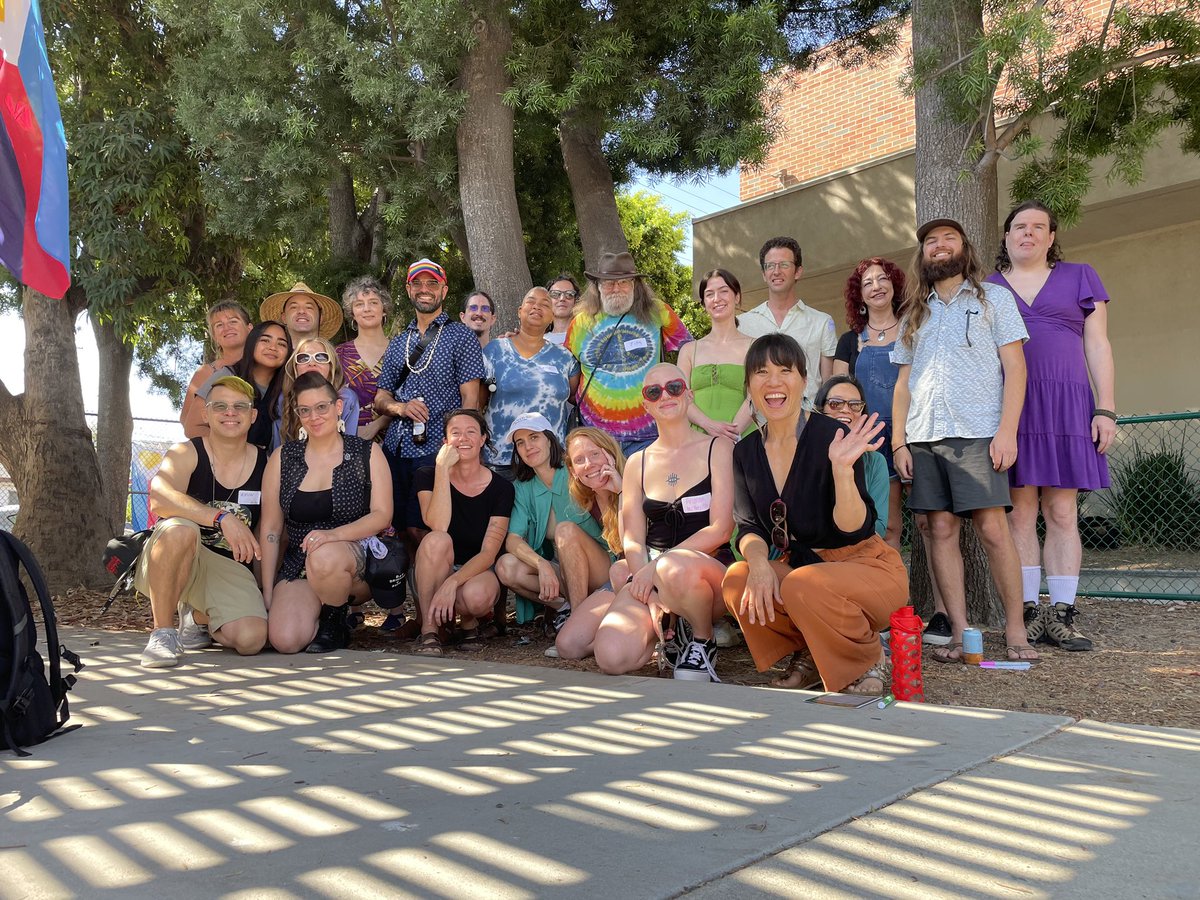
There appears to be an overrepresentation of neurodivergent individuals in kinky spaces as compared to the overall population. @emmendelson explores some potential reasons for this in the latest on the Sex and Psychology blog: https://t.co/kmXBHoxAeX
It's wild how many people think that being polyamorous means you do less -- that you can't commit or care about your relationships.
When really, you're a relationship overachiever. You have multiple loves, you're busy, and you care so much.
And it's wonderful, yet exhausting.
A full ONE THIRD of Americans who have been in a monogamous relationship report having cheated on a parter.
Could #nonmonogamy be an antidote to infidelity?
Thoughtful reporting from @DrSchechinger of @PolyamoryLegal and OPEN's board of directors.
https://t.co/CjPuK6TkPH
Which is why I urge newly opened partners to focus on becoming better autonomous individuals and better at seeing their partner as an autonomous individual, instead of focusing on making rules.
Being open in theory is totally different than in practice. You might make some agreements that allow you and your partner freedoms, and trust yourself to handle what unfolds.
Here's my story at the @HuffPost talking about #RelationshipAnarchy, #OpenRelating and #SoloPolyamory
"We don't need to be limited in regard to whom we can share intimacy with and how. We are not restricted to one 'soulmate.'”
https://t.co/wfydLz8UEZ
So how come we don't have a positively charged word for a relationship spectrum of inclusivity (as opposed to exclusivity)?
Well, I came up with one, but happy to hear other ideas.
Multigamy = the spectrum of relationship dynamics beyond the exclusive dyad.
The practice of having multiple partners predates monogamy, so why are people who choose to do that today, being defined as non-monogamous?
Would gay and lesbian people like to be called non-straight? Obviously this is ridiculous.
@TheCigarPanda The other thing you have to consider is the "why" behind the request. Why would you need to control your partner's appearance and their friends? What are you trying to accomplish and why? Where is this need for control coming from? Do you not trust them? Do you not respect them?
Don't be like Jonah. Choose courage and vulnerability and love instead of control, fear, and abuse. You owe it to yourself, your partner(s), and your community to do better and be better.
This is what it means to take responsibility. Men like Jonah Hill are not taking responsibility for their own emotions and instead are blaming their partners, which gives these men all the justification they need to control their partners with impunity.
The "difficult" (but infinitely more rewarding and healthy) solution, would be to heal my emotional wounds so I don't have to worry about my partners triggering them ever again.
They're too afraid to do the real work required in therapy—they manipulate their therapists in the same way they manipulate everyone else around them. And many therapists are not trained to spot this (abusers can also just fire therapists until they find one they can manipulate)
This process is what men like Jonah Hill do not understand. If a partner is making you uncomfortable, you do not get to control them to ease your discomfort. Cowardly men do this bc they are afraid of their own emotions. This is also why these men can be dangerous in therapy.