🚨NEW: Teachers are raising concerns about a ban on YouTube for under-16s as many year 10 and 11 students use the platform to learn and revise GCSE content
CEOs are quietly realizing the AI replacement plan has a problem.
Two problems, actually.
One: the token costs for running AI agents are now exceeding what they were paying the employees they fired.
Two: when the tokens run out, the AI stops. Just stops. No continuity. No workaround. Just a spinning wheel where your workforce used to be.
You fired humans to save money and bought a subscription that bills you into a corner.
The employees you let go knew what to do when things broke.
The AI just invoices you for the outage.
And then there’s the permission problem nobody wants to talk about.
To do its job, the AI agent needs access. Full access. Your systems, your patents, your contracts, your future plans. Everything you spent years building, handed over to a process that has no loyalty, no discretion, and no skin in the game.
You didn’t hire a replacement.
You gave a stranger with no soul the keys to everything you own.
Enjoy.
They removed CD/DVD drives from devices.
They made physical media harder to buy and use.
They removed expandable storage from phones.
They pushed us into streaming subscriptions.
They made always-online normal.
They made unlimited internet necessary.
Then slowly raised the price of everything.
Ownership quietly became renting.
@LeilaniDowding Why would a facility that is almost fully automated need so much light outside? Security? CCTV can see in the dark these days. I can understand having light available in the event of a security breach but no need to be on all night every night.
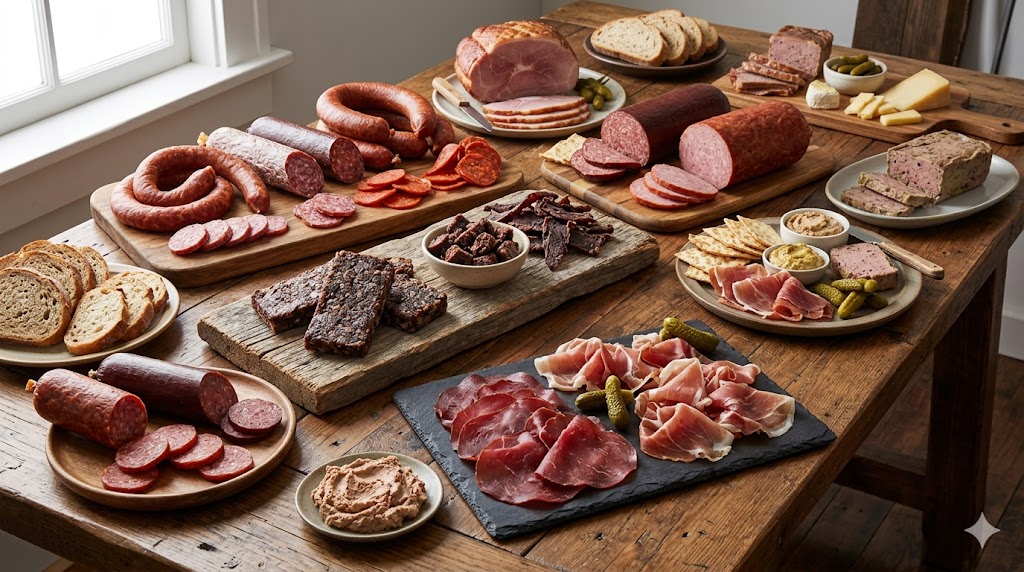
"Unprocessed meat is fine. Processed meat is bad."
Quick question.
What is it about the processing that makes it toxic?
Is it the act of grinding? Is the mince in your fridge a public health emergency? Is pemmican, the food that kept Arctic explorers alive on three-month sledging journeys, a slow-acting poison? Is the salt-cured ham hanging in a Spanish farmhouse for two years killing the family that has been eating it for generations?
Or is it the nitrates? The nitrates that do not survive your stomach acid. The nitrates your own salivary glands produce in larger quantities than a slice of bacon contains. The nitrates that beetroot is celebrated for and bacon is condemned for, in the same magazine, on facing pages.
Or is it the WHO classification? The one that lumped every cured meat on earth, regardless of ingredients, regardless of source, regardless of preparation, into a single category based on relative risk increases so small that the same statistical method would flag drinking tea, sitting near a window, and being Welsh.
In reality, if you find a sausage with three ingredients, all of which your grandmother would recognise, you are eating one of the most nutrient-dense, shelf-stable, convenient foods ever invented. Pemmican kept entire civilisations alive. Biltong runs on salt and air. A decent butcher's sausage runs on the pig.
Processed is doing a lot of work in that sentence. Most of it dishonestly.
Read the ingredients. That is the whole test.
People are going to die from this tech. Shutting off the gas! As she says what if you were pulling out in front of a lorry/truck, what if you are on a rail crossing, or draw bridge. So many horrific scenarios. Where this can be lethal
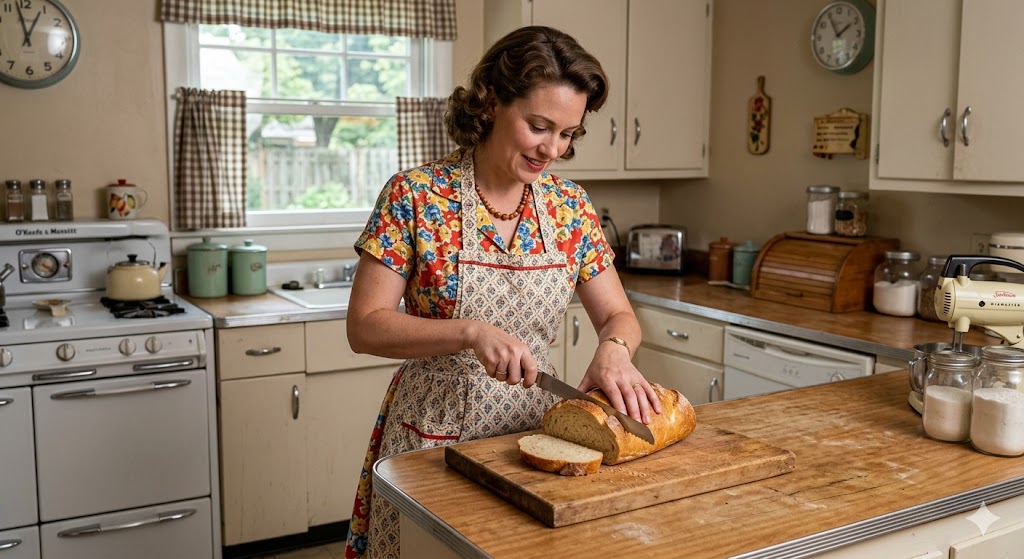
The wheat in your supermarket loaf is not the wheat your great-grandmother ate. It is barely the same plant.
In the 1950s, an American agronomist named Norman Borlaug crossed wheat with a Japanese dwarf variety called Norin 10. The result was a plant half the height of traditional wheat, with a thick stem that did not collapse under synthetic nitrogen fertiliser. Yields tripled. Borlaug got the Nobel Peace Prize. Famines in India and Pakistan were averted.
None of that is in dispute. None of that is the point.
The point is what came after the harvest.
The new dwarf wheat was selected for one thing. Yield. Not flavour. Not minerals. Not digestibility. Studies comparing modern wheat with the heritage varieties grown a century earlier consistently find lower zinc, lower iron, lower magnesium, lower selenium per gram. The plant got shorter. The food got thinner.
Then came the Chorleywood Bread Process, developed in 1961 in a Cheshire town that should have known better. Mix, proof, bake in three and a half hours instead of overnight. The fermentation that broke down the harder gluten fractions and the phytic acid binding the minerals was simply skipped. The loaf was, by structure, harder to digest and lower in bioavailable minerals than its slow-fermented predecessor.
Then came the glyphosate. From the 1980s onwards, farmers in wet northern climates began spraying their wheat with glyphosate roughly a week before harvest. Not for weeds. To dry the crop down. The active ingredient of Roundup, sprayed directly onto the grain that becomes your flour. Global glyphosate use rose roughly fifteen-fold between 1996 and 2016.
So this is the wheat sold to you as a staple food.
A plant bred for yield, fermented for ninety minutes instead of overnight, sprayed with a probable carcinogen the week before it became your toast.
Then you are told you are gluten intolerant.
Possibly. Or possibly you are intolerant of what we have done to wheat in the last sixty years. Bred down, rushed through, and chemically dried for the convenience of an industry that does not eat its own product.
Heritage varieties exist. Spelt. Einkorn. Emmer. Khorasan. Tall, slow-growing, lower-yielding, longer-fermented. Grown by a small number of stubborn farmers who refuse to use the dwarf seed.
The bread takes eighteen hours instead of ninety minutes. It costs more than the supermarket loaf. Your grandmother would have recognised it.
You may now connect the dots yourself.
What the British corner shop, before the supermarket, was actually doing for the parish:
- Sold individual eggs, by the half-dozen, by the dozen, from the local farm.
- Sold loose tea by the ounce, weighed out on brass scales by a grocer who knew which blend you preferred.
- Sold biscuits by weight from a glass jar with a metal scoop. Custard creams, gingernuts, broken digestives at half price.
- Sold cheese by the wedge, cut to order from a wheel on a wooden board with a wire.
- Sold bacon by the rasher, sliced to your specification on the slicer behind the counter.
- Sold flour, sugar, dried peas, dried beans, oats, lentils, all by the pound, weighed into brown paper bags. No plastic anywhere on the premises.
- Sold fresh bread, baked that morning by the baker at the end of the lane.
- Sold fresh milk in glass bottles, returned for the deposit.
•-Sold the local newspaper, the parish magazine, the sweets the children spent their pocket money on, the cigarettes for the men, the matches, the candles, the stamps.
- Knew when Mrs. Atkinson was struggling with the rent and quietly extended her credit until Friday.
- Held the spare key for the elderly lady at number twelve.
- Kept a noticeboard in the window with adverts for the village fete, the lost cat, the lawnmower for sale.
- Took messages for the customers who didn't have a telephone.
- Was open from 7am until 8pm, six days a week, run by the same family for three or four generations.
The corner shop was the parish's distribution layer for food, news, gossip, credit, and small acts of community kindness.
Britain in 1950: approximately 220,000 independent corner shops.
Britain in 2026: roughly 38,000, most owned by chains, almost none family-run, almost all stocking the same brands as the supermarket up the road.
The corner shop, having lost the price war to Tesco and Sainsbury's, took its functions with it. The functions did not transfer to the supermarket.
The supermarket does not extend credit. The supermarket does not hold the key. The supermarket does not know your name.
The transactions that built community got replaced with transactions that did not. The community, accordingly, got thinner.
Nobody put a number on it at the time, because the corner shop was not on a balance sheet.
The country has noticed it is missing.
It is missing from every parish in England, Scotland, Wales, and Northern Ireland. It is missing from every conversation people no longer have on their way home. It is missing from the windowsill where the noticeboard used to be.
The country is quieter now. The supermarket is full of food and empty of people who know each other.
Automobile kill-switches are coming soon to car dealerships near you.
I teamed up w/ Scott Perry & Chip Roy to defund this Orwellian mandate, but too many colleagues (Republican & Democrat) voted against us, so the federal mandate for every new car after 2026 is still in place.
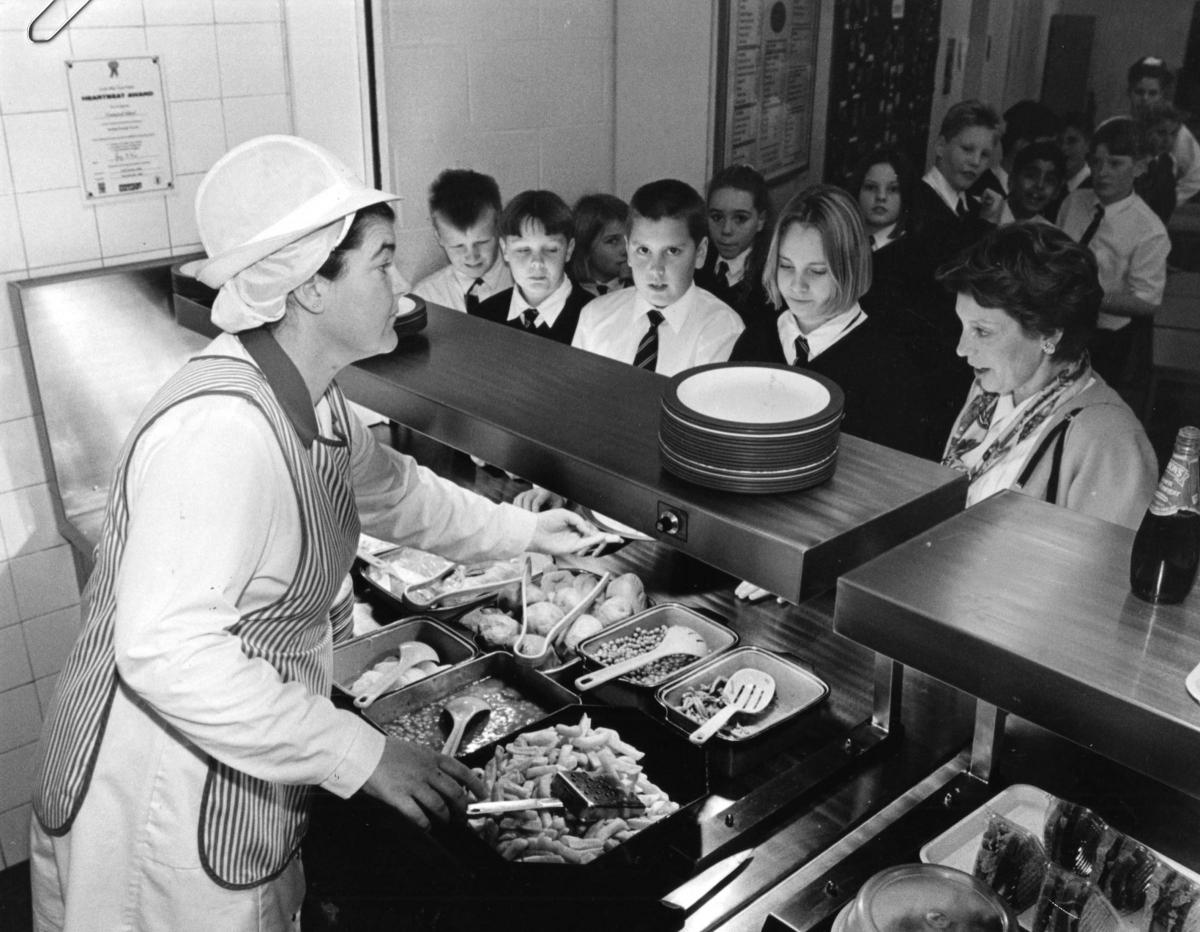
A British school dinner in 1975 was cooked on-site, from whole ingredients, by a dinner lady who knew, without consulting a nutritional database, what a growing child needed to eat.
The dinner was: roast beef, gravy from the drippings, boiled potatoes, cabbage, and sponge pudding with custard made from eggs and milk. Or shepherd's pie from real mince. Or liver and onions. Or fish on Friday, battered and fried in beef dripping.
In a single sitting: haem iron from the meat, calcium from the custard, B12 from the liver, vitamin A from the gravy fat, vitamin D from the eggs, zinc from the beef, omega-3 from the fish, collagen from the gravy, complete protein from every component, and roughly 800 calories dense enough to carry a child through an afternoon of running around a playground in January.
Then the system changed.
In the 1980s and 1990s, local authority catering was outsourced. On-site kitchens closed. Dinner ladies were made redundant. Central production kitchens began manufacturing meals reheated in convection ovens.
The roast beef became a turkey twizzler. The shepherd's pie became a pre-formed disc of processed potato and reconstituted meat product. The liver disappeared entirely. The fish was coated in breadcrumbs and fried in vegetable oil. The custard was made from powder, water, and yellow colouring. The sponge pudding was replaced by a yoghurt tube.
Jamie Oliver's 2005 campaign filmed children who could not identify a tomato. Kitchens where the only equipment was a deep fryer and a microwave. Menus that contained less nutritional value in a full week than the 1975 dinner contained in a single sitting.
The government pledged reform. But the on-site kitchen did not come back. The dinner lady did not come back. The roast beef and the liver and the custard made from eggs did not come back.
The 1975 dinner lady, who had no nutritional qualification and had never heard of a DIAAS score, was producing, at approximately 30p per serving, a meal that contained more bioavailable nutrition than anything the modern system produces at three times the cost.
She has been replaced by a supply chain.
The supply chain is more expensive.
The children are less well fed.
The dinner lady knew what she was doing.
Nobody asked her.
@CecPodd@AutoPap I can see where they have got the styling from. Look at the size of the wheels on the new effort! I will still pick the old 1 though, character and quirks.